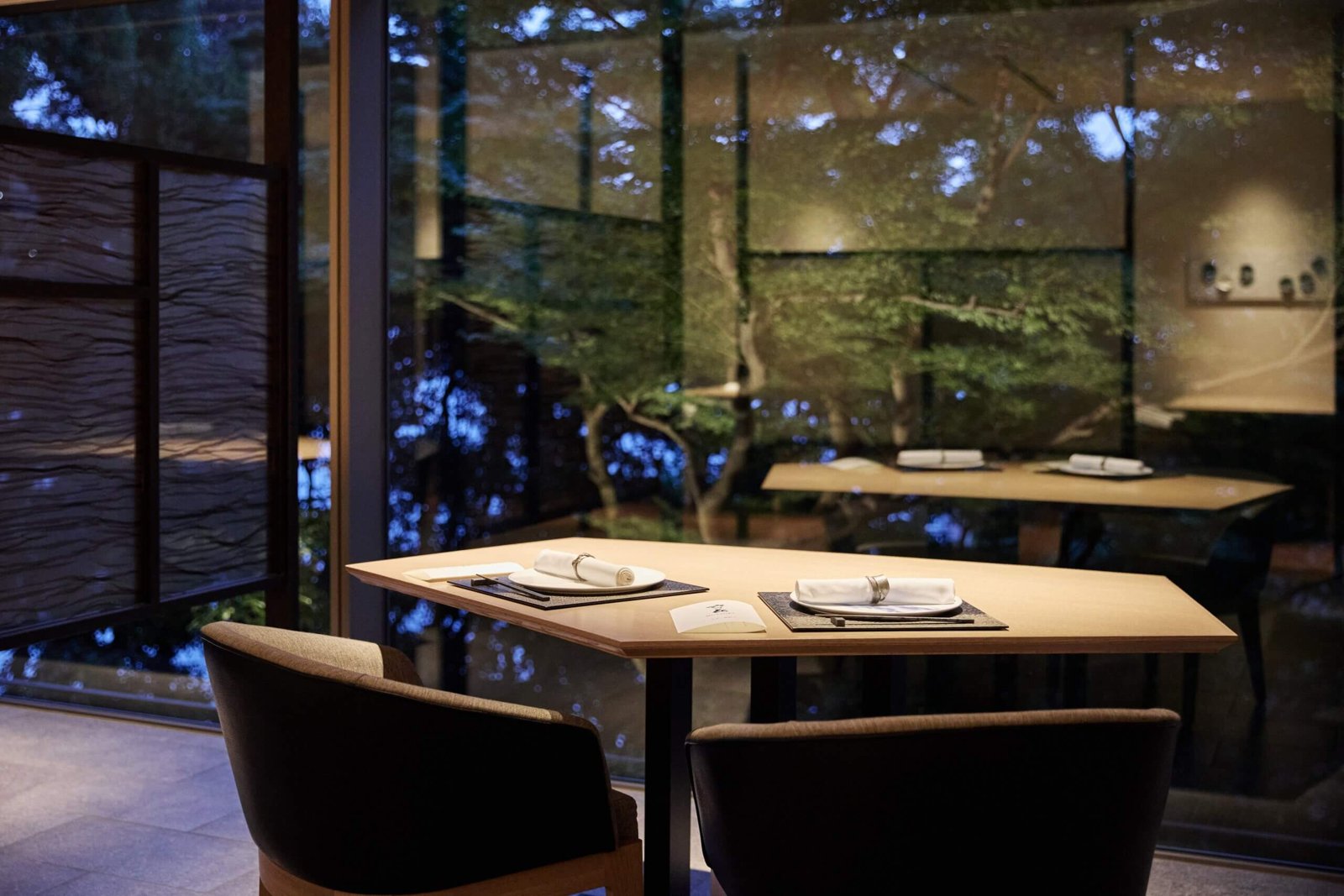

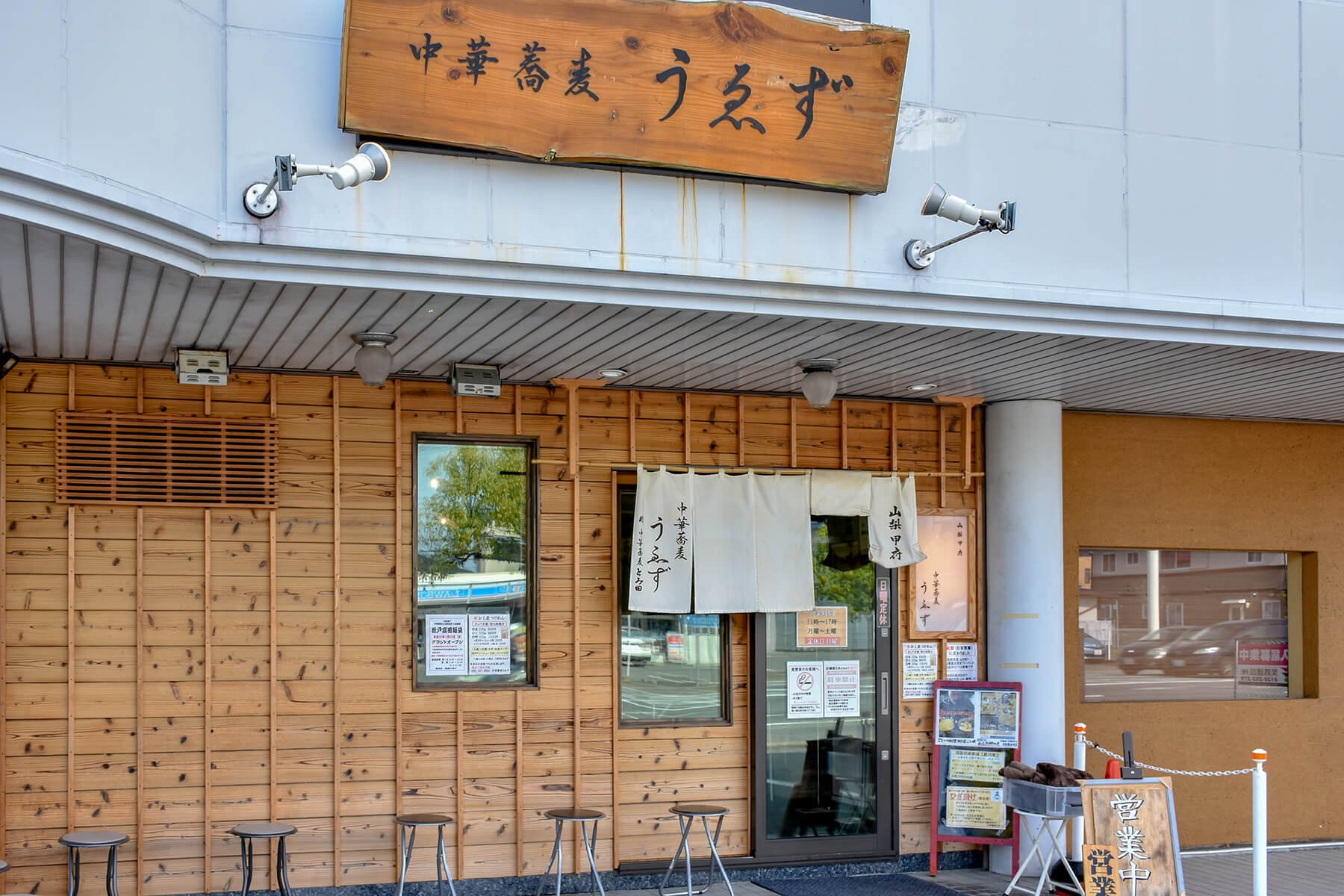
Restaurant in Tokyo, Japan
Atami
100ptsPrecision Burger Counter

About Atami
In Akasaka's dense dining grid, Atami makes a specific argument: that the hamburger, executed with the same sourcing discipline applied to Tokyo's fine-dining tier, earns its place alongside the city's more celebrated counters. Recognised by Opinionated About Dining's 2025 Casual Japan list, the restaurant operates in a price bracket of approximately JPY 8,000–9,999 per person — well above the category average.
Akasaka is a neighbourhood that runs two parallel tracks. On one, the expense-account kaiseki rooms and Michelin-decorated counters — places like RyuGin (Kaiseki, Japanese) and Harutaka (Sushi) — serve a clientele for whom provenance documentation and seasonal supply chains are preconditions, not selling points. On the other, a smaller set of casual operators has absorbed exactly those standards and applied them to formats that don't announce themselves with tasting menus or reservation queues stretching months out. Atami sits on that second track. The address , 3 Chome-9-2, No.R Akasaka, ground floor , puts it among office towers and mid-block side streets, the kind of location that asks nothing of the neighbourhood's prestige geography and relies instead on the work happening inside.
What the Hamburger Looks Like at This Price Point
Tokyo's premium casual scene has spent the last decade sorting itself into clear tiers. At the lower end, craft-burger operators focus on customisation and volume. At the upper end , which is where Atami operates, at approximately JPY 8,000 to JPY 9,999 per person , the conversation shifts to what goes into the patty before it hits the grill. That price range sits well above what most Tokyo diners would expect to pay for a hamburger, and the gap between expectation and bill is precisely the editorial question worth examining.
The short answer is sourcing. At the price point Atami occupies, the cost differential is almost always traceable to the supply chain rather than to labour or real estate alone. In Tokyo's serious meat restaurants , whether the format is yakiniku, steak, or burger , the producers behind the protein are often the actual subject of the meal. The hamburger format here functions less as populist comfort food and more as a vehicle for showcasing what carefully selected Japanese beef does when processed and cooked with precision. Chefs Makoto Suetomi and Hikaru Takahashi operate within that tradition, where the sourcing decision precedes every other choice on the menu.
For comparison, New York has its own version of this conversation. Operators like 5 Napkin Burger and 7th Street Burger approach the hamburger from a volume-and-accessibility standpoint. Tokyo's premium tier approaches it from a position closer to ingredient curation , the same posture you find at L'Effervescence (French), where sourcing philosophy defines the menu before technique enters the picture. Henry's Burger represents another Tokyo reference point in this category, against which Atami's positioning can be read. The distinction between these operators is less about format and more about how far up the supply chain the chef's attention reaches.
The OAD Signal and What It Means for This Category
Opinionated About Dining's 2025 Casual Japan list is a meaningful trust signal in this context, and not only because it indicates quality. OAD's casual category tends to surface operators who are doing something categorically specific rather than broadly competent , places where the format choice is itself an editorial statement. An inclusion at this level, in a list that covers Japan's entire casual dining output, suggests that Atami reads legibly to informed critics as a serious practitioner within its chosen form.
That matters more here than it might for a venue operating in a format with established critical vocabulary. Hamburger restaurants in Japan don't have the same inherited credibility framework as sushi counters or kaiseki rooms. Recognition from a credible external source does real work in establishing that the premium pricing has critical backing, not just market positioning. The Google rating of 4.7 across 62 reviews adds a ground-level data point: the audience engaging with Atami is engaged positively, though the review count indicates a deliberate rather than mass-market operation.
Ingredient Sourcing as the Organising Principle
The editorial angle on Atami is most clearly visible when you map it against the broader sourcing culture of Tokyo's serious dining tier. At the three-Michelin-star level, sourcing documentation has become almost standardised , producers named on menus, seasonal procurement schedules built into the kitchen calendar, supply relationships maintained over years. The question for premium casual operators is whether that discipline transfers down to formats where it isn't structurally required.
At JPY 8,000–9,999, Atami is making a bet that it does. That price bracket implies a protein cost structure that pushes well beyond commodity beef sourcing. In Tokyo's premium beef market, the difference between a generic patty and one built from carefully selected cuts of high-grade Japanese cattle is measurable not just in cost but in texture, fat distribution, and the Maillard reaction at the grill surface. A kitchen that has thought seriously about those variables before service starts is operating from a different premise than one that hasn't.
This is the same logic that separates Tokyo's top-tier operators across all formats. The kaiseki rooms on Atami's competitive periphery , the ones listed on Michelin's Tokyo roster , share with Atami the principle that the sourcing decision is the primary creative act. What changes is the form the food takes once those decisions are made.
Situating Atami in Tokyo's Wider Dining Map
Atami operates within a city that maintains one of the highest concentrations of serious dining in any global market. Across formats and price brackets, Tokyo rewards specificity: operators who do one thing at a high level tend to outlast those who hedge across multiple registers. The hamburger, as a format, has a shorter credibility history in Japan than in the United States, which makes the OAD recognition more pointed , it signals that the format is being executed in a way that meets the city's exacting standards.
For readers building a Tokyo itinerary, Atami fits into a specific slot: the serious casual meal that doesn't require the choreography of a fine-dining booking but operates from the same sourcing principles as the rooms that do. Elsewhere in Japan, comparable levels of ingredient seriousness show up in restaurants like HAJIME in Osaka, Gion Sasaki in Kyoto, akordu in Nara, Goh in Fukuoka, 1000 in Yokohama, and 6 in Okinawa , though those operate in very different formats and price positions. Within Tokyo itself, the full picture of where Atami sits relative to the city's dining range is available in our full Tokyo restaurants guide. For planning beyond the table, our full Tokyo hotels guide, our full Tokyo bars guide, our full Tokyo wineries guide, and our full Tokyo experiences guide cover the surrounding territory. Aldebaran is another Tokyo operator worth considering when building a multi-night dining schedule in Minato.
Know Before You Go
- Address: 3 Chome-9-2, No.R Akasaka 1F, Akasaka, Minato City, Tokyo 107-0052
- Price range: Approximately JPY 8,000–9,999 per person
- Cuisine: Hamburgers
- Recognition: Opinionated About Dining Casual in Japan (2025)
- Google rating: 4.7 (62 reviews)
- Nearest station: Akasaka-Mitsuke (Tokyo Metro Ginza and Marunouchi lines)
- Booking: Contact details not publicly listed , check current booking channels before visiting
- Hours: Not confirmed at time of publication , verify directly before planning your visit
Frequently Asked Questions
What's the signature dish at Atami?
Atami's kitchen, led by Makoto Suetomi and Hikaru Takahashi, centres on the hamburger as its primary form. Given the price positioning , JPY 8,000 to JPY 9,999 per person, recognised by Opinionated About Dining's 2025 Casual Japan list , the operative assumption is that the patty itself is the centrepiece, with sourcing decisions driving the distinction between this and lower-tier burger operations in the city. Specific menu details and dish names are not confirmed in our current data; the recommendation is to check directly with the restaurant for the current offering before visiting.
Recognized By
More restaurants in Tokyo
- SézanneOccupying the seventh floor of the Four Seasons Hotel Tokyo at Marunouchi, Sézanne earned its first Michelin star within months of opening in July 2021 and now holds three. British chef Daniel Calvert applies French technique to Japanese ingredients, producing a prix-fixe format that Tabelog has recognised with Silver awards every year from 2023 through 2026. It ranked 4th in Asia's 50 Best Restaurants in 2025 and 15th globally in 2024.
- SazenkaSazenka is the address for Chinese cuisine in Tokyo at its most technically demanding. Chef Tomoya Kawada's wakon-kansai approach — Japanese seasonal ingredients applied through Chinese culinary technique — has earned consecutive Tabelog Gold Awards from 2019 to 2026, a #71 ranking on the World's 50 Best 2025, and 99 points from La Liste 2026. At JPY 50,000–59,999 per head, it is one of the hardest tables in the city to book and worth the effort.
- NarisawaNarisawa is Tokyo's most credentialled innovative tasting menu restaurant — two Michelin stars, Asia's 50 Best number 12, and a Tabelog Silver award — running at JPY 80,000–99,999 per head. Book for a milestone occasion, confirm vegetarian or vegan needs in advance, and reserve at least two to three months out. With 15 seats and reservation-only access, this is one of Tokyo's hardest tables to secure.
- FlorilègeFlorilège delivers two Michelin stars and an Asia's 50 Best #17 ranking at a dinner price of ¥22,000 — competitive for Tokyo at this level. Chef Hiroyasu Kawate's plant-forward tasting menus around an open-kitchen counter at Azabudai Hills make this the strongest choice for contemporary French dining in Tokyo if theatrical, produce-led cooking is what you want. Book well in advance; availability is near-impossible at short notice.
- DenDen holds two Michelin stars, a World's 50 Best top-25 Asia ranking, and a Tabelog Silver Award running back to 2017 — and it books out within hours of the two-month reservation window opening. Chef Zaiyu Hasegawa's daily-changing seasonal omakase runs JPY 30,000–39,999 at dinner in a relaxed house-restaurant setting near Gaiemmae. Book by phone only, noon–5 PM JST. Lunch is irregular; plan around dinner.
- MyojakuMyojaku is a 2-Michelin-star, 14-course French-leaning omakase in Nishiazabu holding a 4.47 Tabelog score, Tabelog Silver 2025–2026, and Asia's 50 Best #45 (2025). Chef Hidetoshi Nakamura's water-forward, no-dashi approach shifts meaningfully with the seasons — making timing your reservation as important as getting one. Budget JPY 50,000–59,999 per head plus 10% service charge; reservations only, near-impossible to secure.
Similar venues by awards
Related editorial
- Best Fine Dining Restaurants in ParisFrom three-Michelin-star icons to the next generation of Parisian chefs pushing boundaries, these are the restaurants that define fine dining in the world's culinary capital.
- Best Luxury Hotels in RomeFrom rooftop terraces overlooking ancient ruins to Michelin-starred hotel dining, these are the luxury hotels that make Rome unforgettable.
- Best Cocktail Bars in KyotoFrom sleek lounges to hidden speakeasies, Kyoto's cocktail scene blends Japanese precision with global influence in ways you won't find anywhere else.
Save or rate Atami on Pearl
Keep this venue in your Pearl passport, rate it after you visit, and track it alongside every other place you collect.