

Abon
Kushiage · Uchide, Ashiya
Restaurant in Ashiya, Japan
 Book with Pearl
The Read
Fish-Led Kushikatsu Counter
Price
$500+per person
Chef
Tsutomu Hasegawa
Dress
Smart Casual
Why go
Kushi Katsu A-bon holds a Tabelog Silver Award (4.40, 2026) and runs two evening seatings for 19 guests in a counter-dominant room in residential Ashiya. At JPY 15,000–19,999 per head, it delivers a sequential kushiage experience worth the planning effort: but reservations require Japanese-language communication and open monthly.
About Abon
Should You Book Abon?
Yes, if you can get a reservation. Kushi Katsu A-bon in Ashiya holds a Tabelog Silver Award for 2026 and a score of 4.40: credentials that place it among the most consistently recognised kushikatsu restaurants in Hyogo Prefecture. Seats are limited to 19, the reservation window opens on the first of each month for up to three months ahead, and bookings are accepted in Japanese only. If that friction doesn't deter you, this is one of the stronger arguments for making the trip out to Ashiya from Osaka or Kobe.
What to Expect
Abon operates on a set-seating structure: two sittings per evening, at 18:00 and 20:30, six nights a week (closed Wednesdays). That format is the first thing to understand before you book. You are not dropping in for a casual skewer or two: the two-sitting model, the price range of JPY 15,000 to JPY 19,999 per head at dinner, and the counter-dominant room all signal a composed progression through the meal rather than a casual izakaya experience. Think of it less as a pub snack format and more as a sequential tasting built around kushiage: skewered and deep-fried ingredients served one by one, course by course.
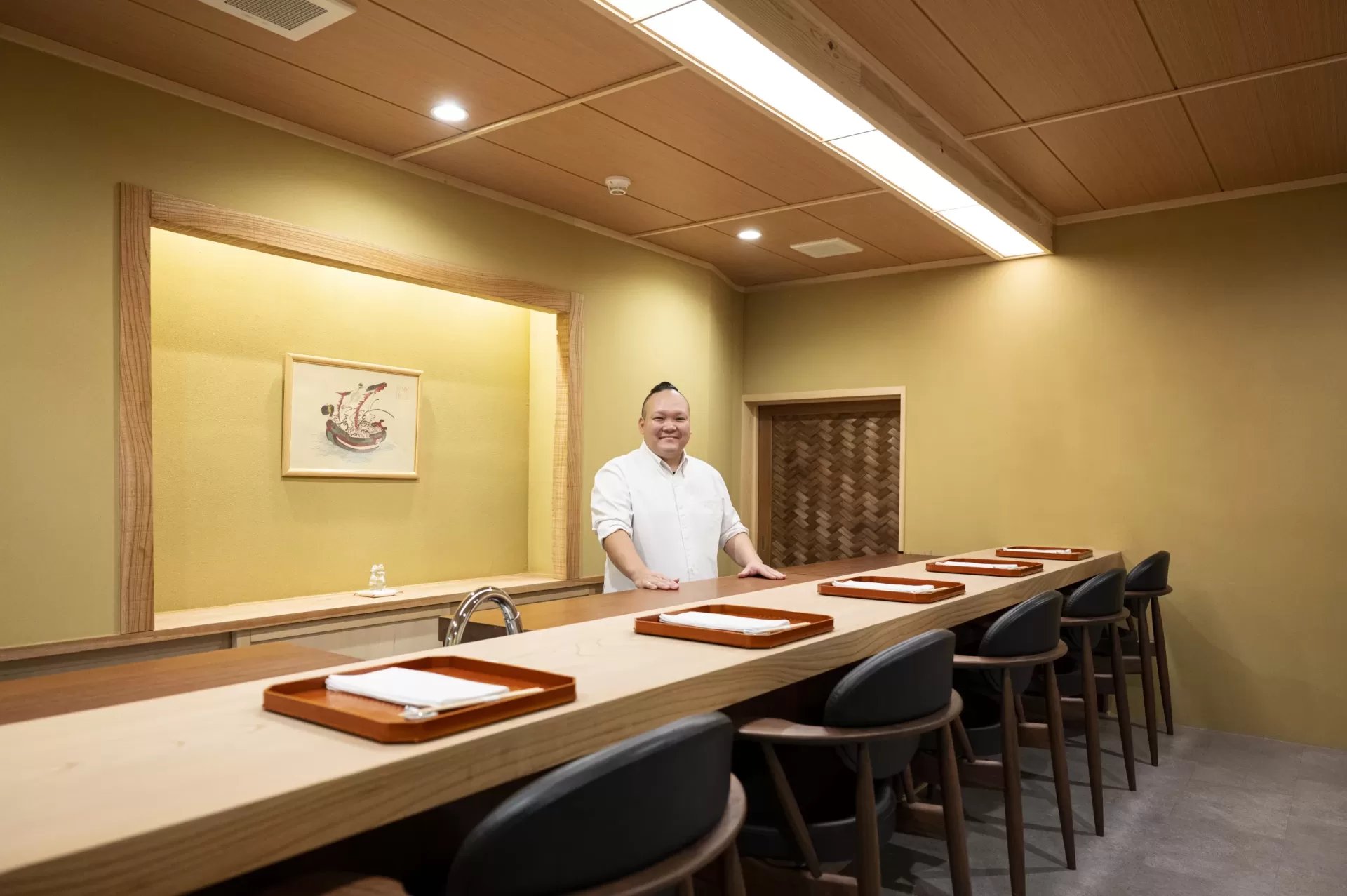
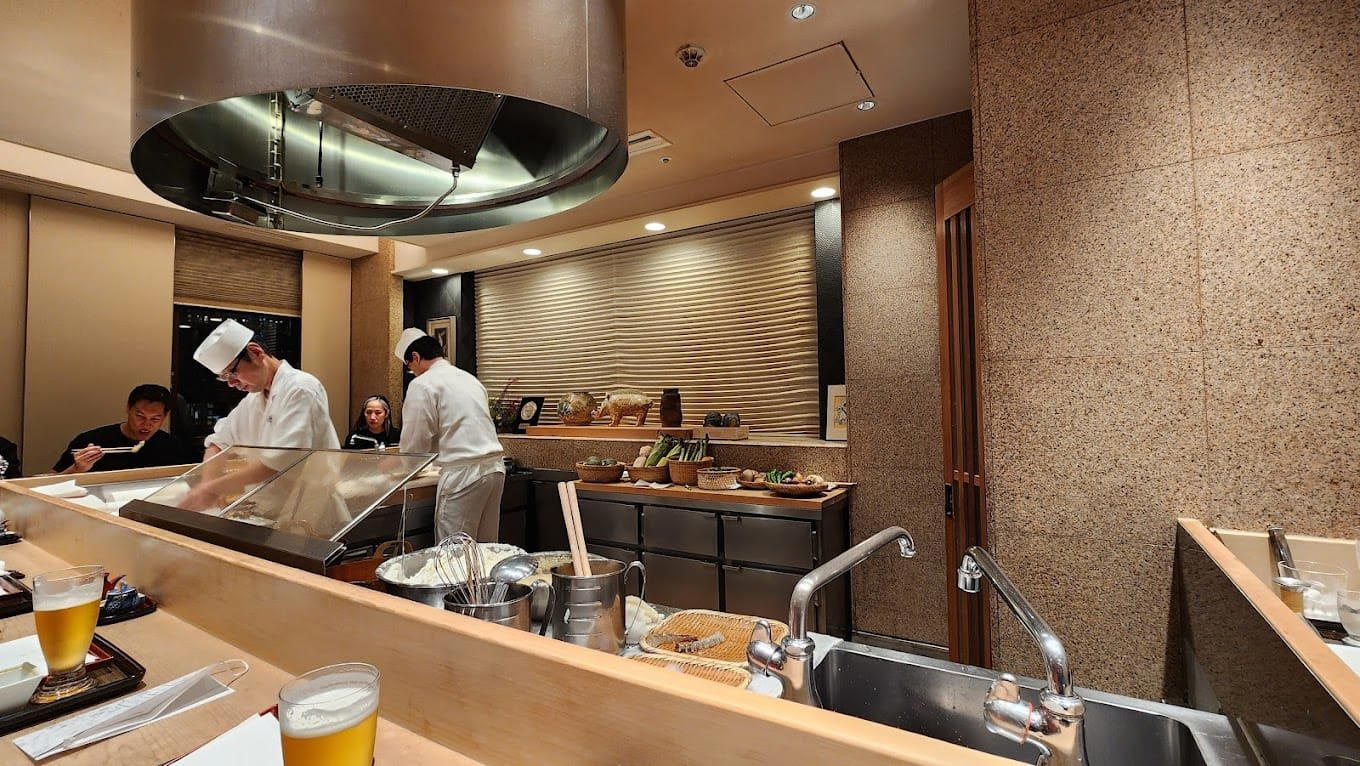
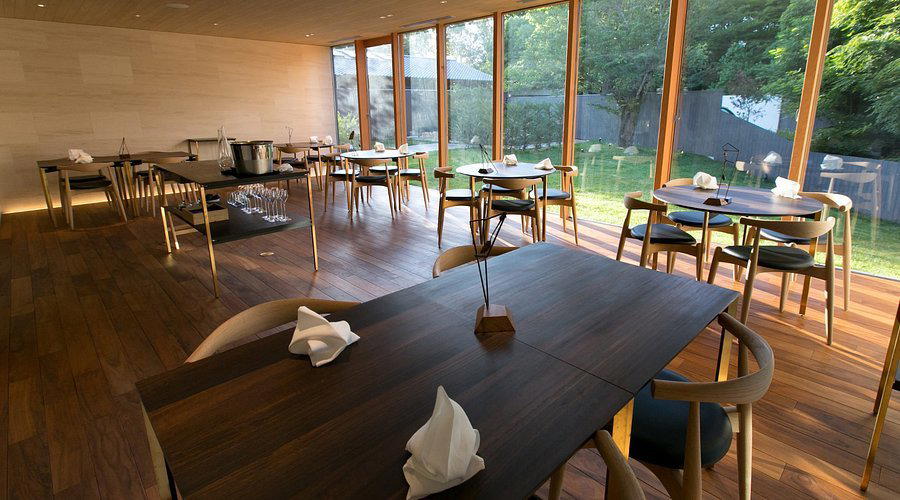
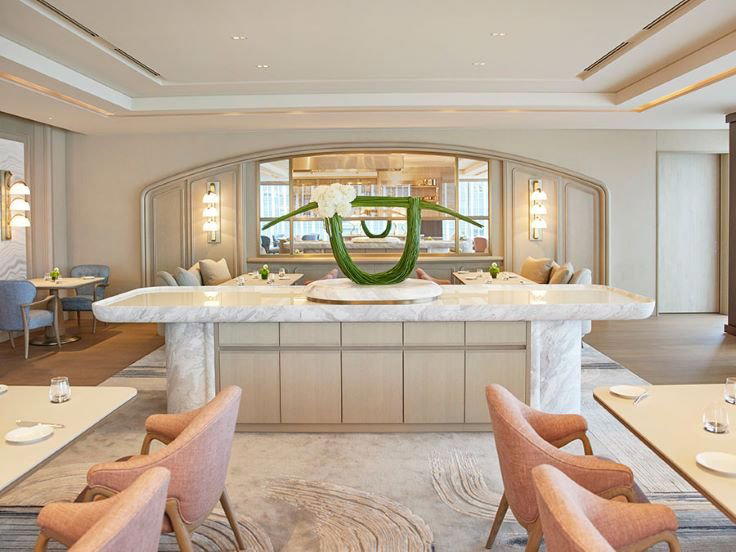
The room itself is small and counter-forward. Of the 19 total seats, 14 are counter positions, which matters for how the meal feels. Sitting at the counter at a restaurant like this puts you close to the preparation process, and at a kushiage counter, that proximity is part of the experience: watching each piece come up from the oil, understanding the pacing of what arrives in front of you. The remaining seats accommodate tables for two to six, which gives groups a functional option, though the room's scale keeps things intimate regardless of where you sit. There are no private rooms, but private hire of the full space is available.
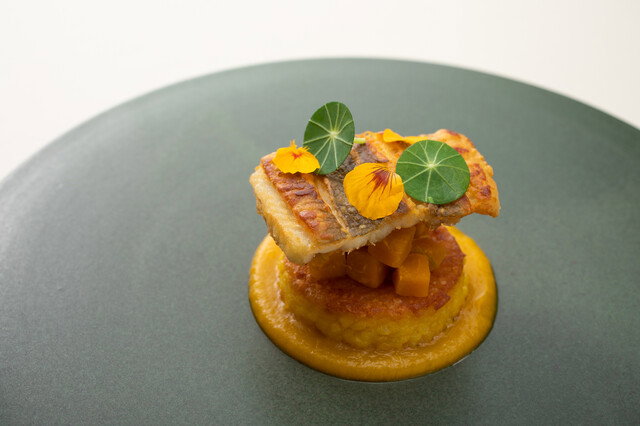
The kitchen signals a particular focus on fish sourcing alongside the core kushiage format. The drinks list covers sake, shochu, and wine, and BYO is permitted at a corkage fee of JPY 3,000 per standard bottle (JPY 6,000 for magnum). If you have a bottle worth bringing, this is a reasonable policy by Kansai standards.
For a 19-seat restaurant in a residential Ashiya neighbourhood, that sustained recognition over eight consecutive award years is a meaningful signal of quality stability rather than a single-year spike.
Access is manageable: a 10-minute walk east from JR Ashiya Station, or a 5-minute walk north from Hanshin Electric Railway Uchide Station. Parking is available nearby (three spaces, ask the venue). The location is residential and low-key, which fits the character of the restaurant: this is a place you seek out deliberately, not one you stumble into.
For special occasions, the format works well. The counter seating and sequential service give the meal a natural structure and pace that suits a celebration or a considered dinner with someone worth impressing. Children are welcome, which is less common at this price point, and the non-smoking environment is consistent throughout. Credit cards are accepted (Visa, Mastercard, JCB, Amex, Diners). For wider context on dining in the area, see our full Ashiya restaurants guide, and explore Ashiya hotels, bars, wineries, and experiences if you are planning a longer stay.
Other strong options in the Ashiya dining orbit include Imai and Tempura Sakurabito for Japanese frying traditions in a comparable register. Further afield in the Kansai region, HAJIME in Osaka and Gion Sasaki in Kyoto are worth knowing if you are building a broader itinerary. For international reference points on what a serious tasting-counter experience can feel like at this price tier, Lazy Bear in San Francisco and Le Bernardin in New York City serve as useful comparators in structure and intent, even if the cuisines differ entirely. Elsewhere in Japan, Harutaka in Tokyo, akordu in Nara, Goh in Fukuoka, 1000 in Yokohama, 6 in Okinawa, affetto akita in Akita, and Aji Arai in Oita each represent the kind of destination-worthy regional dining that puts Abon's Ashiya location in useful national context.
Practical Details
Budget: JPY 15,000–19,999 per head at dinner. Reservations: Required; Japanese-language communication necessary; opens on the 1st of each month for up to 3 months ahead. Hours: Two seatings, 18:00 and 20:30; closed Wednesdays (open on public holidays). Seats: 19 total (14 counter, remainder tables for 2–6). BYO: Permitted; corkage JPY 3,000 per bottle, JPY 6,000 for magnums. Payment: Credit cards accepted (Visa, MC, JCB, Amex, Diners); no IC card or QR payment. Dietary note: Venue asks guests with restrictions against solid lard or certain oils (religious or otherwise) to refrain from booking. Access: 10-min walk from JR Ashiya Station; 5-min walk from Hanshin Uchide Station. Parking: 3 spaces nearby, ask staff.
Planning details
- Hours
- Monday: 6–10:30 PM · Tuesday: 6–10:30 PM
- Location
- 6-8 Kusunokicho, Ashiya, Hyogo 659-0015, Japan
- Website
- tabelog.com/hyogo/A2803/A280302/28000052
- Phone
- +81 797-22-2030
The take
The Take
The Vibe
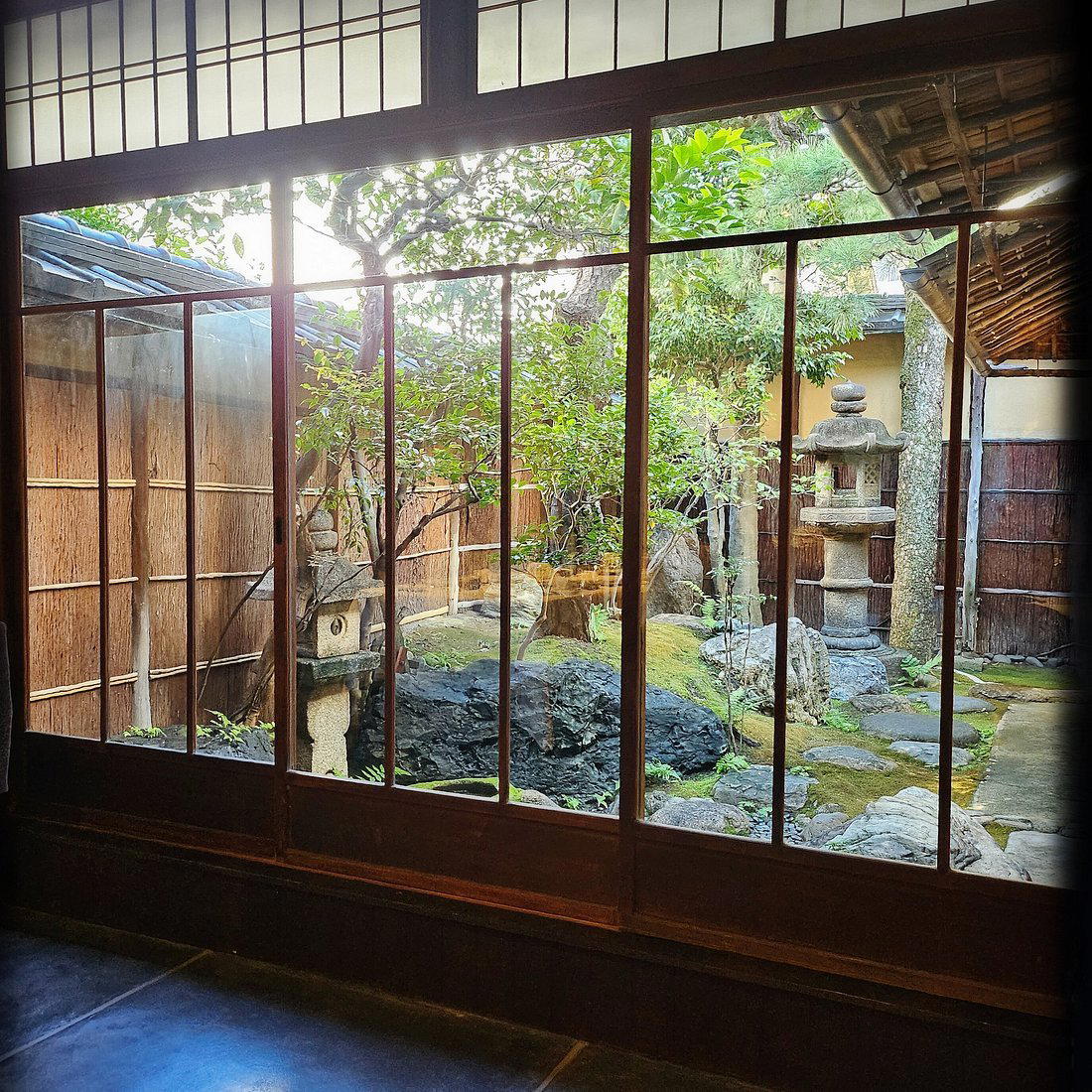
Abon settles into a restrained, quietly refined register. It occupies a low-key residential storefront in Ashiya and intentionally resists showmanship: the room is small, reservation-only and oriented around a single operational core: the counter. The experience reads like a focused Kansai kappo more than a casual skewer bar, and that seriousness gives the place a composed, sophisticated air. The limited seating and kitchen-led service create an intimate, almost meditative pace; this is dining that rewards attention to sourcing and sequence rather than loud presentation or high-energy theatrics.
Best For
This is a counter-dining spot built for concentrated, reservation-only evenings. With 19 seats, 14 at the counter and a few tables for two to six, Abon fits solo diners who want a close view of the work, couples on deliberate date nights, and very small groups celebrating something special. Its price tier and service cadence align it with premium inner-city counters, so it’s best for occasions when you want the chef to set the rhythm of the meal and when you value a calm, considered dining environment.
Ordering Tips
Book ahead and, when possible, request a counter seat: the evening is run from the counter and the sequence of dishes is set by the kitchen. Let the chefs guide the progression: the menu’s sourcing logic and fish-led skewers are central to the experience. Note that seating is limited (19 total) and the restaurant is reservation-only; there is parking nearby for up to three cars and the address is a short walk from JR Ashiya and Hanshin Itsumo stations. Arrive prepared to enjoy a focused, multi-course counter service.
Venue details
Ambiance
Cozy atmosphere with welcoming smiles, retro expressions, and a relaxing space featuring counter seating.
Tags
Vibe
Best For
At the Table
- Dress Code
- Smart Casual
- Noise Level
- Quiet
- Service Style
- Upscale Casual
- Meal Pacing
- Leisurely
- Capacity
- Intimate
- Kitchen
- Modern
- Menu Format
- Counter dining
Know before you go
Know Before You Go
- Getting there
- 6-8 Kusunokicho, Ashiya, Hyogo 659-0015, Japan
Planning details
Hours
- Monday
- 6–10:30 PM
- Tuesday
- 6–10:30 PM
- Wednesday
- Closed
- Thursday
- 6–10:30 PM
- Friday
- 6–10:30 PM
- Saturday
- 6–10:30 PM
- Sunday
- 6–10:30 PM
Location
6-8 Kusunokicho, Ashiya, Hyogo 659-0015, Japan · Directions
Recognition and awards

Also consider
Also Consider
- HAJIME: French, Innovative, ¥¥¥¥
- Harutaka: Sushi, ¥¥¥¥
- RyuGin: Kaiseki, Japanese, ¥¥¥¥
- L'Effervescence: French, ¥¥¥¥
- HOMMAGE: Innovtive French, French, ¥¥¥¥
Restaurant context
Abon sits in a different category from the obvious Kansai splurge options. HAJIME and L'Effervescence operate in French-innovative territory at a comparable or higher price point and carry heavier international recognition, but neither answers the question of where to eat serious kushiage in a quiet, counter-focused setting outside Osaka's centre. If the format matters to you, skewers, sequence, counter proximity, Abon is not competing with those restaurants; it is doing something they are not.
Against Harutaka and RyuGin, the comparison is more about occasion fit than format overlap. Harutaka's sushi counter and RyuGin's kaiseki progression both offer sequential tasting structures at the ¥¥¥¥ tier, but with more mainstream international booking access and broader name recognition among non-Japanese diners. Abon's Japanese-only reservation policy means it skews toward guests who are either local, have a Japanese-speaking contact, or have planned specifically for it: which is a real logistical gap worth acknowledging before you commit.
HOMMAGE offers another comparison point for the special-occasion diner in the Kansai region who wants a composed tasting experience with French technique. At a similar price tier, HOMMAGE may be more accessible for non-Japanese speakers. The honest recommendation: if kushiage done at this level of seriousness is your specific target, Abon is the right booking. If you want the tasting-counter experience with easier access logistics, Harutaka or HOMMAGE are stronger practical choices.
Explore Ashiya
Around this place
Discover more on Pearl
Unlock the full Abon guide in Pearl, including awards, comparisons, FAQs, planning details, and nearby places.
FAQ
Frequently Asked Questions
What should I order at Abon?
Abon specialises exclusively in kushi-age (deep-fried skewers) and the Tabelog listing notes a particular focus on fish. The format is counter-driven and likely set-course, so ordering is not a la carte in the conventional sense: you receive what the kitchen serves. At JPY 15,000–19,999 per head, expect a full progression rather than a pick-and-choose menu.
What are alternatives to Abon in Ashiya?
Abon sits in Ashiya specifically, so direct local competitors in the same kushikatsu tier are scarce. For high-end fried skewers in the wider Kansai region, Osaka remains the category heartland, where the style originated. If you cannot secure a reservation, Abon opens bookings only on the 1st of each month for up to three months ahead, exploring Osaka's kushi-age scene is the practical fallback.
Is Abon good for a special occasion?
Yes, with caveats. Abon holds a Tabelog Silver Award for 2026 and is recommended for family and friends occasions. The 19-seat room and counter format make it feel considered rather than celebratory in a banquet sense, and private rooms are not available. For an intimate dinner where the cooking is the event, it works well; for a large group celebration requiring a private space, look elsewhere.
Can I eat at the bar at Abon?
Yes. Abon has 14 counter seats out of 19 total, so the counter is actually the primary format here. Tables seat two to six people. Counter seating is listed explicitly as a venue feature, and for a kushikatsu restaurant this is the intended way to eat: you watch the skewers come out directly.
Is lunch or dinner better at Abon?
Dinner only: Abon does not serve lunch. The two sittings are at 18:00 and 20:30, and the Tabelog budget entry shows no lunch pricing. At JPY 15,000–19,999 for dinner, plan your evening accordingly and factor in that the 20:30 seating runs until 23:00 closing.
Does Abon handle dietary restrictions?
With significant limitations. Abon's reservation policy states explicitly that guests with dietary restrictions against solid lard or certain oils for religious reasons should not book. The kitchen uses animal fat in its frying process, which is standard for traditional kushikatsu. If this is a concern, do not reserve: the venue itself advises against it.