
Finch Hattons Luxury Safari Camp
Tsavo National Park, Tsavo
Hotel in Tsavo, Kenya
 Book with Pearl
The Read
Intimate-Scale Wilderness Architecture
Why go
Finch Hattons Luxury Safari Camp is worth shortlisting for a special-occasion safari in Tsavo West National Park, especially if Preferred Hotels benefits influence how value is judged. It is a stronger fit for couples and safari-focused itineraries than for travelers seeking a beach resort, city base, or nightlife-heavy Kenya trip.
About Finch Hattons Luxury Safari Camp
Book Finch Hattons Luxury Safari Camp if the occasion calls for a stay in Tsavo and you want a hotel with a smart casual dress code.
The practical booking angle is its Preferred Hotels Member recognition for 2025. That gives travelers a clear affiliation to check when comparing it with other options. If you are also considering other Kenya stays, compare it directly with Finch Hattons Luxury Safari Camp, Nomad Beach Resort, Sarova Whitesands Beach Resort & Spa, Siringit Villa, Swahili Beach Resort, or ol Donyo Lodge without assuming identical settings or inclusions.
Choose it for a Tsavo stay, not an extras-heavy comparison
Finch Hattons Luxury Safari Camp is in Tsavo. That makes it relevant for travelers specifically looking at Tsavo rather than for those comparing Kenya venues in a broad, destination-neutral way.
For comparison, ol Donyo Lodge, Siringit Villa, Nomad Beach Resort, Sarova Whitesands Beach Resort & Spa, and Swahili Beach Resort can be considered separately depending on the trip. Finch Hattons Luxury Safari Camp remains the direct pick when the priority is this specific venue in Tsavo.
Preferred Hotels Member recognition and dress code are the main details
Because the camp is a Preferred Hotels Member for 2025, travelers who care about hotel affiliations should check the relevant booking channel before committing. The membership itself is the key point; any specific benefits, rates, or recognition should be confirmed at the time of booking.
The dress code is smart casual. Other stay details, facilities, policies, dining arrangements, pricing, and service inclusions should be checked directly before booking.
Quick reference: choose this for Finch Hattons Luxury Safari Camp in Tsavo with Preferred Hotels Member recognition for 2025 and a smart casual dress code; compare other named Kenya options separately based on your trip needs.
Planning details
- Location
- Tsavo West National Park, Kenya
- Website
- virginlimitededition.com/finch-hattons
The take
The Take
The Vibe
Finch Hattons reads as an intentionally restrained safari camp that privileges space and silence over spectacle. Set inside the vast, low-traffic sweep of Tsavo West, the property’s 17-room scale keeps numbers deliberately small so the place does not compete with itself. Much of the architecture leans toward softer materials — canvas, timber and open-air design — so the line between inside and out stays porous. The result is an intimate, rustic-feeling retreat where quiet and privacy are offered as a form of luxury rather than an absence.
Best For
This camp suits travelers who want a quiet, small-scale safari experience rooted in place rather than a high-density lodge scene. The low room count and setting in expansive Tsavo West make it good for couples seeking privacy, guests who prioritize uninterrupted wildlife viewing and those who prefer a measured, contemplative pace. It is less suitable for travelers seeking a buzzy social atmosphere or heavy vehicle concentration; the camp’s value is its restraint and the feeling of having the park largely to yourself.
Venue details
Ambiance
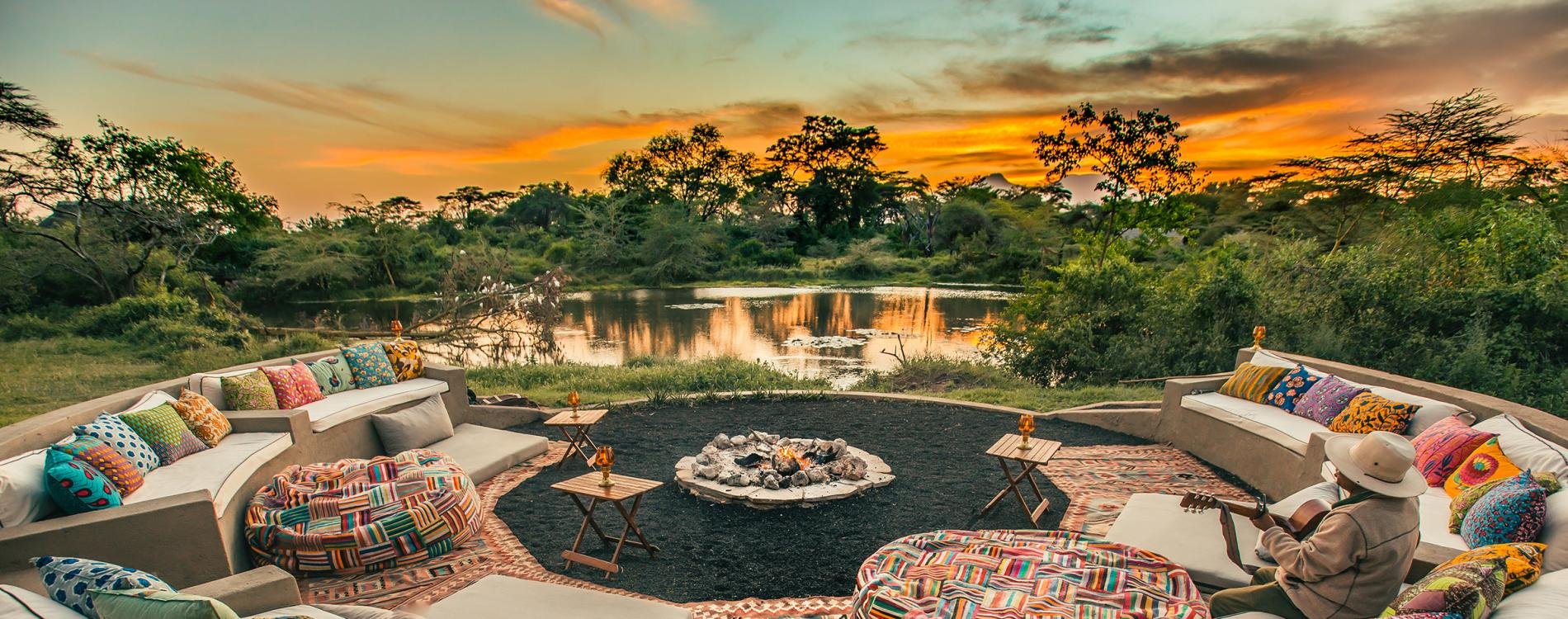
Serene and sophisticated atmosphere with natural sounds of wildlife, relaxed lighting on private decks, and views of hippo pools and Chyulu Hills.
Tags
Vibe
Best For
Experience
Amenities
View
Accessibility
About the Stay
- Rooms
- 17
- Check-out
- 11:00
- Property Style
- Luxury Tented Camp Evoking 1920s Safari Glamour with Modern Comforts.
- Design Style
- Modern Clean Aesthetic with Muted Tones, Leather, Wood, Steel, and African Heritage Elements.
Know before you go
Know Before You Go
- Getting there
- Tsavo West National Park, Kenya
Planning details
Location
Tsavo West National Park, Kenya · Directions
Recognition and awards
Also consider
If you cannot book this
Look first at ol Donyo Lodge if the trip can shift to another safari area. It is the closest style match in the comparison set.
If the plan can pivot from safari to coast, compare Nomad Beach Resort and Swahili Beach Resort instead. They are better fallbacks for travelers who want beach time rather than a park-based camp stay.
Hotel context
How It Compares
Against ol Donyo Lodge, Finch Hattons Luxury Safari Camp is the Tsavo-focused choice. Pick Finch Hattons if the trip is built around Tsavo West National Park; pick ol Donyo Lodge if the itinerary points toward the Chyulu Hills and Amboseli side instead. Both read as safari-lodge decisions rather than general hotel decisions, so location should drive the choice before brand preference.
Sarova Whitesands Beach Resort & Spa, Swahili Beach Resort, and Nomad Beach Resort are better cross-shops for travelers who want the Kenya coast, beach access, and a resort rhythm. They are not substitutes for a Tsavo safari stay; they solve a different trip brief. If the occasion is about game-drive days and a camp setting, Finch Hattons is the cleaner match.
Siringit Villa is the better comparison for privacy-led travelers who want a villa-style stay. Finch Hattons is the stronger pick when the draw is a managed safari-camp experience with a recognized hotel affiliation. Booking difficulty is easy, so the decision should center on trip style, not scarcity.
Explore Tsavo
Around this place
Discover more on Pearl
Unlock the full Finch Hattons Luxury Safari Camp guide in Pearl, including awards, comparisons, FAQs, planning details, and nearby places.
Compare Finch Hattons Luxury Safari Camp
| Venue | Location | Awards |
|---|---|---|
| Finch Hattons Luxury Safari Camp | Tsavo | Preferred Hotels Member 2025 |
| ol Donyo Lodge | Chyulu Hills - Amboseli | 2026 Relais Chateaux Hotels2025 Relais Chateaux Award |
| Sarova Whitesands Beach Resort & Spa | Mombasa | No published awards |
| Siringit Villa | Usa River | Small Luxury Hotels Member 2025 |
| Swahili Beach Resort | Diani Beach | No published awards |
| Nomad Beach Resort | Diani Beach | No published awards |


How Finch Hattons Luxury Safari Camp Tsavo compares with similar nearby venues.
FAQ
Frequently Asked Questions
Do loyalty programs work at Finch Hattons Luxury Safari Camp?
Finch Hattons Luxury Safari Camp is a Preferred Hotels Member for 2025. Travelers who value hotel affiliations should confirm the current booking channel and any specific benefits before reserving.
When is the best time to book Finch Hattons Luxury Safari Camp?
How is the location of Finch Hattons Luxury Safari Camp?
The location is Tsavo. That makes it relevant for travelers specifically planning a Tsavo stay rather than a general Kenya hotel search.
Is Finch Hattons Luxury Safari Camp family-friendly?
Family facilities, age policies, and child-focused programming are not included here. Families should check current policies directly with Finch Hattons Luxury Safari Camp before booking.
Which room category is best at Finch Hattons Luxury Safari Camp?
No room-category details are provided here. The safest approach is to compare the current room descriptions directly with the camp and choose based on the needs of your trip.
How does Finch Hattons Luxury Safari Camp compare to other hotels?
It is the direct choice if you are specifically looking at Finch Hattons Luxury Safari Camp in Tsavo. Nomad Beach Resort, Sarova Whitesands Beach Resort & Spa, Siringit Villa, Swahili Beach Resort, and ol Donyo Lodge are separate comparisons to evaluate on their own current details.