
Hotel in New Orleans, United States
Four Seasons Hotel New Orleans
950ptsMississippi-Front Louisiana Dining





About Four Seasons Hotel New Orleans
Occupying the heritage World Trade Center tower at 2 Canal Street, Four Seasons Hotel New Orleans sits where downtown meets the Mississippi River. With two distinct restaurant programs, a 75-foot rooftop infinity pool, and an eight-treatment-room spa carrying Louisiana's only Biologique Recherche franchise, it earned La Liste Top Hotels recognition (92 points, 2026) and has anchored the upper tier of New Orleans luxury lodging since its 2022 debut.
Where the Mississippi Meets the Marble Lobby
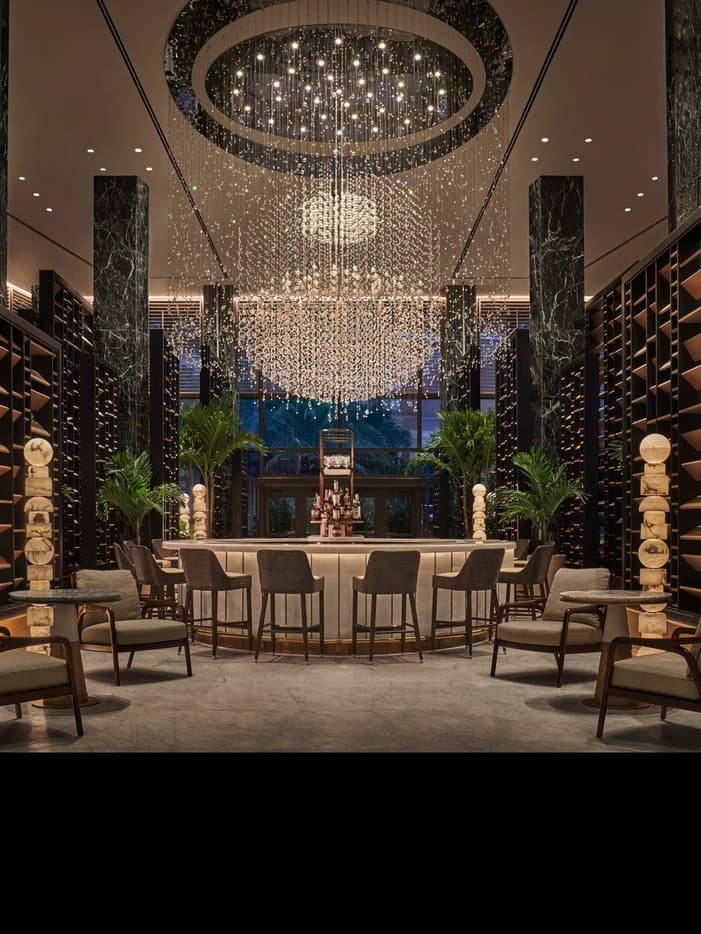
The approach along Canal Street places you at one of New Orleans' most loaded intersections: the foot of the city's main commercial artery, the edge of the French Quarter, and the bank of the river that made the city possible. The building itself is the former World Trade Center tower, a heritage structure that carries the civic weight of that history before you ever walk through the door. Once inside, the lobby reorients you immediately. Black marble columns frame a circular bar, and suspended above it, a chandelier assembled from 15,000 hand-strung crystals sourced from the Czech Republic catches and scatters light across the room. It is a confident opening statement from a property that has, since its 2022 launch, positioned itself at the leading of the downtown New Orleans accommodation tier.
That tier has grown more competitive over the past decade. Properties like Hotel Peter and Paul, Hotel Saint Vincent, and Maison Metier have shifted guest expectations toward design-led, locally embedded experiences. The Four Seasons answers in a different register: a larger footprint, international brand infrastructure, and the kind of amenity density that independent boutique properties cannot match. La Liste ranked it at 92 points in its 2026 Leading Hotels list, placing it squarely in the upper bracket of American luxury hotels. For context on how other New Orleans properties sit within this field, our full New Orleans restaurants and hotels guide maps the broader competitive picture.
The Dining Programs: Louisiana Sourcing as Structural Logic
New Orleans has long had a complicated relationship between its culinary heritage and the hotel dining room. The city's neighborhood restaurants set a high floor, and hotel kitchens have historically struggled to clear it. The Four Seasons runs two distinct restaurant programs that take materially different approaches to that challenge.
Chemin à la Mer occupies the fifth floor, with a wall of windows facing the Mississippi. The kitchen draws heavily from Louisiana waters: fresh oysters anchor the opening, and the côte de boeuf carved tableside at the table represents the kind of theater that works precisely because the sourcing underpins it. The weekday oyster hour at the bar, featuring a rotating daily selection of bivalves, functions as a point of contact between the hotel and the local dining public. This is a meaningful operational signal. When a hotel restaurant draws neighborhood regulars rather than exclusively serving hotel guests, it typically indicates that the kitchen is competing on merit rather than convenience.
Miss River takes a different angle. The restaurant's approach to Louisiana staples runs through a Gulf red snapper encased in a thick salt crust, deboned and plated tableside at an open station, and a whole buttermilk fried chicken designed for sharing. The Belle Époque interior, designed by London-based Alexander Waterworth Interiors, deploys pink quartzite marble, scalloped wallpaper, and bronze accents in a way that reads as a deliberate aesthetic position rather than neutral hotel décor. Both restaurants operate in a broader national pattern where major urban luxury hotels have moved away from generic continental menus toward programs built around regional identity and specific sourcing relationships. Hotels like SingleThread Farm Inn in Healdsburg and Auberge du Soleil in Napa have anchored this model in a wine-country context; the Four Seasons New Orleans extends it into Gulf Coast culinary territory.
Pool, Spa, and the Infrastructure of Responsible Luxury
The 75-foot infinity pool on the fifth-floor deck operates year-round, heated in winter and cooled in summer, which in New Orleans terms means it functions as a genuine amenity across all twelve months rather than a seasonal feature. Underwater music and lighting are embedded in the pool deck. Cabanas and a full beverage program run adjacent to it. The pool is noted as the largest hotel pool in New Orleans, a practical claim in a city where outdoor space at this scale is constrained by the urban grid and the flood-management infrastructure that shapes building footprints downtown.
The spa occupies eight treatment rooms and carries the exclusive Louisiana franchise for Biologique Recherche, a French skincare brand whose protocols center on a library of over 30 serums customized per treatment. This is not a credential that reads as marketing copy: Biologique Recherche maintains tight distribution controls, and its presence in a spa signals a purchasing relationship that independent properties in the same city cannot readily replicate. The relaxation room and its adjoining terrace face the river, which in practical terms means the spa circuit does not end at the treatment table.
Sustainability question at a property of this scale is less about dramatic environmental gestures and more about operational depth. The sourcing logic at Chemin à la Mer, with its emphasis on Louisiana waters, represents a form of supply chain compression that reduces transportation distances and keeps revenue within the regional economy. The spa's exclusive partnership with a single brand implies a depth of commitment rather than a rotating vendor model. These are structural choices rather than marketing ones, and they align the property with a broader movement in premium American hospitality toward accountability in sourcing and partnership. Properties like Post Ranch Inn in Big Sur and Amangiri in Canyon Point have built environmental commitment into their physical footprint and operations; the urban luxury context at 2 Canal Street demands a different expression of the same principle.
Rooms and the 34th-Floor View
Guest rooms carry the design signature of Bill Rooney, with large white plaster magnolia reliefs above the beds, shiplap paneling referencing the river architecture outside, and compass-patterned carpeting that responds to the building's own geometry. These are not incidental details; they represent a deliberate effort to anchor the guest room experience in place rather than produce the interchangeable luxury-neutral aesthetic that characterizes many international chain properties.
The 34th-floor observation deck is available for private events and delivers what the building's height and position on the river bend make geometrically inevitable: a full panoramic read of the city, the river, and the bridge. For guests comparing properties across the upper New Orleans tier, including The Celestine New Orleans, Columns, Catahoula New Orleans, and Pontchartrain Hotel St. Charles Avenue, the Four Seasons occupies a distinct position: it offers amenity scale and brand infrastructure that boutique properties do not, while the room design and restaurant programs demonstrate enough local specificity to avoid the anonymous luxury that would make the Canal Street address feel arbitrary.
Across the Four Seasons portfolio, the New Orleans property can be usefully compared against urban counterparts like Four Seasons at The Surf Club in Surfside, which operates in a similarly heritage-building context with a specific regional identity. For travelers whose itinerary includes other American luxury properties, Raffles Boston, Aman New York, and The Fifth Avenue Hotel in New York City offer useful reference points in the same pricing tier. Internationally, Aman Venice, Badrutt's Palace Hotel in St. Moritz, and Hotel Bel-Air in Los Angeles sit in comparable premium brackets with their own heritage-building narratives. For travelers whose journeys extend to nature-led luxury, Kona Village in Kailua Kona, Little Palm Island Resort and Spa, Sage Lodge in Pray, Troutbeck in Amenia, and Canyon Ranch Tucson represent the opposite end of the density spectrum, where the commitment to place is expressed through landscape rather than landmark architecture. The Element New Orleans Downtown offers a lower-cost alternative within the same downtown geography for travelers who prioritize location over amenity depth.
Planning Your Stay
The hotel sits at 2 Canal Street, at the river end of the street and within walking distance of the French Quarter, the streetcar lines, and the main ferry crossing to Algiers Point. Amenities include 24-hour room service, a full gym, a house car, meeting rooms, outdoor pool, pet-friendly policies, two restaurants, and the spa. The Chandelier Bar is the natural starting and ending point for an evening; its World Fair Fizz, a lavender riff on the classic Ramos gin fizz using butterfly pea flower tea and champagne, is a reliable introduction to the kitchen team's sensibility in cocktail form. Oyster hour at Chemin à la Mer runs on weekdays. The Google review score of 4.4 across 597 reviews reflects a property that performs consistently rather than episodically.
Frequently Asked Questions
Is Four Seasons Hotel New Orleans more formal or casual?
The property operates in the upper tier of New Orleans accommodation, earning 92 points on the 2026 La Liste Leading Hotels ranking, which places it in the same bracket as the city's most formally appointed properties. In practice, however, the atmosphere skews toward the relaxed end of that tier. The two restaurants have distinct registers: Chemin à la Mer with its oyster bar and weekday happy hour pulls a neighborhood crowd alongside hotel guests, while Miss River's tableside service and designed interior run slightly more formal. The Chandelier Bar is accessible and well-trafficked by non-guests. By the standards of comparable Four Seasons properties in other American cities, the New Orleans house reads as convivial rather than stiff, shaped by a city that has never prized formality for its own sake.
Which room offers the leading experience at Four Seasons Hotel New Orleans?
Hotel earned its La Liste recognition in part through a room program that anchors design choices in place-specific references: magnolia reliefs, shiplap paneling, compass carpeting. Higher floors in the heritage tower provide river views that compound the logic of the building's original siting on the bend of the Mississippi. For guests who treat the room as a destination in itself, the upper-floor river-facing options deliver the most coherent version of what the property is arguing for architecturally. For travelers focused on amenity access, proximity to the fifth-floor pool deck and spa matters more than elevation. The 34th-floor observation deck is a shared event space rather than a guest room amenity, but its existence signals the building's structural generosity with vertical space across the property.
Recognized By


Related editorial
- Asia's 50 Best Restaurants 2026: The Chairman and Wing Go 1-2 from the Same BuildingThe Chairman takes No. 1 and Wing climbs to No. 2 at Asia's 50 Best Restaurants 2026. Both operate from the same Hong Kong building. Here's what it means.
- Four Seasons Yachts Debut: 95 Suites, 11 Restaurants, and a March 2026 Maiden VoyageFour Seasons I launches March 20, 2026, with 95 suites, a one-to-one staff ratio, and 11 onboard restaurants. Worth tracking if you want hotel-grade service at sea.
- LA Michelin Guide 2026: Seven New Restaurants from Tlayudas to Uzbek DumplingsMichelin's March 2026 California Guide update adds six LA restaurants and one Montecito newcomer, spanning Oaxacan tlayudas, Uzbek manti, and Korean-Italian pasta.
Save or rate Four Seasons Hotel New Orleans on Pearl
Keep this venue in your Pearl passport, rate it after you visit, and track it alongside every other place you collect.