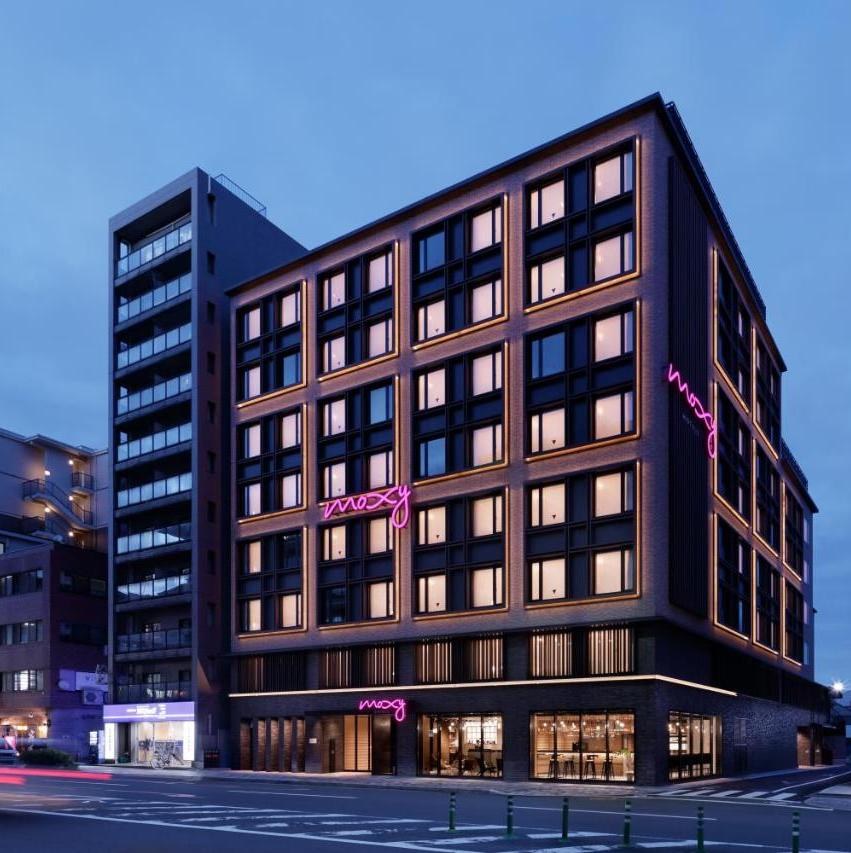

Hotel in Kyoto, Japan
Moxy Kyoto
150Pearl PointsUrban Format, Kyoto Address

About Moxy Kyoto
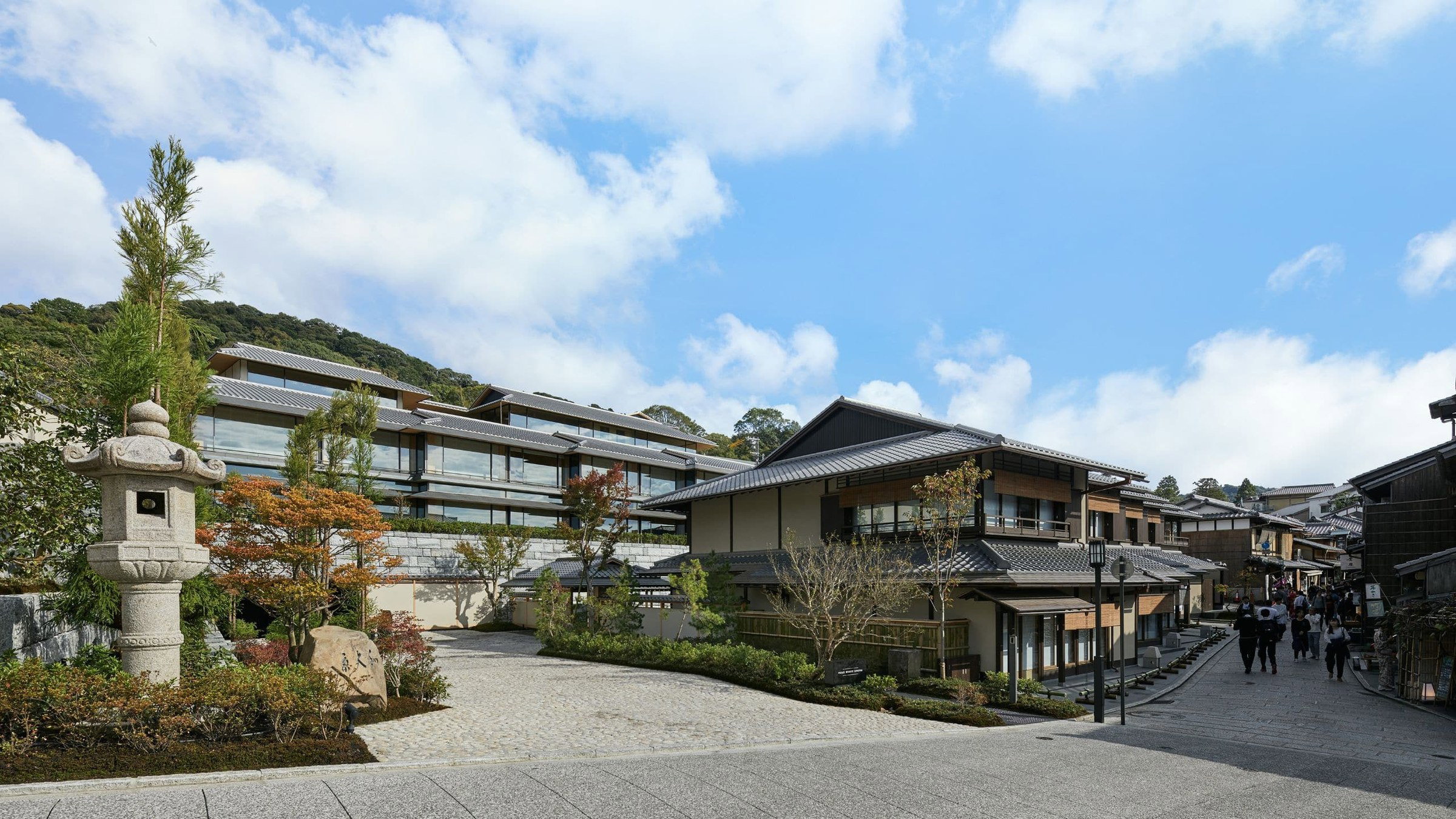
Moxy Kyoto sits in Nakagyo-ku, positioned where international lifestyle hotel formats meet a city that resists easy modernisation. A Michelin Selected property for 2025, it offers a design-led alternative to both the traditional ryokan circuit and the city's larger international flags, with an address in the Nishinokyo corridor that keeps central Kyoto within reach.
Where Kyoto's Design Conversation Gets Complicated
Kyoto's hotel market has never been tidy. On one end, multi-generational ryokan operators in Higashiyama and along the Kamo River hold ground by reputation and ritual. On the other, international luxury brands, including Aman Kyoto and the Four Seasons Hotel Kyoto, have staked positions in the upper tier with properties that translate Japanese spatial principles through a global hospitality lens. The middle has grown considerably more interesting: lifestyle brands entering Kyoto now have to answer a harder question than they face in Tokyo or Osaka. Does the design vocabulary they bring add something to a city whose aesthetic identity is among the most codified in the world, or does it simply exist alongside it?
Moxy Kyoto, at 12 Nishinokyo Nanseicho in Nakagyo-ku, sits inside that question. Moxy operates as Marriott International's youth-oriented lifestyle flag, a brand built around compressed room footprints, social-first common areas, and a design posture that reads as informal without being arbitrary. That formula has worked at scale in European capitals and Asian gateway cities. In Kyoto, the stakes for visual coherence are higher.
The Nishinokyo Address and What It Implies
Nakagyo-ku occupies the geographical centre of Kyoto, and Nishinokyo in particular sits slightly west of the dense tourist corridor that connects Nijo Castle to the Karasuma axis. This is not the same proposition as the Higashiyama addresses held by properties like Higashiyama Shikikaboku, where walking distance to heritage temples and cobbled lanes is part of what you are paying for. The Nishinokyo position is more pragmatic: central enough for subway access, removed enough to carry lower land costs, and set in a neighbourhood that mixes residential Kyoto with light commercial activity.
That kind of address tends to appeal to a specific traveller: someone who wants Kyoto as a base rather than a total immersion experience, who will cover significant daily distances by bicycle or transit, and who sees the hotel primarily as a functional anchor rather than a destination in itself. It contrasts with the orientation of, say, Hoshinoya Kyoto, which is designed as an arrival point you do not leave casually. Moxy Kyoto occupies a different register entirely.
Michelin Selection in Context
The 2025 Michelin Selected designation is the property's primary external credential. Michelin's hotel selection program, which sits below the key (distinction) tier, operates as a quality filter rather than a hierarchy statement. A property earns inclusion by meeting baseline standards across condition, service consistency, and guest experience. It does not imply fine dining on-site, architectural distinction, or exceptional pricing, though any of those can be present. For Moxy Kyoto, the designation places it in a peer set that includes well-run mid-scale and lifestyle hotels, and separates it from the unvetted accommodation market at similar price points.
Across Kyoto's Michelin Selected cohort, the category spans considerable range. Properties like Candeo Hotels Kyoto Karasuma Rokkaku and GRANBELL HOTEL KYOTO share the same designation and operate in broadly comparable lifestyle and design-hotel territory. What the designation tells you is less about the ceiling than about the floor: the property has passed scrutiny and runs at a standard that justifies the credential. For travellers cross-referencing options, that is a meaningful filter. For a deeper view into Kyoto's full accommodation range, see our full Kyoto Prefecture restaurants guide.
Design Language in a City That Has Its Own
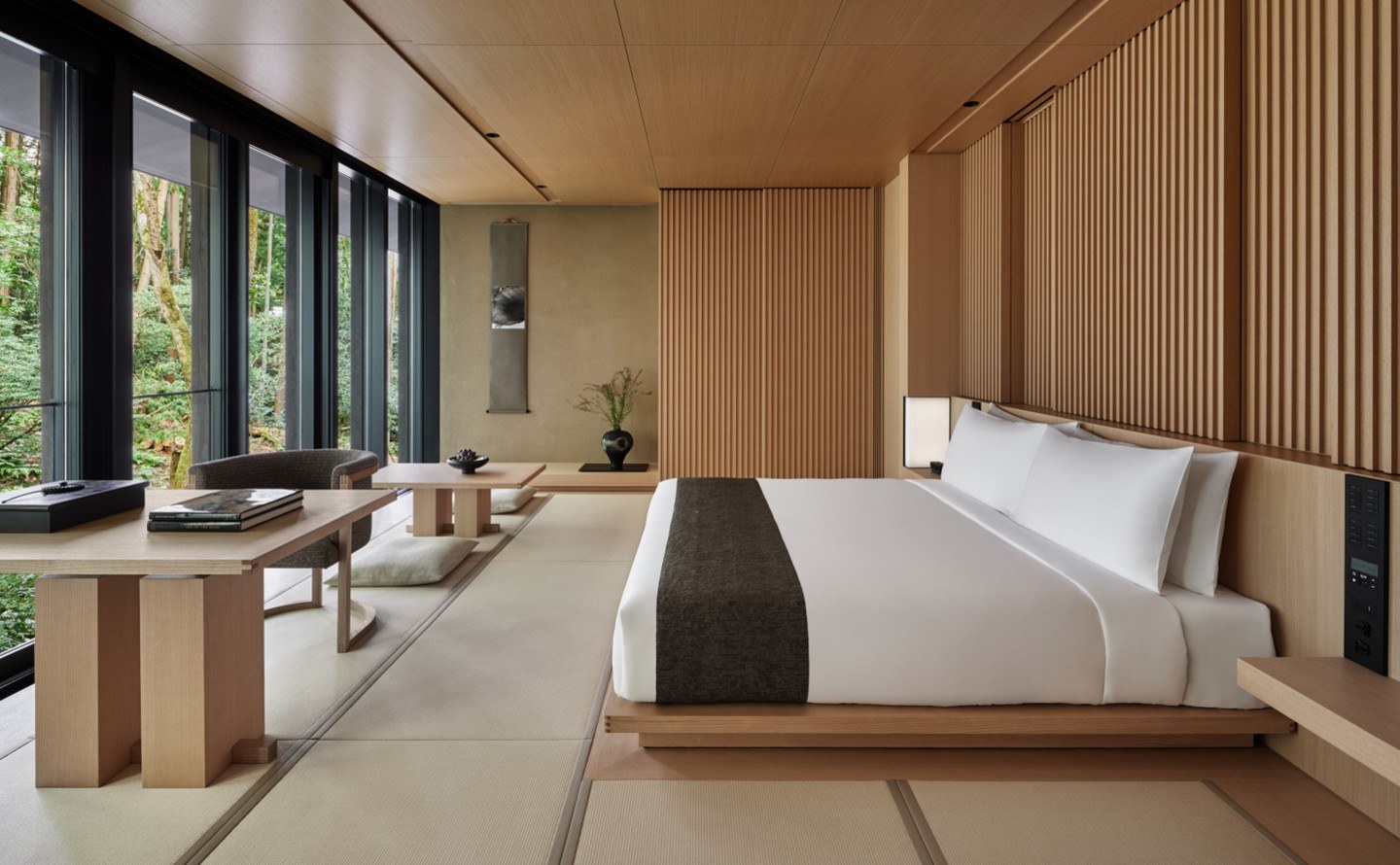
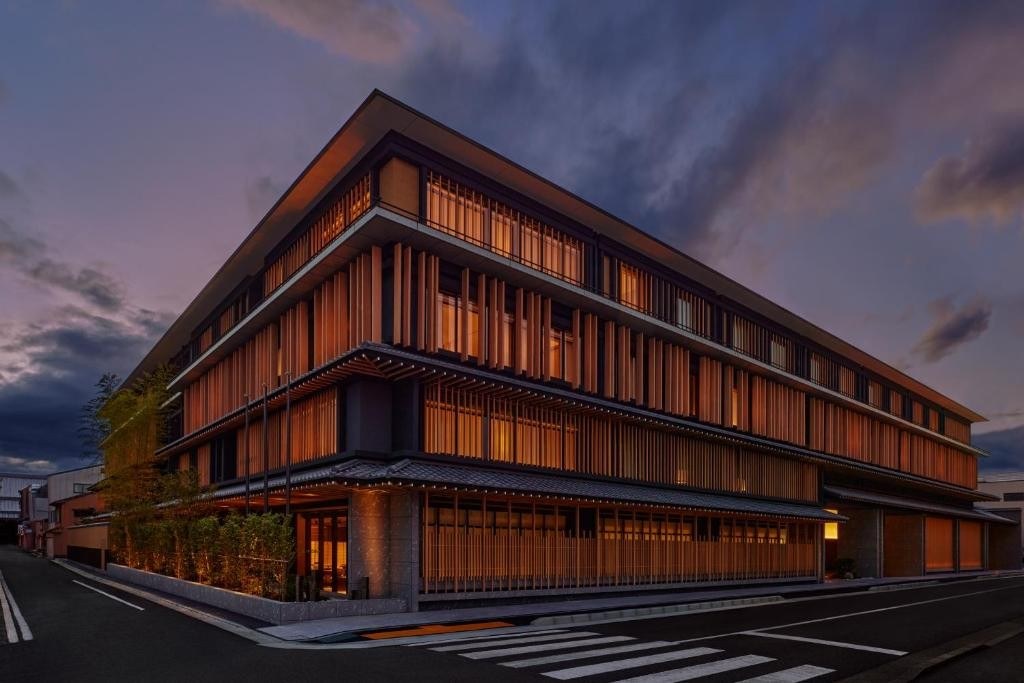
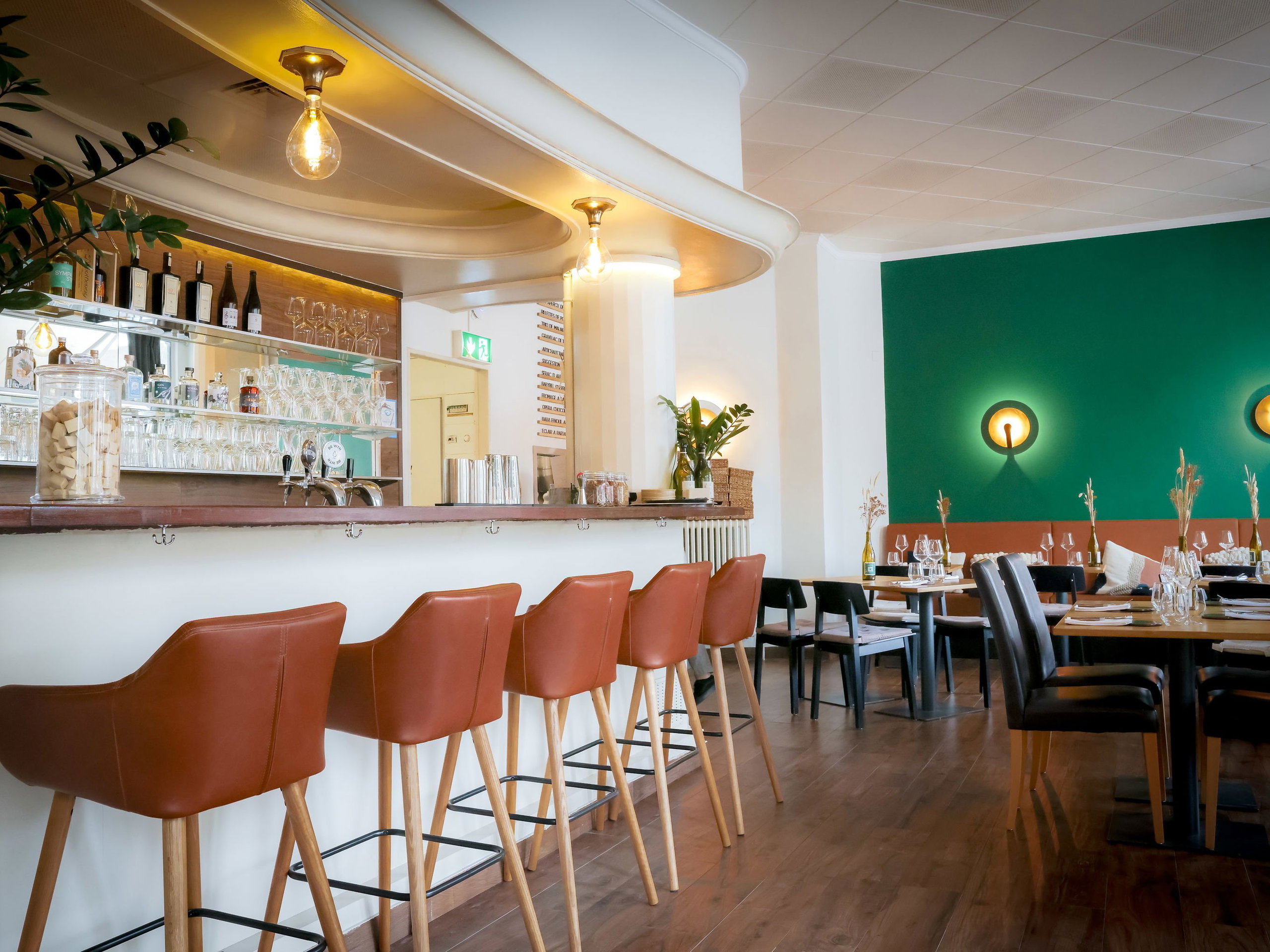
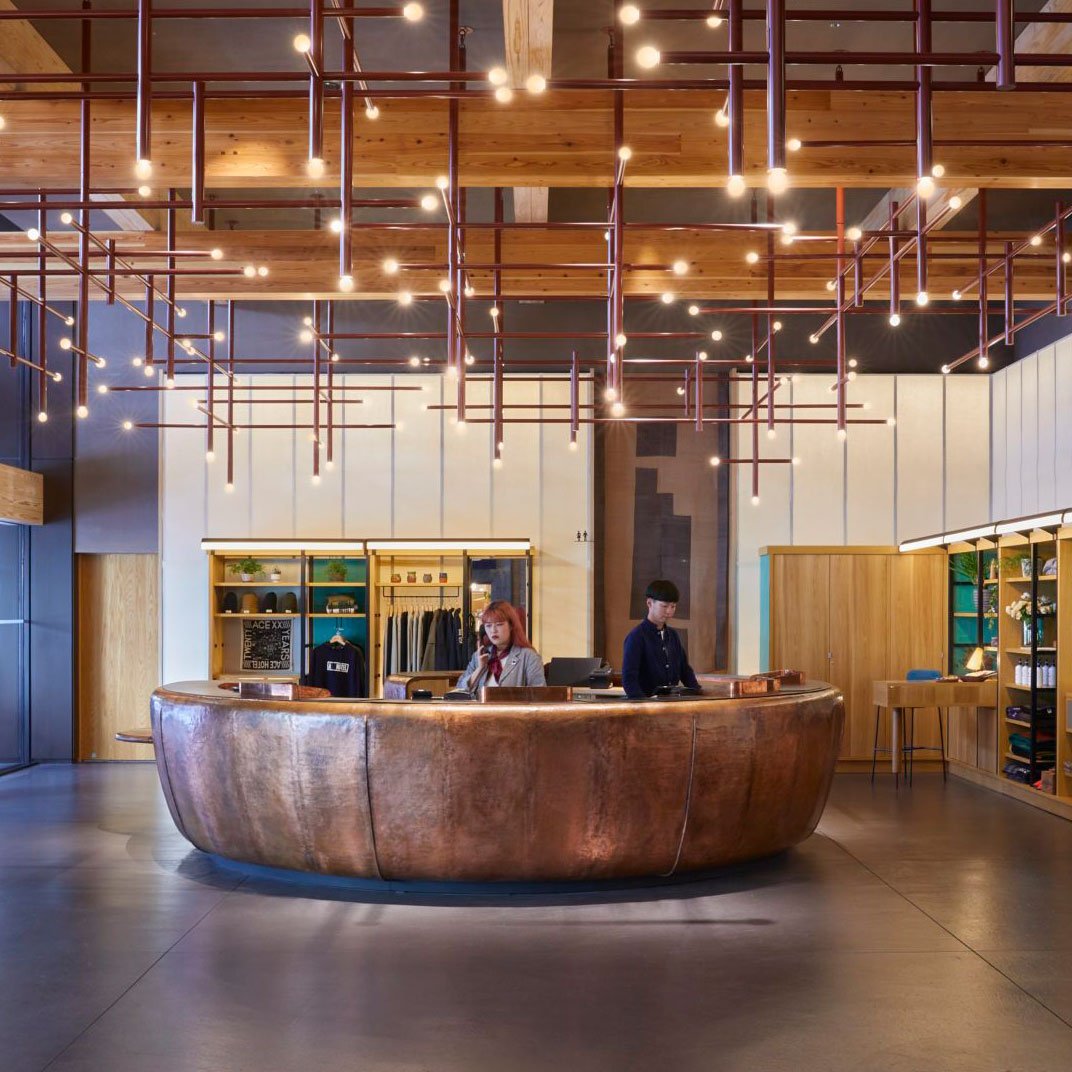
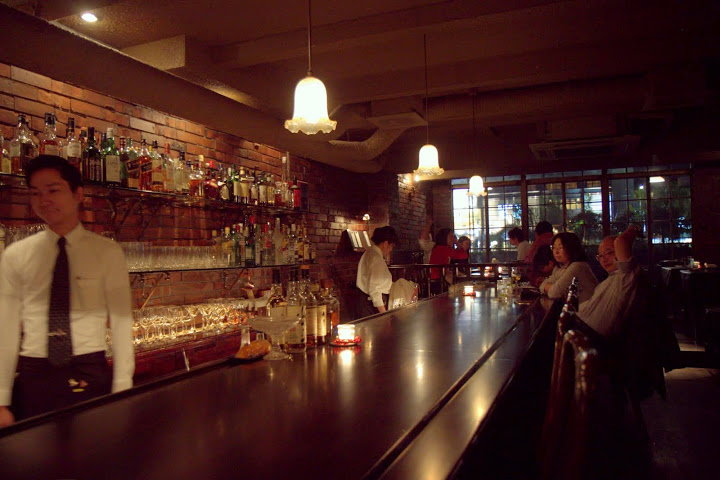
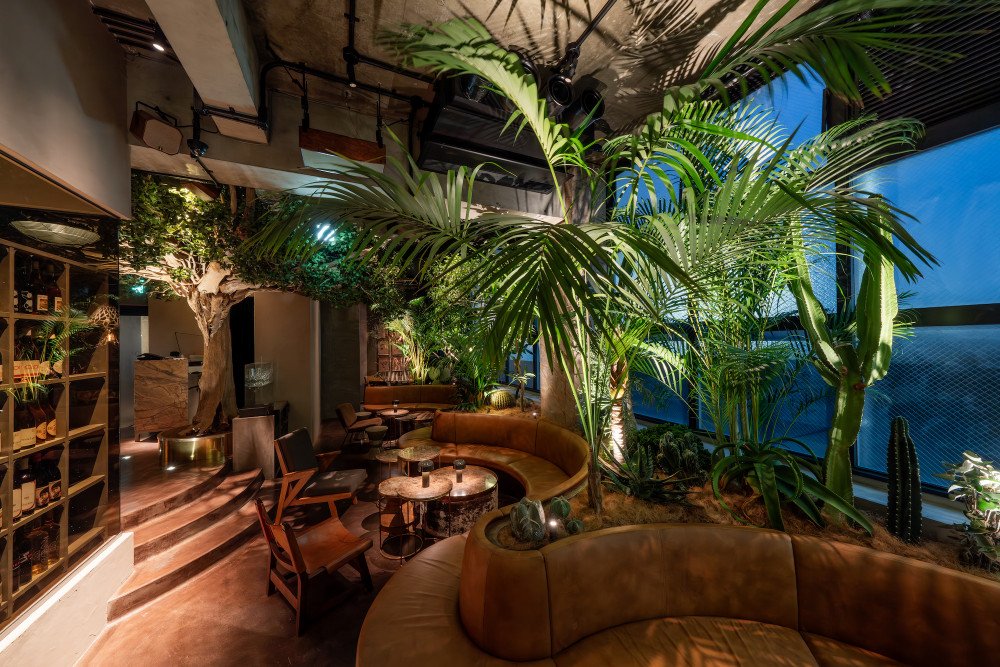
Moxy as a brand deploys a recognisable visual grammar: exposed materials, high-contrast interiors, modular furniture, and social spaces that serve as informal lobbies, bar areas, and work zones simultaneously. The brand's European properties tend to use this vocabulary against industrial or early-twentieth-century building fabric. In Asia, the tension is different. Kyoto's residential and commercial vernacular, even in Nakagyo-ku, carries centuries of visual accumulation: timber lattice, restrained material palettes, proportional discipline in façades. A lifestyle hotel's design ambitions operate in that company whether it intends to engage with the context or bracket itself off from it.
This is the design question that makes Kyoto a more demanding operating environment than comparable Japanese cities. Hotel Kanra Kyoto and eph KYOTO handle it through direct material and spatial reference to Kyoto's architectural tradition. International lifestyle brands handle it differently, typically by creating an interior world that is coherent on its own terms rather than in dialogue with the street. Neither approach is wrong, but they produce different guest experiences and attract different travellers. The Moxy formula leans toward the latter: a designed enclosure rather than a mediation between guest and city fabric.
How It Fits the Broader Japan Picture
Japan's hotel market has diversified considerably over the past decade. At the high end, properties like HOTEL THE MITSUI KYOTO in Kyoto and Bvlgari Hotel Tokyo in Tokyo have raised the capital cost of competing in the luxury tier. At the experiential end, ryokan properties like Gora Kadan in Hakone, Zaborin in Kutchan, and Amanemu in Mie operate in a format category that international brands cannot easily replicate. The space available to lifestyle hotels is the traveller who wants a managed, design-consistent environment without committing to full-immersion Japanese hospitality formats, and who is allocating a mid-range nightly rate rather than a premium one.
Moxy Kyoto addresses that traveller directly. It does not position against Nishimuraya Honkan in Kinosaki-cho or Asaba in Izu. It does not compete with Benesse House in Naoshima for the art-destination traveller. Its competitive set is the functional lifestyle hotel operating in a high-context city at a price point that keeps repeat visits affordable.
Planning Your Stay
The property is located at 12 Nishinokyo Nanseicho, Nakagyo-ku, which places it within the Kyoto subway network's reach; the Tozai Line corridor provides reasonable east-west access across the city. For travellers arriving from Kyoto Station, the ride is short. Booking through Marriott Bonvoy channels will be the primary route for most guests, and the Michelin Selected status makes the property visible within that platform's curated filters. Given Kyoto's persistent occupancy pressure during cherry blossom season (late March to mid-April) and autumn foliage peak (mid-November), advance booking several weeks out is advisable during those windows. Outside peak periods, last-minute availability is more likely. Price data is not available in the current record, but Moxy properties internationally price at the accessible end of lifestyle hotel positioning, below comparable Marriott flags such as W or Edition. Guests who want a more design-intensive experience in central Kyoto may also consider Hotel Kanra Kyoto or eph KYOTO as reference points in a similar zone.
Frequently Asked Questions
- What's the leading suite at Moxy Kyoto?
- Specific room category and suite data for Moxy Kyoto is not available in current records. Moxy properties generally prioritise social infrastructure and room design efficiency over large suite tiers, with the premium room offering typically being a higher-floor or corner room rather than a formal suite. The Michelin Selected designation for 2025 confirms the property meets Michelin's quality baseline, which provides some assurance of condition and consistency. For confirmed room categories and availability, contact Marriott Bonvoy directly or check the brand's official booking channel.
- Why do people go to Moxy Kyoto?
- The combination of a central Nakagyo-ku address, Michelin Selected status, and Moxy's recognisable lifestyle format gives the property a clear value proposition for travellers who want design consistency and location practicality without committing to either ryokan pricing or the full-luxury tier. Kyoto rewards a mobile approach to sightseeing given its spread of heritage sites, and a well-positioned mid-scale hotel with good transit access suits that pattern. The Michelin credential provides a baseline quality signal that helps with cross-market comparison.
- How hard is it to get into Moxy Kyoto?
- Availability at Moxy Kyoto follows Kyoto's broader occupancy rhythms rather than the scarcity dynamics of small luxury properties with limited keys. Demand spikes sharply during cherry blossom season and autumn foliage weeks, and during national holidays such as Golden Week. Booking two to four weeks ahead covers most standard periods; a month or more in advance is advisable for peak dates. As a Marriott property, it is bookable through the Bonvoy platform, which gives it broad visibility and generally reliable inventory management.
- Is Moxy Kyoto a good base for visiting Nijo Castle and the Kyoto Imperial Palace?
- The Nishinokyo Nanseicho address in Nakagyo-ku places Moxy Kyoto in close proximity to both Nijo Castle, one of Kyoto's most visited Edo-period sites, and the western approach to the Imperial Palace grounds. Both are accessible by bicycle or on foot from the Nakagyo-ku corridor, making the location a practical anchor for travellers prioritising those sites alongside the central Kyoto grid. The Michelin Selected designation for 2025 confirms a baseline of operational reliability that supports repeat-visit or longer-stay planning.
Location
12 Nishinokyo Nanseicho, Nakagyo-ku, Kyoto Prefecture, Japan
Kyoto, Japan
Recognized By
Explore Kyoto
Save or rate Moxy Kyoto on Pearl
Keep this venue in your Pearl passport, rate it after you visit, and track it alongside every other place you collect.