
Gayana Eco Resort
Gaya Island, Kota Kinabalu
Hotel in Kota Kinabalu, Malaysia
 Book with Pearl
Why go
Gayana Eco Resort is a better fit for a slow island stay than a practical Kota Kinabalu base. Book it for a celebration or retreat-style trip where the resort is the point; choose a city hotel instead if restaurants, errands, or frequent day plans matter more.
About Gayana Eco Resort
Gayana Eco Resort is a Kota Kinabalu venue to consider when you want the booking decision to rest on confirmed basics rather than on unverified assumptions. The verified public facts are limited: the venue is in Kota Kinabalu, the dress code is smart casual, it is listed by the MICHELIN Guide in the Hotels Selected category for 2025.
Because the verified record is narrow, this guide should be used as a cautious starting point rather than a substitute for checking current availability, policies, accommodation details, arrival requirements directly with the venue. If those operational details matter to your trip, confirm them before booking.
Choose it when the confirmed basics fit your trip
Gayana Eco Resort is best evaluated as a Kota Kinabalu stay with a confirmed MICHELIN Guide Hotels Selected (2025) listing. That recognition is the clearest verified reason to keep it on a shortlist, especially for travelers who prefer properties that have been noticed by a major hotel guide.
The practical value depends on what you need from the stay. Since verified details here do not establish specific facilities, room categories, dining formats, transfer arrangements, or prices, avoid making the decision on assumptions. Treat the venue's own current information as the authority for those points.
Who should book, who should compare alternatives
Gayana Eco Resort suits travelers who are comfortable choosing a Kota Kinabalu property on the basis of its hotel-guide recognition and then confirming the finer details directly. The smart casual dress code is also worth noting when planning what to pack.
For comparison, consider other Kota Kinabalu options such as Hyatt Centric Kota Kinabalu or The Luma Hotel if you are weighing different hotel styles in the city. Bungaraya Island Resort, Gayana Marine Resort, Sutera Sanctuary Lodges may also be useful reference points depending on the kind of stay you are planning.
Planning details
- Location
- Malohom Bay, Pulau Gaya, 88000 Kota Kinabalu, Sabah, Malaysia
- Website
- echoresorts.com/gayana
- Phone
- +60 88-380 390
The take
The Take
The Vibe
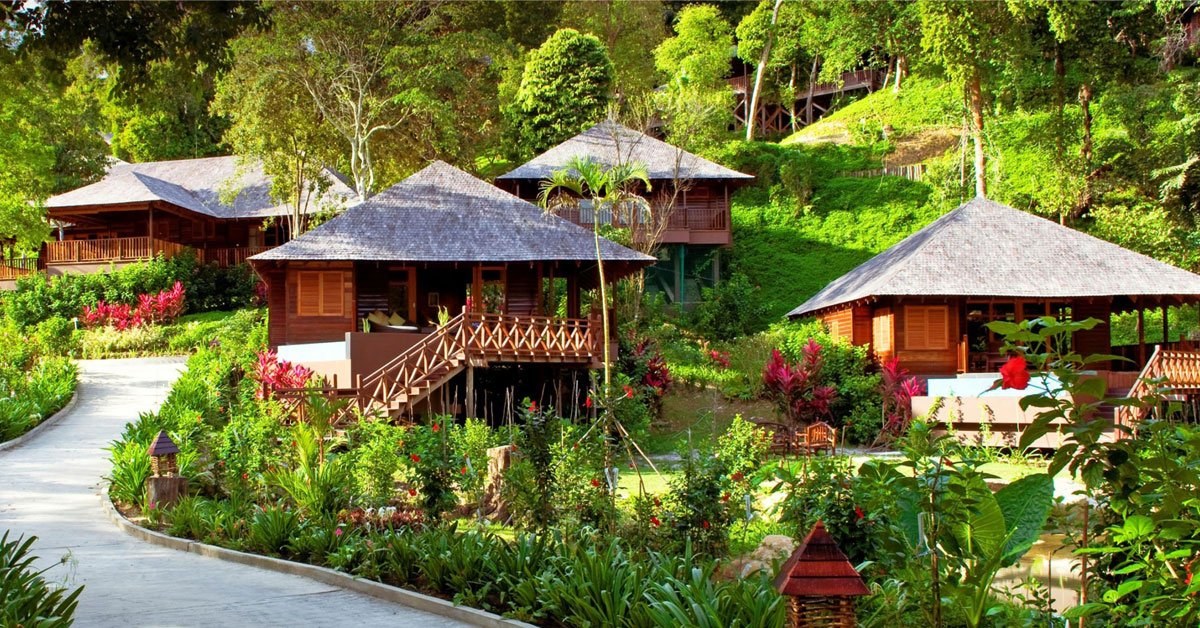
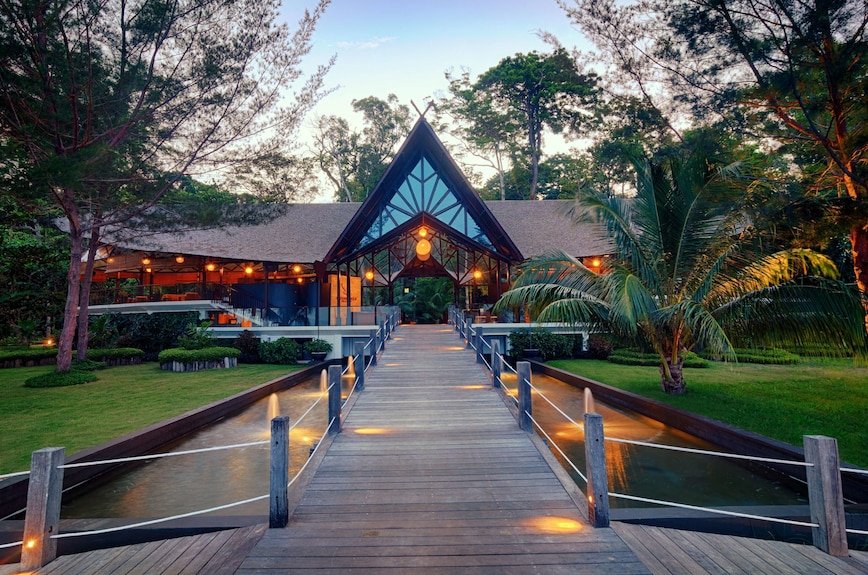
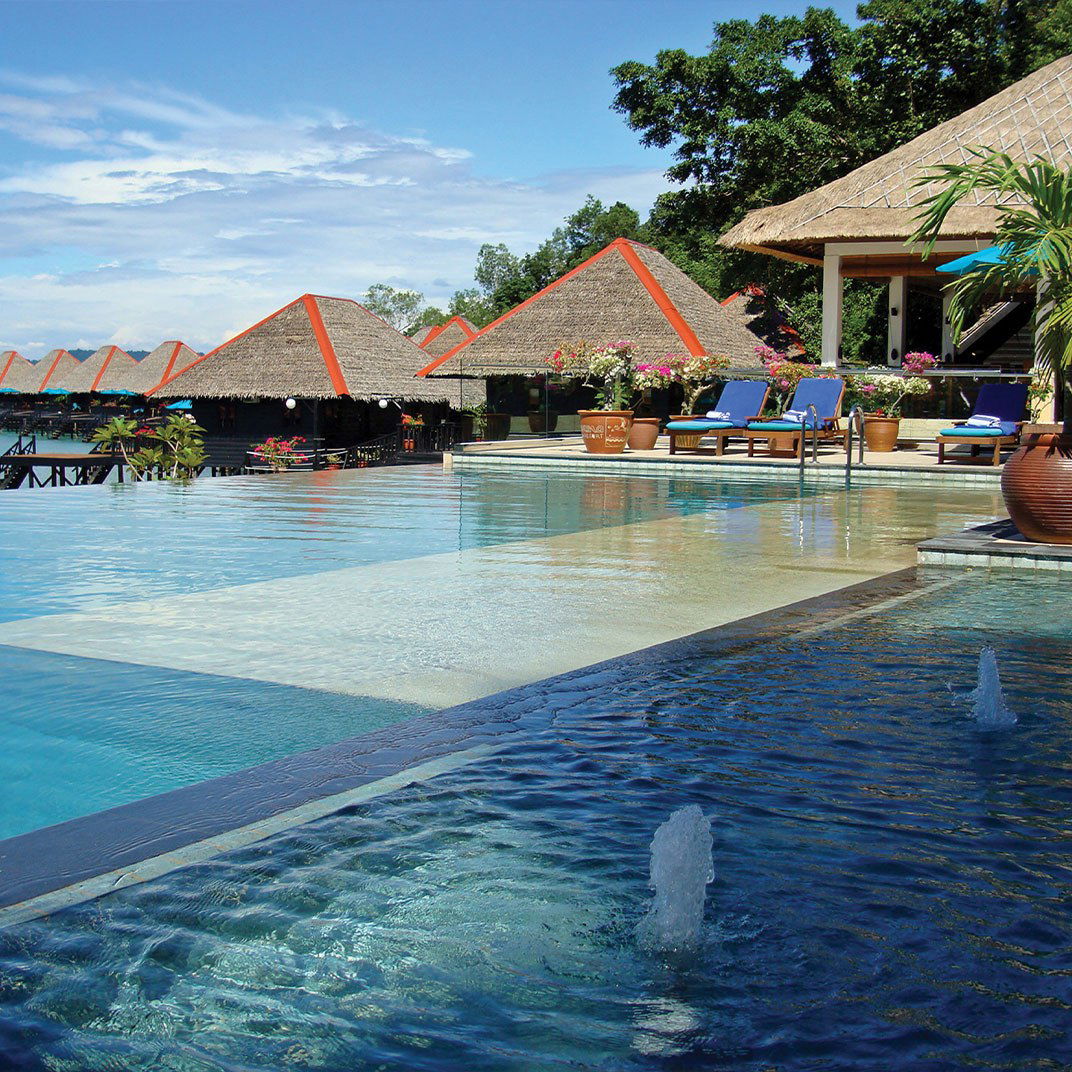
Gayana Eco Resort presents a low-intervention over-water aesthetic that foregrounds the surrounding marine environment. Chalets on timber-and-steel stilts sit above the bay and link by refined boardwalks, creating a small-scale, intimate island compound where local materials and pitched roofs keep architectural fuss to a minimum. The property’s placement inside a protected marine park reinforces a measured restraint: movement is by boat and on foot, and design choices consistently prioritize views and ecological sensitivity over visual drama. The result is a quietly charming, rustic-serene retreat that feels deliberately integrated with its marine setting.
Best For
This resort is best for couples and nature-minded travelers seeking seclusion and marine immersion. It is explicitly framed for honeymooners, romantic getaways, wellness retreats and short escapes, and its position inside a federal conservation area makes it especially appealing for guests focused on quiet restoration and nature observation. The presence of a marine research station gives the property a thoughtful, conservation-oriented character that will resonate with guests interested in marine environments, while the absence of roads and arrival-by-boat access suits travelers seeking a deliberate break from mainland bustle.
Stay Tips
Plan logistics around boat transfers: the resort is reached by a roughly fifteen-minute crossing from the Kota Kinabalu waterfront and is designed for arrival by boat rather than by road. Expect to move on foot across boardwalks once on property—there are no roads—and book any required transfers in advance. Keep luggage manageable for easy movement along timber walkways. Because rooms are oriented toward open water and the design emphasizes the marine setting, confirm arrival times and transfer details with the resort so your first impressions match the intended experience.
Planning details
Location
Malohom Bay, Pulau Gaya, 88000 Kota Kinabalu, Sabah, Malaysia · Directions
Recognition and awards
Also consider
Where to look if this is not the right fit
If the island format feels too limiting, cross-shop Hyatt Centric Kota Kinabalu first. It is the cleaner choice for a city-led trip with easier access to meals and plans.
If the brief is still a resort stay near Kota Kinabalu, compare Bungaraya Island Resort before deciding. It keeps the island-resort idea while giving you another nearby option to price against.
Hotel context
How it compares in Kota Kinabalu
Gayana Marine Resort, Bungaraya Island Resort, Gayana Eco Resort sit in the island-resort decision set, so the main question is not convenience but how much of the trip should revolve around the hotel. Gayana Eco Resort has the clearest recognition signal here through its MICHELIN Guide Hotels Selected listing for 2025, which makes it the safer splurge when experience quality matters more than city access.
Hyatt Centric Kota Kinabalu is the better pick for travelers who want a city base, easier meal planning, less transfer friction. The Luma Hotel plays a similar role for guests who want a design-led stay without committing to an island rhythm. Those options are easier to justify when the itinerary has multiple city stops.
Sutera Sanctuary Lodges is the comparison to make if the trip leans more nature-first than resort-first. Choose Gayana Eco Resort for a polished occasion stay near Kota Kinabalu; choose Hyatt Centric or The Luma when flexibility and simple logistics matter more than ambiance.
Explore Kota Kinabalu
Around this place
Discover more on Pearl
Unlock the full Gayana Eco Resort guide in Pearl, including awards, comparisons, FAQs, planning details, and nearby places.
Compare Gayana Eco Resort
| Venue | Location | Awards |
|---|---|---|
| Gayana Eco Resort | Kota Kinabalu | 2025 Michelin Selected Hotels |
| Gayana Marine Resort | Kota Kinabalu | Preferred Hotels Member 2025 |
| Bungaraya Island Resort | Kota Kinabalu | 2025 Michelin Selected HotelsPreferred Hotels L.V.X. Collection 2025Small Luxury Hotels Member 2025 |
| Hyatt Centric Kota Kinabalu | Kota Kinabalu | No published awards |
| Sutera Sanctuary Lodges | Manukan Island | No published awards |
| The Luma Hotel | Kota Kinabalu Sabah | No published awards |


How Gayana Eco Resort Kota Kinabalu compares with similar nearby venues.
FAQ
Frequently Asked Questions
When is the best time to book Gayana Eco Resort?
The verified record does not provide booking windows, seasonal demand patterns, or minimum-stay guidance. If your dates are fixed, check availability directly with Gayana Eco Resort and note that it is listed by the MICHELIN Guide as Hotels Selected in 2025.
How does Gayana Eco Resort compare to other hotels and resorts?
Gayana Eco Resort is a Kota Kinabalu venue with MICHELIN Guide Hotels Selected (2025) recognition. If you are comparing options, Hyatt Centric Kota Kinabalu and The Luma Hotel are other Kota Kinabalu hotels to review, while Bungaraya Island Resort, Gayana Marine Resort, Sutera Sanctuary Lodges may be relevant depending on the style of stay you want.
Which room category is best at Gayana Eco Resort?
The verified information does not identify a best room category, room layout, view type, or category hierarchy. Check Gayana Eco Resort's official channels for current accommodation descriptions and choose based on the details that matter most to your stay.
What is check-in like at Gayana Eco Resort?
The verified information does not specify the check-in process, arrival timing, or transfer arrangements. Contact Gayana Eco Resort directly for current arrival instructions before you travel to Kota Kinabalu.