
Hotel in Island Of Lanai, United States
Four Seasons Resort Lana\u0027i
200ptsIsland-Isolated Luxury

About Four Seasons Resort Lana\u0027i
The only resort on Lana'i to hold a Michelin Key distinction, Four Seasons Resort Lana'i sits above Manele Bay on an island with no traffic lights and fewer than 3,000 residents. The physical setting — cliffs, ocean, near-total quiet — defines the experience as much as the property itself. Reaching it requires intent, which is precisely the point.
An Island That Filters Its Own Guests
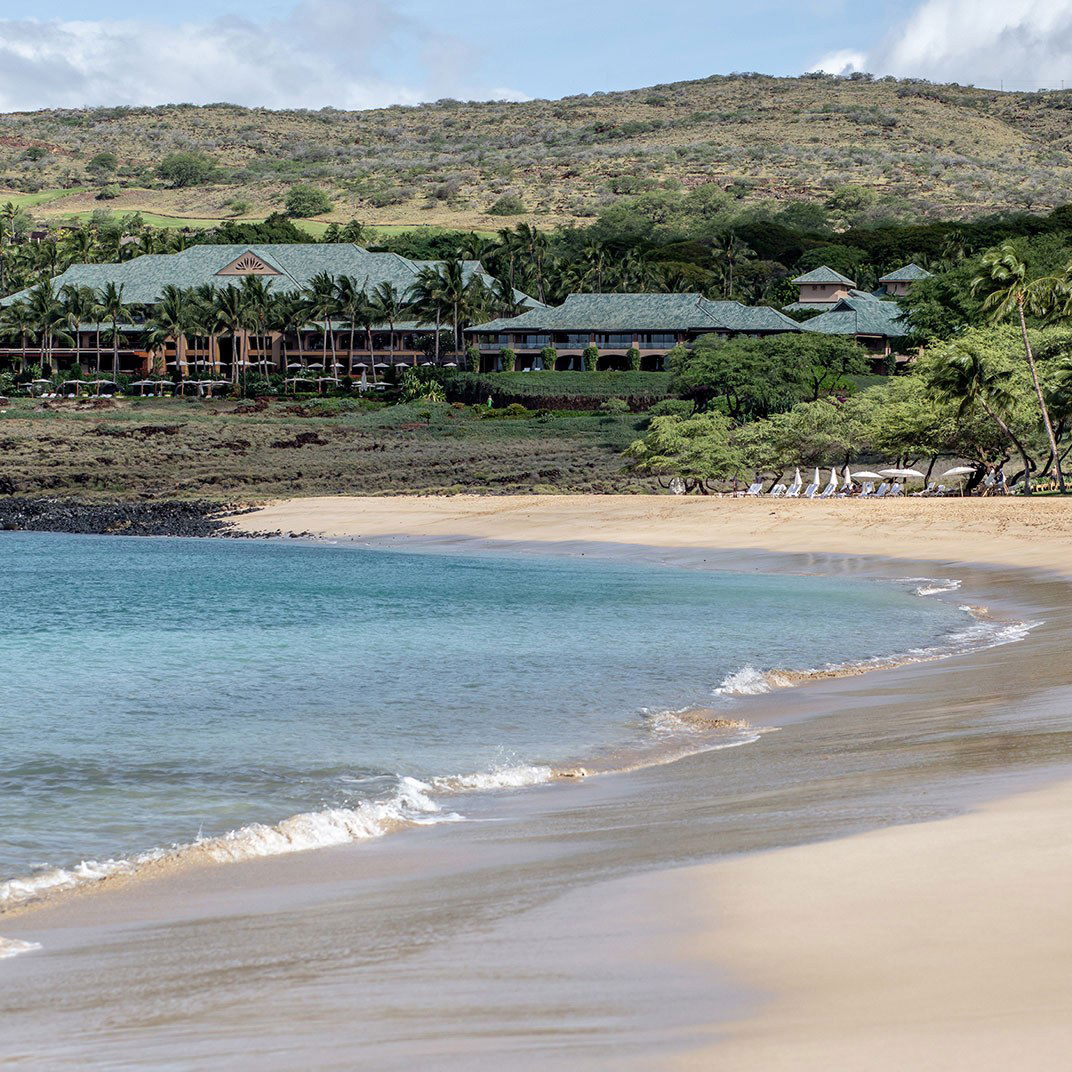
Lana'i is the smallest publicly accessible inhabited island in Hawaii, and getting there requires either a forty-five-minute ferry crossing from Maui's Lahaina Harbor or a short commuter flight. There are no traffic lights on the island. The single town, Lana'i City, sits in the island's interior, a relic of its pineapple-plantation past. The resort, addressed to One Manele Bay Road, occupies the island's southern coast, where volcanic cliffs drop to clear water and a protected bay curves below the property's terrace. This geographical remoteness is not incidental — it functions as a selection mechanism. The guests who arrive at Four Seasons Resort Lana'i, and at Lana'i generally, have already decided they want somewhere that requires effort to reach.
That context matters when assessing the resort's position. Michelin awarded it a Key distinction in its 2025 Hotels & Stays guide, placing it in a category that requires consistent quality across hospitality, design, and overall guest experience rather than dining alone. A Michelin Key is not a restaurant star; it reflects the full physical and service proposition of the property. For a resort on an island this size, that recognition signals something about the property's ability to operate at a competitive level despite the logistical constraints of its location.
The Physical Language of the Property
Hawaiian resort design has long operated in two registers: the grand continental hotel transplanted to the tropics, and the smaller property that attempts to dissolve into its natural setting. The Four Seasons Resort Lana'i belongs more to the latter tradition. The architecture draws on local volcanic stone and works with the terrain rather than against it, positioning guest rooms and public spaces to read the ocean rather than obstruct it. The approach is consistent with how premium resort design has evolved across remote Pacific locations — whether at Kona Village, A Rosewood Resort in Kailua Kona or further afield , where the scarcity of the setting itself becomes the design argument.
The resort's structures follow the cliff line above Manele Bay, which creates a spatial hierarchy: the higher-positioned accommodations read the full arc of the ocean, while lower terraces and pools descend toward the water. This layered arrangement is more architecturally considered than a flat beachfront footprint would allow. Light conditions at this latitude shift quickly , the bay can hold a flat silver calm in the morning and shift to deep blue by midday , and the orientation of the property's primary volumes takes advantage of those changes rather than defaulting to a single fixed view.
In the company of properties that pursue a similar design ethos through extreme natural settings , Amangiri in Canyon Point, where the desert itself is the medium, or Post Ranch Inn in Big Sur, where the architecture clings to coastal ridgeline , the Lana'i property reads as part of a coherent American tradition of high-design remote resort hospitality. The logic is the same across all three: physical isolation is the amenity, and the built environment exists to frame it.
How the Property Sits in the Four Seasons Tier
The Four Seasons brand operates across a wide range of markets, from dense urban addresses like Four Seasons at The Surf Club in Surfside to remote resort formats. The Lana'i property sits at the quieter, more isolated end of that spectrum. Within the broader field of premium Hawaiian accommodation, it competes less with large Maui or Oahu resort complexes and more with the category of low-density properties where the ratio of land and water access to guest count is the primary value argument. The island's limited visitor infrastructure reinforces that positioning , there are no competing luxury hotels on Lana'i, which gives the resort a degree of territorial exclusivity that properties on more developed islands cannot replicate.
That exclusivity carries a parallel obligation: the property has to function as a complete destination rather than a hotel in a larger urban ecosystem. Where a city property like The Fifth Avenue Hotel in New York City or Raffles Boston can lean on the surrounding city for dining, culture, and activity, the Lana'i resort must deliver those elements internally or through the island's own limited but specific offerings , snorkeling in Manele Bay, the island's unpaved interior roads, access to offshore dive sites, and golf on a course exposed to trade winds. This demands a different kind of operational depth than urban luxury formats require.
Atmosphere and What to Expect
The dominant register at Lana'i is quiet. Not the curated quiet of a spa floor or a library corner, but the structural quiet of an island with minimal traffic, no commercial strip, and a resident population in the low thousands. Guests accustomed to resort environments where ambient activity , pool bars, organized programming, proximity to other guests at close range , forms part of the energy will find Lana'i a different proposition. The property's design amplifies rather than compensates for the island's baseline stillness. That makes it particularly suitable for guests who have already cycled through high-activation resort formats and are looking for a different calibration. Properties with a comparable tonal register in other American settings include Little Palm Island Resort & Spa in Little Torch Key and Dunton Hot Springs in Dunton, both of which operate on the principle that deliberate remoteness, rather than programming density, is the primary offering.
The arrival sequence matters here more than at most properties. The ferry crossing from Maui , weather-dependent, roughly forty-five minutes, operating on a fixed schedule , or the commuter flight resets expectations before guests reach the resort. By the time a guest arrives at Manele Bay, they have already committed to the island's pace. The property benefits from that psychological preparation in ways that drive-up resorts cannot.
Planning Your Stay
Peak demand at the resort aligns with broader Hawaiian tourism patterns: winter months (December through February) and summer school holidays draw the highest occupancy across the state, and Lana'i's limited accommodation inventory means lead times are correspondingly longer. For shoulder-season travel , April through early June, or September through early November , booking windows compress, though the island's weather in those periods can be less predictable. The ferry operates from Lahaina Harbor on Maui; travelers arriving by air from the US mainland will typically connect through Honolulu or Maui. The resort sits directly above Manele Bay, which is a short transfer from the island's small airport. Given the property's Michelin Key recognition and its position as the only full-service luxury resort on the island, demand for preferred room categories should be expected to outpace availability during high season. Guests considering comparable levels of design-led resort isolation elsewhere in the American West might also look at Sage Lodge in Pray or Canyon Ranch Tucson, though neither replicates the Pacific island context that defines the Lana'i experience.
Frequently Asked Questions
What should I expect atmosphere-wise at Four Seasons Resort Lana'i?
The atmosphere is defined by the island rather than the property. Lana'i has no commercial resort strip, no traffic lights, and a resident population under 3,000. The resort's position above Manele Bay amplifies that baseline quiet , this is not a property where poolside activity and ambient social energy form part of the offer. Guests arriving from high-activation resort environments will notice the difference immediately. The Michelin Key recognition (2025) reflects a property that delivers on hospitality and design at a high level without relying on volume or programming density to fill the experience.
What's the most popular room type at Four Seasons Resort Lana'i?
The property's architecture is oriented toward ocean views, and accommodations positioned to take the full Manele Bay aspect will carry the strongest demand. The Michelin Key distinction and the resort's position as Lana'i's only luxury property mean that higher-tier room categories are subject to early booking pressure, particularly during winter and summer peak periods. Given that no detailed room configuration data is available here, the Four Seasons reservations team is the correct source for current category availability and pricing.
What's the defining thing about Four Seasons Resort Lana'i?
Territorial exclusivity. There is no competing luxury hotel on Lana'i, and the island's geography , accessible only by ferry or commuter flight , keeps total visitor numbers well below comparable Hawaiian destinations. The Michelin Key (2025) confirms the property operates at a level consistent with international luxury benchmarks, but the more fundamental distinction is structural: the island itself cannot be replicated, and the resort is the only full-service luxury address on it. That combination of geographic scarcity and recognized hospitality quality places it in a narrow peer set globally.
How far ahead should I plan for Four Seasons Resort Lana'i?
If your travel window falls between December and February, or during July and August, plan at least four to six months ahead. The island has limited accommodation inventory at any price point, and the Four Seasons holds the only luxury-tier rooms. Shoulder seasons offer more flexibility, but the ferry schedule and commuter flight connections from Maui or Honolulu add logistical layers that benefit from early confirmation regardless of season. The resort's own reservations channel is the appropriate starting point; third-party booking platforms may not reflect real-time availability for preferred categories.
Recognized By

Related editorial
- Asia's 50 Best Restaurants 2026: The Chairman and Wing Go 1-2 from the Same BuildingThe Chairman takes No. 1 and Wing climbs to No. 2 at Asia's 50 Best Restaurants 2026. Both operate from the same Hong Kong building. Here's what it means.
- Four Seasons Yachts Debut: 95 Suites, 11 Restaurants, and a March 2026 Maiden VoyageFour Seasons I launches March 20, 2026, with 95 suites, a one-to-one staff ratio, and 11 onboard restaurants. Worth tracking if you want hotel-grade service at sea.
- LA Michelin Guide 2026: Seven New Restaurants from Tlayudas to Uzbek DumplingsMichelin's March 2026 California Guide update adds six LA restaurants and one Montecito newcomer, spanning Oaxacan tlayudas, Uzbek manti, and Korean-Italian pasta.
Save or rate Four Seasons Resort Lana\u0027i on Pearl
Keep this venue in your Pearl passport, rate it after you visit, and track it alongside every other place you collect.