

Gorilla Forest Lodge, an A&K Sanctuary
Bwindi Impenetrable National Park, Bwindi Impenetrable Forest
Hotel in Bwindi Impenetrable Forest, Uganda
 Book with Pearl
Why go
Shortlist Gorilla Forest Lodge, an A&K Sanctuary for a Bwindi-first itinerary where the lodge needs to reduce planning friction around gorilla trekking. Its Travel + Leisure It List Hotels recognition in 2026 gives it a clear luxury-travel signal, but the strongest fit is remote leisure, incentive, or executive retreat travel rather than a conventional business stay.
About Gorilla Forest Lodge, an A&K Sanctuary
Gorilla Forest Lodge, an A&K Sanctuary is a venue in Bwindi Impenetrable Forest. It's best to start with the basics rather than assume a specific hotel format, service package, dining program, room setup, or itinerary style.
The dress code is smart casual, and the lodge is recognized on the Travel + Leisure It List Hotels (2026). Travelers should confirm practical details directly with the venue or their booking channel before making plans around meals, amenities, transfers, room categories, or special requests.
Book it for a Bwindi Impenetrable Forest stay
Gorilla Forest Lodge, an A&K Sanctuary is a Bwindi Impenetrable Forest option to shortlist. Check the current booking terms, room information, meal arrangements, and any on-property services through official channels.
The smart-casual dress code is a service-related detail. Do not infer a particular cuisine, price range, service format, activity package, or amenity set from the venue name alone; confirm those items before relying on them for a trip.
Business-travel details
For work-related travel, it is not possible to describe Gorilla Forest Lodge, an A&K Sanctuary as a conventional business hotel or as a meeting-focused property. If the trip depends on work facilities, group services, connectivity, or a specific schedule, confirm those requirements before booking.
The Travel + Leisure It List Hotels (2026) recognition is a useful credibility marker, but it does not replace checking the practical details that matter for a particular stay. Use it as one signal, not as proof of any specific amenity or service.
For broader planning around the area, use our full Bwindi Impenetrable Forest hotels guide and our full Bwindi Impenetrable Forest experiences guide. For food and drink context beyond the lodge, travelers can also scan our full Bwindi Impenetrable Forest restaurants guide and our full Bwindi Impenetrable Forest bars guide.
Planning details
- Location
- Bwindi Impenetrable Forest, Uganda
- Website
- abercrombiekent.com/stays/safari-lodges/gorilla-forest-lodge
The take
The Take
The Vibe
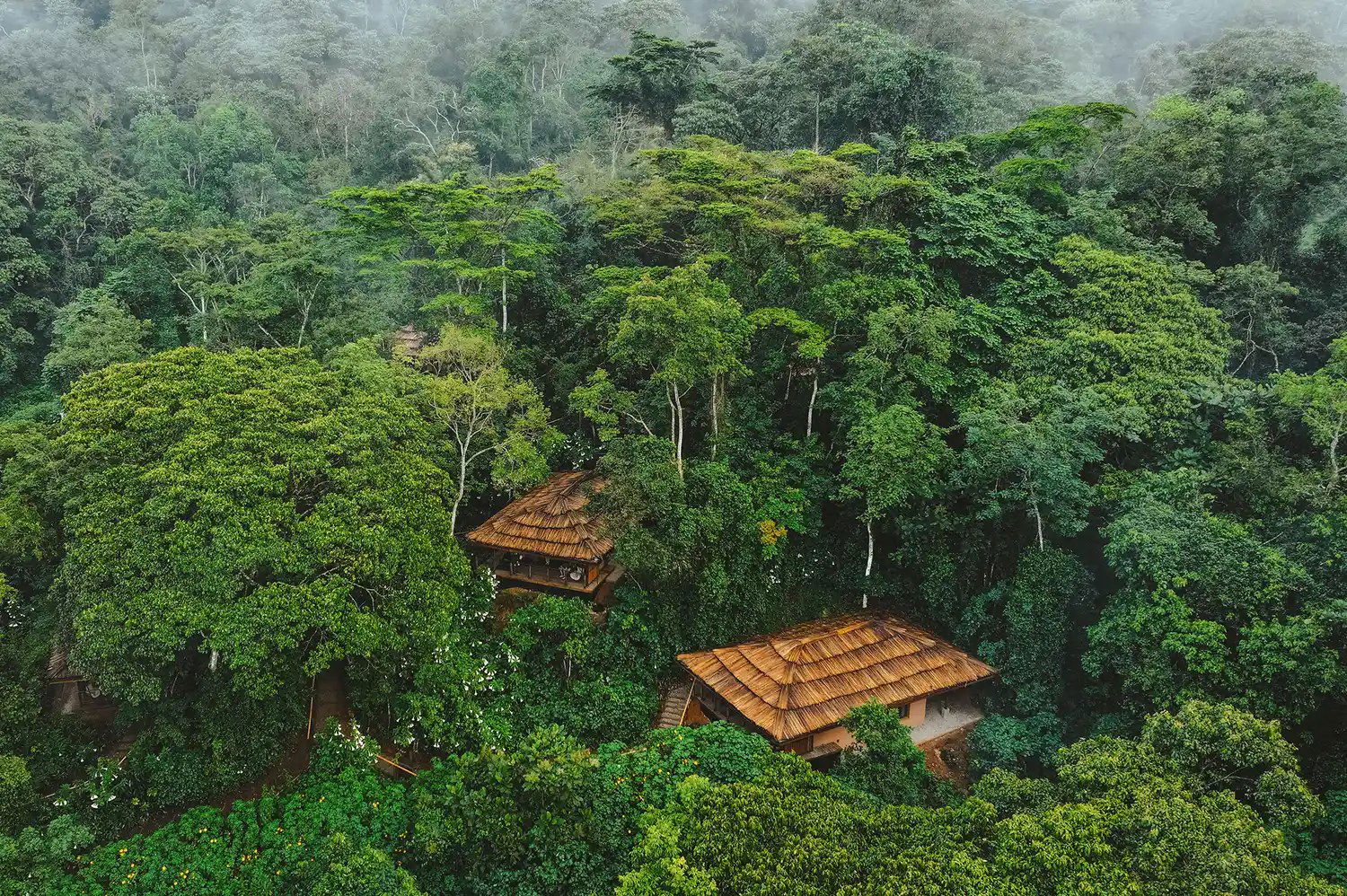
Gorilla Forest Lodge settles into the forest rather than announcing itself, and the experience is defined by that quiet, layered montane canopy. The architecture and finishes read as a restrained, craft-driven response to place: woven banana-leaf walls and regionally informed materials keep design aligned with local practice. With only ten identical guest rooms, the scale feels intimate and deliberately low-key, encouraging attention to birdsong, mist and the rhythms of the rainforest. The lodge presents an understated, contemplative luxury that prioritizes immersion in the UNESCO-protected ecology over theatrical amenities or ostentation.
Best For
This lodge is best for travelers who prioritize immersive nature and wildlife access over conventional resort trappings. Its singular location inside Bwindi Impenetrable National Park makes it ideal for guests focused on gorilla trekking and deep forest encounters, and its small, uniform room configuration suits couples or individuals seeking a quietly personal stay. The design’s engagement with local craft traditions also appeals to travelers who appreciate thoughtful, place-driven design. Those expecting bustling social scenes or extensive onsite entertainment should look elsewhere; the property is about proximity to the forest and serene presence.
Stay Tips
Room selection is simple here—there are ten guest rooms that are identical in configuration, so guests needn’t agonize over picking a specific unit. The lodge’s siting inside the park materially shortens transfers to trekking trailheads, so choose this property if you value minimal transit time to morning treks. Expect quiet dawns beneath the canopy and a stay oriented around the natural environment rather than heavy programming; plan activities around early starts and the lodge’s forest context rather than on-site dining rituals or nightlife.
Venue details
Ambiance
Warm, organic atmosphere with contemporary design using natural materials like papyrus thatch and barkcloth, floor-to-ceiling windows, and a habitat-inspired palette of greens and earth tones.
Tags
Vibe
Best For
Experience
Amenities
View
About the Stay
- Rooms
- 10
- Check-in
- 15:00
- Check-out
- 11:00
- Property Style
- Luxury Eco Lodge Perched High in the Treetops
- Design Style
- Modern Design Forward with Organic Materials and Artisan Craftsmanship
Planning details
Location
Bwindi Impenetrable Forest, Uganda · Directions
abercrombiekent.com/stays/safari-lodges/gorilla-forest-lodge
Recognition and awards

Explore Bwindi Impenetrable Forest
Around this place
Discover more on Pearl
Unlock the full Gorilla Forest Lodge, an A&K Sanctuary guide in Pearl, including awards, comparisons, FAQs, planning details, and nearby places.
FAQ
Frequently Asked Questions
How does Gorilla Forest Lodge, an A&K Sanctuary compare to other Bwindi Impenetrable Forest hotels?
It is in Bwindi Impenetrable Forest, the dress code is smart casual, and it is recognized on the Travel + Leisure It List Hotels (2026). For amenities, room types, dining, and services, compare current details directly with other Bwindi Impenetrable Forest options before booking.
Do loyalty programs work at Gorilla Forest Lodge, an A&K Sanctuary?
Loyalty-program details are not available. Do not plan around points, credits, or status benefits unless the booking channel confirms them in writing.
Is Gorilla Forest Lodge, an A&K Sanctuary good for business travel?
It is not possible to describe it as a business-travel property. If you need work facilities, meetings, connectivity, or other business services, confirm those details directly before booking.
Is Gorilla Forest Lodge, an A&K Sanctuary family-friendly?
Family-specific services and policies are not available. Confirm current age policies, room arrangements, dining, and any family needs with the venue before booking.
How is the dining at Gorilla Forest Lodge, an A&K Sanctuary?
Dining details such as cuisine, meal format, chef, and price range are not available. The dress code is smart casual, but you should confirm meal arrangements directly if dining matters to your stay.