
Hotel in Atami, Japan
The Hiramatsu Hotels \u0026 Resorts Atami
150ptsOnsen-Anchored Refinement

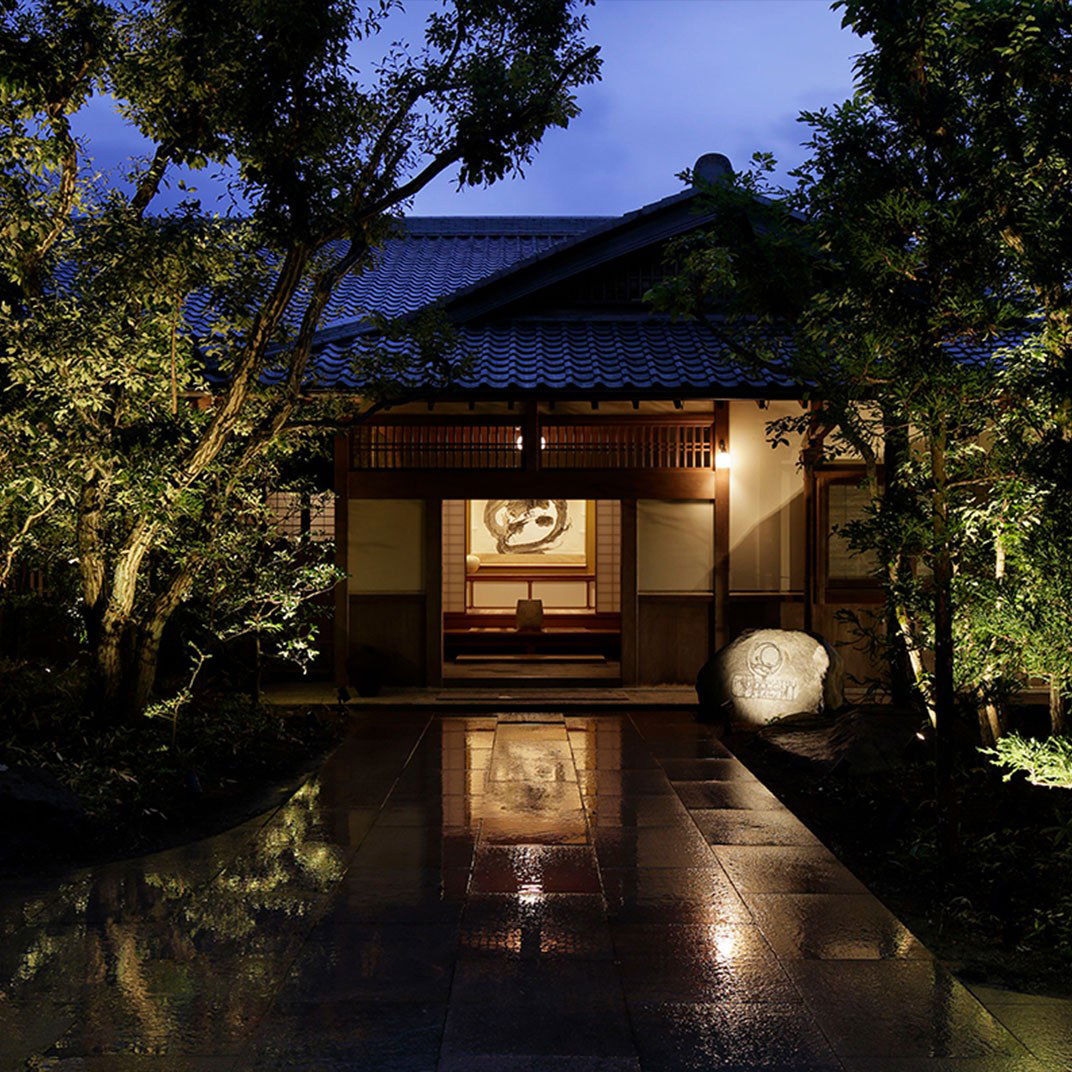
About The Hiramatsu Hotels \u0026 Resorts Atami
Selected by the Michelin Hotels guide 2025, The Hiramatsu Hotels & Resorts Atami sits within one of Japan's most storied onsen resort towns, bringing the Hiramatsu group's French-inflected hospitality and dining standards to a coastline long associated with Tokyo-era weekenders. The property offers a concentrated version of the brand's culinary programme against a backdrop of Izu Peninsula views and mineral-rich hot spring culture.
Atami and the Logic of the Onsen Resort Hotel
Atami has occupied a specific place in the Japanese leisure imagination for well over a century. Positioned roughly ninety minutes from Tokyo by shinkansen, the town became the default escape for urban professionals seeking thermal waters and coastal air, and its hotel stock reflects that long history: large ryokan-style properties built for group travel, smaller family-run inns, and, more recently, design-forward properties targeting a more curated market. The Hiramatsu Hotels & Resorts Atami sits in that newer tier, bringing a hospitality group with deep roots in French cuisine to a town where kaiseki and traditional Japanese fare have historically dominated the dinner conversation.
For context on what surrounds the property in Atami's competitive set, Atami Izusan Karaku and Pearl Star Hotel Atami represent the more traditional and mid-market ends of the local offer. The Hiramatsu property pitches above both in brand positioning, drawing on a group identity built around professional kitchen standards and French culinary fluency. Our full Atami restaurants guide maps that broader dining picture across the town.
The Hiramatsu Culinary Identity in Context
Understanding what the Hiramatsu group brings to Atami requires a brief look at how the brand has operated across its portfolio. The group's properties consistently frame their dining programmes around French technique applied to Japanese seasonal ingredients, a positioning that places them in a specific niche within Japanese resort hospitality. This is not the kaiseki-first approach you would find at a property like Gora Kadan in Hakone or Asaba in Izu, where Japanese culinary tradition anchors everything from the room service aesthetic to the plating philosophy. Hiramatsu properties occupy a middle register: informed by French discipline, grounded in Japanese produce, and designed for a guest who travels between both culinary worlds with ease.
That positioning matters in Atami particularly because the Izu Peninsula's produce story is strong. The region's seafood, citrus, and wasabi cultivation give any kitchen with serious intent strong raw material to work with, and a French-trained kitchen has specific tools for showcasing marine products in ways that differ from, but do not compete with, the local kaiseki tradition.
The property's 2025 Michelin Hotels selection confirms that the physical and service standards match the culinary ambitions. Michelin's hotel selection process evaluates comfort, character, and consistency rather than room count or brand affiliation, which gives the designation weight as an independent endorsement. Comparable Michelin-selected resort hotels in Japan tend to occupy a tier where design intent, dining quality, and service discipline converge, and the Atami property's inclusion places it within that cohort.
Where This Property Sits in Japan's Resort Hotel Spectrum
Japan's premium resort hotel market has stratified considerably over the past decade. At one end sit the Aman properties, with Amanemu in Mie representing the ultra-low-key, high-ritual approach to onsen hospitality at price points that reflect genuine scarcity of rooms. At the other end, a wave of newer boutique and branded properties has addressed a market that wants design coherence and kitchen quality without committing to the full Aman price register. The Hiramatsu Atami property occupies that second tier alongside properties like Fufu Nikko, Fufu Kawaguchiko, and Zaborin in Kutchan.
Within the Hiramatsu group's own footprint, the Atami property has a sibling in The Hiramatsu Hotels & Resorts Ginoza in Ginoza, Okinawa. Both apply the same brand logic to very different regional contexts, which is itself a useful signal about how the group thinks: the culinary programme travels with the brand, adapting to local produce rather than replacing the framework entirely.
For guests whose reference points are urban luxury, the Atami property represents a different register from a city hotel like Bvlgari Hotel Tokyo or HOTEL THE MITSUI KYOTO. The proposition here is resort-mode rather than city-base: thermal waters, coastal scenery, and a dining programme designed to anchor evenings rather than compete with a city's restaurant scene. The trade-off is that you are committing to the hotel's kitchen as your primary dining option, which makes the quality of that kitchen a more consequential factor than it would be in Tokyo or Kyoto, where you can walk out to a dozen credible alternatives.
The Onsen Context and the Physical Setting
Atami's thermal waters are the underlying reason the town exists as a resort destination, and any premium property here integrates the onsen offer into its core guest experience. The address at 1993-237 Atami places the property within the town's hillside terrain, where the characteristic topography of the Izu Peninsula, steep slopes running down toward Sagami Bay, shapes what guests see from their rooms and how the property is arranged across its site. Properties in this position typically orient their key rooms and bathing facilities toward the water view, using the landscape as a design element rather than incidental backdrop.
For guests comparing Atami against other onsen-driven resort destinations, the relevant peer destinations include Hakone (more accessible from Tokyo, more architecturally dense), the Izu Peninsula's quieter southern reaches, and the Kinosaki hot spring town, where Nishimuraya Honkan represents the deep-tradition end of ryokan hospitality. Atami sits closer to Tokyo than all of these alternatives and carries a slightly more accessible, slightly more urban character as a result.
Planning a Stay: Practical Orientation
The shinkansen connection from Tokyo Station to Atami (JR Tokaido Shinkansen, roughly 50 minutes on the Kodama service) makes the property viable as a two-night escape rather than requiring a long-haul domestic journey. That accessibility cuts both ways: Atami fills up on peak domestic travel weekends, particularly Golden Week (late April through early May), the Obon period in mid-August, and the New Year window, so advance planning for those dates matters. Shoulder-season visits in November and March offer quieter conditions and the chance to experience the town's plum blossom (February) and autumn foliage seasons respectively.
Guests comparing this property against further-flung alternatives in Japan's resort circuit might also consider Kamenoi Besso in Yufu, Sekitei in Hatsukaichi-shi, Satoyama-Jujo in Niigata, or Nasu Mukunone in Nasu depending on their appetite for travel distance and regional character. For a Pacific island alternative within the broader Japanese geography, Halekulani Okinawa, Jusandi in Ishigaki, and Benesse House on Naoshima offer meaningfully different experiences at comparable or higher price points. The Atami property's case rests on proximity to Tokyo, a credible French-accented dining programme, and Michelin-confirmed standards in a town that is well-established but rarely oversaturated in the premium tier.
Frequently Asked Questions
- What is the atmosphere like at The Hiramatsu Hotels & Resorts Atami?
- The property's atmosphere reflects the Hiramatsu group's French-influenced hospitality model applied to a traditional Japanese onsen destination. Atami's hillside setting, thermal spring culture, and Sagami Bay views provide the physical backdrop, while the hotel's culinary programme and service approach orient the experience toward the kind of considered, dining-anchored stay that the brand has built its reputation on across its portfolio. It sits closer to polished contemporary resort than deep-tradition ryokan. For a broader picture of what Atami offers as a destination, see our full Atami guide.
- What is the leading suite at The Hiramatsu Hotels & Resorts Atami?
- Specific suite configurations and names are not available in current published data for this property. What the Michelin Hotels 2025 selection does confirm is that the accommodation standards meet a threshold of comfort and character that Michelin's hotel evaluators apply consistently across their selected properties. Within the Hiramatsu group, premium room categories at their properties typically prioritise ocean or landscape-facing orientation, private onsen access, and spatial generosity over room count. Guests seeking the group's most expansive offer should contact the property directly to confirm current room category availability and pricing. For international reference points on what Michelin-tier luxury looks like in a grand hotel context, Badrutt's Palace in St. Moritz, Hôtel de Paris Monte-Carlo, and The Fifth Avenue Hotel in New York illustrate the tier. The Fufu Kyu-Karuizawa Restful Forest in Karuizawa and GOTO RETREAT by Onko Chishin offer useful domestic comparisons for guests assessing premium suite formats within Japan's boutique resort category.
Recognized By

Similar venues by awards
Related editorial
- Asia's 50 Best Restaurants 2026: The Chairman and Wing Go 1-2 from the Same BuildingThe Chairman takes No. 1 and Wing climbs to No. 2 at Asia's 50 Best Restaurants 2026. Both operate from the same Hong Kong building. Here's what it means.
- Four Seasons Yachts Debut: 95 Suites, 11 Restaurants, and a March 2026 Maiden VoyageFour Seasons I launches March 20, 2026, with 95 suites, a one-to-one staff ratio, and 11 onboard restaurants. Worth tracking if you want hotel-grade service at sea.
- LA Michelin Guide 2026: Seven New Restaurants from Tlayudas to Uzbek DumplingsMichelin's March 2026 California Guide update adds six LA restaurants and one Montecito newcomer, spanning Oaxacan tlayudas, Uzbek manti, and Korean-Italian pasta.
Save or rate The Hiramatsu Hotels \u0026 Resorts Atami on Pearl
Keep this venue in your Pearl passport, rate it after you visit, and track it alongside every other place you collect.