
Soho House does not have a public waitlist you join and then wait your turn. The application is reviewed by a membership committee, and the committee decides, with no published timeline, no guaranteed outcome, and no appeals process. Soho House New York is currently accepting new membership applications, reviewed quarterly by the Committee.1 For most cities, the realistic answer is: apply, get a member to support you, and expect to wait months before hearing anything. In some markets (London's original Soho House on Greek Street, New York's Meatpacking location), the wait runs longer and the rejection rate is higher. In newer or smaller markets, the door is meaningfully easier to open. The single best route for most readers is a warm referral from an existing member who is active and in good standing, without one, your application sits in a much larger pile.
Why Soho House Books Out Its Membership in Competitive Markets
The Membership Committee reviews applications quarterly.2 Soho House positions itself as a club for people in the creative industries, film, fashion, music, advertising, media, architecture, and adjacent fields. The committee is looking for professional fit with that identity, not just the ability to pay annual dues. That framing creates a real filter: a finance professional or tech founder with no creative-sector footprint will have a harder time than a mid-career art director or documentary filmmaker, even if the former earns more.

The club also has a global footprint that complicates the picture. Soho House operates houses across North America, Europe, Asia, and beyond, and membership at one house grants access to all of them. That cross-property access makes each membership more valuable, and makes the committee more selective, because they are effectively granting access to a global network, not just a single dining room.
Demand is highest in the founding markets. Soho House previously closed its application in New York, Los Angeles, and London locations due to overcrowding.3 Cities where Soho House has opened more recently tend to have shorter queues, and some applicants in those markets report faster turnarounds. If you have flexibility on which house anchors your membership, that geography arbitrage is worth considering.
The Channels That Actually Work
There are three realistic routes into Soho House,2 ranked by how reliably they produce a result:
1. Member referral. An existing member who knows your work and is willing to actively support your application, not just lend their name, is the most effective lever available. The committee weighs referrals from engaged members more heavily than cold applications. To propose a new member, the applicant adds the proposer's name and email address to the application form.4 If you know someone who is a regular at their local house, ask them directly. If you know someone who joined years ago and rarely visits, their referral carries less weight.
2. Direct application with a strong creative portfolio. You can apply without a referral through the Soho House membership page. The application asks for your professional background, your creative work, and why you want to join. A thin or generic application, "I travel frequently and enjoy good food", is unlikely to move forward. A specific, credentialed creative profile with a clear body of work gives the committee something to evaluate.
3. Soho Friends membership as a bridging route. Soho Friends is Soho House's lower-tier membership, available without committee review. Soho Friends members can upgrade to House membership by applying, which would be reviewed by the committee at their next quarterly meeting.5 It puts you inside the ecosystem, visible to members and staff, which can support a subsequent application.
There is no card-program shortcut here. American Express Centurion, Chase Sapphire Reserve, and similar programs do not grant Soho House membership or bypass the committee process. Members are allowed to bring three guests with them to the Houses at any time; more can be arranged by calling the House before arrival.4 Repeated guest visits do not substitute for membership and do not accelerate your application.
When the Committee Actually Responds
Applicants report waits ranging from a few weeks to over a year, with no consistent pattern that maps to application quality or referral strength alone. The volume of applications in a given market appears to be the primary variable.

If you apply and hear nothing for several months, the standard advice is to follow up once, politely, through the membership inquiry channel, not to reapply or submit a second application. Submitting duplicate applications does not help and may flag your file negatively.
Because no specific timeline is published or verifiable, treat any figure you read elsewhere as anecdotal. Confirm the current state of your application directly with Soho House's membership team. Membership starts when the welcome email is sent; it is not possible to pick a start date.4
The Money-vs-Time Tradeoff
Soho House membership is not cheap, and the cost structure rewards commitment. Annual membership prices vary significantly by tier and location; confirm the current fee structure directly with Soho House.6 Soho House New York membership starts from $950 quarterly ($475 for Under 27 members).1 Soho House encourages people under 27 to apply, offering lower membership costs until their 30th birthday.3 Because rates change, confirm the exact fee structure during your application process rather than budgeting from a figure you read online.
The time cost is the harder variable. If you apply cold with no referral in London or New York, you may wait a year or more with no guarantee of acceptance. If you can get a strong referral from an active member in a newer market, you might hear back in weeks. Money does not buy queue position. The patient route, build a genuine creative profile, cultivate a real referral, apply in a less saturated market, is the only route that reliably improves your odds.
How to Improve Your Application Before You Submit
The committee is evaluating whether you fit the creative-industries identity of the club. Before applying, audit your application against that lens. A few practical moves:
Make your creative work findable. If your professional website is thin or your portfolio is behind a login, fix that before you apply. The committee will look.
Be specific about which house you want to join and why. Generic applications that could apply to any club in any city read as low-effort. Name the house, reference the community you want to be part of, and connect it to your actual work.
Choose your referees carefully. One active, engaged member who knows your work is more valuable than three members who barely know you. Ask the person who can speak to what you actually do, not the person with the most impressive title.
If you are in a field that sits at the edge of the creative industries, tech, finance, law, frame your application around the creative work you do or support, not your primary professional identity. The committee is not looking for a reason to reject you; they are looking for a reason to say yes.
Inside a Soho House: What You're Actually Paying For
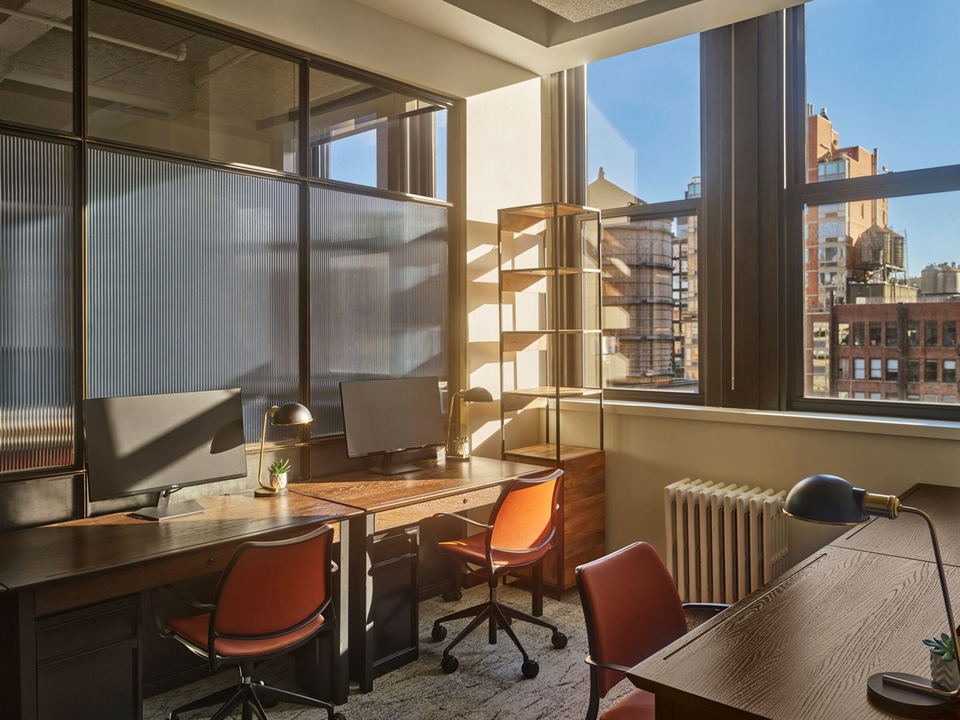
The physical experience varies significantly by property, but the format is consistent: a private members' club with food and drink, workspaces, screening rooms, rooftop pools (in many locations), and a program of events ranging from film screenings to panel discussions to member parties. Soho House New York has a 44-seat screening room1 and 44 bedrooms.1 The design aesthetic across houses tends toward worn-in comfort, vintage furniture, low lighting, the deliberate absence of the corporate hotel polish you'd find at a Four Seasons or a Rosewood.

The crowd is the product as much as the space. On a weekday afternoon, you'll find people working on laptops alongside people taking meetings over lunch. On a weekend evening, the energy shifts toward social. The mix skews toward creative professionals in their 30s and 40s, with a visible contingent of people who are recognizable in their industries if not necessarily famous to the general public. In London and New York, the rooms carry more density and more noise; in smaller markets, the atmosphere is quieter and the regulars know each other.
Bedrooms are available at most houses for members and their guests, typically at rates below comparable boutique hotels in the same neighborhood, one of the more concrete financial benefits of membership for frequent travelers. Food and drink quality varies by property but is generally competent rather than destination-worthy; you are not joining for the cooking.
The events program is where engaged members extract the most value. Screenings, talks, and member-only parties are included or lightly priced, and the access to people in adjacent creative fields is the thing that keeps long-term members renewing. Soho Friends screenings go live midday, one week before the screening date; members have 24 hours to enter the Screening Lottery.5
Who You'll Actually Sit Next to at Soho House
The crowd is not as uniformly creative as the application process implies. In practice, the membership includes a significant number of people who work adjacent to creative industries, brand managers, startup founders, PR professionals, agents, alongside the filmmakers, photographers, and designers the club nominates as its core constituency. In the most established houses, you will also find a layer of legacy members who joined years ago when the criteria were applied differently.
What the room is not: a networking club in the traditional sense. The culture actively discourages overt business solicitation. Members who treat the space as a lead-generation venue tend to be noticed and not warmly. The social contract is closer to a good bar than a conference, conversations happen, connections form, but the transactional energy is kept low.
Alternatives Worth Considering If Soho House Doesn't Work Out
Private Members' Clubs: Soho House vs. the Realistic Alternatives
| Club | Application difficulty | Creative-industries focus | How to apply | Key difference |
|---|---|---|---|---|
| Soho House (established markets) | High, committee review, referral helps significantly | Core identity | Online application + member referral | Global access across all properties |
| The AllBright (London/LA) | Moderate, women-only, professional focus | Partial, broader professional scope | Direct application | Women-only; strong programming |
| NeueHouse (NYC/LA) | Moderate, creative and media focus | Strong, media, arts, entertainment | Application + referral preferred | Workspace-forward; fewer social amenities than Soho House |
| The Arts Club (London) | High, traditional committee, long waitlist | Arts and culture emphasis | Proposer + seconder required | More formal; older membership demographic |
| Casa Cipriani (NYC) | High, invitation-heavy | Fashion, finance, media overlap | Referral-driven; limited public application | More social/nightlife-oriented than workspace-focused |
NeueHouse is the closest functional substitute for creative professionals who want a workspace-anchored club with a strong events program. The Arts Club suits members who want a more traditional London institution with a genuine arts focus. Casa Cipriani skews more social and less workspace-oriented, which suits some members better than Soho House's hybrid format.
Who Should Actually Apply to Soho House
Apply if you work in or directly adjacent to the creative industries, travel frequently enough to use multiple houses, and have at least one active member who can genuinely vouch for your work. The membership pays for itself fastest for people who use the hotel rooms regularly, attend the events program, and treat the space as a genuine base rather than an occasional treat.
Skip it, or at least deprioritize it, if your primary draw is the restaurant or bar. The food and drink are not the reason to join, and the annual dues are hard to justify on dining alone when comparable restaurants are available without a membership fee. Also skip it if you are looking for a traditional business networking club; the culture is not built for that, and you will find it frustrating.
The application is worth attempting if you are early in a creative career and want access to the community more than the amenities. Some members report that the connections made through the events program were the primary return on their dues. Others find the rooms too crowded in peak markets and the value proposition thinner than expected. Know which type you are before you apply.
The Bottom Line on Soho House Membership
Soho House is a real club with a real filter, and the filter is not primarily financial. If you have a genuine creative-industries profile and a warm referral from an active member, the application is worth submitting, particularly in a market where the club has opened more recently and the waitlist is shorter. If you are applying cold in London or New York with a thin creative portfolio, the odds are not in your favor, and the wait will be long regardless.
The rooms are comfortable, the events program is genuinely useful for people who engage with it, and the hotel rates are a real benefit for frequent travelers. The food is fine. The crowd is interesting in the way that any well-curated room of creative professionals is interesting.
The alternatives, NeueHouse for workspace focus, The Arts Club for a more traditional London institution, are worth pursuing in parallel rather than treating Soho House as the only option. Membership is for a minimum period of one year and renewable annually; renewals are not automatic and are reviewed by the Membership Behaviour Committee,2 so even acceptance is not a permanent guarantee. For most readers, the practical advice is: apply if you have the referral and the profile, pursue NeueHouse or a comparable club simultaneously, and do not put your professional social life on hold waiting for a committee decision that may take a year to arrive. The referral is the only variable you actually control, that is where the preparation time is best spent.
Frequently Asked Questions
How long does the Soho House membership application take to process?
Applicants report waits ranging from a few weeks to over a year depending on the market. London and New York tend to run longer; newer markets tend to move faster. Confirm the current status of your application directly with Soho House's membership team rather than relying on any figure published elsewhere.
Do you need a member referral to apply to Soho House?
A referral is not formally required, but it meaningfully improves your odds. The membership committee weighs support from active, engaged members. You can apply without a referral through the Soho House membership page, but a cold application in a competitive market faces a higher bar. One strong referral from someone who knows your work is more useful than multiple nominal endorsements.
Can you visit Soho House as a guest without being a member?
Yes, existing members can bring guests to most houses, though guest policies vary by property and some houses restrict guest access during peak hours or for certain amenities. Repeated guest visits do not substitute for membership and do not accelerate your application. Soho Friends membership offers a separate route into the ecosystem with limited house access in some locations.
Does Soho House membership cover all properties worldwide?
The "Every House" membership tier grants access to all Soho House properties globally. There are also local and city-specific tiers at lower price points that restrict access to a single house or region. The fee structure varies by tier and location; confirm the exact cost during your application process.
What industries does Soho House prioritize in its Soho House New York membership decisions?
Soho House describes its membership as focused on the creative industries: film, fashion, music, advertising, media, architecture, and adjacent fields. The committee evaluates professional fit with that identity alongside the application itself. Applicants from finance, tech, or law who have no visible creative-sector footprint tend to face a harder review. Framing your application around creative work you do or actively support, rather than your primary professional title, is the practical advice for applicants from adjacent fields.