Sun Moon Studio is the kind of restaurant that makes a 30-minute trip across the Bay feel effortless: a Michelin-starred tasting menu served in a four-table room that feels closer to dinner in someone’s home than a formal restaurant. On my July 11, 2026 visit, the gracious team, salt-and-pepper rockfish, sea urchin, egg custard tart, Taiwanese-style sausage, and mango cream puff made the evening an easy yes.
The restaurant describes its cooking as farmer- and producer-driven. Co-chefs and co-owners Alan Hsu and Sarah Cooper translate that idea into a highly seasonal menu rooted in California seafood, farms, and pantry products, while ingredients such as Hodo tofu, Shao Xing wine, nori, shiso, Taiwanese sausage, and miso give the meal a personal point of view. Michelin currently lists Sun Moon Studio with one star, but the award is only part of the appeal. The real distinction is how ambitious food and deeply personal service fit into such a tiny room.
Sun Moon Studio at a glance
- Where: 1940 Union Street, Suite 21, in West Oakland
- Format: A fixed, seasonal tasting menu in a four-table dining room
- Price: $180 per person, plus tax and a 20% service charge, when checked in August 2026
- Time: Allow about two to two and a half hours
- Dinner: Thursday through Sunday, with early and late seatings
- Drinks: Wine, sake, a $125 beverage pairing, and a $60 nonalcoholic pairing
- Reservations: Released six weeks ahead at noon Pacific through OpenTable
- Best for: A serious date night, a quiet celebration, or anyone who values direct interaction with the people cooking and serving the meal
- Know before booking: There is no waiting area, the menu is fixed, and late cancellations can incur a $75-per-person fee
Prices and policies can change. Check the official Sun Moon Studio information page before reserving.
Why the four-table room changes the experience
Sun Moon Studio’s intimacy is not a vague marketing claim. On my visit there were four tables total: two two-tops and two four-tops. The official private-dining information says the full room can accommodate up to 14 guests, but the important detail is not the capacity number. It is that everyone in the building feels present in the same shared space.
The open kitchen and service area sit directly in front of the tables. I spoke with every team member in the building during dinner. Hsu, Cooper, and the rest of the team were gracious, informed, and fully engaged. The service was some of the best I have experienced in the Bay Area because it was observant without being stiff. Dishes arrived with enough context to understand the producers and ideas behind them, but the explanations never turned the evening into a lecture.
That scale creates a different rhythm from both a chef’s counter and a large fine-dining room. You still sit face to face with your guest, yet there is almost no physical or emotional distance from the kitchen. It feels like a private dinner where the hosts happen to be serving a carefully composed tasting menu. Even as the savory courses became more substantial, the pacing remained relaxed and the two-to-two-and-a-half-hour meal never felt rushed.
The visual details reinforce the feeling. A navy-blue industrial facade and fabric curtain give way to a warm room with wood tables, low flowers, shelves of bottles and pantry goods, handmade-looking ceramics, and large windows. It is considered, but not precious. That balance is the clearest expression of the restaurant: technically serious food in a space that invites conversation.
The complete July 11, 2026 menu
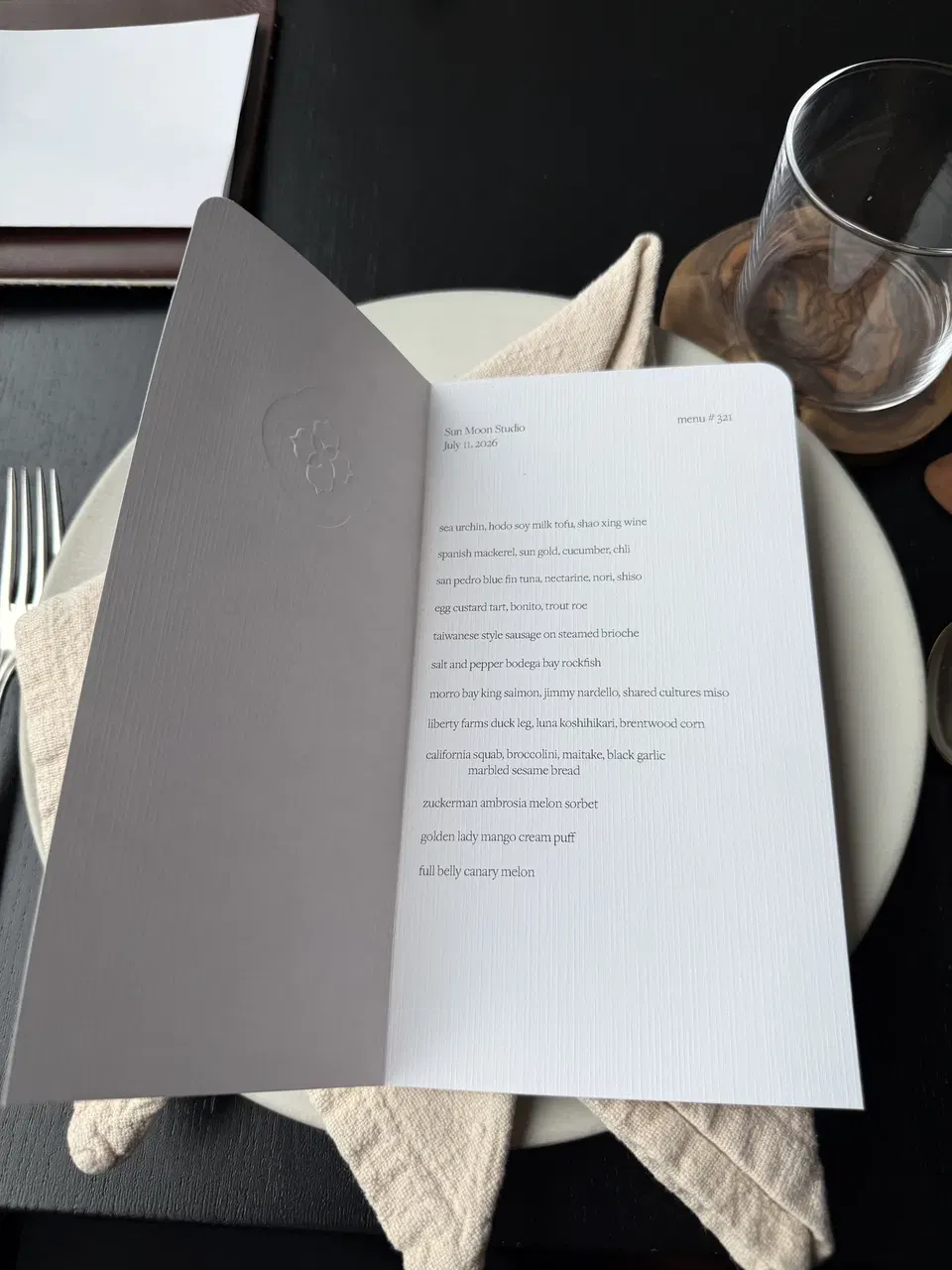
The menu is seasonal, so this is a record of Menu No. 321 on July 11, 2026, not a promise of what will appear on a future visit. The printed card listed 13 items. I have preserved the order and producer names while standardizing capitalization for readability.
Opening courses
- Sea urchin: Hodo soy milk tofu, Shao Xing wine
- Spanish mackerel: Sun Gold, cucumber, chili
- San Pedro bluefin tuna: nectarine, nori, shiso
- Egg custard tart: bonito, trout roe
- Taiwanese-style sausage on steamed brioche
Main progression and bread
- Salt-and-pepper Bodega Bay rockfish
- Morro Bay king salmon: Jimmy Nardello, Shared Cultures miso
- Liberty Farms duck leg: Luna Koshihikari, Brentwood corn
- California squab: broccolini, maitake, black garlic
- Marbled sesame bread
Desserts
- Zuckerman ambrosia melon sorbet
- Golden Lady mango cream puff
- Full Belly canary melon
The opening courses: uni, mackerel, tuna, tart, and sausage
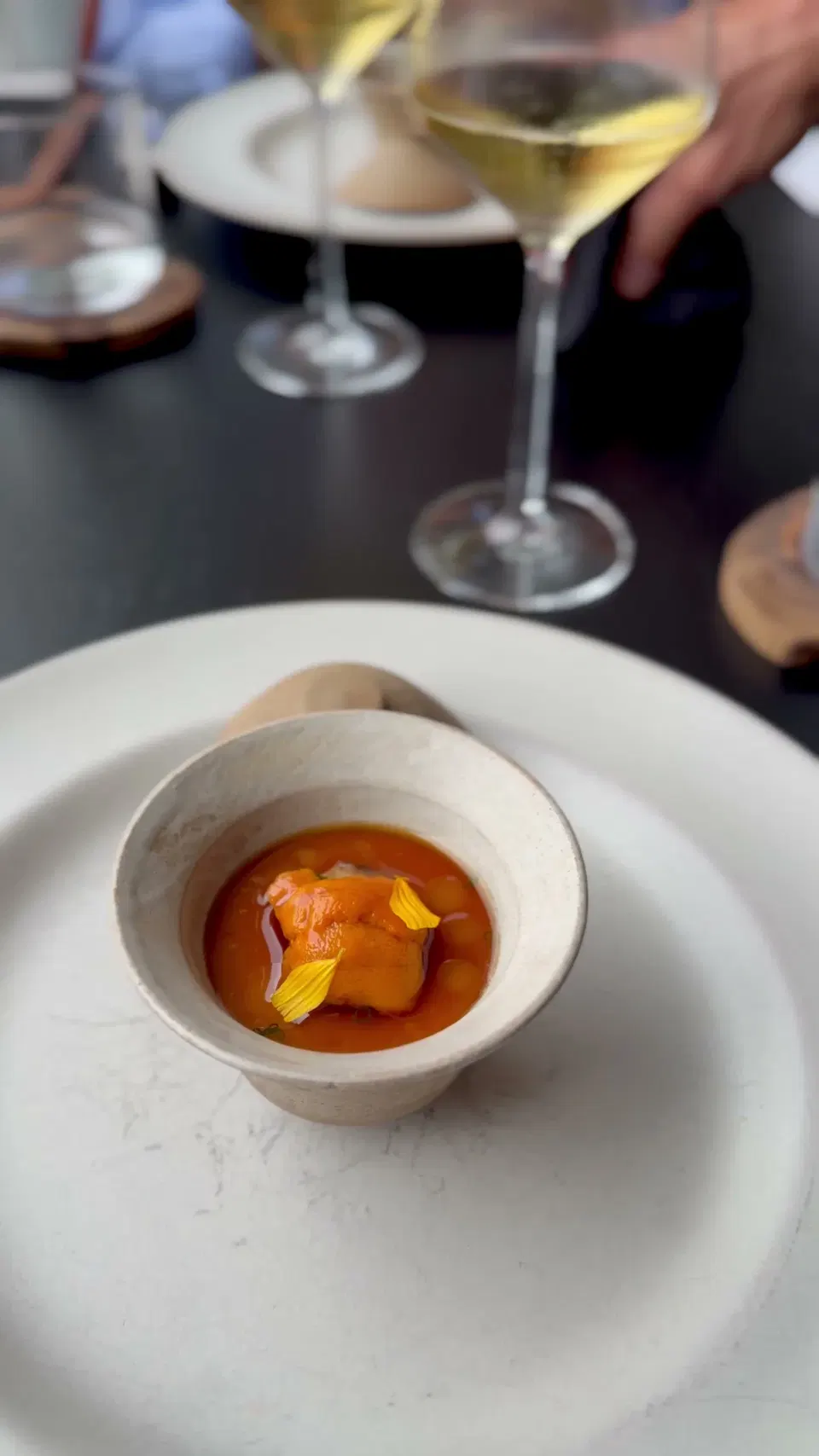
The meal began with sea urchin, Hodo soy milk tofu, and Shao Xing wine in a small ceramic cup. It was one of my favorites. The uni sat above the tofu in a vivid amber-orange sauce, with the compact presentation keeping the focus on its natural richness. The tofu gave the course a soft foundation while the wine brought an aromatic counterpoint. It was a concise introduction to the menu’s larger vocabulary: carefully sourced California ingredients interpreted through the chefs’ own references rather than forced into a single category.
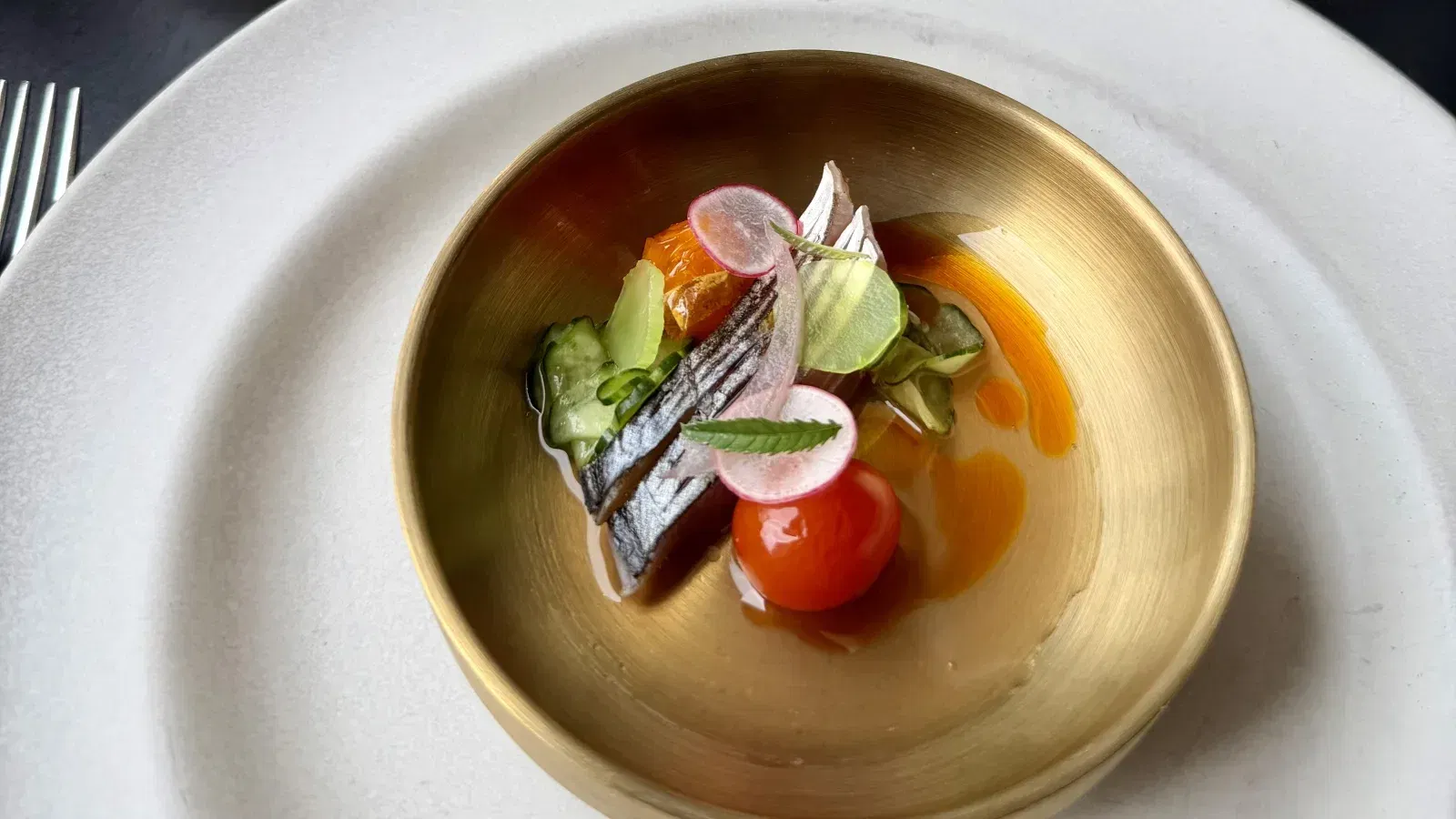
Spanish mackerel followed with Sun Gold tomato, cucumber, and chili. The silver-skinned fish arrived with a bright arrangement of tomatoes, sliced cucumber, radish, and herbs in a brass bowl. It tasted like peak Northern California summer: rich, cool, bright with tomato and cucumber, and sharpened by chili.
The San Pedro bluefin tuna paired nectarine with nori and shiso. The combination made sense within the progression: another rich fish, but framed by stone fruit, seaweed, and an herbaceous edge rather than repeating the mackerel’s tomato-and-cucumber profile. It also showed how the menu could move between familiar tasting-menu luxury and ingredients that felt tied to a specific California summer.
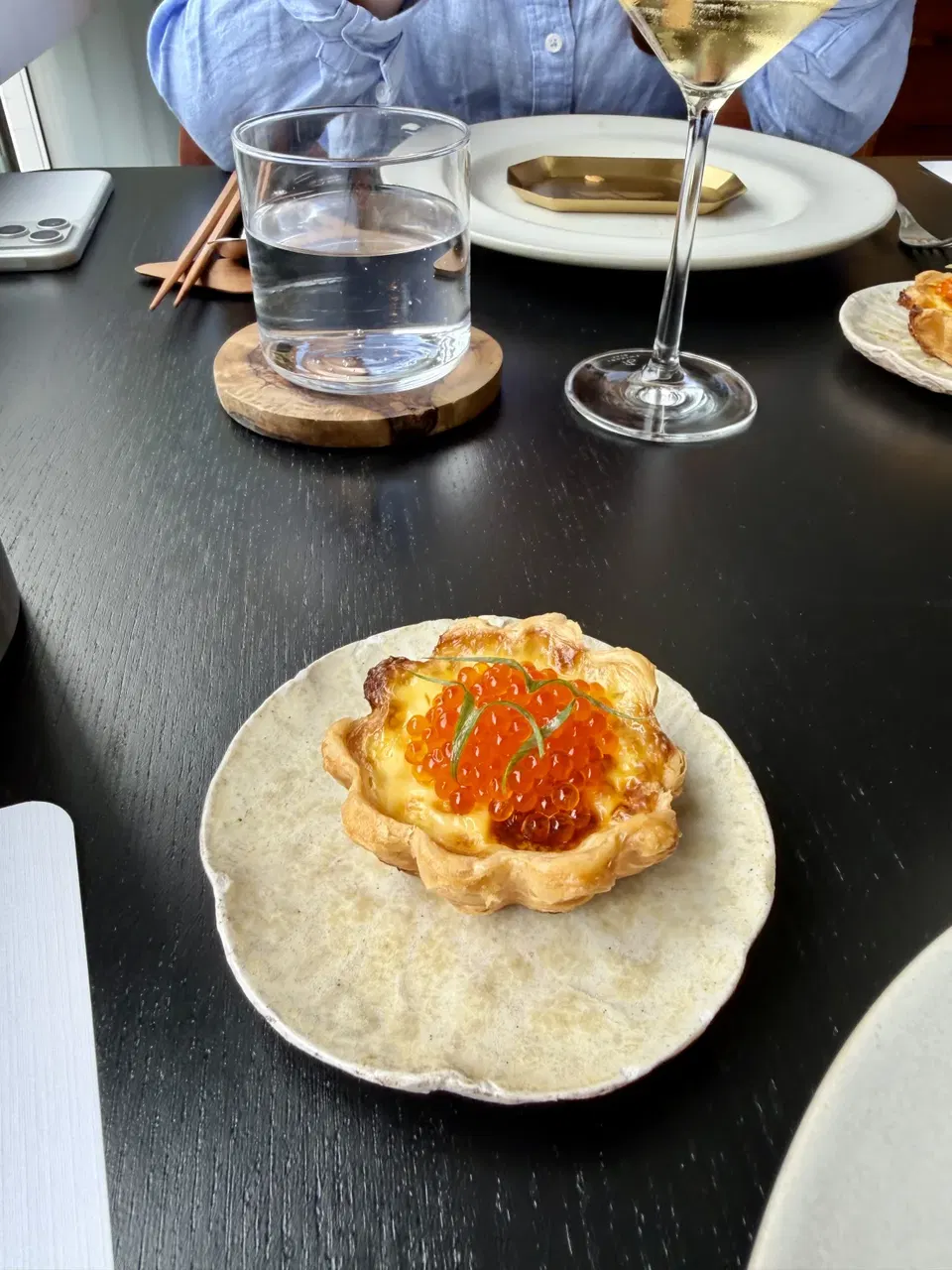
The egg custard tart was another standout. A deeply layered pastry shell held warm savory custard and was finished with bonito, a generous cap of trout roe, and fine strips of scallions. Each part was legible in a few bites: crisp pastry, soft custard, and the pop of roe. Michelin has also highlighted Sun Moon Studio’s savory egg tart in its description of the restaurant, and after eating this version it is easy to understand why the form has become one of the restaurant’s signatures.
The Taiwanese-style sausage on steamed brioche was the most playful opening course and one of my favorites. It looked almost like a miniature hot dog, but the glossy sausage, soft golden brioche, mushrooms, peanuts, and cilantro gave it far more depth than the visual joke suggested. Most importantly, it still tasted and felt like sausage on a bun. The dish did not erase the comfort of the original idea in order to make it fine dining.
The savory peak: rockfish, salmon, duck, squab, and bread
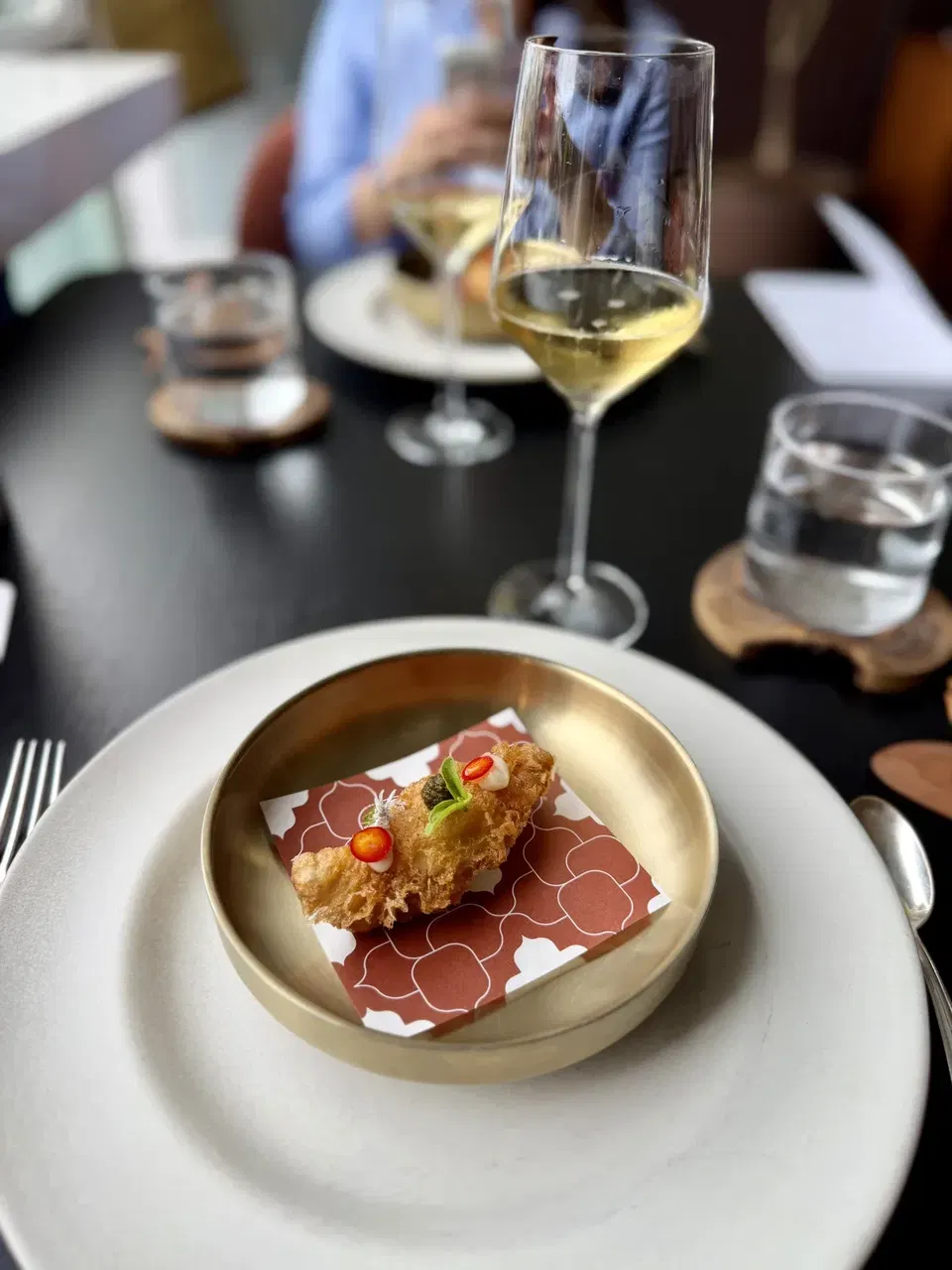
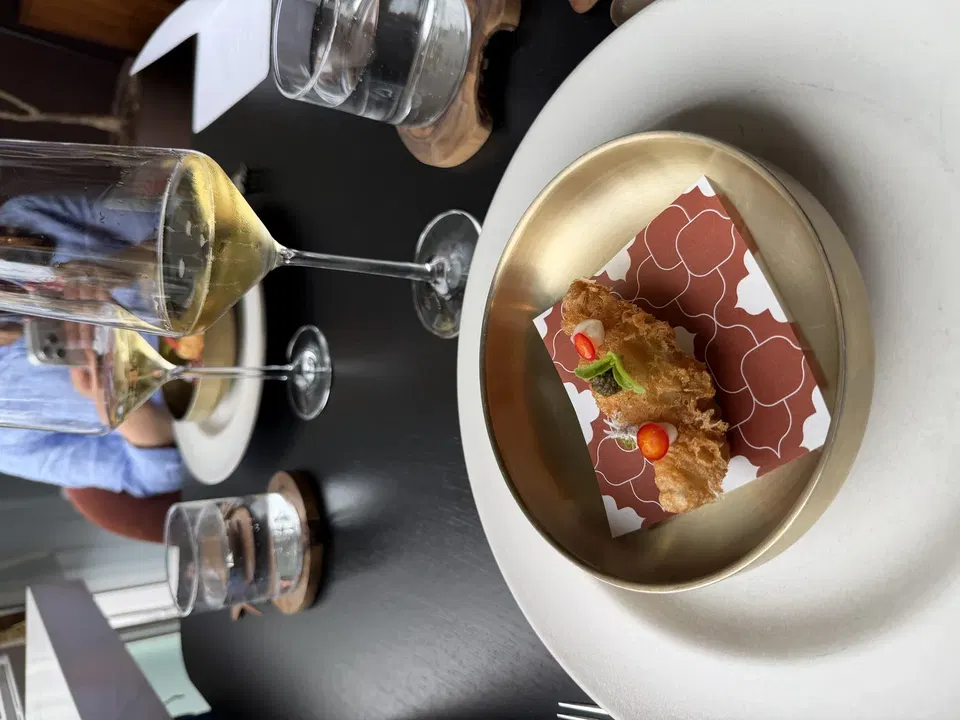
The salt-and-pepper Bodega Bay rockfish was my favorite savory course. A crisp, lacy-fried piece of rockfish arrived in a brass bowl over patterned paper, with small dots of sauce, sliced red chili, and herbs. It delivered the direct satisfaction of exceptional fried fish with the precision and restraint of a tasting-menu course. This is the dish I kept thinking about after dinner.
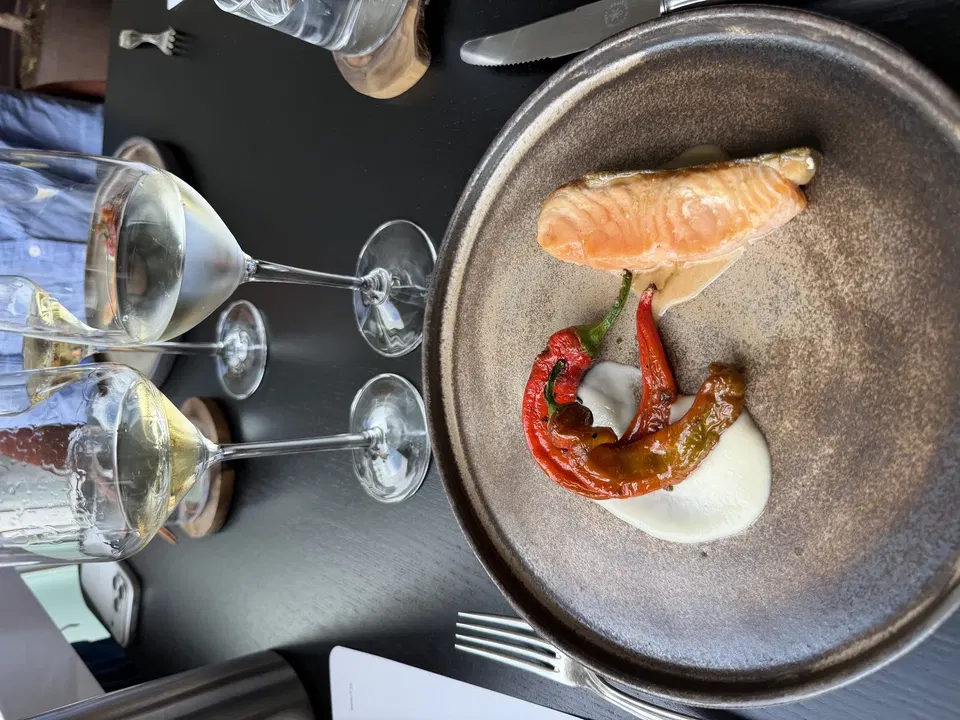
Morro Bay king salmon came next with Jimmy Nardello peppers and Shared Cultures miso. The salmon was served beside long roasted red peppers, with pale and amber sauces connecting the two. The peppers brought sweetness and a little char while the miso gave the plate a savory backbone. Shared Cultures is a Bay Area fermentation company, so the ingredient choice continued the restaurant’s emphasis on named regional producers rather than treating sourcing as anonymous background information.
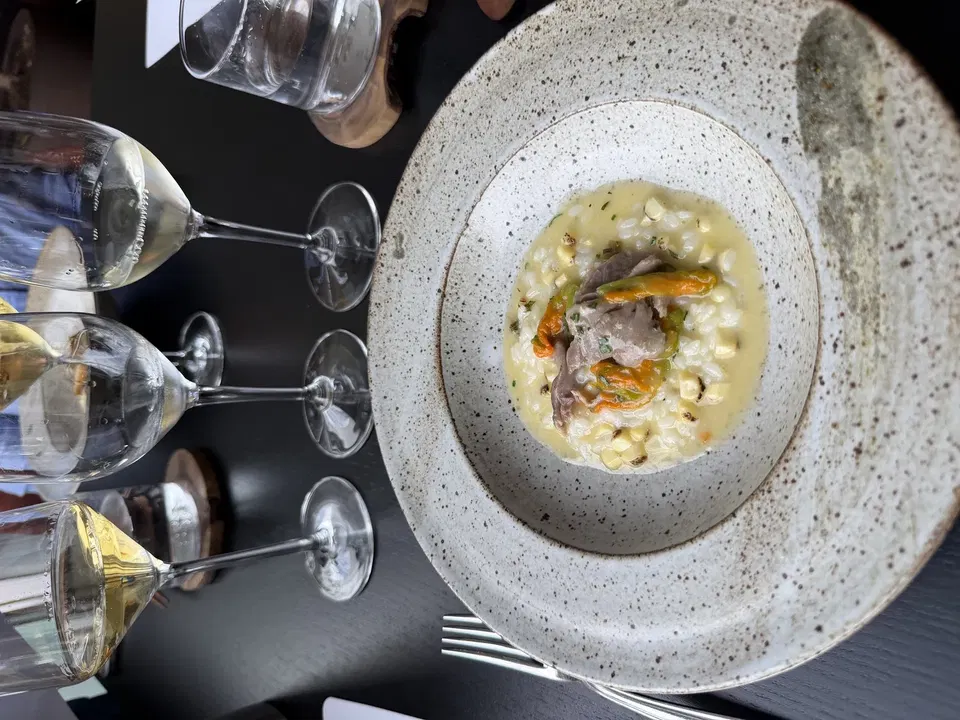
The Liberty Farms duck leg was paired with Luna Koshihikari rice and Brentwood corn. Rather than presenting the duck as a large separate roast, the course placed tender slices over a loose, creamy bed of rice and corn. It was one of the most comforting plates of the night, with the grain and sweet corn softening the transition from seafood to the darker final meat course.
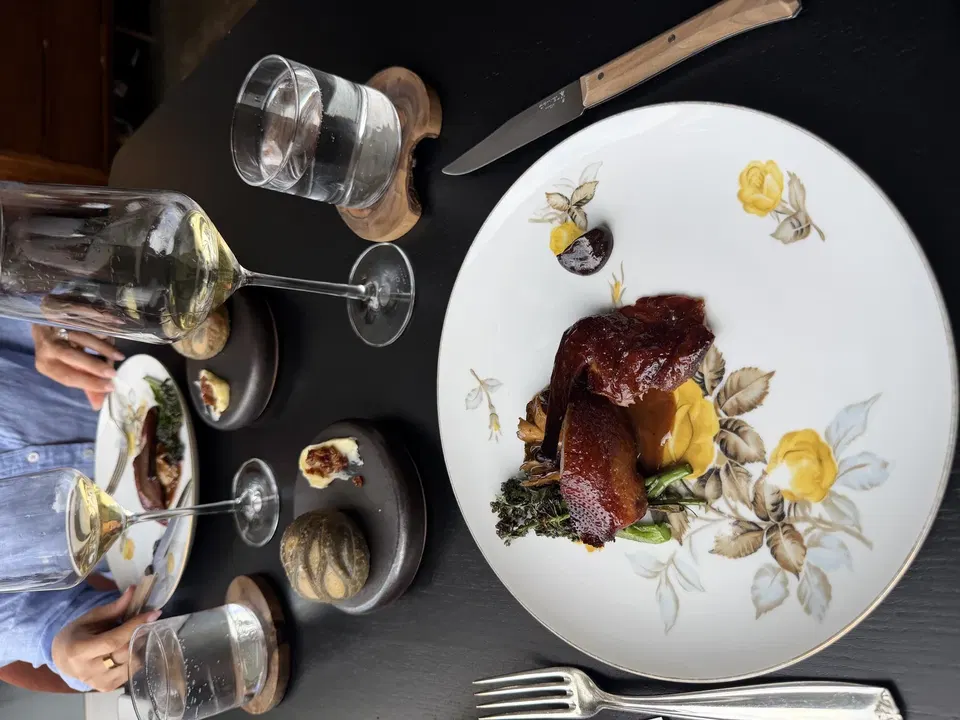
California squab closed the main progression with broccolini, maitake, and black garlic. The bird arrived deeply lacquered, with crisp-looking skin and a glossy sauce, set against charred greens and mushrooms. Black garlic appeared as a dark, concentrated accent on the floral plate. It was the richest savory course, but the broccolini and maitake kept the plate from feeling one-dimensional.
Marbled sesame bread came alongside this part of the meal as a small dark-and-gold loaf with butter and a crisp savory topping. It was visually striking and useful, not ornamental. The bread gave us something warm and tactile to pull apart between bites of squab, and it reinforced how comfortable the meal remained even at its most formal.
Wine, local Oakland sake, and the dessert finale
The beverage program works whether you commit to the pairing or order selectively. I found the wine list fairly priced for a Michelin-starred tasting menu, with thoughtful glasses and bottles rather than a list designed only around prestige. The posted July 2026 beverage list showed many wines by the glass in roughly the $16 to $30 range. The official site currently lists the full beverage pairing at $125 and the nonalcoholic pairing at $60.
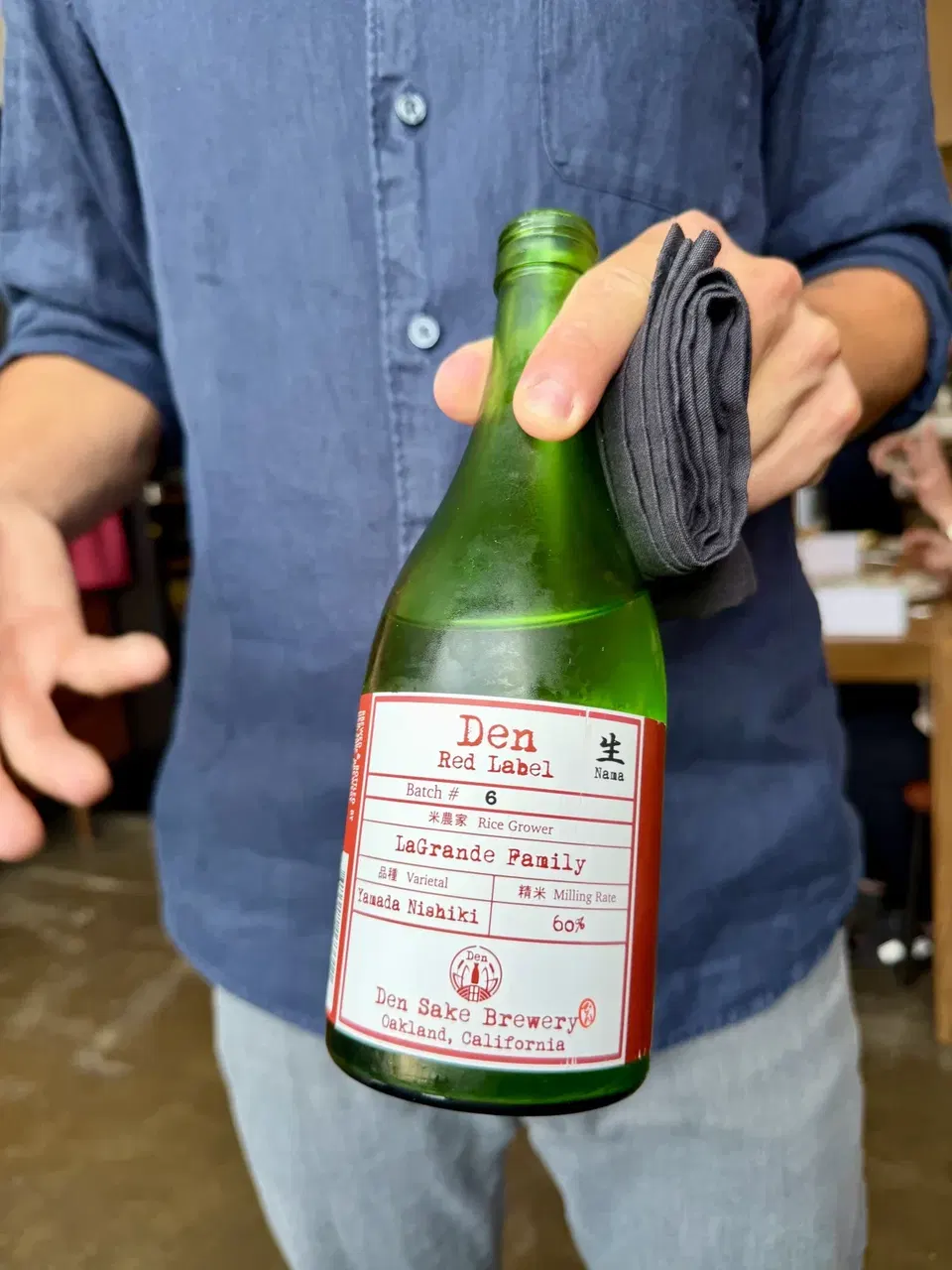
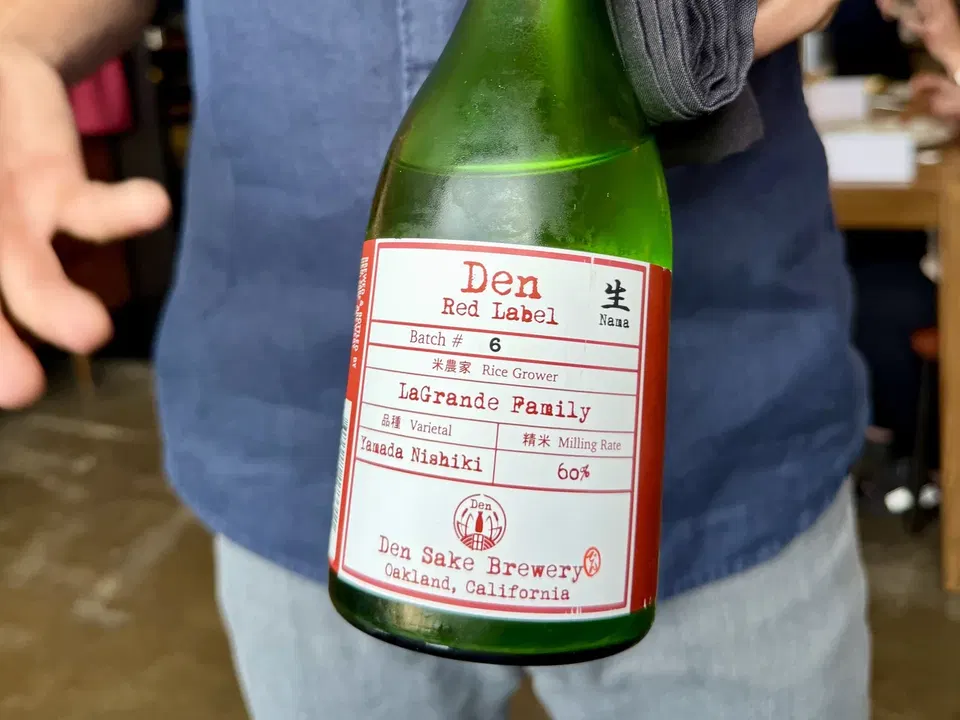
The sake selection was especially memorable because it included Den Sake Brewery from Oakland. I tried Red Label Nama Batch 6, an unpasteurized sake made with Yamada Nishiki rice from the LaGrande family and milled to 60 percent, according to the bottle. Den was established in Oakland by brewer Yoshihiro Sako and describes its style as bright, refreshing, and suited to Californian cuisine. That local connection felt completely natural beside Sun Moon Studio’s producer-driven menu. It was not a novelty pour; it was a nearby maker whose philosophy fit the food.
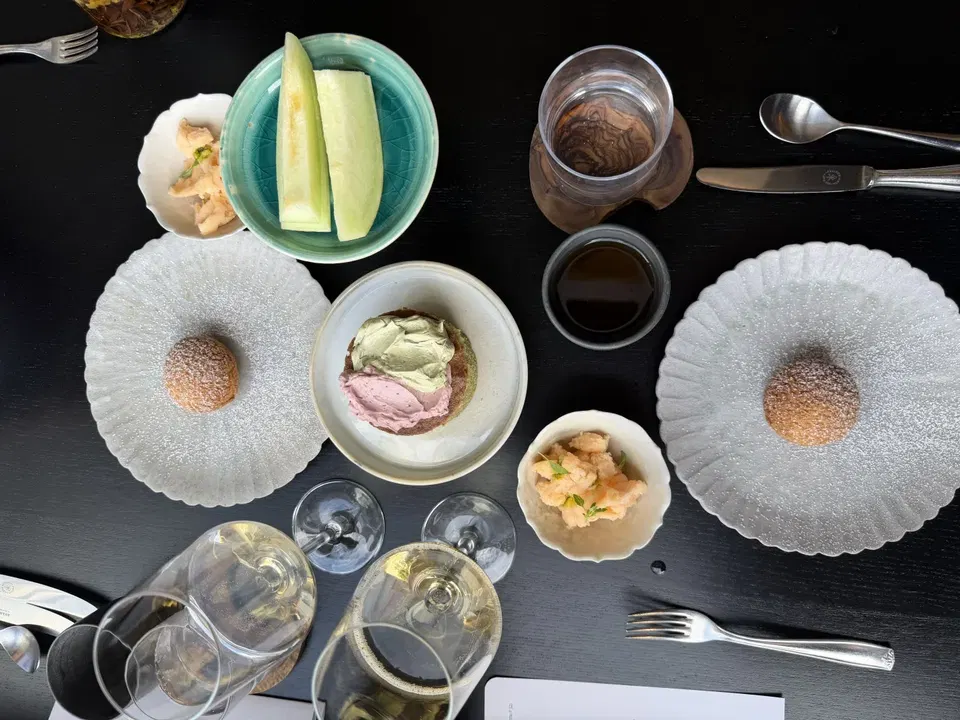
Dessert arrived as a generous table-wide finale rather than a single austere plate. The listed sequence included Zuckerman ambrosia melon sorbet, Golden Lady mango cream puffs, and thick wedges of Full Belly canary melon. All three were refreshing after the duck and squab. The sorbet was icy and fruit-forward, the melon was served simply enough to appreciate the fruit itself, and the round cream puff was dusted with sugar and sized for a few satisfying bites.
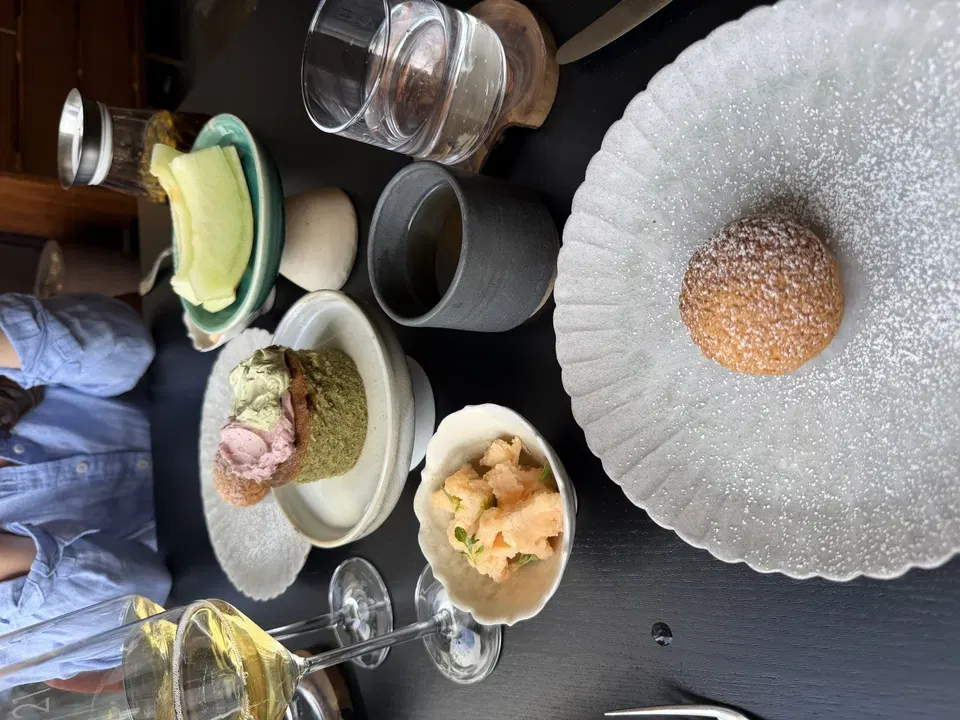
The mango cream puff was my favorite dessert. It had enough pastry and cream to feel rich, but mango kept the finish bright. That restraint mattered after 10 savory items. Sun Moon Studio did not end the meal by trying to overpower everything that came before it. The final courses cleared and refreshed the palate, leaving the dinner feeling complete rather than merely long.
Is Sun Moon Studio worth the trip from San Francisco?
Yes. My trip from San Francisco took about 30 minutes that evening, which made the restaurant feel like an easy cross-Bay dinner rather than a destination requiring a full weekend plan. Traffic can change quickly, so treat 30 minutes as one visit’s timing, not a guarantee. The official site encourages rideshare and says street parking is available, though guests should leave cars empty of belongings. West Oakland BART is about a mile away, so BART plus a short rideshare is another practical option.
Arrive close to the reservation time. Sun Moon Studio does not have a waiting area and only holds tables for up to 10 minutes. If you arrive late, the restaurant warns that it may not be possible to serve the full menu in the remaining time.
Reservations are the harder part. Tables are released six weeks ahead at noon Pacific through OpenTable. With only four tables, desirable nights can disappear quickly. If your date is unavailable, use OpenTable’s Notify Me feature. The official cancellation policy asks guests to cancel at least four days ahead. Cancellations three days or fewer before dinner, or reductions in party size, incur a $75-per-guest fee. Groups larger than six require a full buyout, and the restaurant says the room can accommodate up to 14 guests.
At $180 per person before tax and the 20 percent service charge, Sun Moon Studio is a significant dinner, but the price felt aligned with the number of courses, quality of ingredients, beverage options, and unusually high-touch service. The service charge is shared among the team and the restaurant states that no additional gratuity is expected. Corkage is $30 per 750-milliliter bottle, with a maximum of two bottles per party.
Who should book Sun Moon Studio?
Book Sun Moon Studio if you want a tasting menu where the room and service are as memorable as the food. It is especially good for a couple who wants a quiet date, a small celebration where conversation matters, or a diner interested in California seafood and farms viewed through Taiwanese and other Asian ingredients and techniques. It is also a strong choice for visitors staying in San Francisco who want one East Bay dinner without turning the transfer into a logistical project.
For the smoothest experience, share allergies and aversions when booking, because the restaurant can accommodate many, but not all, dietary restrictions. Plan to arrive close to your reservation time: there is no waiting area, and the kitchen may not be able to serve the complete menu after a late arrival. Parties larger than six require a full buyout, with capacity for up to 14 guests.
The four-table scale is ultimately the reason the experience stays with me. I left remembering specific bites, especially the rockfish, uni, egg custard tart, sausage brioche, and mango cream puff, but also remembering the people. I talked to every member of the team. The chefs and service staff made a technically ambitious dinner feel gracious, calm, and personal. That combination is rare enough to justify the reservation alarm and the trip across the Bay.
For Pearl’s venue details and future updates, see the Sun Moon Studio restaurant profile.
Sun Moon Studio FAQ
How much does dinner at Sun Moon Studio cost?
As of August 2026, Sun Moon Studio’s tasting menu costs $180 per person, plus tax and a 20 percent service charge shared among the team. The beverage pairing is $125 and the nonalcoholic pairing is $60. No additional gratuity is expected, according to the restaurant.
How do Sun Moon Studio reservations work?
Sun Moon Studio releases reservations six weeks ahead at noon Pacific through OpenTable. Because the Oakland dining room has only four tables, popular dates can sell out quickly. Use OpenTable’s Notify Me feature if your preferred seating is unavailable.
How long is the Sun Moon Studio tasting menu?
Sun Moon Studio recommends allowing two to two and a half hours for dinner. That matched the relaxed pace of my visit. Early seatings begin around 5 to 5:30 p.m., and later seatings begin around 7:45 to 8:30 p.m.
What kind of food does Sun Moon Studio serve?
Sun Moon Studio serves a seasonal, farmer- and producer-driven California tasting menu. Co-chefs Alan Hsu and Sarah Cooper combine local seafood, meat, produce, and pantry products with personal references that include Taiwanese sausage, Hodo tofu, nori, shiso, Shao Xing wine, and miso.
What were the best dishes on the July 11, 2026 menu?
My favorites were the salt-and-pepper Bodega Bay rockfish, sea urchin with Hodo soy milk tofu and Shao Xing wine, egg custard tart with bonito and trout roe, Taiwanese-style sausage on steamed brioche, and the Golden Lady mango cream puff.
Does Sun Moon Studio have wine and sake?
Yes. Sun Moon Studio offers wine and sake by the glass and bottle, plus optional alcoholic and nonalcoholic pairings. I thought the wine list was well priced for the format. A highlight was Red Label Nama Batch 6 from Den Sake Brewery in Oakland.
Can Sun Moon Studio accommodate dietary restrictions or groups?
The restaurant says it can accommodate many, but not all, dietary restrictions when notified during booking. Parties larger than six require a full-restaurant buyout, and the dining room can accommodate up to 14 guests. Contact the restaurant directly about allergies, accessibility, children, and private dining.
Is Sun Moon Studio Michelin-starred?
Yes. The Michelin Guide currently lists Sun Moon Studio with one star and categorizes the restaurant as Californian. The restaurant opened in West Oakland in 2024 under co-chefs and co-owners Alan Hsu and Sarah Cooper.
Operational details were last checked August 9, 2026 against Sun Moon Studio’s official information page, the Michelin Guide, OpenTable, and Den Sake Brewery. Menu details and all photographs come from a firsthand July 11, 2026 visit.