According to Eater National, Hasung Lee has opened Oyatte in New York City with an eight-course tasting menu built around fresh vegetables. The Oyatte NYC restaurant belongs on your chase list if you plan trips around tasting menus, but skip the scramble if vegetables need to play support to meat or seafood (Eater1).
Lee appeared on Netflix’s Culinary Class Wars, and that has clearly helped demand. The better reason to care is the combination of format and timing: a vegetable-focused menu, produce from Crown Daisy Farm in Staatsburg, New York, and a restaurant that Lee has been planning since 2020. Oyatte is fully booked every day. That tells you the practical answer before the first wave of long reviews arrives: this is not a casual walk-in decision (Eater1).
Why the Oyatte NYC Restaurant Is Drawing Reservations Early
Oyatte has the kind of opening pressure that makes early booking annoying and useful at the same time. Lee has a Netflix profile from Culinary Class Wars, a fine-dining résumé that includes Gramercy Tavern, Atomix, The French Laundry, and Geranium, and a project that has been in the works for years. That pulls in two groups at once: viewers who want to eat where the person from the show is cooking, and restaurant obsessives who care more about the kitchens behind the name.

The delayed-opening story matters because it helps set expectations. Oyatte has been in planning since 2020 and the opening was postponed four times because of permit issues, furniture delivery delays, and construction delays. For diners, that matters less as drama and more as context. A restaurant that has fought through that many delays may still be tightening service in public. Book with the patience you would bring to an ambitious opening, not the expectations you would bring to a restaurant with years of rhythm behind it (Eater1).
The scarcity is real because Lee said the restaurant is fully booked every day. Pearl translation: do not save this for a last-minute New York weekend. Use Seven Rooms, check repeatedly, and assume cancellations will matter more than standard availability. If you are flying in, Oyatte should be the anchor reservation, not the flexible second dinner after a meeting or show.
The better peer comparison is Dirt Candy, not a protein-heavy tasting counter. If you want a more established vegetable tasting-menu reference point in New York, Dirt Candy is the safer choice. If you want to catch Lee’s first NYC restaurant while the opening energy is still raw, Oyatte is the higher-risk, higher-curiosity table.
The Culinary Class Wars Connection Is Useful, Not the Whole Bet
Lee’s Culinary Class Wars appearance gives Oyatte reach beyond the usual New York restaurant circle. He got the spotlight on the Netflix show, and Lee said guests who watched it now want to visit the restaurant. That explains part of the reservation pressure, but it does not explain why experienced diners should care after the Netflix effect fades.
The stronger credential is the kitchen path. Gramercy Tavern, Atomix, The French Laundry, and Geranium are not interchangeable lines on a résumé. They signal that Lee has worked across New York fine dining, Korean-influenced tasting-menu cooking, California destination dining, and Copenhagen’s high-precision restaurant culture. Do not read that as a promise that Oyatte copies any of those places. Read it as a reason to expect a chef who understands pacing and the difference between a vegetable dish that feels like filler and one that can carry a course.
The Netflix detail matters most for timing. Lee said he participated in the show because he wanted to attract more investors, though he found them before the show was released to the public. That distinction is useful. Oyatte was not conceived as a quick post-TV cash-in. It had been developing since 2020. The show widened the audience, but the restaurant was already the plan.
For the reader, that lowers one risk and raises another. You are not booking a restaurant built only on screen recognition. Good. But you are booking a restaurant with demand intensified by screen recognition. Less good if you hate reservation games. If you do not care about watching a chef’s first months unfold in real time, wait for demand to settle.
What the Eight-Course Vegetable Tasting Menu Actually Signals
Oyatte’s menu is eight courses and built on fresh vegetables. That is the main decision point. If your ideal tasting menu climaxes with wagyu, caviar, langoustine, or a parade of luxury proteins, Oyatte may frustrate you. If you are more interested in what a chef can do with produce over a full sequence, this is the reason to fight for the table.
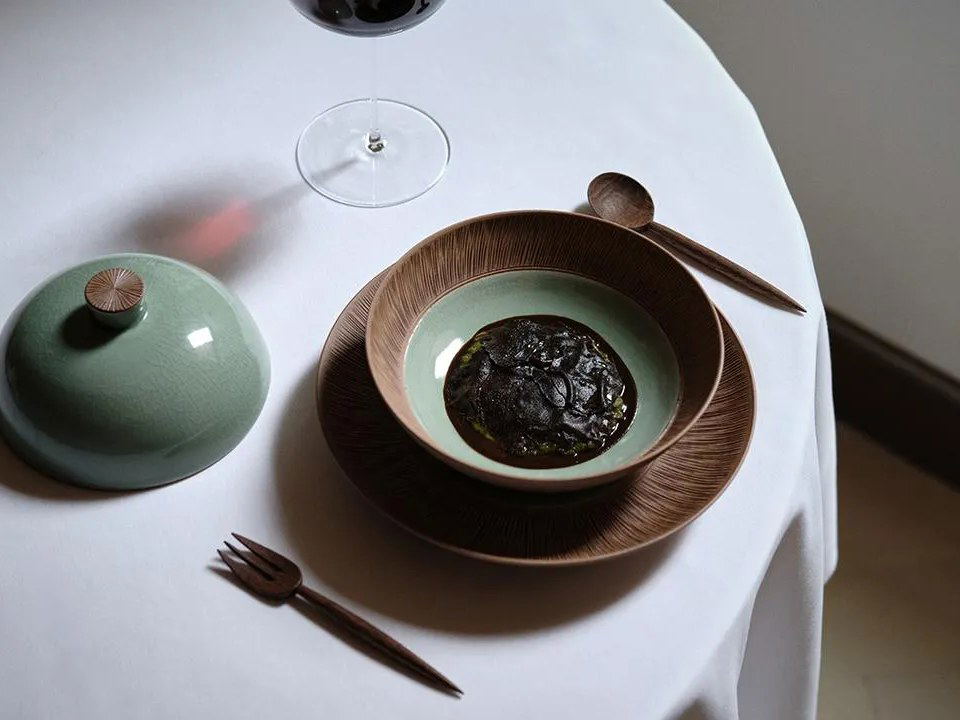
Lee sources produce from Crown Daisy Farm in Staatsburg, New York, owned by Brett Ellis. That farm relationship gives the menu a clearer center than a generic seasonal-market approach. Lee keeps a long spreadsheet of fruits, vegetables, nuts, and tree bark fermenting at any moment. That is the most useful sensory clue in the available reporting: expect the menu to lean on produce transformation, preservation, and texture rather than just vegetable arrangements on plates.
This is where Oyatte separates itself from restaurants that simply include a strong vegetable course. An eight-course tasting menu focused on vegetables forces the kitchen to solve the same problem repeatedly without leaning on the usual luxury shorthand. The interest comes from whether Lee can make eight courses feel like a sequence rather than a thesis. His background at restaurants including Atomix, The French Laundry, and Geranium makes that question worth testing, but the format is still the deciding factor.
Compared with a more conventional New York tasting menu, Oyatte is better for diners who already like fermentation, produce-led cooking, and menus that do not treat meat as the automatic center. It is worse for groups with one person who quietly believes dinner is not dinner without a large protein. That person should not be dragged here. Oyatte is the kind of booking where the table needs to agree on the premise before anyone opens Seven Rooms (Eater1).
How to Book Oyatte and What to Expect From the First Months
Oyatte uses Seven Rooms for reservations, and the booking pressure is already tight. The restaurant is fully booked every day. Your best approach is repetitive rather than romantic: check the platform, look for cancellations, and avoid locking flights or hotels around a table you do not yet have.

The cover-count detail is the most useful behind-the-scenes fact for planning. Lee originally wanted no more than 30 covers per day, but because of an issue with Seven Rooms, the restaurant started with 55 covers over three turns. That was far above the 20 covers per day the restaurant handled during soft opening. Translation: the kitchen opened under more pressure than planned.
That does not mean you should avoid it. It means you should calibrate. Early meals at ambitious restaurants can give restaurant people exactly what they like: a chef’s idea still taking shape, a menu being tested against real demand, and service systems finding their rhythm. They can also bring timing gaps and uneven pacing. If you require mature-room consistency, wait. If you want to see Lee’s vegetable menu before it becomes more fixed, go now.
Confirm spend directly through Seven Rooms before you commit. Do not assume this will price like a casual vegetable restaurant just because the menu is produce-led. Lee’s résumé and the eight-course tasting format point to a fine-dining decision, but the exact cost, wine pairing details, and cancellation terms should come from the booking flow.
The group advice is simple: book with two or four people who will actually talk about vegetables. Do not make this a broad celebration dinner unless every guest is aligned. A new, fully booked tasting-menu restaurant is not the place to discover that half the table wanted steak.
Who Should Book Oyatte Now, And Who Should Wait
Book Oyatte now if you care about chef trajectory, vegetable tasting menus, and early access. Lee’s path through Gramercy Tavern, Atomix, The French Laundry, and Geranium gives this opening enough substance to justify the reservation chase. Crown Daisy Farm gives the menu a source point. The eight-course format gives the dinner a clear point of view. The fully booked status tells you the table will not get easier by casual effort.

Wait if your New York list is already packed with harder-to-get tables and you only have one tasting-menu slot. Oyatte is interesting because it is new, specific, and produce-led, not because it is the safest possible use of a limited weekend. If you have not yet decided whether vegetable-focused dining excites you, do not make Oyatte your test case under reservation pressure. Start with a more established vegetable menu, then come back when you know you want this format.
Skip for now if you are chasing the Netflix connection more than the food. Lee’s Culinary Class Wars visibility helped bring guests in, but the restaurant’s actual bet is not television nostalgia. It is whether an eight-course menu built from fresh vegetables, farm sourcing, and fermentation can hold New York’s attention after the opening rush. That is a better reason to book than screen recognition.
The next thing to watch is whether Oyatte can convert early scarcity into repeat demand once the first fully booked stretch normalizes. If Lee’s vegetable menu keeps evolving with Crown Daisy Farm’s produce and the room stabilizes after its delayed opening, Oyatte could become one of New York’s more meaningful new tasting-menu reservations. For now, chase it if the premise is your format; wait if you need several months of service before giving up a night in New York.