Ten rooms on a remote Venetian lagoon island, 25 minutes by boat from the Grand Canal crowds. The Cipriani family just expanded Locanda Cipriani on Torcello from six to ten rooms, adding four new suites while preserving the inn's century-old intimacy. Worth booking if you want Venice without the cruise-ship density, skip if you need mainland proximity or prefer properties with more than ten keys (Robbreport1).
Giuseppe Cipriani Sr. acquired a wine shop on Torcello in 1936 and transformed it into an inn after World War II, creating what became the family's quietest property. The renovation, led by Fabrizio Cocchi Studio, doubled down on that seclusion rather than modernizing it away. Starting rates are approximately $860 (Robbreport1).
Why the Locanda Cipriani Torcello Expansion Matters Now
Venice is seeing a wave of high-profile hotel openings in 2026, but most are clustered along the Grand Canal where foot traffic peaks during summer months. Locanda Cipriani moves in the opposite direction, the expansion from six to ten rooms keeps the property smaller than most boutique hotels while addressing demand for off-grid Venetian experiences. Torcello remains sparsely populated, with medieval buildings and the Byzantine Basilica of Santa Maria Assunta as the island's primary landmarks (Robbreport1).
The Cipriani family's decision to invest in expansion here, rather than scale up their mainland operations, signals confidence in the market for intimate, heritage-driven properties. Giuseppe Cipriani, founder and CEO of the Cipriani Group and grandson of Giuseppe Sr., framed the renovation as preservation rather than transformation. According to Robb Report, Cipriani said the goal was to preserve "the soul of the place," rooted in its history, setting, and generations of guests.
The timing aligns with broader shifts in luxury travel toward smaller properties that offer isolation without sacrificing service depth. At ten rooms total, Locanda Cipriani sits well below the typical boutique hotel threshold, closer in scale to a private villa rental than a traditional inn. That scarcity matters when booking windows tighten during peak season.
From Six Rooms to Ten: What Changed at the Locanda Cipriani
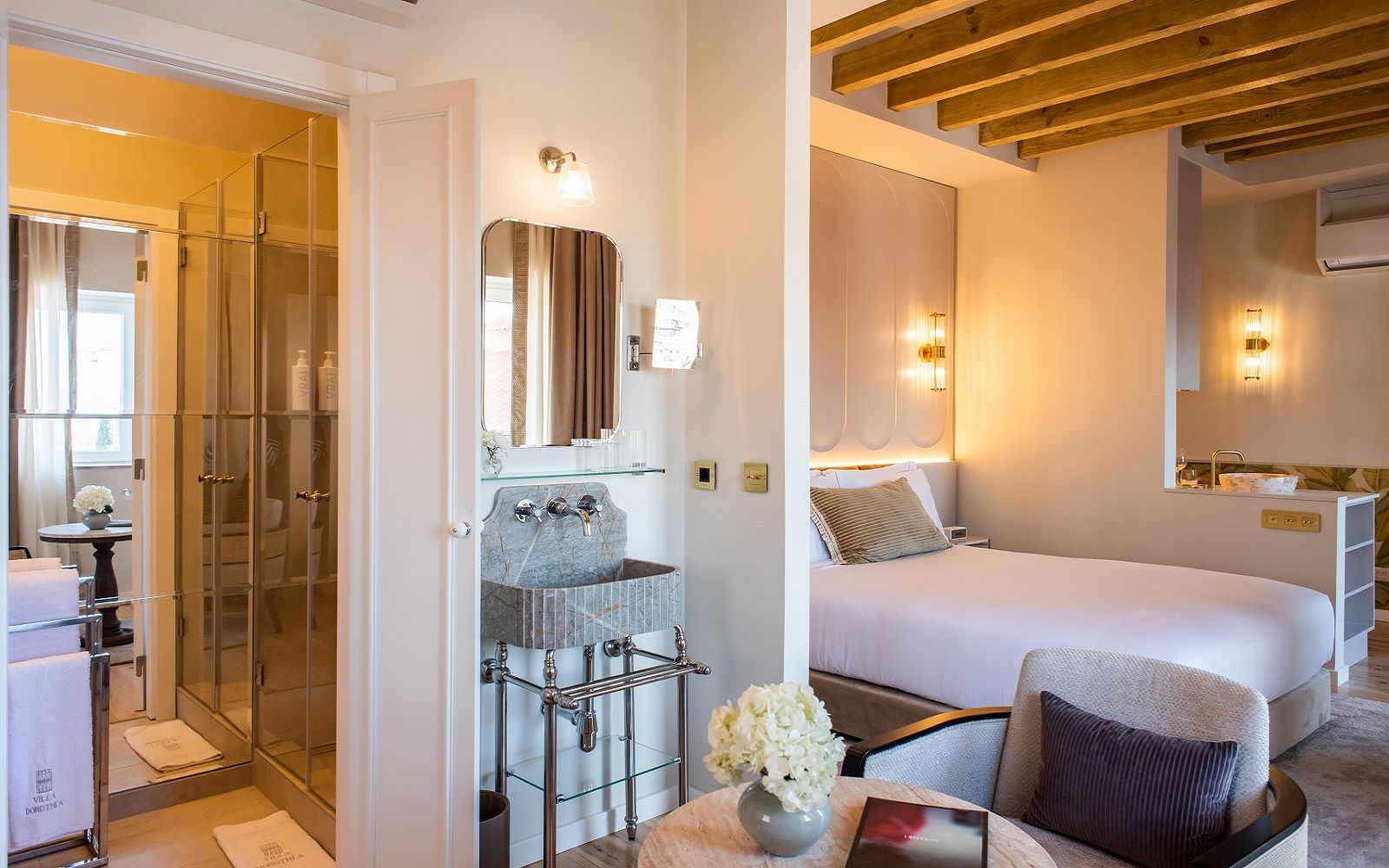
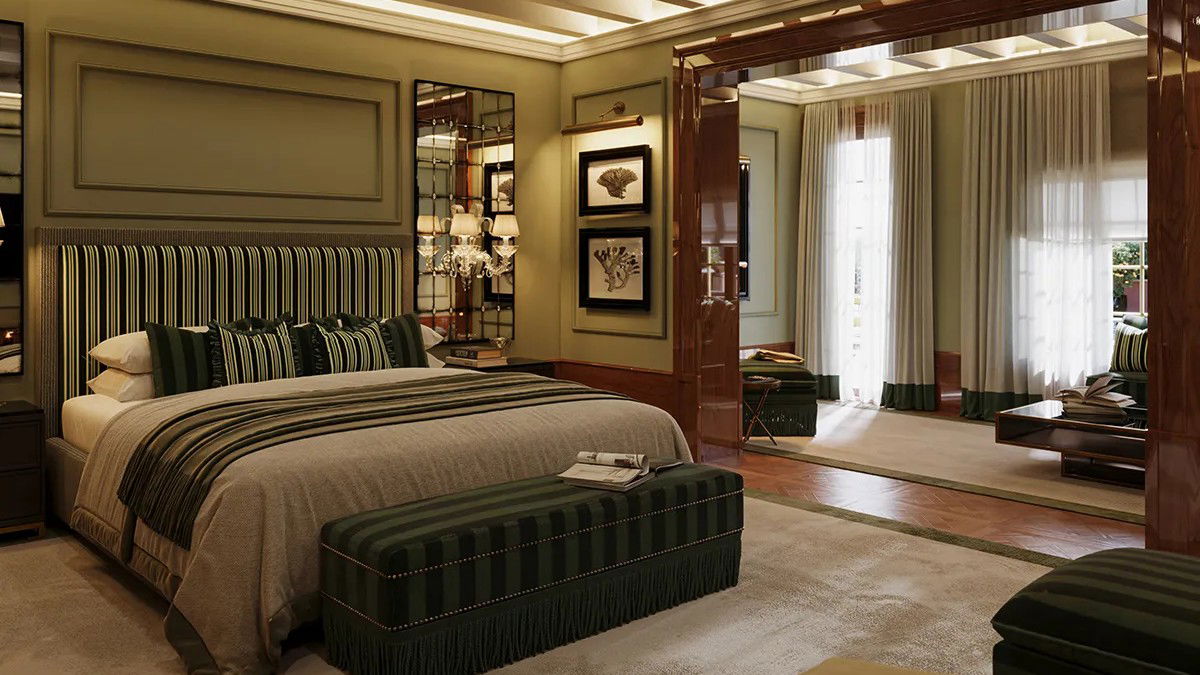
The expansion added four new suites to the original six-room footprint, bringing the total to ten accommodations. Each suite includes dedicated living areas and terraces overlooking the gardens and the nearby Basilica of Santa Maria Assunta. The design work, handled by Fabrizio Cocchi Studio, focused on lightening the interiors without erasing the property's historic character. Historic ceiling beams were painted white to brighten the atmosphere, while high-gloss wood paneling pairs with handblown glass light fixtures from Vetreria Venier in Murano (Robbreport1).
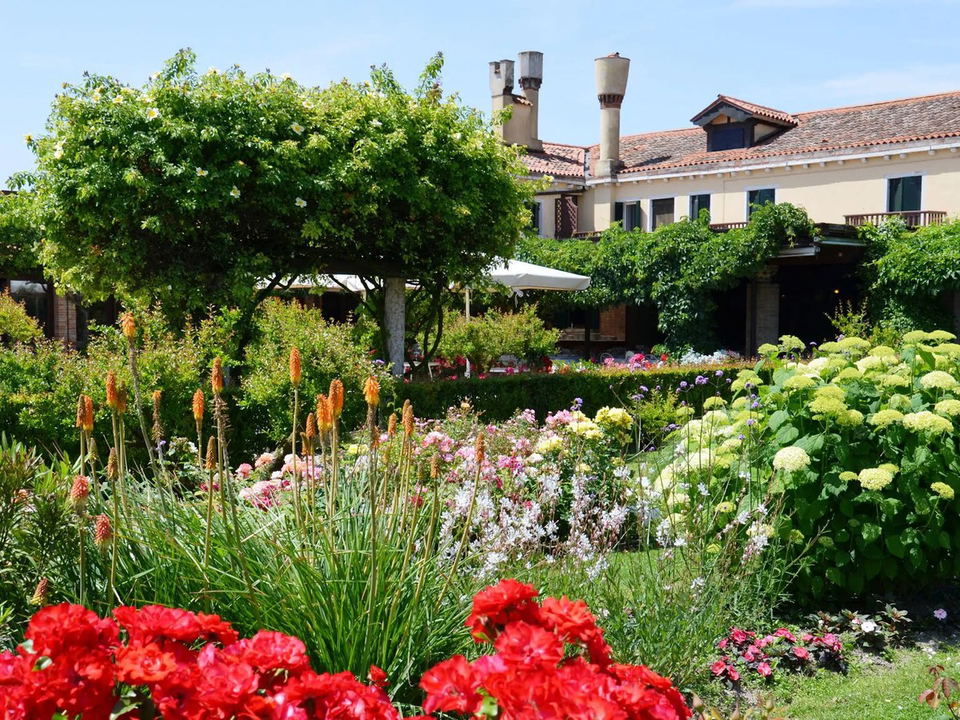
The renovation extended beyond guest rooms. A new bar counter, a signature element across Cipriani family restaurants, was added to the property. The restaurant and shared spaces were reconfigured to encourage what Cipriani described as "simple conviviality," a term that suggests communal dining over private in-room service. The gardens were also refreshed, with roses, flowering plants, vegetable plots, and a vine-covered pergola supported by pink marble columns returning to the grounds.
The scale remains the defining feature. At ten rooms, the property feels closer to a private estate than a commercial hotel. That intimacy has always been part of the appeal, the inn's guest list reportedly includes Queen Elizabeth II, Winston Churchill, Nicole Kidman, Elton John, and Ernest Hemingway, who stayed for months while writing Across the River and Into the Trees. The expansion preserves that sense of exclusivity rather than diluting it.
The Four New Suites and Fabrizio Cocchi Studio's Design Approach
Fabrizio Cocchi Studio's brief was restorative rather than transformative. The design draws heavily from the island itself, the lagoon, the gardens, and the changing light across the water. According to Robb Report, Cipriani wanted the interior to feel connected to the landscape, "allowing the lagoon, the gardens, and the changing light to remain the true protagonists."
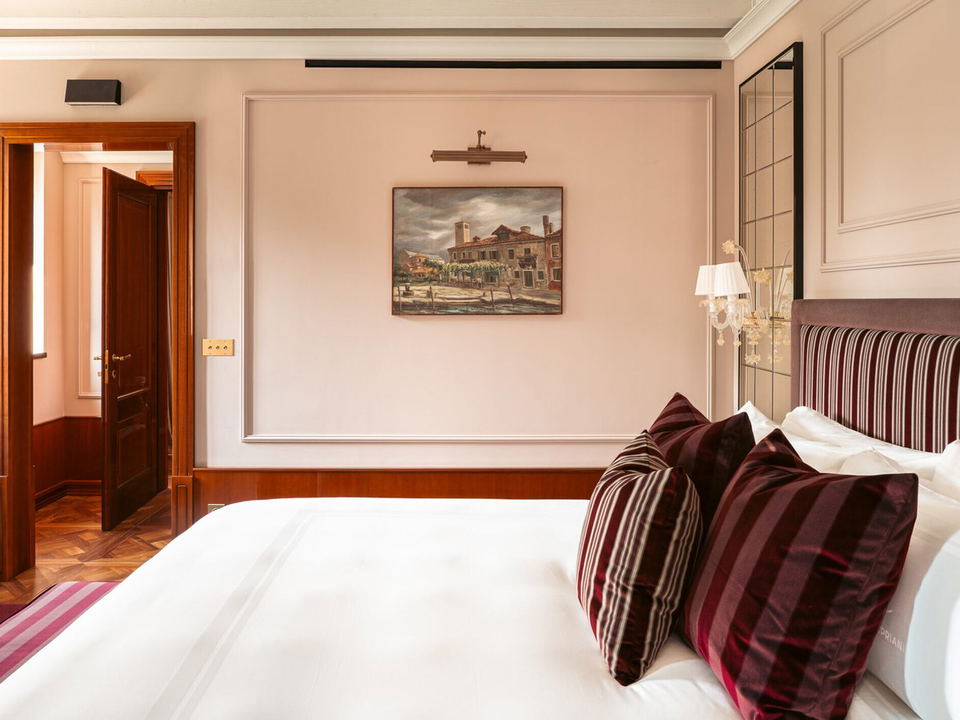
The four new suites follow that logic. Terraces overlook the gardens and the Basilica of Santa Maria Assunta, positioning the rooms as viewing platforms for the island's natural and architectural context. The white-painted ceiling beams lighten spaces that might otherwise feel heavy with history, while the high-gloss wood paneling and Murano glass fixtures add tactile detail without competing with the views.
The material palette reflects Venetian craft traditions, handblown glass from Vetreria Venier in Murano, pink marble columns in the pergola, and wood paneling that echoes the region's historic interiors. The approach avoids contemporary minimalism in favor of layered textures that feel grounded in place. For readers familiar with other Cipriani properties, the design here skews quieter and more restrained than the brand's urban locations.
The bar counter addition matters for the guest experience. Cipriani family properties typically use the bar as the social anchor, a place where guests gather before and after meals. At a ten-room property, that counter becomes the de facto communal space, particularly during shoulder seasons when the island sees fewer day-trippers from Venice proper.
What Staying on Torcello Island Actually Feels Like
Torcello sits about 25 minutes by boat from Venice, far enough to feel removed from the Grand Canal's foot traffic but close enough for a same-day return if you need mainland access. The island itself is sparsely populated, with medieval buildings, the Byzantine Basilica of Santa Maria Assunta, and the Church of Santa Fosca as the primary landmarks. Most visitors arrive as day-trippers, leaving by late afternoon, which means overnight guests have the island largely to themselves after sunset.
That isolation defines the experience. There are no cars, no cruise-ship crowds, and no late-night bar scene. The rhythm is slower, mornings in the gardens, afternoons at the basilica, evenings at the inn's restaurant. For readers who track Venice hotel openings, Locanda Cipriani offers the opposite of the Gritti Palace or the Cipriani Venice on Giudecca, less service polish, less infrastructure, but more seclusion.
The 25-minute boat ride is part of the appeal, but it's also a practical constraint. If you need frequent access to Venice proper, for business meetings, museum visits, or restaurant reservations, the commute adds friction. For readers planning a Venice itinerary, Locanda Cipriani works best as a standalone destination rather than a base for mainland exploration.
The island's history adds context. Torcello was one of the lagoon's first inhabited islands, predating Venice itself as a settlement. The Basilica of Santa Maria Assunta dates to the 7th century, with Byzantine mosaics that draw art historians and architecture students. The island's population peaked in the medieval period and has declined steadily since, today, fewer than 20 permanent residents live here. That depopulation is what makes the setting feel untouched, but it also means limited infrastructure beyond the inn and the basilica.
Booking Access, Pricing, and Seasonal Availability
Starting rates are approximately $860 per night, positioning Locanda Cipriani below Venice's top-tier luxury hotels but above mid-market boutique properties. At ten rooms total, availability tightens quickly during peak season, late spring through early fall, when the lagoon weather is warmest and the gardens are in bloom. Advance booking is essential if you're targeting specific dates.
The property operates seasonally, closing during winter months when lagoon conditions make boat access less reliable. That seasonal rhythm is common across smaller Venetian properties, but it narrows the booking window for readers planning trips outside the May-to-September corridor. For off-season travelers, the inn's closure means you'll need to consider mainland alternatives.
Room categories include the four new suites and the six original rooms. The suites offer more space, dedicated living areas, and terrace access, worth the premium if you plan to spend significant time on the property rather than exploring the island. The original rooms are smaller but still include the same design updates and garden views. For solo travelers or couples who prioritize location over square footage, the original rooms deliver the same island access at a lower rate.
Booking mechanics are straightforward, direct reservations through the Cipriani Group's website or by phone. No third-party platforms, no points programs, no dynamic pricing algorithms. That simplicity reflects the property's scale and the family's preference for direct guest relationships over distribution partnerships.
For readers comparing Venetian options, Locanda Cipriani sits in a category of its own. It's not a full-service luxury hotel like the Gritti Palace, not a design-forward boutique like the Palazzina Grassi, and not a sprawling resort like the Cipriani Venice on Giudecca. It's a ten-room inn on a depopulated island, 25 minutes by boat from the city center, with a guest list that spans monarchs and novelists. Worth booking if that isolation appeals to you, skip if you need the infrastructure and proximity of a mainland property.
The Cipriani family's expansion here, at a time when Venice is seeing a surge of high-profile openings, suggests confidence in the market for small-scale, heritage-driven properties. As more travelers seek alternatives to the Grand Canal's density, Torcello's remoteness becomes an asset rather than a limitation. The inn's reopening positions it as Venice's quietest luxury escape, ten rooms, one island, and a century of history that the family chose to preserve rather than modernize away.