67 Pall Mall Shanghai opens in Xuhui District in December 2026 with 5,000-plus wines from more than 40 countries and annual membership currently priced at RMB38,000 (£4,184). Worth tracking, and worth joining before December if you will use the cellar often, because the price rises to RMB50,000 (£5,500) with an unspecified joining fee after that window (Thedrinksbusiness1).
The reason to care is not only the address or the dues. Grant Ashton, founder and CEO of 67 Pall Mall, is putting more than 1,000 labels of fine Chinese wine inside a dedicated cellar, with bottles from Ningxia, Xinjiang, Yunnan and beyond named in the source report. If your Shanghai drinking life still runs through hotel bars, importer dinners and private bottles at restaurants, 67 Pall Mall Shanghai belongs on your 2026 shortlist. If you only want occasional by-the-glass access, the membership math is harder to defend (Thedrinksbusiness1).
Why 67 Pall Mall Shanghai Costs More Than Its Peers
The first decision is price. Until December, annual membership for 67 Pall Mall Shanghai is RMB38,000 (£4,184) with no joining fee, according to Joyce Yip's report. After that, the annual fee increases to RMB50,000 (£5,500) plus a joining fee that Ashton did not specify. That makes Shanghai more expensive on annual dues than the group's London, Singapore and Verbier clubs, which charge £2,750 (with a £2,000 joining fee), S$4,800 (£2,772, with a £1,150 joining fee) and CHF2,500 (£2,307, with a £1,846 joining fee), respectively (Thedrinksbusiness1).
That comparison matters because 67 Pall Mall is asking Shanghai members to pay a premium before the club has an operating rhythm in mainland China. London has the original-club pull. Singapore has a clear role for Southeast Asia collectors. Verbier works as a mountain-season wine room. Shanghai is being priced as a major address from day one. The value case depends on whether you will use the wine program often enough to make the by-the-glass list and private-room access part of your normal week (Thedrinksbusiness1).
Against Club Bâtard, the rival Hong Kong-based wine club preparing to open in Shanghai one month earlier, the first-year cash outlay looks different. Club Bâtard memberships are open at a one-time joining fee of RMB100,000 (£11,000) plus a monthly subscription of RMB1,250 (£137), according to the same report. Before December, 67 Pall Mall Shanghai is easier to enter on upfront cost. After the fee increase, the comparison depends on the still-undisclosed joining fee.
The cap is the other pressure point. Ashton said the Shanghai club 's membership will be capped at 1,500. That is not a tiny dining-room number, but it is small enough to create pressure if Shanghai collectors respond. For anyone who already spends heavily on wine storage, corkage, private dining and restaurant markups, RMB38,000 may be less about club status than controlled access to a deep list.
The 1,000-Label Chinese Wine Cellar Is the Real Test
The dedicated Chinese wine cellar is the most important part of 67 Pall Mall Shanghai. The club plans to hold more than 1,000 labels of fine Chinese wine, including rare, aged and collectible bottles from Ningxia, Xinjiang, Yunnan and beyond. That is a different proposition from adding a short local page to a global list. It asks members to taste Chinese labels as a serious category, not as a polite nod to location.
The cellar number is the fact that matters. More than 1,000 Chinese labels gives members enough range to compare regions, producers, bottle age and styles without treating the category as a token pour. It also changes the member experience from trophy drinking to repeat tasting. One evening can be about familiar European references. The next can be about Chinese bottles with enough depth behind them to make comparisons useful.
This is where 67 Pall Mall Shanghai could be more useful than another luxury hotel wine bar. A hotel can pour famous Bordeaux and a few domestic labels for context. A private wine club with around 1,000 wines available by the glass can make side-by-side drinking normal. That is the format collectors need if they are trying to understand Chinese wine beyond a producer dinner or a single bottle recommendation.
The club will feature 5,000-plus wines from more than 40 countries, with around 1,000 available by the glass. That by-the-glass number is the buying reason. If 67 Pall Mall Shanghai delivers the range implied by the figures, members can drink across categories without committing to full bottles. For collectors, that means lower-risk discovery. For Chinese producers, it puts their wines in front of members who already understand price, age and provenance.
What You Get Inside the Xuhui Maison
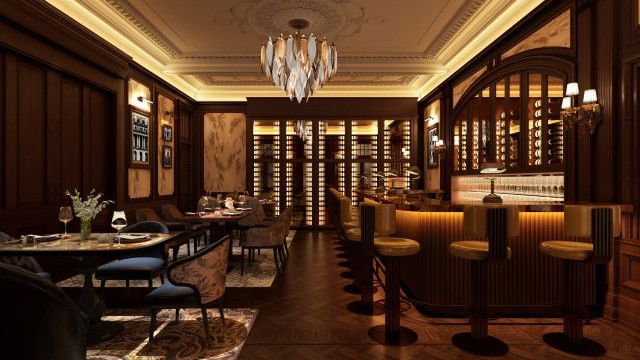
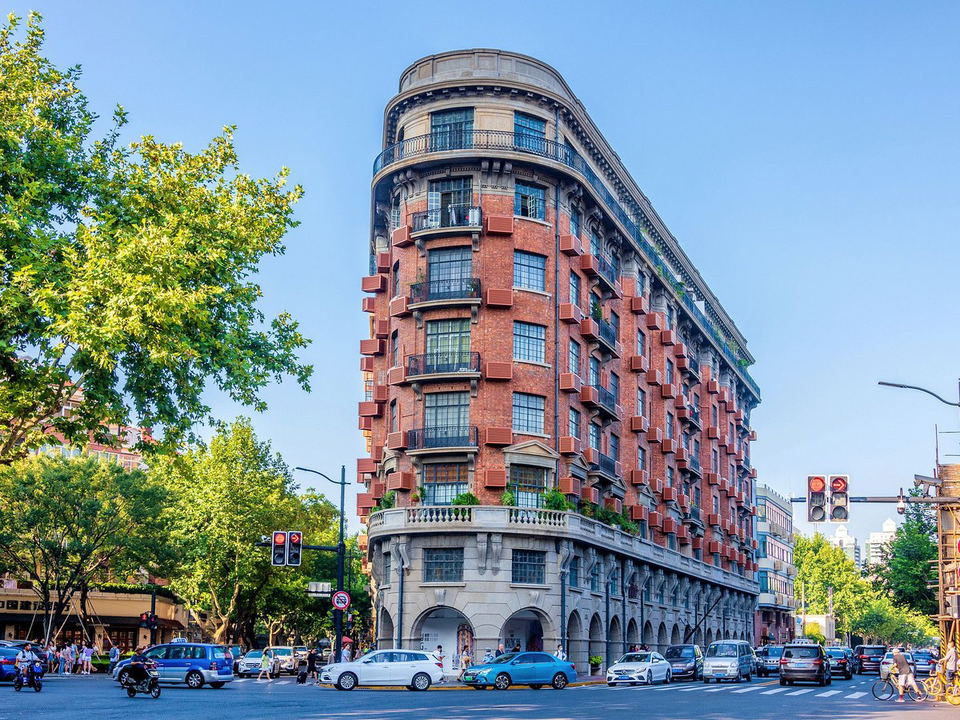
The address matters because Xuhui is one of the few Shanghai districts where the building can do some of the work before the bottle arrives. The club will be located in a century-old French Renaissance Maison in the city's historic Xuhui District. Do not book because the architecture sounds romantic. Book because a multi-floor members' club in a historic house gives 67 Pall Mall more ways to separate drinking formats: glass at the bar, private room dinner, spirits after wine, and repeat visits that do not feel like the same table every time.
According to the source, 67 Pall Mall Shanghai will include a baijiu bar alongside whisky and spirits offerings. That is useful if your group does not drink wine at the same pace. In Shanghai, private entertaining often needs more than a Burgundy list and a Decanter. A baijiu bar gives the club a local hosting tool; whisky and spirits broaden the room for mixed groups. For a wine-only purist, this may look like dilution. For anyone hosting clients or friends with different drinking habits, it makes the membership more practical.
The club will also have more private rooms than any other 67 Pall Mall club, according to Ashton's comments in the report. That is the feature to watch if you entertain in Shanghai. A large wine list gets attention, but private rooms decide whether members move dinners away from restaurants. If the rooms are easy to book, the club becomes a repeat hosting address. If they are hard to secure once the 1,500-member cap fills, the value drops quickly for anyone joining mainly for private dining.
Dress code, reservation mechanics and guest policies were not detailed in the source, so do not assume the operating rhythm yet. The sensible play is to treat 2026 as a tracking year: ask when private rooms can be booked, how many guests a member can bring, whether by-the-glass pricing is published in advance, and how the club will handle access during peak business weeks.
Why Shanghai Gets the First Mainland Club
Ashton has called Shanghai the most important wine market in the world, according to the source report. You do not need to accept the full claim to understand the move. 67 Pall Mall opened a bar residency in Hong Kong in January 2024, and Shanghai now gives the London-based private members' wine club its mainland China play. For collectors who split time between Hong Kong and Shanghai, that sequence is the point: Hong Kong remains a trade hub, while Shanghai is where 67 Pall Mall is placing the larger member bet.
The timing is competitive. Club Bâtard is preparing to launch its Shanghai outpost one month earlier than 67 Pall Mall Shanghai. That gives Shanghai collectors two private wine-club models to compare before the end of 2026. Club Bâtard arrives with a high joining fee and lower monthly subscription. 67 Pall Mall arrives with a higher annual fee, no joining fee until December, a 1,500-member cap and a large by-the-glass program. If you care about discovery by the glass, 67 Pall Mall has the stronger paper case. If you care about a lower recurring monthly amount after a large upfront payment, Club Bâtard may look cleaner.
December also creates a pricing deadline. The pre-December RMB38,000 annual membership is the number to judge. The post-December RMB50,000 annual membership plus an unspecified joining fee is a different product, even if the cellar is the same. If you are likely to join, waiting for opening photos may cost real money. If you are uncertain, wait for operating details. A historic house and a large list do not answer whether the private rooms are bookable, whether members can bring the right guests, or how the Chinese cellar will be presented night to night.
Who Should Join, and Who Should Wait
Join before December if you live in Shanghai, entertain often, and want structured access to Chinese wine without relying on restaurant lists. The RMB38,000 price is high, but it is the cleanest entry point currently stated. The case is strongest for collectors who will use the 1,000 by-the-glass options, book private rooms and bring guests who understand why a dedicated Chinese cellar matters.
Wait if you need proof of service rhythm, guest access or private-room availability. The source gives strong cellar numbers, but it does not give the mechanics that decide whether a private club becomes part of your life. A 1,500-member cap can create energy, but it can also create competition for the most useful rooms and times. Before paying the higher post-December price, ask for the details that affect your calendar.
Skip it if your wine life is still restaurant-led and you prefer paying per occasion. Shanghai already has enough high-end dining and hotel drinking rooms for occasional spending. 67 Pall Mall Shanghai is built for frequency. The more you want to taste across regions, host privately and compare Chinese bottles with European references, the better the membership reads. The less often you drink this way, the more the annual fee becomes status rent.
The thing to watch now is not whether Shanghai gets another luxury drinking room. It is whether 67 Pall Mall can turn more than 1,000 Chinese labels from a headline cellar into bottles members actually order, compare and collect after December 2026.