
Bar in Tokyo, Japan
TsuruTonTan UDON NOODLE Brasserie GINZA
100ptsFull-Service Udon Brasserie
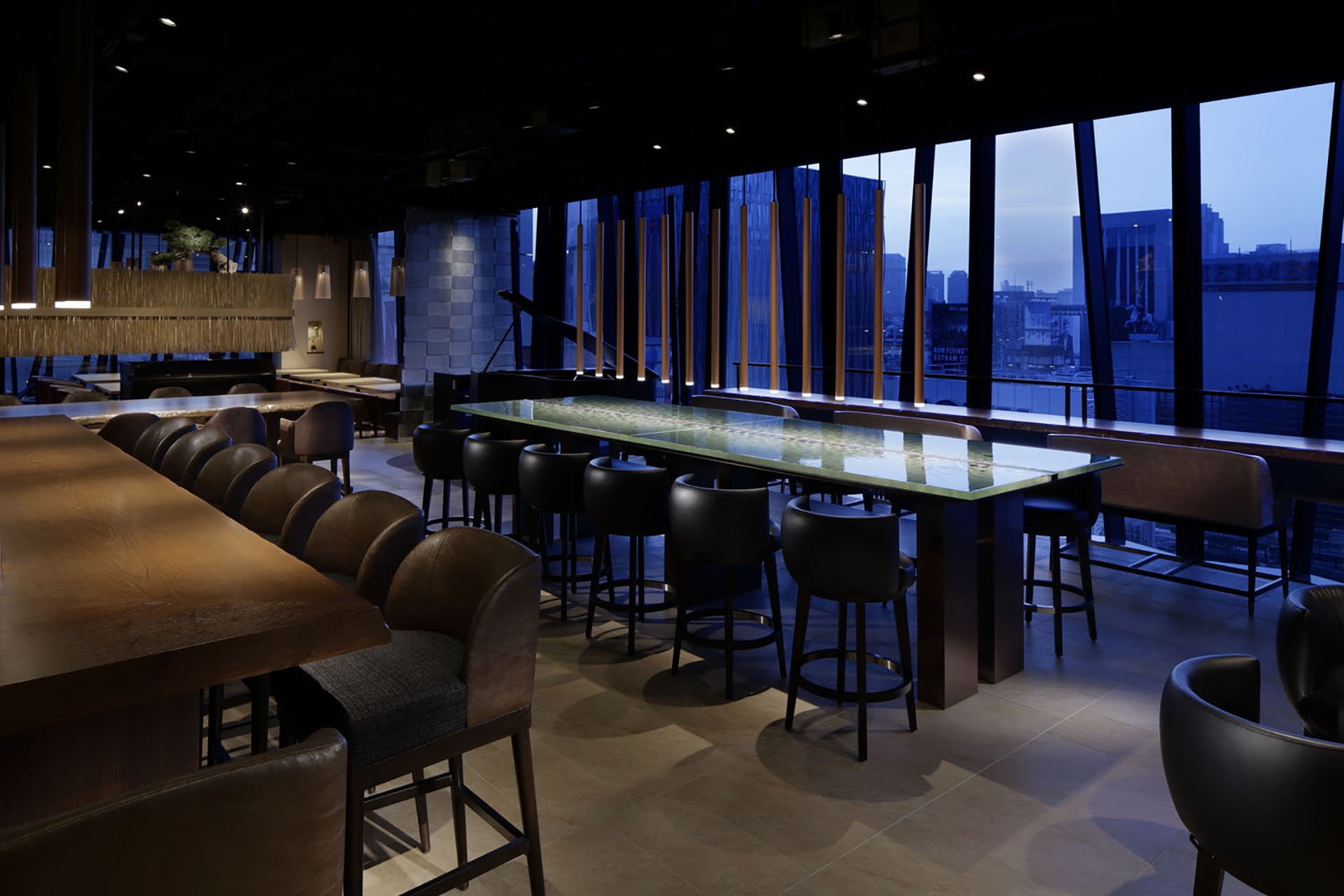
About TsuruTonTan UDON NOODLE Brasserie GINZA
On the tenth floor of Ginza NOVO, TsuruTonTan brings its brasserie format to one of Tokyo's most commercially dense districts, serving udon in a setting that sits closer to European dining room than traditional noodle counter. The chain's Ginza outpost draws a cross-section of office workers, shoppers, and out-of-towners who want something substantial without the ceremony of a kaiseki reservation.
Udon at Scale, in Ginza
The tenth floor of GINZA NOVO sits above one of Tokyo's most commercially concentrated stretches of Chuo-ku, where department stores and flagship boutiques occupy nearly every address on the Chome grid. That altitude, and the building it occupies, sets a particular expectation before you arrive at the host stand. TsuruTonTan UDON NOODLE Brasserie GINZA works within that expectation rather than against it: the room reads as a brasserie in the European sense, with the dimensional scale and ambient noise of a dining room designed for volume, applied to a format centered entirely on hand-made udon.
Udon, in its regional Japanese contexts, is typically a fast, unfussy proposition. Kagawa Prefecture's sanuki style is eaten at counters in minutes; Osaka's soft, rounded noodles arrive in casual surroundings. The TsuruTonTan model reframes that informality inside a full-service, multi-course-adjacent dining experience without abandoning the noodle's democratic origins. The result is a format that sits between izakaya accessibility and the deliberate pacing of a restaurant meal, which is a less common position in Tokyo's noodle category than it might appear.
The Arc of a Meal Here
The editorial angle most useful for understanding what TsuruTonTan Ginza is doing as a dining experience is sequence. A meal here does not function the way a bowl of noodles at a standing counter does, consumed in eight minutes before the next guest takes the stool. The pacing is structured around a progression: starters and small plates arrive first, building a context of flavor and texture before the main udon course anchors the meal.
In traditional brasserie logic, the sequence is predetermined by a prix-fixe or set menu architecture. TsuruTonTan applies a softer version of that structure, where the noodle bowl remains the gravitational center and the surrounding dishes orbit it. This approach mirrors what has happened across several categories of Japanese cuisine in recent decades: ramen-ya, tonkatsu specialists, and now udon houses have each found a premium tier where the primary ingredient is treated with the same course-building intention you would expect from an omakase counter, even if the price point and formality remain significantly lower.
For a reader planning the meal, this means arriving with appetite staged rather than collapsed. The room moves, but it does not rush. Ordering a range of starters alongside the noodle course rather than replacing them makes more structural sense within the restaurant's rhythm. Ginza's dining culture, shaped by decades of expense-account formality and high-end kaiseki tradition, has conditioned restaurants in the area to support longer table times than comparable formats in, say, Shinjuku or Shibuya.
Where Ginza Places This Format
Ginza's bar and restaurant scene skews toward the premium end of nearly every category. The cocktail bars within a short walk of GINZA NOVO include Bar Orchard Ginza, which operates in the fruit-forward precision tier of Tokyo bartending, and the Bulgari Ginza Bar, which sits inside the tower hotel and prices against international luxury comparables. Star Bar Ginza and Tender Bar represent the classic-leaning, high-craft end of the neighbourhood's bar tradition, bars where a single drink is a considered event rather than a preamble.
In that company, TsuruTonTan occupies a different bracket: it is the neighbourhood's answer to accessible volume dining executed at a quality level consistent with the address. The noodle format gives it natural democratic appeal that none of its immediate bar-scene neighbours can claim. You can bring someone unfamiliar with Tokyo's dining hierarchy to TsuruTonTan without needing to brief them on etiquette, tasting menu structure, or booking windows measured in months. That accessibility is not a concession to the format; it is the format.
For readers building an itinerary around Ginza's food and drink scene, TsuruTonTan functions well as an early-evening anchor before moving to one of the neighbourhood's more intimate bar programs. The meal ends decisively rather than trailing into dessert indecision, which makes it logistically clean. Bar High Five, a few minutes' walk, is one of Tokyo's most carefully run bar programs, and Bar Benfiddich in Shinjuku represents the experimental botanical end of the city's cocktail tradition if you want to extend the evening further afield.
Tokyo Udon in Broader Context
Tokyo's noodle market is divided roughly into ramen (the dominant category by sheer number of venues and media coverage), soba (which carries cultural weight in older Tokyo neighbourhoods and traditional restaurant culture), and udon (which has historically been treated as the less prestigious of the wheat noodle categories in an eastern Japan context). That hierarchy has shifted over the past decade as Kagawa-style sanuki udon chains expanded nationally and premium udon formats began appearing in high-traffic urban locations.
TsuruTonTan was among the earlier brands to reposition udon as a sit-down, full-service experience rather than a fast counter proposition. The Ginza location places that bet in the neighbourhood where the price-to-ambition ratio is most legible to both domestic and international diners. The brand has multiple locations across Japan and internationally, which means the Ginza address functions as a flagship-tier expression rather than an experimental one. Readers visiting Japan across multiple cities should note that similar experiences are available in Osaka, though the Ginza context adds a specific layer of neighbourhood contrast that changes how the format reads. If you are moving through western Japan, Bar Nayuta in Osaka and Bee's Knees in Kyoto are worth anchoring evenings around, while Lamp Bar in Nara and Yakoboku in Kumamoto extend the geography further. For a broader view of Tokyo's dining and drinking scene, our full Tokyo restaurants guide maps the categories in more detail.
For visitors to Japan who are also building bar itineraries beyond Tokyo, anchovy butter in Osaka Shi, Kyoto Tower Sando in Kyoto Shi, and Bar Libre in Tokyo represent distinct ends of the Japanese bar spectrum worth noting alongside any dinner planning. International travellers connecting through the Pacific might also note Bar Leather Apron in Honolulu as a quality benchmark in a different context.
Know Before You Go
Location: 10th floor, GINZA NOVO, 5-2-1 Ginza, Chuo City, Tokyo 104-0061
Neighbourhood: Ginza, Central Tokyo
Format: Full-service udon brasserie; sit-down with starter and noodle progression
Price range: Not confirmed in current data; Ginza address suggests mid-to-upper casual tier
Reservations: Booking method not confirmed; walk-in availability typical for brasserie-format udon, though Ginza volume at peak hours may warrant advance planning
Hours: Not confirmed; verify directly before visiting
Contact: Phone and website not listed in current data; check GINZA NOVO building directory for current details
Frequently Asked Questions
What cocktail do people recommend at TsuruTonTan UDON NOODLE Brasserie GINZA?
TsuruTonTan's primary identity is as a udon restaurant rather than a cocktail destination, so drinks function as accompaniments rather than the main event. The Ginza neighbourhood, however, is densely served by serious cocktail programs: Bar Orchard Ginza specialises in fruit-forward precision cocktails and is within close reach of the GINZA NOVO building. For post-dinner drinks in a more classic register, the neighbourhood's dedicated bar culture gives you several options without needing to travel far.
What should I know about TsuruTonTan UDON NOODLE Brasserie GINZA before I go?
The venue sits on the tenth floor of GINZA NOVO, which means you are entering a full-service dining room rather than a casual noodle counter. The format is structured around a progression from small plates to the udon course, so arriving with time to work through multiple dishes makes more sense than treating it as a quick stop. Specific hours and booking details are not confirmed in current data, so verifying directly before your visit is the practical starting point. Ginza's dining culture generally supports longer table times than faster-turnover Tokyo neighbourhoods.
How hard is it to get in to TsuruTonTan UDON NOODLE Brasserie GINZA?
If the format follows the brasserie model consistently, walk-in access during off-peak hours is likely more achievable than at a counter-seat omakase, where allocation is the primary constraint. That said, Ginza at peak dinner service on weekends draws significant foot traffic, and a high-profile address on the tenth floor of a shopping complex attracts both domestic and international diners. Booking method is not confirmed in current data; checking availability in advance is the lower-risk approach regardless of typical walk-in patterns.
Who tends to like TsuruTonTan UDON NOODLE Brasserie GINZA most?
The format works well for diners who want a structured, full-service meal in Ginza without committing to the price point or booking complexity of the neighbourhood's kaiseki or omakase options. It also suits mixed groups where one or more people are less familiar with Japanese dining formality, since the udon premise is immediately legible and the brasserie setting removes most of the etiquette friction. Tokyo visitors on shorter itineraries who want a quality meal that does not require weeks of advance planning fall into the natural audience here.
Does TsuruTonTan UDON NOODLE Brasserie GINZA live up to the hype?
The hype, such as it is, centres on the format rather than on fine-dining credentials: TsuruTonTan is not a Michelin-decorated restaurant, and placing it in that frame sets the wrong expectation. Assessed as a premium udon brasserie in one of Tokyo's most commercially demanding neighbourhoods, the question is whether the quality-to-accessibility ratio holds. The brand's multi-location presence across Japan and internationally suggests the model is consistent rather than dependent on a single chef or location's idiosyncrasies, which is both a reassurance and a caveat for readers seeking a singular experience.
Is TsuruTonTan Ginza different from other TsuruTonTan locations in Japan?
TsuruTonTan operates across multiple Japanese cities, which means the core format, hand-made udon in a full-service brasserie setting, is consistent across locations. The Ginza address distinguishes itself primarily through context: the neighbourhood's density of high-end dining and the building's commercial positioning make this the brand's highest-profile domestic address. For a visitor covering multiple Japanese cities, the experience at the Ginza location will read as the reference point against which other branches feel more local and less curated. The noodle product itself is the constant; what changes is the room and the surrounding neighbourhood argument.
More bars in Tokyo
- 8bit Cafe8bit Cafe in Shinjuku is Tokyo's retro gaming bar — a fun, low-pressure stop that works best as an early-evening warm-up rather than a serious cocktail destination. Walk-ins are easy and the crowd is casual and young. Go for the atmosphere, not the bar program, and plan to move on to somewhere like Bar Benfiddich for the serious drinking.
- A10A10 is a basement bar in Ebisu West, Shibuya — a neighbourhood that signals a drinks-serious crowd over a nightlife-first one. Booking difficulty is low, making it accessible for first-timers, but confirm capacity and hours directly before visiting. Best suited to small groups of two to four looking for a considered, low-noise drinking environment in one of Tokyo's more relaxed upscale pockets.
- Ahiru StoreAhiru Store is a relaxed neighbourhood wine bar in Tomigaya, Shibuya, suited to unhurried evenings and easy to book when busier Tokyo bars are full. The atmosphere stays calm and conversational, making it a practical choice for explorers who want a quieter, more residential side of Tokyo's drinking scene rather than a polished Ginza experience.
Related editorial
- Asia's 50 Best Restaurants 2026: The Chairman and Wing Go 1-2 from the Same BuildingThe Chairman takes No. 1 and Wing climbs to No. 2 at Asia's 50 Best Restaurants 2026. Both operate from the same Hong Kong building. Here's what it means.
- Four Seasons Yachts Debut: 95 Suites, 11 Restaurants, and a March 2026 Maiden VoyageFour Seasons I launches March 20, 2026, with 95 suites, a one-to-one staff ratio, and 11 onboard restaurants. Worth tracking if you want hotel-grade service at sea.
- LA Michelin Guide 2026: Seven New Restaurants from Tlayudas to Uzbek DumplingsMichelin's March 2026 California Guide update adds six LA restaurants and one Montecito newcomer, spanning Oaxacan tlayudas, Uzbek manti, and Korean-Italian pasta.
Save or rate TsuruTonTan UDON NOODLE Brasserie GINZA on Pearl
Keep this venue in your Pearl passport, rate it after you visit, and track it alongside every other place you collect.