
Bar in New York City, United States
Il Buco Alimentari & Vineria
100ptsItalian-Rooted Neighbourhood Provisioning
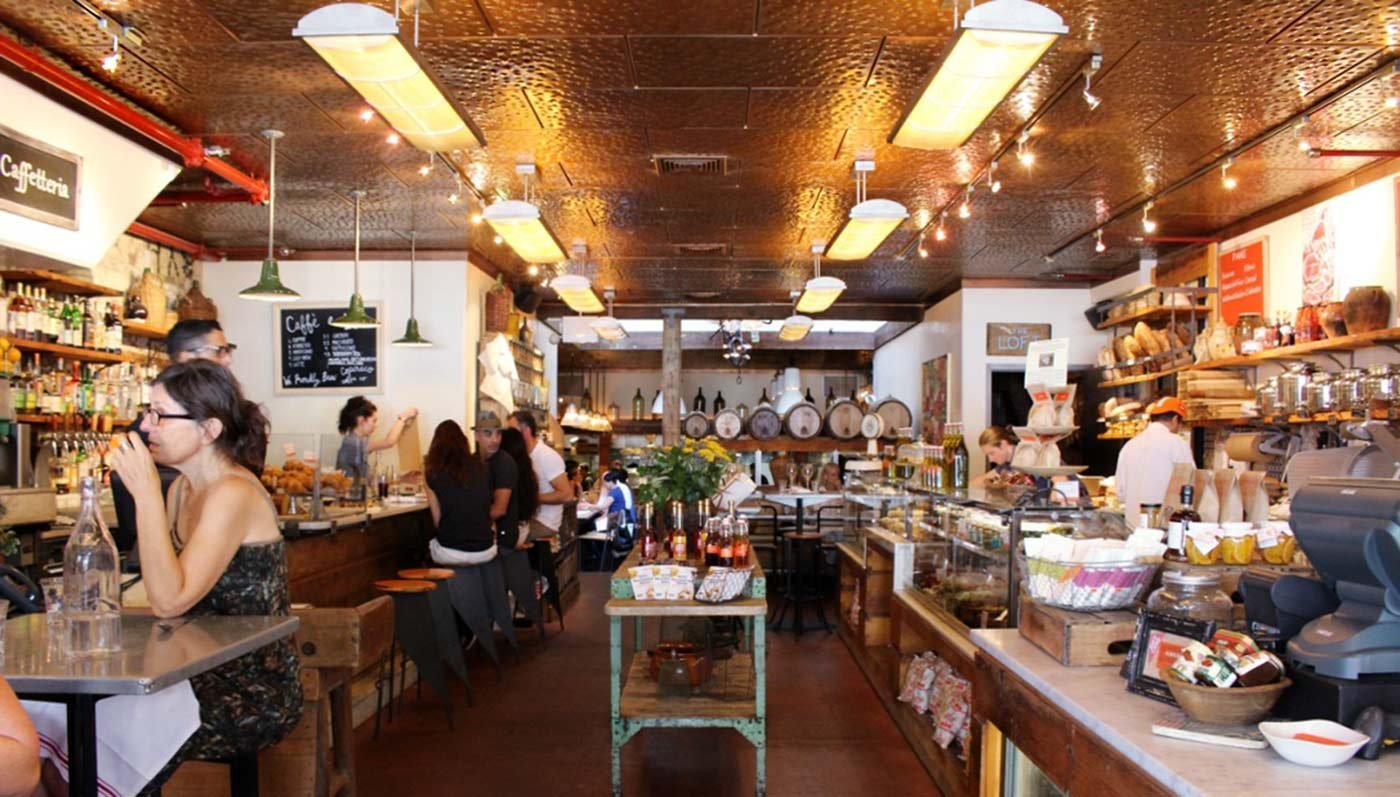
About Il Buco Alimentari & Vineria
On Great Jones Street in NoHo, Il Buco Alimentari & Vineria has operated as a neighbourhood anchor since opening as the casual sibling to the original Il Buco on Bond Street. The format combines an all-day Italian-inflected kitchen with a wine-focused bar and a well-stocked deli counter, drawing regulars from the surrounding blocks as reliably as it draws visitors with more deliberate intentions.
Great Jones Street and the Shape of a Neighbourhood Restaurant
NoHo has never settled into a single dining identity. The blocks between Houston and Bleecker, between Broadway and the Bowery, have cycled through art galleries, independent retail, and restaurants that range from destination-level to deeply neighbourhood-oriented. Il Buco Alimentari & Vineria, at 53 Great Jones Street, sits closer to the second category than the first, even if its reputation has long since crossed the boundary. Opened as the market-and-wine-bar extension of the original Il Buco on Bond Street, the Alimentari operates on a different register: less occasion-driven, more built for daily life, with a deli counter, a bar program, and a kitchen that runs across most of the day. That format, rare enough in New York City to be worth noting, gives the space its particular role in the neighbourhood.
The distinction between a restaurant you visit and a restaurant that becomes part of your weekly pattern is largely structural. In a city where most rooms are organised around dinner service and the theatre of a reservation, all-day Italian formats with a functioning retail component occupy a smaller, more stable niche. The Alimentari belongs to that niche, and has for long enough that it functions less as a discovery and more as a known coordinate for anyone who spends meaningful time in lower Manhattan. For our full guide to where to eat and drink across the city, see our New York City restaurants guide.
The Bar as Common Ground
In a neighbourhood without a dominant bar culture, the wine and aperitivo side of the Alimentari fills a gap that few spaces in NoHo address. The bar program here is not built around technique-forward cocktails or the kind of single-spirit focus that defines the East Village's more specialist rooms. It is built around Italian wine, amaro, and the kind of drinking that accompanies a meal rather than preceding or following it. That orientation places it in a different competitive set from the city's notable cocktail bars, which increasingly operate as destination venues in their own right.
New York's cocktail scene has spent the last decade consolidating around technical ambition and provenance-led menus. Bars like Amor y Amargo have made amaro the centre of a serious program; Attaboy NYC operates on bespoke, guest-led formats; Angel's Share has held its East Village address for decades as a precision-focused Japanese-American cocktail room. The Alimentari is not competing with any of these. Its bar serves the room it shares with the kitchen: it is where you wait for a table, where you sit alone with a glass and the counter as company, where the aperitivo hour extends into dinner without anyone marking the transition. That function, the bar as social infrastructure rather than destination, is what gives it its particular neighbourhood weight. Across the country, bars that perform this role reliably over time are noted precisely for their consistency: ABV in San Francisco and Kumiko in Chicago both operate with a similar anchoring logic in their respective cities.
The Kitchen and the Counter
The food program at the Alimentari draws from the same Italian-rooted sourcing philosophy that defines the original Il Buco, but applies it across a wider range of occasions. The deli counter has functioned as a reference point for charcuterie and house-cured product in a city where that kind of retail-meets-restaurant format remains genuinely uncommon. New York has plenty of Italian restaurants and a growing number of wine bars, but fewer spaces where you can buy provisions, sit at the bar with a natural wine, and move into a full meal without changing rooms or sensibility.
That continuity of experience matters more than it might seem. The all-day format demands a kitchen that can hold its standard across lunch, the mid-afternoon counter trade, and evening service. In most cities, this would be unremarkable. In New York, where labour costs and real estate economics push most restaurants toward narrow service windows, it represents a genuine operational commitment. The Alimentari has maintained that commitment long enough that the format itself has become part of what regulars rely on.
NoHo, the Block, and How to Use the Space
Great Jones Street is not a dining destination in the way that, say, a particular block of the West Village or a stretch of the Lower East Side functions as one. It is a working block in a neighbourhood that has resisted easy categorisation, which is part of why a room like the Alimentari can hold its place there without competing against a cluster of similar venues. The nearest analogue in terms of positioning might be a European all-day neighbourhood restaurant, the kind of place that serves the same regulars at lunch and a different crowd at dinner, with the bar in between.
Practically, the address is accessible from the B, D, F, M trains at Broadway-Lafayette or the 6 at Bleecker Street, both within a short walk. The room is not large, and the format leans toward walk-ins and counter seating for solo or duo visits, though dinner service warrants checking ahead, particularly later in the week. For visitors staying in lower Manhattan or moving between NoHo, the Village, and SoHo, the Alimentari works as both a stopping point and a full evening. Visitors with an interest in the city's bar geography might also explore Superbueno nearby, which operates on a different register but shares the commitment to a specific, considered program.
The wine list skews Italian and natural, aligned with the kitchen rather than assembled as a separate attraction. This is consistent with how the most effective neighbourhood rooms in this city build their beverage programs: the list supports the food, the staff know it, and the selection turns over often enough to reward repeat visits. For those interested in how bars with similar ethos operate in other markets, Jewel of the South in New Orleans, Julep in Houston, and Allegory in Washington, D.C. each demonstrate how a strong beverage identity can anchor a room's community role without requiring cocktail-destination credentials. Internationally, Bar Leather Apron in Honolulu and The Parlour in Frankfurt on the Main represent similar neighbourhood-anchor formats in very different cities.
Frequently Asked Questions
- What do regulars order at Il Buco Alimentari & Vineria?
- The house-cured charcuterie from the deli counter is a consistent draw, alongside the Italian-focused wine list that regulars treat as a rotating reference rather than a fixed selection. The all-day format means the counter crowd at lunch and the dinner crowd share the same menu logic, which tends to reward those who return often enough to track what changes.
- What should I know about Il Buco Alimentari & Vineria before I go?
- The Alimentari operates as an all-day Italian market, bar, and restaurant at 53 Great Jones Street in NoHo, a few minutes walk from Broadway-Lafayette. It is the sister venue to the original Il Buco on Bond Street, but runs on a more casual, counter-oriented format. Expect a room that rewards walk-in bar visits as much as seated dinners, with a wine program built around Italian and natural producers.
- Can I walk in to Il Buco Alimentari & Vineria?
- For counter seating and bar visits, walking in is generally viable, particularly at off-peak hours. Dinner service for a full table, especially Thursday through Saturday, benefits from booking ahead. The all-day format means the room absorbs drop-in traffic at lunch and mid-afternoon more easily than most New York City restaurants in a similar bracket.
- Who tends to like Il Buco Alimentari & Vineria most?
- The room draws a consistent mix of neighbourhood regulars, wine-focused diners, and visitors who want Italian food with market-level ingredient sourcing rather than formal dining room theatre. It suits solo diners and pairs as much as groups, given the counter and bar configuration. Those who appreciate the deli-retail component often return specifically for it.
- Should I make the effort to visit Il Buco Alimentari & Vineria?
- If your interest is in Italian wine, house-cured product, and an all-day format that functions as a genuine neighbourhood room rather than a destination performance, the Alimentari earns the detour. It is not the place to go for a special-occasion dinner in the conventional New York sense, but for the specific combination of market, bar, and kitchen it offers, there are very few direct equivalents at this address or price position in lower Manhattan.
- How does Il Buco Alimentari & Vineria relate to the original Il Buco, and does it matter which one you visit?
- The two venues share an ownership, sourcing philosophy, and Italian-rooted identity, but operate on substantially different formats. The original Il Buco on Bond Street functions as a more formal dinner restaurant with a longer culinary history, while the Alimentari leans into the all-day market-and-bar model with a deli counter and a more casual register. Visitors with a specific interest in the wine and charcuterie counter, or in dropping in without a reservation, are better served by the Alimentari; those seeking a sit-down dinner occasion may find the original Il Buco a closer fit.
More bars in New York City
- (SUB)MERCER(SUB)MERCER occupies a basement address on Mercer Street in SoHo, positioning it as a deliberate destination rather than a drop-in. The subterranean format tends to keep ambient noise lower than street-level alternatives, making it a reasonable call for groups of four or more. Book ahead for weekends and confirm group capacity directly with the venue.
- 1 OR 81 OR 8 on DeKalb Avenue is a low-key Fort Greene bar that works best for two people on a weeknight when the room is quiet enough for conversation. Walk-ins are easy, no advance planning required. If a specialist cocktail program is your priority, Attaboy or Amor y Amargo offer more defined experiences — but for a neighbourhood drink without the fuss, this delivers.
- 230 Fifth Rooftop Bar230 Fifth is the easiest rooftop bar in Midtown to walk into, and the Empire State Building views justify the trip. The crowd skews groups and tourists, and the drinks are solid rather than craft-focused. Go early on a weekday for the best version of the experience; after 9 PM on weekends it tips firmly into party-group territory.
- 4 Charles Prime Rib4 Charles Prime Rib is a compact, reservation-required West Village dining room built around a focused prime rib format. It works well for dates and pairs but is too small for groups of four or more. Booking is easy relative to Manhattan peers, and the narrow menu signals a kitchen that executes one thing consistently well.
- 44 & X Hell's KitchenA low-key Hell's Kitchen neighborhood bar-restaurant that earns its place for easy weeknight dates and pre-theatre dinners. Booking is simple, the room is intimate enough for conversation, and there's no dress pressure. Not a cocktail destination, but a reliable, pressure-free option in Midtown West when you want comfort over spectacle.
- 58-22 Myrtle Ave58-22 Myrtle Ave is a low-key Ridgewood neighborhood spot that rewards return visits more than first impressions. Easy to get into, with no reservation headaches, it suits regulars looking for an unpretentious room rather than a structured cocktail program. If a strong drinks list or kitchen ambition matters to you, look to Attaboy or Amor y Amargo instead.
Related editorial
- Asia's 50 Best Restaurants 2026: The Chairman and Wing Go 1-2 from the Same BuildingThe Chairman takes No. 1 and Wing climbs to No. 2 at Asia's 50 Best Restaurants 2026. Both operate from the same Hong Kong building. Here's what it means.
- Four Seasons Yachts Debut: 95 Suites, 11 Restaurants, and a March 2026 Maiden VoyageFour Seasons I launches March 20, 2026, with 95 suites, a one-to-one staff ratio, and 11 onboard restaurants. Worth tracking if you want hotel-grade service at sea.
- LA Michelin Guide 2026: Seven New Restaurants from Tlayudas to Uzbek DumplingsMichelin's March 2026 California Guide update adds six LA restaurants and one Montecito newcomer, spanning Oaxacan tlayudas, Uzbek manti, and Korean-Italian pasta.
Save or rate Il Buco Alimentari & Vineria on Pearl
Keep this venue in your Pearl passport, rate it after you visit, and track it alongside every other place you collect.