
Bar in New York City, United States
Ambassadors Clubhouse
100ptsClubhouse-Format Cocktails
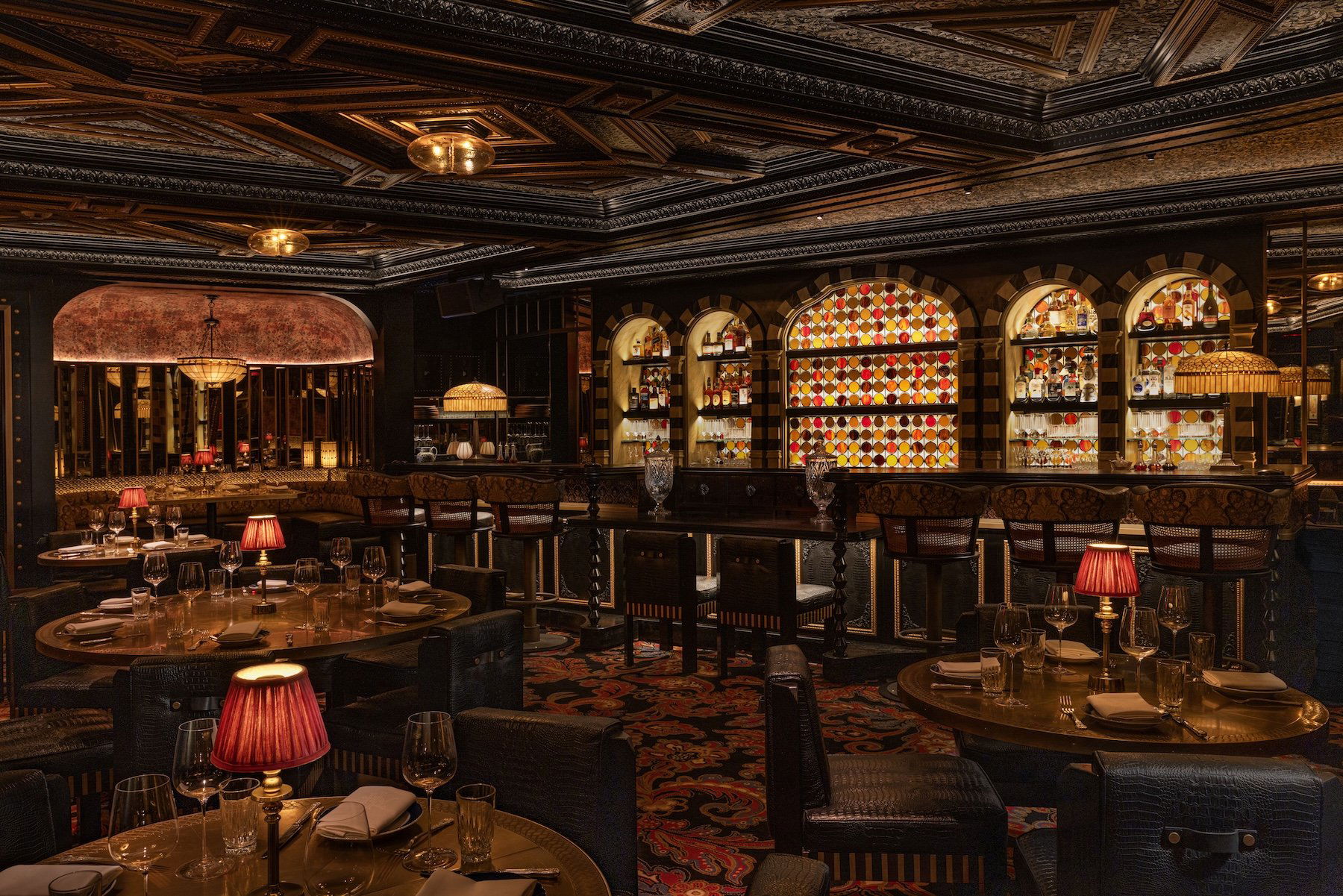
About Ambassadors Clubhouse
Ambassadors Clubhouse occupies a particular tier in New York City's bar and dining culture where setting and service operate as a unified proposition. The clubhouse format — increasingly rare in a city that favors open, casual rooms — positions it alongside a small cohort of venues where the experience is structured and sequential rather than drop-in. For visitors familiar with the city's more transparent cocktail programs, the contrast is deliberate.
The Room Before the First Round
New York's bar culture has spent the better part of a decade moving toward openness: exposed brick, visible ice programs, bartenders who narrate their process. The clubhouse format runs counter to that. It implies enclosure, membership logic, and a room that signals something before anyone has ordered. Ambassadors Clubhouse sits inside this less common tradition, where the physical environment carries editorial weight from the moment you enter, and the sequence of what follows is shaped by the space as much as the menu.
That sequencing matters. In venues structured around a tasting progression — whether cocktail flights, multi-course pairings, or a deliberately paced drinks menu — the room functions as a first course in itself. What you see and feel on arrival sets the register for everything that follows. The clubhouse model, which New York has historically exported to cities like London and Hong Kong, is now a niche proposition even within Manhattan, where large open-plan bars dominate the mid-market and intimate counters define the high end.
Where Ambassadors Clubhouse Sits in the City's Drinking Map
New York's cocktail scene has fragmented into distinct tiers and philosophies. On one side sit the technically rigorous programs: venues like Attaboy NYC, where the bartender-led, no-menu format puts all emphasis on the interaction and the drink itself, or Amor y Amargo, which has built an entire identity around bittersweet spirits and functions almost as a specialist shop that also serves you. On another side sit the atmosphere-forward rooms, where design, history, or concept anchors the experience. Angel's Share , tucked above a Japanese restaurant in the East Village since the early 1990s , represents the older version of this model: low lighting, strict house rules, a room that demands a certain comportment.
Ambassadors Clubhouse operates closer to the latter cohort. The draw is not the naked technical display of the bartender's process, but the frame around it. In cities with a strong club-dining tradition, this format often commands a price premium and a different booking logic than walk-in cocktail bars. New York has historically supported both, though the post-pandemic bar market has thinned the middle ground between casual neighborhood rooms and destination-level venues.
For context on how this format travels: Bar Leather Apron in Honolulu and Kumiko in Chicago both operate structured, atmosphere-led programs where the sequence of service is as considered as the drinks themselves. Allegory in Washington, D.C. applies a similar principle with a narrative-driven concept. Ambassadors Clubhouse belongs to this conversation, even if its New York address puts it in a more competitive market.
The Progression: How the Experience Is Structured
The most useful way to understand a venue like this is through its sequencing. A well-structured drinks program in a room with clubhouse logic typically moves through distinct phases: an arrival drink calibrated to the space, a middle section where the more complex or spirit-forward options sit, and a closing act that resolves the evening. This arc mirrors the tasting progression structure that defines the better multi-course restaurant experiences in the same city tier.
At bars where the room is doing significant work , where the atmosphere is part of the proposition and not incidental to it , the quality of that progression often depends on whether the drinks program matches the register set by the space. A technically precise but emotionally flat menu in a room designed for occasion-drinking creates dissonance. The strongest venues in this format, from Jewel of the South in New Orleans to The Parlour in Frankfurt on the Main, resolve that tension by building menus that match the room's emotional temperature.
New York has a handful of rooms that get this right. Superbueno does it through maximalist Latin-American energy that makes the room and the glass feel continuous. Julep in Houston (worth noting for comparative purposes) achieves it through Southern hospitality as a structural principle. ABV in San Francisco takes the opposite route: stripping back the room to let the drinks carry everything. Ambassadors Clubhouse reads as a different proposition from all of these.
Planning a Visit
The clubhouse model in New York typically operates with some version of reservation or membership logic, and venues in this tier often have capacity constraints that make walk-in access unreliable, particularly on evenings where the room is hosting a full complement of guests. Given the venue's positioning, arriving without a confirmed booking carries real risk of not being seated. The city's most comparable rooms in this format recommend booking at least a week ahead for weekend visits; midweek access is generally more flexible. For a broader orientation to where Ambassadors Clubhouse sits relative to the full spectrum of the city's bars and restaurants, the EP Club New York City guide maps the relevant peer set across neighborhoods and price tiers.
What to drink is shaped by the format: in structured, occasion-led rooms, the tendency is toward spirit-forward classics or house originals with enough complexity to reward attention over the course of an evening rather than high-volume, quick-turn cocktails. The distinction matters because it tells you something about the pacing the venue expects. Coming in with a grab-and-go mindset in a room built for a longer arc produces a mismatch that is as much the guest's problem as the venue's.
Frequently Asked Questions
What should I drink at Ambassadors Clubhouse?
In a venue where the room and the program are designed to work together, the strongest choices tend to be the house originals or spirit-forward classics that reward slower consumption. Clubhouse-format bars in New York typically anchor their menus around whisky, aged rum, or complex gin-based drinks rather than high-citrus, high-volume cocktails. Ask the bartender for their sequencing recommendation: in venues structured around a progression, that question usually unlocks the most considered response.
What's the main draw of Ambassadors Clubhouse?
The draw is the format itself. In a city where the dominant cocktail bar model is either the walk-in technical counter or the large-format hotel bar, the clubhouse proposition , structured, atmosphere-led, occasion-appropriate , occupies a distinct position. It is not primarily a destination for the drinks in isolation, but for the experience of drinking in a room built to make the occasion feel considered. That positions it as a peer of venues where setting and service function as a unified package rather than separate components.
Is Ambassadors Clubhouse reservation-only?
Venues operating in the clubhouse format in New York typically require or strongly prefer reservations, particularly for evening sittings. Walk-in availability depends on capacity and the night of the week. Given the positioning of Ambassadors Clubhouse within a tier where the room size is likely limited, confirming a booking in advance is the safer approach. Check the venue's current booking channels directly, as policy in this format can differ from standard restaurant reservation platforms.
How does Ambassadors Clubhouse compare to other structured cocktail experiences in New York?
The clubhouse format distinguishes itself from the bartender-interaction model (as at Attaboy NYC) and the specialist-spirits model (as at Amor y Amargo) by making the room itself a primary element of the proposition. Peer venues in other cities that operate comparable formats include Bar Leather Apron in Honolulu and Kumiko in Chicago, both of which pair a considered physical environment with a sequenced, deliberate drinks program. In New York's current market, rooms that operate with this level of format discipline are a smaller cohort than the city's overall bar count might suggest.
More bars in New York City
- (SUB)MERCER(SUB)MERCER occupies a basement address on Mercer Street in SoHo, positioning it as a deliberate destination rather than a drop-in. The subterranean format tends to keep ambient noise lower than street-level alternatives, making it a reasonable call for groups of four or more. Book ahead for weekends and confirm group capacity directly with the venue.
- 1 OR 81 OR 8 on DeKalb Avenue is a low-key Fort Greene bar that works best for two people on a weeknight when the room is quiet enough for conversation. Walk-ins are easy, no advance planning required. If a specialist cocktail program is your priority, Attaboy or Amor y Amargo offer more defined experiences — but for a neighbourhood drink without the fuss, this delivers.
- 230 Fifth Rooftop Bar230 Fifth is the easiest rooftop bar in Midtown to walk into, and the Empire State Building views justify the trip. The crowd skews groups and tourists, and the drinks are solid rather than craft-focused. Go early on a weekday for the best version of the experience; after 9 PM on weekends it tips firmly into party-group territory.
- 4 Charles Prime Rib4 Charles Prime Rib is a compact, reservation-required West Village dining room built around a focused prime rib format. It works well for dates and pairs but is too small for groups of four or more. Booking is easy relative to Manhattan peers, and the narrow menu signals a kitchen that executes one thing consistently well.
- 44 & X Hell's KitchenA low-key Hell's Kitchen neighborhood bar-restaurant that earns its place for easy weeknight dates and pre-theatre dinners. Booking is simple, the room is intimate enough for conversation, and there's no dress pressure. Not a cocktail destination, but a reliable, pressure-free option in Midtown West when you want comfort over spectacle.
- 58-22 Myrtle Ave58-22 Myrtle Ave is a low-key Ridgewood neighborhood spot that rewards return visits more than first impressions. Easy to get into, with no reservation headaches, it suits regulars looking for an unpretentious room rather than a structured cocktail program. If a strong drinks list or kitchen ambition matters to you, look to Attaboy or Amor y Amargo instead.
Related editorial
- Asia's 50 Best Restaurants 2026: The Chairman and Wing Go 1-2 from the Same BuildingThe Chairman takes No. 1 and Wing climbs to No. 2 at Asia's 50 Best Restaurants 2026. Both operate from the same Hong Kong building. Here's what it means.
- Four Seasons Yachts Debut: 95 Suites, 11 Restaurants, and a March 2026 Maiden VoyageFour Seasons I launches March 20, 2026, with 95 suites, a one-to-one staff ratio, and 11 onboard restaurants. Worth tracking if you want hotel-grade service at sea.
- LA Michelin Guide 2026: Seven New Restaurants from Tlayudas to Uzbek DumplingsMichelin's March 2026 California Guide update adds six LA restaurants and one Montecito newcomer, spanning Oaxacan tlayudas, Uzbek manti, and Korean-Italian pasta.
Save or rate Ambassadors Clubhouse on Pearl
Keep this venue in your Pearl passport, rate it after you visit, and track it alongside every other place you collect.