Löwenbräu Festzelt (nur während Oktoberfest geöffnet)
Theresienwiese, Munich
Bar in Munich, Germany
 Book with Pearl
The Read
Price
$30–50per person
Why go
Choose Löwenbräu Festzelt if the group wants the full Oktoberfest tent format rather than a quiet Munich bar night. It suits 4+ people better than couples or business plans, mainly because scale and shared-table energy are the appeal. Outside festival season, use Munich's regular bar options instead.
About Löwenbräu Festzelt (nur während Oktoberfest geöffnet)
Löwenbräu Festzelt (nur während Oktoberfest geöffnet) is a Munich venue open only during Oktoberfest, with a casual dress code. Plan it as an Oktoberfest-specific listing rather than a year-round Munich venue.
Pick it for Oktoberfest timing, not a year-round Munich plan
The key planning detail is timing. Because Löwenbräu Festzelt (nur während Oktoberfest geöffnet) is open during Oktoberfest, it should not be treated like a standard Munich venue available throughout the year. For any visit outside that period, compare other Munich options instead.
If the group needs flexibility beyond Oktoberfest dates, use Pearl's Munich bars guide to look at other options in the city.
Use Munich's venue scene when the Oktoberfest-only timing does not fit
For a different Munich plan, Champagne Characters München is another option to consider. For a broader city plan around other stops, use Pearl's Munich restaurants guide, hotels guide, and experiences guide to build the rest of the trip around the Oktoberfest slot.
Planning details
- Location
- Munich, Germany
The take
The Take
The Vibe
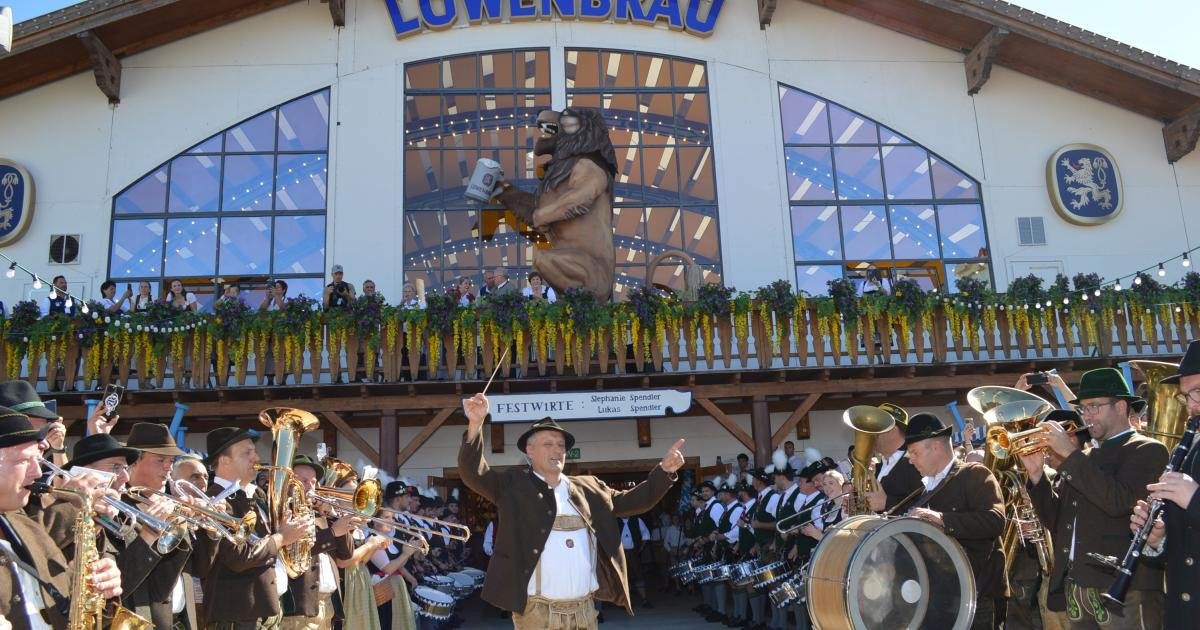
Approaching the Löwenbräu Festzelt feels theatrical: brass bands carry from inside, roasting meat scents cut through the autumn air, and a lion sculpture above the entrance marks the way. Inside the scale registers immediately: thousands of seats, long communal tables and a central band platform create a raucous, civic celebration rather than an intimate room. Servers move constantly, balancing multiple Maß steins as music and conversation swell around them. The tent format, refined on this site for more than two centuries, stages a historic, communal Oktoberfest experience that prioritizes volume, shared benches and exuberant company.
Best For
The Löwenbräu Festzelt is built for groups and festival-going crowds. Its long communal tables and enormous capacity suit group dining, large meet-ups and celebratory outings during Oktoberfest; the crowd mixes Bavarian regulars in Tracht with visitors from around the world. This is a seasonal, purpose-driven experience, only open during Oktoberfest, that rewards anyone seeking the full Wies'n atmosphere rather than a quiet meal. It’s ideal for those who want to be in the middle of the action: live brass bands, communal storytelling and the ceremonial heft of a Maß shared among friends.
Ordering Tips
The beer program is central: Löwenbräu pours an Oktoberfest Bier brewed specifically for the festival at a higher gravity (typically around 6.1% ABV) with a fuller body and pronounced malt character. Expect beer to arrive in Maß steins and to be carried by servers balancing multiple steins at once. Given the communal benches and steady traffic, orders are pragmatic and focused on big-format pours and hearty festival food. Rely on the tent’s traditional offerings and the staff’s practiced flow when securing a beer and a place at a table.
Venue details
Ambiance
Festive Bavarian hunting lodge with traditional woodwork, deer heads, and 16,000 twinkling lights creating a cozy daytime conviviality that transforms into a high-energy party vibe at night.
Tags
Vibe
Best For
Experience
Format
At the Bar
- Bar Category
- Beer Bar
- Late Night
- Closes by Midnight
- Music
- Bavarian Brass and Modern Pop/rock
- Live Music
- Yes
Planning details
Location
Munich, Germany · Directions
Also consider
Also Consider
- Champagne Characters München, Notable alternative
- Theresienhöhe 7, Notable alternative
- ISArBAR, Notable alternative
- Trisoux Bar, Notable alternative
- The Green, Notable alternative
Bar context
How it compares in Munich
Löwenbräu Festzelt is the group-first choice among these Munich options because it is tied to Oktoberfest scale, seasonality, and shared-table energy. Champagne Characters München is the better pick for a controlled wine or champagne-led night, especially for smaller groups that want conversation over festival atmosphere.
Theresienhöhe 7, ISArBAR, Trisoux Bar, and The Green make more sense when the priority is a regular Munich bar plan rather than an Oktoberfest-specific outing. They are easier to frame for dates, smaller groups, and evenings where ambiance matters more than scale.
For value, judge the tent as an event experience rather than a bar substitute. If the group wants Oktoberfest, choose the tent format. If the group wants drinks, seating control, and a calmer room, cross-shop the Munich bar options first.
Around this place
Discover more on Pearl
Unlock the full Löwenbräu Festzelt (nur während Oktoberfest geöffnet) guide in Pearl, including awards, comparisons, FAQs, planning details, and nearby places.
Compare Löwenbräu Festzelt (nur während Oktoberfest geöffnet)
| Venue | Location | Awards |
|---|---|---|
| Löwenbräu Festzelt (nur während Oktoberfest geöffnet) | Munich | No published awards |
| Champagne Characters München | Munich | No published awards |
| Theresienhöhe 7 | Munich | No published awards |
| ISArBAR | Munich | No published awards |
| Trisoux Bar | Munich | No published awards |
| The Green | Munich | No published awards |
How Löwenbräu Festzelt Munich compares with similar nearby venues.
FAQ
Frequently Asked Questions
Does Löwenbräu Festzelt (nur während Oktoberfest geöffnet) have happy hour deals?
Plan around the main timing detail: Löwenbräu Festzelt (nur während Oktoberfest geöffnet) is a Munich venue open only during Oktoberfest.
Is Löwenbräu Festzelt (nur während Oktoberfest geöffnet) good for a date?
That depends on the kind of Oktoberfest plan you want. If you want to compare other Munich options, consider Champagne Characters München or Trisoux Bar.
Does Löwenbräu Festzelt (nur während Oktoberfest geöffnet) have outdoor seating?
If outdoor seating matters, confirm it directly before planning around Löwenbräu Festzelt (nur während Oktoberfest geöffnet) in Munich, or compare other options such as ISArBAR or The Green.
Do I need a reservation at Löwenbräu Festzelt (nur während Oktoberfest geöffnet)?
Plan around its Oktoberfest-only season in Munich. Theresienhöhe 7 is another Munich venue to compare if you need a different plan.
Is the food good at Löwenbräu Festzelt (nur während Oktoberfest geöffnet)?
Plan for Löwenbräu Festzelt (nur während Oktoberfest geöffnet) as an Oktoberfest-only Munich venue, and compare other Munich options such as Champagne Characters München if specific details are central to the plan.