


Clos Apalta (Casa Lapostolle)
Apalta Valley, Santa Cruz
Winery in Santa Cruz, Chile
 Book with Pearl
The Read
Gravitational Barrel Architecture
Why go
Clos Apalta (Casa Lapostolle) is a winery near Santa Cruz in Chile's O'Higgins region.
About Clos Apalta (Casa Lapostolle)
For a Santa Cruz itinerary, Clos Apalta (Casa Lapostolle) is best considered when you want a recognized wine-country stop with a smart casual dress code. Pearl 4 Star Prestige (2025) and a World's 50 Best Vineyards #6 placement in 2019 make it a notable choice. Beyond those points, plan without assuming specific tour formats, menu details, prices, group capacity, or access rules unless you confirm them directly before you go.
That makes the planning advice simple: make Clos Apalta (Casa Lapostolle) a priority if those recognitions matter to your trip, then keep the rest of the day realistic. If the goal is breadth, compare it with Viña Montes or Viña Viu Manent. If the goal is a more focused day, leave room around the booking rather than trying to turn the schedule into a checklist.
Plan this as the anchor, not a quick add-on
Use the confirmed details as your starting point: Clos Apalta (Casa Lapostolle) is in Santa Cruz, carries Pearl 4 Star Prestige (2025), and has been recognized by World's 50 Best Vineyards at #6 in 2019. Because details for hours, prices, visit formats, or capacity are not included, the safest move is to confirm logistics directly before committing the rest of the day.
For a first-time visitor, the stronger move is one priority winery visit and one flexible backup, not three rigid appointments. Our full Santa Cruz wineries guide is useful for building that backup plan; other Santa Cruz dining and lodging resources can help keep the day from becoming all transit and no recovery. If the trip is broader than wine, use broader Santa Cruz planning resources rather than adding another rushed stop.
Who should prioritize it
Prioritize this if the trip is built around wine recognition and the group is comfortable confirming details in advance. It is a weaker fit for travelers who need every practical detail settled from a short listing alone, because hours, pricing, menus, access rules, and group policies are not included here.
For travelers mapping a broader itinerary beyond Santa Cruz, Clos Apalta (Casa Lapostolle) can serve as a recognized benchmark rather than just another name on the itinerary. Keep comparisons grounded: Viña Caliterra, Viña Maquis, Viña Montes, Viña VIK, and Viña Viu Manent are useful winery comparisons, while other Santa Cruz dining rooms can fill in the non-winery parts of the day.
Know Before You Go
- Use case: a recognized Santa Cruz wine-country stop with confirmed accolades.
- Dress code: smart casual.
- Recognition: Pearl 4 Star Prestige (2025) and World's 50 Best Vineyards #6 (2019).
- Planning: confirm hours, pricing, booking requirements, and visit format directly before arranging the rest of the day.
- Trip pairing: combine with Santa Cruz lodging, meals, or one additional winery rather than overloading the day.
Planning details
- Location
- Fundo, 3130000 San José de Apalla, Santa Cruz, O'Higgins
- Website
- closapalta.com
The take
The Take
The Vibe
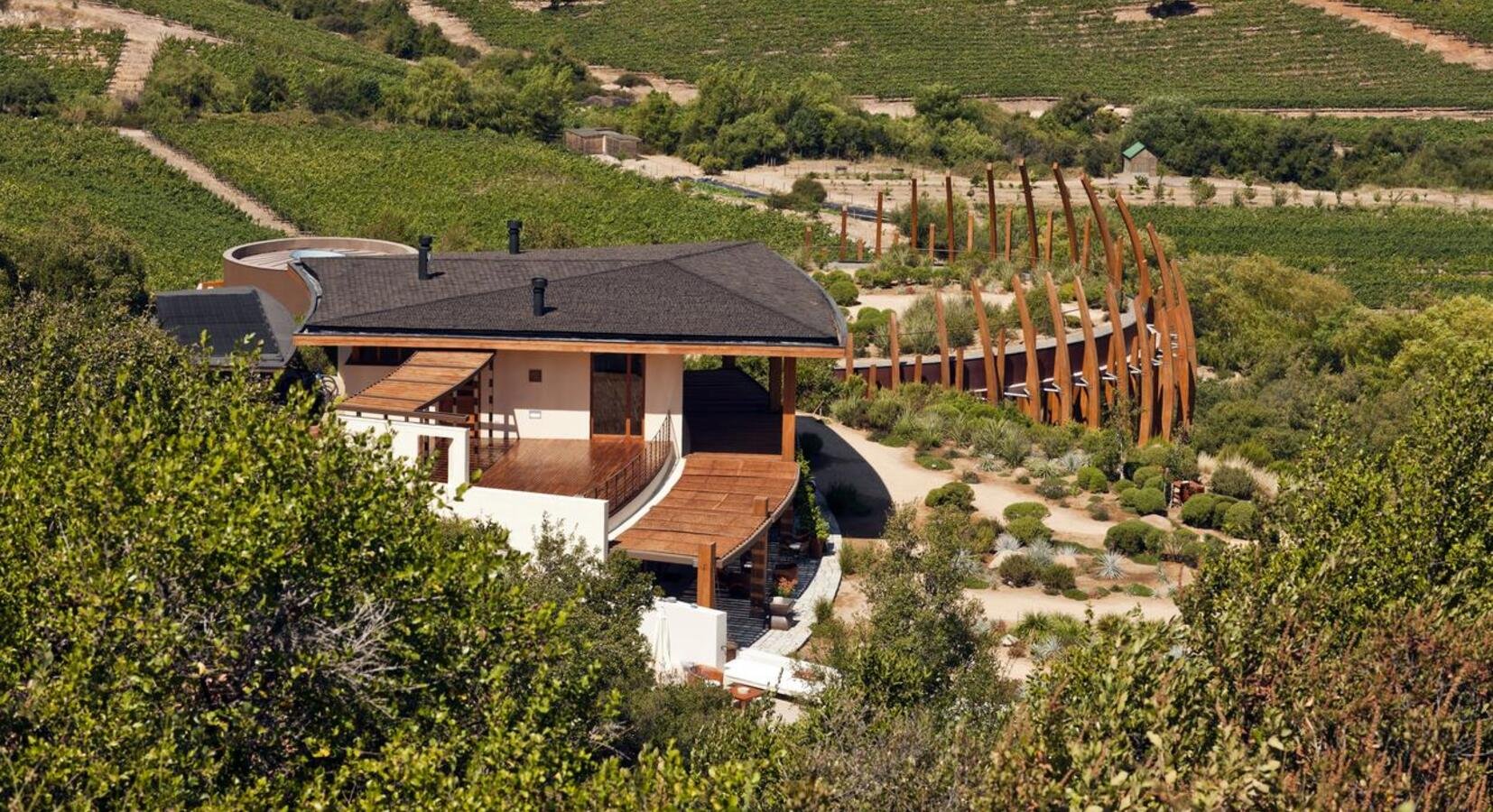
Clos Apalta presents as an architectural estate where building and landscape are inseparable. The winery is literally embedded in the hillside: wooden staves rise from green slopes and the production levels are arranged so grape must descends by gravity. That design-first approach gives the place a deliberate, contemplative character — equally modern in its engineering and grounded in the land. The tone is serene rather than flashy; visitors encounter a quiet, well‑resolved expression of Chilean premium wine culture that emphasizes restraint, terroir clarity and structural precision over theatricality.
Best For
This estate is best for visitors who come for serious wine-focused experiences. The text situates Clos Apalta within Colchagua’s premium red-wine conversation and highlights its EP Club Pearl 4 Star Prestige rating, signalling a reference‑point estate for tasting and study. The gravitational winemaking approach and the discussion of minimal intervention make it especially apt for travelers interested in viticultural technique, terroir expression and structured, age-worthy wines. It suits small, focused visits that prioritize tasting and learning rather than casual socializing.
Tasting Tips
When visiting, orient your visit around the wines and the house philosophy: ask about the gravitational flow design and how it influences aromatic precision and structure. Prioritize tastings that showcase estate bottlings or single‑vineyard expressions that reflect Colchagua’s elevation diversity and terroir discipline. Because the estate is presented as a reference‑point winery, request commentary on the production choices that reduce intervention — that context is central to understanding the wines you taste. Avoid expecting standard restaurant ordering advice; the emphasis here is educational and wine‑centric.
Venue details
Ambiance
Modern architectural design integrated into the hillside with natural light from the seven-floor gravity-fed cellar; sophisticated and refined atmosphere reflecting Old World Bordeaux traditions in a New World setting.
Tags
Vibe
Best For
Experience
Sourcing
View
At the Vineyard
- Appellation
- Apalta Valley, Colchagua Valley, Chile
- Varietals
- Carmenère, Cabernet Sauvignon, Merlot, Petit Verdot
- Visits
- By appointment only
- Farming
- Biodynamic
- Wine Styles
- Still Red
- Food Pairing
- Offered
- Shipping
- Available
- Wine Club
- Available
Know before you go
Know Before You Go
- Getting there
- Fundo, 3130000 San José de Apalla, Santa Cruz, O'Higgins
Planning details
Location
Fundo, 3130000 San José de Apalla, Santa Cruz, O'Higgins · Directions

Also consider
Also Consider
- Viña Montes, Notable alternative
- Viña Viu Manent, Notable alternative
- Viña Maquis, Notable alternative
- Viña Caliterra, Notable alternative
- Viña VIK, Notable alternative
Winery context
How It Compares
Clos Apalta (Casa Lapostolle) is the higher-commitment choice in the Santa Cruz set: prioritize it when the trip is about depth, reputation, and a quieter wine-focused day. Viña Montes is the better cross-shop if the group wants a strong Apalta Valley name with a more flexible planning mindset, while Viña Viu Manent is the safer pick for travelers who value an easier, more classic Santa Cruz wine-day structure.
For readers who cannot secure the booking, Viña Maquis and Viña Caliterra are sensible alternatives when the priority is staying wine-focused without forcing the whole itinerary around one slot. Viña VIK is the better comparison for travelers who want the winery experience to feel like a destination in itself rather than one stop among several.
Value depends on what the day is meant to do. Choose Clos Apalta (Casa Lapostolle) if limited access and a serious wine context are part of the appeal. Choose Viña Viu Manent or Viña Montes if the group needs easier logistics, and look to Viña VIK if design-led atmosphere matters as much as the wine visit.
Explore Santa Cruz
Around this place
Discover more on Pearl
Unlock the full Clos Apalta (Casa Lapostolle) guide in Pearl, including awards, comparisons, FAQs, planning details, and nearby places.
Compare Clos Apalta (Casa Lapostolle)
| Venue | Location | Awards |
|---|---|---|
| Clos Apalta (Casa Lapostolle) | Santa Cruz | 2025 World's 50 Best Vineyards · #652023 World's 50 Best Vineyards · #392022 World's 50 Best Vineyards · #182021 World's 50 Best Vineyards · #172020 World's 50 Best Vineyards · #272019 World's 50 Best Vineyards · #6 |
| Viña Montes | Santa Cruz | 2026 Falstaff Winery Guide2025 World's 50 Best Vineyards · #102024 World's 50 Best Vineyards · #172023 World's 50 Best Vineyards · #72022 World's 50 Best Vineyards · #32021 World's 50 Best Vineyards · #52020 World's 50 Best Vineyards · #42019 World's 50 Best Vineyards · #6 |
| Viña Viu Manent | Santa Cruz | 2026 Falstaff Winery Guide2025 World's 50 Best Vineyards · #402024 World's 50 Best Vineyards · #192023 World's 50 Best Vineyards · #432022 World's 50 Best Vineyards · #322021 World's 50 Best Vineyards · #452020 World's 50 Best Vineyards · #432019 World's 50 Best Vineyards · #23 |
| Viña Maquis | Palmilla | No published awards |
| Viña Caliterra | Colchagua | 2026 Falstaff Winery Guide |
| Viña VIK | San Vicente De Tagua Tagua | 2026 Falstaff Winery Guide2025 World's 50 Best Vineyards · #12024 World's 50 Best Vineyards · #22023 World's 50 Best Vineyards · #32022 World's 50 Best Vineyards · #42021 World's 50 Best Vineyards · #82020 World's 50 Best Vineyards · #102019 World's 50 Best Vineyards · #14 |

How Clos Apalta (Casa Lapostolle) Santa Cruz compares with similar nearby venues.
FAQ
Frequently Asked Questions
How long should I plan for a visit to Clos Apalta (Casa Lapostolle)?
Plan it as a priority Santa Cruz stop if Pearl 4 Star Prestige (2025) and World's 50 Best Vineyards #6 (2019) matter to your itinerary, and confirm the current format and timing directly before you go.
When is the best time to visit Clos Apalta (Casa Lapostolle)?
The safest approach is to plan from confirmed logistics and keep the rest of your Santa Cruz day flexible until you know the current schedule.
What is the dress code at Clos Apalta (Casa Lapostolle)?
The dress code is smart casual. That makes it sensible to dress neatly while still planning for a Santa Cruz winery itinerary.
What recognition does Clos Apalta (Casa Lapostolle) have?
Clos Apalta (Casa Lapostolle) is listed with Pearl 4 Star Prestige (2025) and was ranked #6 in World's 50 Best Vineyards in 2019. Those are the recognitions to use when deciding whether it belongs on your Santa Cruz itinerary.
What other wineries can I compare with Clos Apalta (Casa Lapostolle)?
Viña Montes and Viña Viu Manent are natural comparisons for a wine-focused itinerary. Viña Maquis, Viña Caliterra, and Viña VIK are also useful comparisons, especially if you are weighing Clos Apalta (Casa Lapostolle) against other winery options.