






Herdade do Esporão
Contemporary · Reguengos de Monsaraz
Winery in Reguengos de Monsaraz, Portugal
 Book with Pearl
The Read
Organic Estate Enoturismo
Price
$20–30tasting
Why go
Herdade do Esporão is a wine estate near Reguengos de Monsaraz in Portugal's Alentejo region.
About Herdade do Esporão
Herdade do Esporão is a venue in Reguengos de Monsaraz with a smart casual dress code and recognition that includes Pearl 3 Star Prestige (2025) and World's 50 Best Vineyards #69 (2025).
If you are considering Herdade do Esporão for a special occasion, confirm the current experience, availability, and booking requirements directly with the venue before making plans.
A recognized Reguengos de Monsaraz venue for your shortlist
The strongest reasons to keep Herdade do Esporão on a shortlist are its Reguengos de Monsaraz location, smart casual dress code, Pearl 3 Star Prestige (2025), and World's 50 Best Vineyards #69 (2025) recognition.
Before planning around details such as lunch service, group arrangements, specific offerings, private tours, or allergy accommodations, check the venue's official channels and confirm the exact offering for your date.
Who should choose it when comparing notable venues
Choose Herdade do Esporão if you want a recognized Reguengos de Monsaraz venue and are comfortable confirming the operational details directly. Travelers building a broader plan can also use Our full Reguengos de Monsaraz restaurants guide to pair the visit with other dining in Reguengos de Monsaraz.
For comparison, consider Adega Cartuxa (Fundação Eugénio de Almeida), Adega Cooperativa de Borba, Herdade do Mouchão, Luis Pato, and Quinta do Carmo as other Portugal venue references. When comparing options, check current format, price, capacity, and service style directly with each venue.
Planning details
- Hours
- Location
- Location
- Herdade do Esporão, Edifício Enoturismo, 7200-999
- Reservations
- Book on TheFork
- Website
- esporao.com
- Phone
- +351 266 509 280
The take
The Take
The Vibe
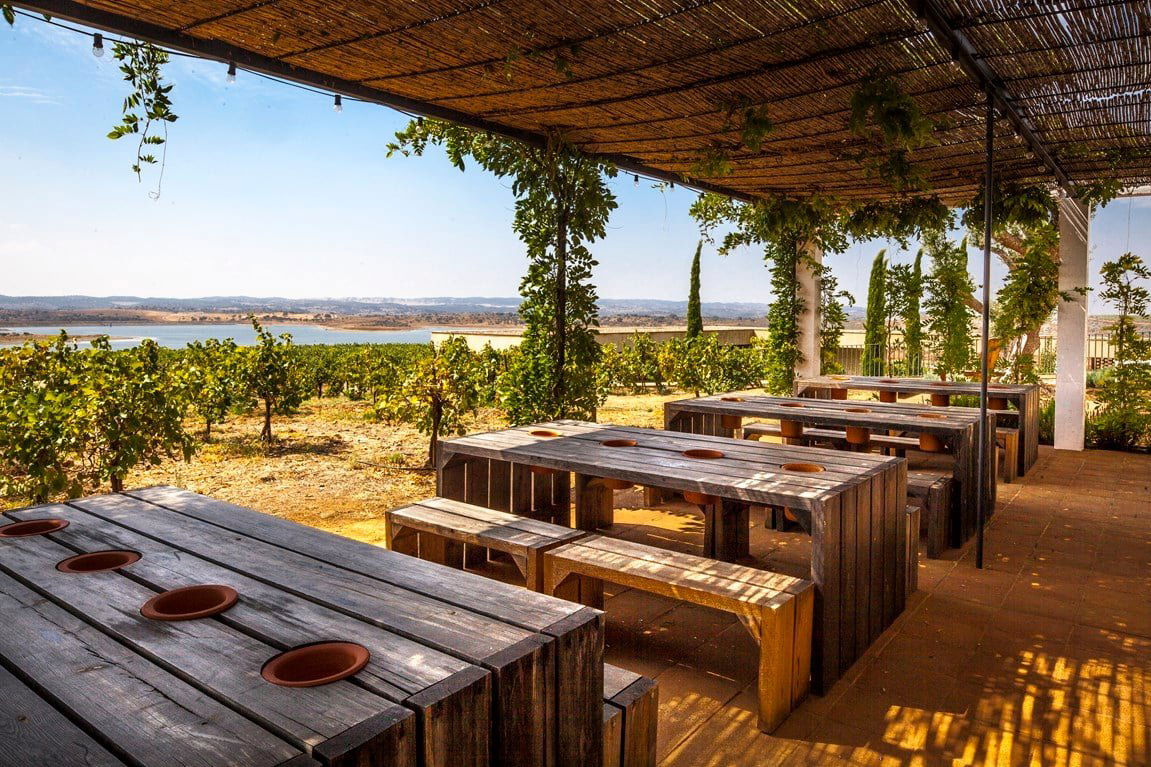
Herdade do Esporão sits across open Alentejo plains where the landscape does much of the storytelling. Rolling, largely treeless terrain punctuated by cork oaks and umbrella pines frames the estate, and the combination of intense sun, thin soils and pronounced diurnal shifts gives the place a spare, measured quality. The winery’s organic vineyards and its focus on restraint in the cellar reinforce that understated, contemplative character. Visiting feels like stepping into a rural production landscape that prizes clarity and provenance over spectacle — quietly elegant and rooted in the region’s elemental conditions.
Best For
Esporão is well suited to travelers interested in learning about Alentejo viticulture and estate-scale winemaking. The estate’s enotourism infrastructure and certified organic vineyards make it a strong stop for wine-education visits and guided tastings, and its expansive grounds work well for small group outings or solo exploration. Given the estate’s reputation and Pearl 3 Star Prestige rating, it’s also a fitting choice for thoughtful special-occasion visits where the focus is on tasting concentrated, fresh expressions of southern Portuguese terroir.
Tasting Tips
When you visit or taste Esporão wines, prioritize the estate’s organic lineup and ask how vineyard sites and the diurnal temperature swings influence each bottling; the description emphasizes freshness and concentration as hallmarks. Inquire about on-site offerings: the estate’s enotourism infrastructure suggests formal tours and tastings are available, so book a guided tasting to learn about farming practices and vinification. Note the Pearl 3 Star Prestige rating as a shorthand for the estate’s standing within Portugal’s enotourism-focused properties.
Venue details
Ambiance
Rustic yet elegant atmosphere blending historic monuments with modern winery facilities amid expansive vineyards and olive groves.
Tags
Vibe
Best For
Experience
Sourcing
View
At the Vineyard
- Appellation
- Alentejo
- Varietals
- Aragonez, Trincadeira, Touriga Nacional, Antão Vaz, Roupeiro
- Tour Duration
- 60-90 minutes
- Tour Languages
- English, Portuguese
- Visits
- By reservation
- Farming
- Organic
- Wine Styles
- Still Red, Still White, Still Rose, Amphora
- Food Pairing
- Offered
- Shipping
- Available
- Wine Club
- Available
Know before you go
Know Before You Go
- Getting there
- Herdade do Esporão, Edifício Enoturismo, 7200-999
Planning details
Hours
Location
Location
Herdade do Esporão, Edifício Enoturismo, 7200-999 · Directions
Recognition and awards




Also consider
Where to go if you cannot get in
Try Adega Cartuxa (Fundação Eugénio de Almeida) if your route already runs through Évora, or Adega Cooperativa de Borba if you want a more practical regional tasting with less emphasis on occasion-driven ambiance.
Winery context
How it compares
Herdade do Esporão is the pick when the experience needs to feel like the main event. Compared with Adega Cartuxa (Fundação Eugénio de Almeida) and Quinta do Carmo, it is the more obvious choice for travelers who want an estate-led visit rather than a stop fitted around another city or route.
If value and ease matter more than polish, Adega Cooperativa de Borba is the smarter cross-shop. It is better suited to a practical regional tasting, while Herdade do Esporão is better for a date, celebration, or business-hosting scenario where the room, pace, and setting need to carry the occasion.
For serious wine travelers comparing producer character, Herdade do Mouchão and Luis Pato belong on the wider shortlist. Choose Herdade do Esporão when you want a polished Alentejo destination; choose those alternatives when the producer story or a different regional angle matters more than the estate-visit format.
Explore Reguengos de Monsaraz
Around this place
Discover more on Pearl
Unlock the full Herdade do Esporão guide in Pearl, including awards, comparisons, FAQs, planning details, and nearby places.
Compare Herdade do Esporão
| Venue | Location | Awards |
|---|---|---|
| Herdade do Esporão | Reguengos de Monsaraz | Michelin Guide Portugal 20262026 Michelin 1 Star2026 Falstaff Winery Guide2026 La Liste Top Restaurants2025 World's 50 Best Vineyards · #692025 The Best Chef One Knife2025 Michelin 1 Star2024 Michelin 1 Star |
| Adega Cartuxa (Fundação Eugénio de Almeida) | Évora | 2026 Falstaff Winery Guide |
| Quinta do Carmo | Estremoz | 2026 Falstaff Winery Guide |
| Luis Pato | Anadia | No published awards |
| Adega Cooperativa de Borba | Borba | No published awards |
| Herdade do Mouchão | Casa Branca | 2026 Falstaff Winery Guide |

How Herdade do Esporão compares with similar nearby venues.
FAQ
Frequently Asked Questions
What specific offerings are available at Herdade do Esporão?
What other venues can I compare with Herdade do Esporão?
Other comparison venues include Adega Cartuxa (Fundação Eugénio de Almeida), Quinta do Carmo, Adega Cooperativa de Borba, Herdade do Mouchão, and Luis Pato. Compare current pricing, format, capacity, and specific services directly with each venue.