
Winery in Napa, United States
Farella Vineyard
500ptsCoombsville Estate Precision
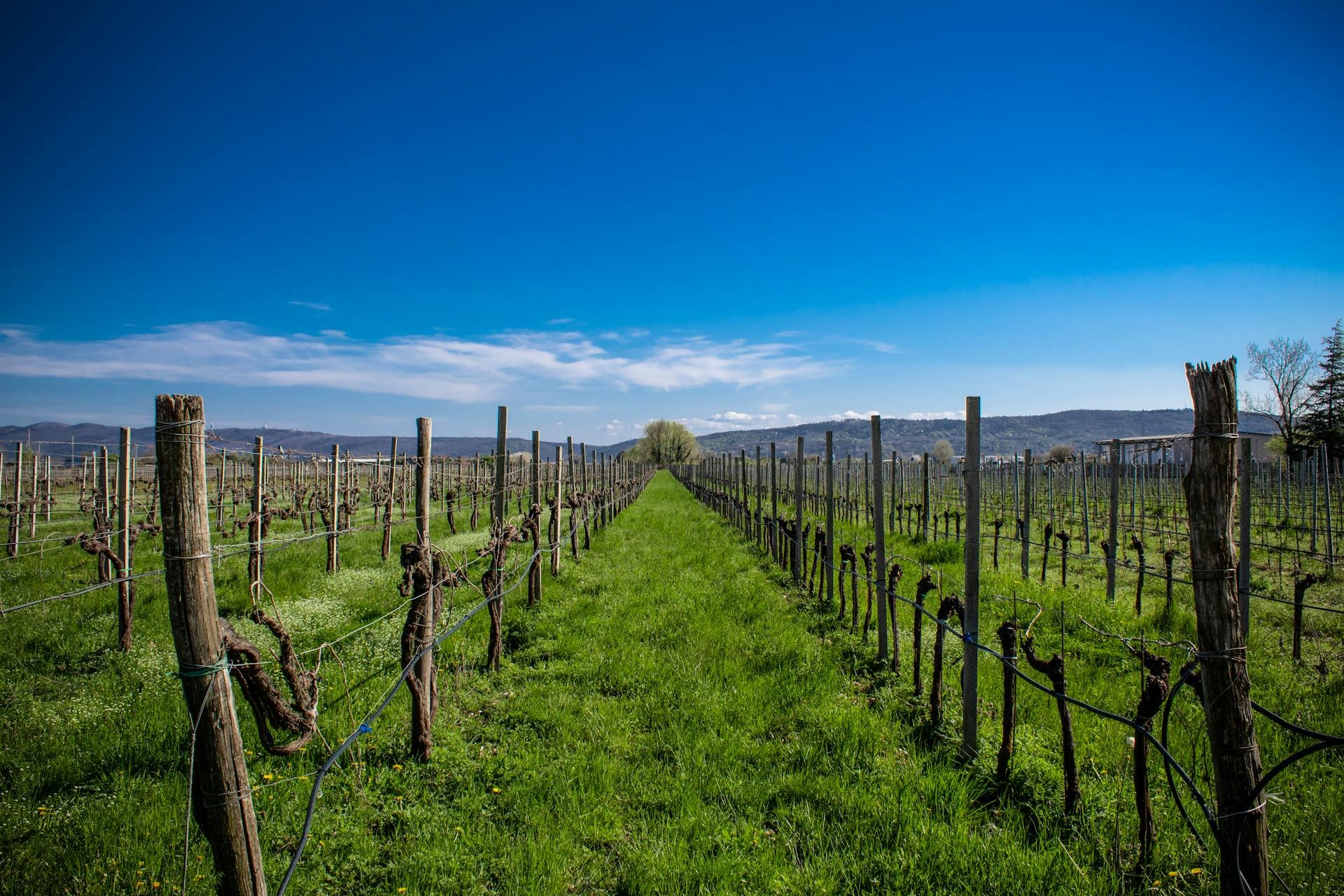
About Farella Vineyard
Farella Vineyard holds a Pearl 2 Star Prestige rating from EP Club (2025), placing it among Napa's more carefully considered estate producers. Located at 2222 3rd Ave, the vineyard operates in a part of the valley where farming decisions carry more weight than marketing. For visitors oriented toward serious estate wine rather than tasting-room spectacle, it represents a focused point of entry into Napa's quieter tier.
Where Napa Pulls Back From Its Own Noise
There is a version of Napa that announces itself loudly: grand tasting pavilions, high-volume production, and wines priced to signal status as much as to deliver it. Then there is the tier beneath that theatre, where producers work closer to the land and the wines speak to place rather than profile. Farella Vineyard, at 2222 3rd Ave in the city of Napa, belongs to that second category. The address alone tells you something: not the prestige corridor of Oakville or Rutherford, not the well-trodden route past Darioush Winery on the Silverado Trail, but a working address in the southern valley, where the bay influence keeps temperatures lower and the growing season longer than the benchland appellations further north.
That geography shapes everything. Southern Napa receives more marine air off San Pablo Bay, which means slower ripening, higher natural acidity retention, and grapes that require patience rather than intervention to reach balance. It is a quieter argument for quality, one that vineyards with more northerly addresses rarely need to make because the marketing practically writes itself. Here, the wine has to do the work.
The Prestige Signal: What EP Club's 2025 Rating Tells You
EP Club awarded Farella Vineyard a Pearl 2 Star Prestige rating in 2025, which places it in a recognized tier of serious estate producers rather than in the broader general market. In a valley where recognition accumulates through sheer volume of critical attention, a Prestige-level rating for a relatively lower-profile address carries weight. It functions as a peer-set indicator: this is not a winery competing on the same axis as the large-format, visitor-center operations. Compare the EP Club standing here to what you find at Ashes and Diamonds Winery, another Napa producer that has built its identity on restraint and considered viticulture rather than on the blockbuster-Cabernet playbook that dominates the valley's public image.
The Pearl 2 Star designation also situates Farella in a different conversation from volume producers. Across Napa, there is a meaningful split between wineries that prioritize allocation-based sales, direct-to-consumer relationships, and site-specific farming, and those that scale production to meet distributor demand. The Prestige rating signals that Farella belongs to the former group, which has practical implications for visitors: expect a different visit format, a closer relationship between what you taste and what grows in front of you, and less of the produced hospitality experience that defines Napa's more commercially polished tasting rooms.
Southern Napa as a Distinct Wine Argument
Understanding Farella requires placing it within the broader geography of what Napa's southern end does differently. The Carneros AVA, which sits at the valley's southern boundary and extends into Sonoma, built its reputation on Pinot Noir and Chardonnay for exactly the reasons that apply here: the bay fog, the wind, the cool mornings. Artesa Vineyards and Winery, one of the significant names working this southern edge, demonstrates how Spanish-rooted ownership and a different cultural approach to winemaking can shape what ultimately ends up in the glass, even within Napa's dominant Cabernet-focused identity.
Farella occupies a position slightly north of Carneros proper, in the Coombsville AVA, an appellation that received official recognition in 2011 and has since attracted growing critical attention for exactly the reasons the geography suggests: elevation, volcanic soils, and a climate that rewards varieties and winemaking approaches built around finesse rather than power. Coombsville is where Napa's structural argument shifts. Producers here are not trying to out-muscle Oakville; they are making a different case entirely.
The intersection of place-specific farming and classical winemaking technique is precisely the kind of dynamic that the editorial angle of local ingredients meeting global method is built to describe. Coombsville's combination of cooler temperatures and Tufa and red clay soils presents a raw material that rewards techniques associated with Bordeaux and Burgundy traditions: careful canopy management, attentive picking decisions, and a light hand in the cellar. Farella fits that pattern. The Pearl 2 Star Prestige rating suggests the approach is working.
Farella in the Context of Napa's Estate Tier
Positioning Farella against its peer set clarifies the choice a visitor is making. At the allocation-only, critically celebrated end of Napa sits a tier of producers whose wines are essentially unavailable unless you are already on a mailing list. Farella is not in that bracket, and that is a useful practical fact. It sits closer to the group of serious estate producers who maintain visitor access while operating at a scale where individual vineyard blocks matter.
Within that group, the comparisons are instructive. Blackbird Vineyards has built a reputation around Merlot-dominant blends and a design-forward identity that appeals to buyers who want Napa quality without the flagship price points. Clos Selene Winery operates with a different philosophy, focused on site expression and smaller production. These are wineries that compete on distinctiveness rather than on volume or name recognition alone. Farella belongs in this cohort.
Outside Napa, the producers that operate with this kind of site-first discipline tend to share certain characteristics: farming that treats the vineyard as the primary instrument, winemaking that avoids masking the source material, and a visitor experience calibrated to people who arrived to learn something rather than to check a box. Accendo Cellars in St. Helena works within this framework at a higher price point; Adelaida Vineyards in Paso Robles makes a version of the same argument in a warmer climate. The discipline is consistent across geography.
Planning a Visit: What You Should Know
Farella Vineyard is at 2222 3rd Ave, Napa, CA 94558, in the Coombsville area of southern Napa Valley. The venue database does not carry current hours, phone, or booking method, so direct contact through the winery's own channels is the appropriate first step before visiting. Given that Farella sits in the Prestige tier of the EP Club ratings, expect the kind of visit format that benefits from advance arrangement rather than a walk-in approach: smaller-scale estate producers in this category typically work by appointment.
The Coombsville area is accessible from downtown Napa, making it a practical stop if you are already oriented toward the southern valley rather than the northern bench. For visitors building a broader Napa itinerary, the full Napa guide maps the valley's different zones and helps calibrate which producers fit your purpose. Coombsville rewards visitors who are interested in how Napa argues for quality on cooler-climate terms, which is a different conversation than the one happening in Oakville or Howell Mountain.
If your trip extends beyond California, the estate-focus approach that defines Farella's category has counterparts at Adelsheim Vineyard in Newberg, where Oregon Pinot Noir producers have built their identities around exactly this kind of restrained, site-specific winemaking. And for a broader sense of how different regional traditions approach the same set of questions, Alpha Omega Winery in Rutherford shows what Napa's northern bench does with a more ambitious production format, a useful contrast to what Farella represents in the south.
Frequently Asked Questions
What is the main draw of Farella Vineyard?
Farella's primary draw is its position within Napa's estate-focused, Coombsville-based tier of producers. The EP Club Pearl 2 Star Prestige rating (2025) places it among wineries that compete on site expression and farming discipline rather than on volume or aggressive marketing. For visitors oriented toward smaller-scale production and a direct relationship between vineyard and bottle, Farella represents a specific and considered choice within the Napa offer. It is not the Napa of grand pavilions; it is the Napa of actual winemaking, which is a different and often more rewarding thing to encounter.
What wine should I try at Farella Vineyard?
The venue database does not include a current wine list, so specific recommendations require direct contact with the winery. What the geography and EP Club Prestige rating do suggest is that Farella's strongest argument will be in varieties that benefit from Coombsville's cooler conditions and volcanic soils: wines with structural acidity and restraint rather than extraction and alcohol weight. Visitors who have spent time with producers like Alexander Valley Vineyards in Geyserville or Andrew Murray Vineyards in Los Olivos will recognize the kind of site-specific conversation that Coombsville producers tend to engage in, even if the specific varieties and styles differ by region.
Related editorial
- Asia's 50 Best Restaurants 2026: The Chairman and Wing Go 1-2 from the Same BuildingThe Chairman takes No. 1 and Wing climbs to No. 2 at Asia's 50 Best Restaurants 2026. Both operate from the same Hong Kong building. Here's what it means.
- Four Seasons Yachts Debut: 95 Suites, 11 Restaurants, and a March 2026 Maiden VoyageFour Seasons I launches March 20, 2026, with 95 suites, a one-to-one staff ratio, and 11 onboard restaurants. Worth tracking if you want hotel-grade service at sea.
- LA Michelin Guide 2026: Seven New Restaurants from Tlayudas to Uzbek DumplingsMichelin's March 2026 California Guide update adds six LA restaurants and one Montecito newcomer, spanning Oaxacan tlayudas, Uzbek manti, and Korean-Italian pasta.
Save or rate Farella Vineyard on Pearl
Keep this venue in your Pearl passport, rate it after you visit, and track it alongside every other place you collect.