



Domäne Wachau
Dürnstein
Winery in Dürnstein, Austria
 Book with Pearl
The Read
Co-operative Terroir Precision
Price
$50–100tasting
Why go
Domäne Wachau is a wine estate in Dürnstein, Austria.
About Domäne Wachau
Domäne Wachau is a Dürnstein venue recognized by Pearl 4 Star Prestige (2025) and World's 50 Best Vineyards #3 (2020). For planning, treat it as a recognized stop in Dürnstein, use smart casual dress, and confirm any visit details directly before building a full itinerary around it.
Before you travel, contact Domäne Wachau for opening hours, tasting formats, food service, pricing, shipping, group capacity, and appointment rules. Use its recognition and location as the starting point, then confirm practical arrangements directly with Domäne Wachau.
Use it as an anchor, not a quick add-on
If Domäne Wachau is a priority for your Dürnstein plans, make it the fixed point of the day rather than an afterthought. Its awards give it enough profile that travelers should avoid relying on assumptions about availability, format, or timing.
For a broader itinerary, compare Domäne Wachau with Weingut F. X. Pichler, Weingut Emmerich Knoll, Weingut Alzinger, Weingut Jäger, or Weingut Prager. Keep the plan flexible until the practical details are confirmed.
Who should choose it
Choose Domäne Wachau if you want a Dürnstein stop with clear recognition. Its awards support its status as a serious venue, while tasting style, menu, cellar experience, and service format should be checked directly.
Travelers comparing names can also look at Weingut F. X. Pichler, Weingut Emmerich Knoll, Weingut Alzinger, Weingut Jäger, and Weingut Prager. For trip planning beyond this venue, use Our full Dürnstein restaurants guide and confirm meals or overnights separately.
Quick reference: Domäne Wachau is best treated as a recognized Dürnstein venue with smart casual dress. Confirm all operational details directly before relying on them.
Planning details
- Location
- Dürnstein 107, 3601 Dürnstein
- Website
- domaene-wachau.at
- Phone
- +43 2711 371
The take
The Take
The Vibe
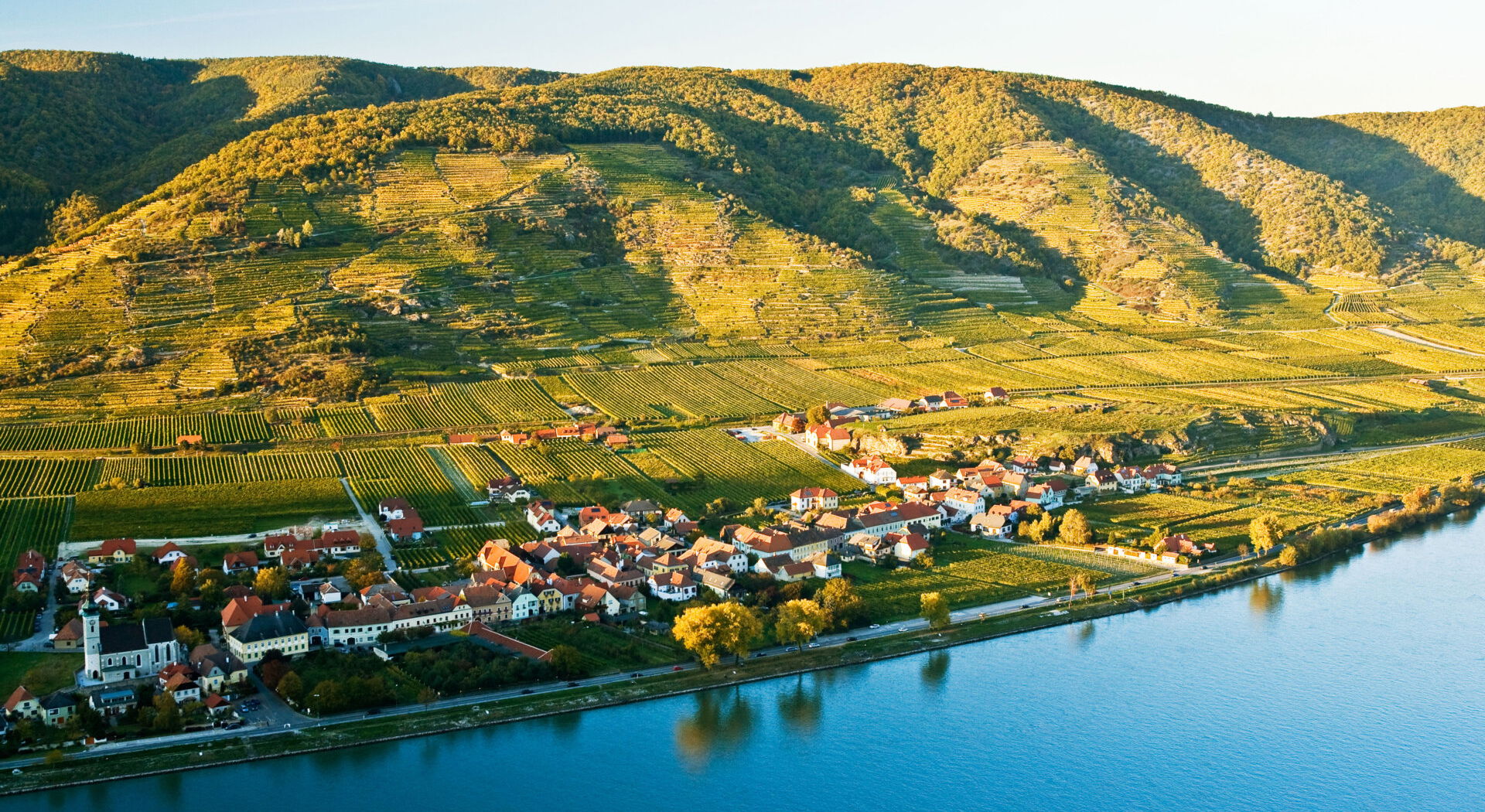
Domäne Wachau reads like a chapter of regional history: a Baroque winery building set into steep, loess-and-gneiss terraces where cellars cut three centuries deep into the hillside. The site feels rooted in place, framed by the tightening Danube valley and the blue-and-white tower of Dürnstein, and its architecture makes a forceful statement about continuity and landscape. The cooperative’s scale gives the visitor a different kind of presence — not a single-house manifesto but a panoramic expression of the Wachau’s vineyards — and the overall impression is historically resonant and regionally authoritative.
Best For
Domäne Wachau suits visitors who come for landscape-driven wine learning and for groups or special visits that want a wide cross-section of the Wachau. Because the cooperative aggregates fruit from the valley’s principal sites, tastings here are best for people interested in horizontal comparisons across terroir rather than the tightly focused, single-estate narrative of a small producer. The setting — a long-established Baroque structure set into steep terraces — also makes it rewarding for those who value architectural and cultural context alongside their wine tasting.
Tasting Tips
When tasting at Domäne Wachau, prioritize flights or formats that showcase the cooperative’s breadth: ask for selections that sample multiple sites or vineyard plots so you can appreciate the horizontal range the estate emphasizes. Be explicit with staff that you want comparisons across the Wachau’s terroirs rather than a single-house style. If you’re comparing visits, contrast these multi-site tastings with offerings from single-estate neighbors to hear the difference between breadth and narrowly focused house style.
Venue details
Ambiance
Historic baroque palace nestled in picturesque vineyard slopes with profound cellar atmosphere highlighting terroir-driven wines.
Tags
Vibe
Best For
Experience
Sourcing
View
At the Vineyard
- Appellation
- Wachau DAC
- Varietals
- Grüner Veltliner, Riesling, Chardonnay, Zweigelt, Pinot Noir
- Tour Duration
- 3-4 hours
- Visits
- By reservation
- Farming
- Organic
- Wine Styles
- Still White
- Food Pairing
- Offered
- Wine Club
- Not available
Know before you go
Know Before You Go
- Getting there
- Dürnstein 107, 3601 Dürnstein
Planning details
Location
Recognition and awards


Also consider
Where to look if this does not fit
If the main priority is a more focused high-demand Wachau producer, try Weingut F. X. Pichler. If the goal is a smaller-feeling comparison within the Dürnstein orbit, look at Weingut Alzinger or Weingut Emmerich Knoll.
Winery context
How it compares in Dürnstein
Domäne Wachau is the stronger first stop for travelers who want a broad Wachau read before choosing favorites. Weingut F. X. Pichler is the sharper cross-shop for collectors chasing a focused, high-demand producer visit, while Weingut Emmerich Knoll and Weingut Alzinger suit visitors who already know they want a narrower grower-led lens.
For value, the decision is less about price and more about information density. Domäne Wachau is likely to give a broader sense of the region in one appointment; smaller peers may feel more personal if the visit is available. If booking pressure is the concern, keep backup options in play early rather than waiting until the Dürnstein itinerary is fixed.
Weingut Jäger and Weingut Prager are better cross-shops for travelers willing to look beyond the immediate Dürnstein cluster. Choose them when the trip is built around producer comparison across the Wachau rather than staying tightly within the village.
Explore Dürnstein
Around this place
Discover more on Pearl
Unlock the full Domäne Wachau guide in Pearl, including awards, comparisons, FAQs, planning details, and nearby places.
Compare Domäne Wachau
| Venue | Location | Awards |
|---|---|---|
| Domäne Wachau | Dürnstein | 2026 Falstaff Winery Guide2025 World's 50 Best Vineyards · #682024 World's 50 Best Vineyards · #332023 World's 50 Best Vineyards · #142022 World's 50 Best Vineyards · #202021 World's 50 Best Vineyards · #222020 World's 50 Best Vineyards · #32019 World's 50 Best Vineyards · #19 |
| Weingut F. X. Pichler | Dürnstein | 2026 Falstaff Winery Guide |
| Weingut Emmerich Knoll | Dürnstein | 2026 Falstaff Winery Guide |
| Weingut Alzinger | Dürnstein | 2026 Falstaff Winery Guide |
| Weingut Jäger | Weißenkirchen | 2026 Falstaff Winery Guide |
| Weingut Prager | Weißenkirchen | 2026 Falstaff Winery Guide |
How Domäne Wachau Dürnstein compares with similar nearby venues.
FAQ
Frequently Asked Questions
What other venues can I compare with Domäne Wachau?
Useful comparisons include Weingut F. X. Pichler, Weingut Emmerich Knoll, Weingut Alzinger, Weingut Jäger, and Weingut Prager. Use Domäne Wachau as the Dürnstein reference point, then confirm each venue's visit details directly.
What is the flagship wine at Domäne Wachau?
For a specific flagship bottle or current focus, ask Domäne Wachau directly. Domäne Wachau is recognized for Pearl 4 Star Prestige (2025) and World's 50 Best Vineyards #3 (2020).
Are wine club details for Domäne Wachau?
Does Domäne Wachau ship wine?
How long should I plan for a visit to Domäne Wachau?
Does Domäne Wachau serve food?
Do not assume a meal is available at Domäne Wachau; confirm directly, and use other Dürnstein dining options if you need a firm meal plan.
Can Domäne Wachau handle large groups?
Larger parties should contact Domäne Wachau directly before planning around a group visit. Smart casual dress is the dress guidance.