
Restaurant in Tokyo, Japan
Yakitori SANKA
350Pearl PointsMichelin-recognised yakitori at mid-range prices.
.png?width=144&height=144&quality=80)

About Yakitori SANKA
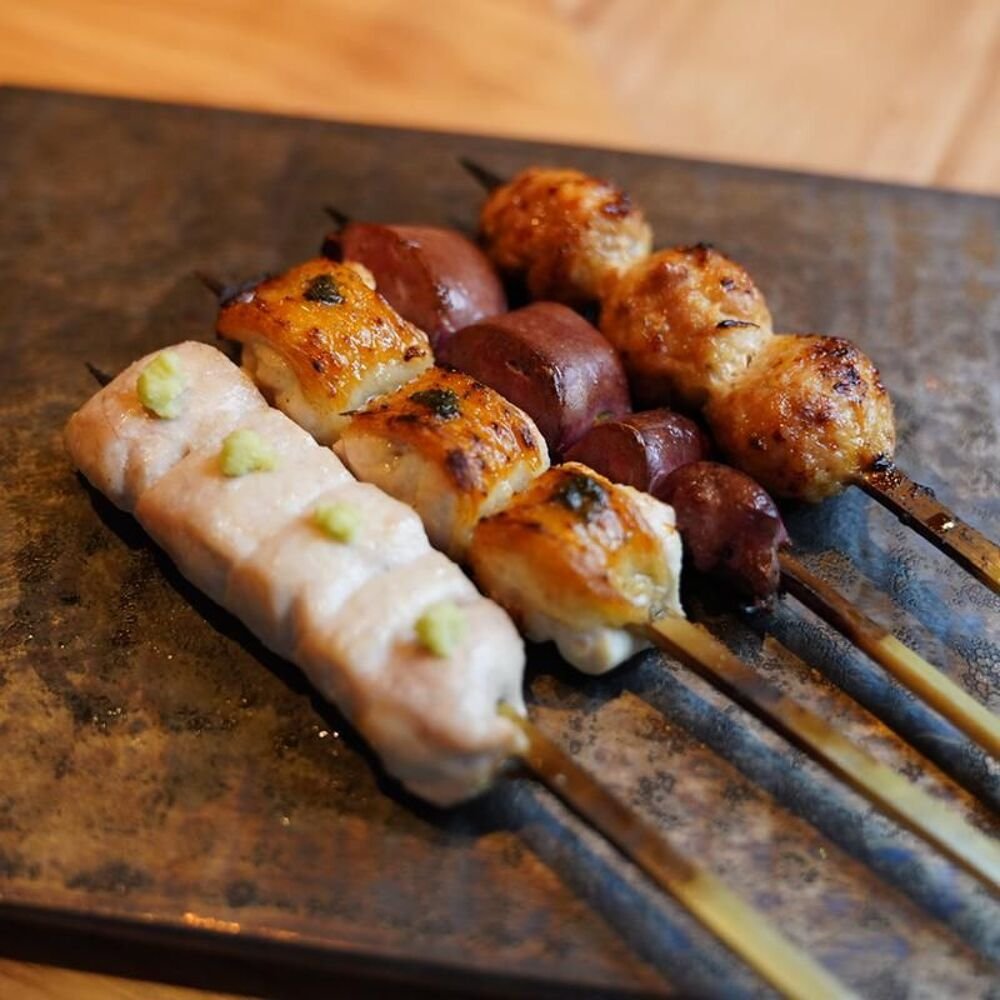
Michelin Bib Gourmand-recognised yakitori in Kagurazaka at a mid-range price point. The chef's background in hairdressing translates directly to the kitchen: chicken is cut along the fibres with real precision, and Kochi Prefecture sourcing is adjusted by cut. For Bib Gourmand quality without a high-end bill, this is one of the stronger calls in Shinjuku.
Verdict
Book Yakitori SANKA if you want Michelin-recognised yakitori at a mid-range price point in one of Tokyo's most walkable dining neighbourhoods. The 2024 Bib Gourmand tells you what you need to know: this is cooking that earns serious recognition without the serious bill. For food-focused travellers who treat a meal as the main event rather than a side note, this is a strong call in Kagurazaka.
About Yakitori SANKA
Yakitori SANKA sits on the second floor of a building in Yaraicho, Shinjuku City, in the Kagurazaka district — one of Tokyo's most characterful neighbourhoods, known for its Franco-Japanese character and a dining scene that punches well above its tourist profile. The address alone is worth knowing: Kagurazaka draws serious diners without the Ginza pricing, and SANKA fits that logic exactly.
The story behind the kitchen is one of the more interesting in Tokyo's yakitori circuit. The chef arrived at the grill after a career in hairdressing, and that background shapes the cooking in a way that goes beyond biography. Chicken is cut along the fibres rather than across them, producing skewers that hold their form on the grill and look as considered as they taste. Salt application follows the same precision logic: measured, deliberate, and applied with the spatial awareness of someone trained to work in fine detail. The result is yakitori that reads as craft rather than convenience.
The kitchen sources chicken from Kochi Prefecture as a baseline but adjusts the producing region according to the specific cut being prepared. This is not a detail buried in a press release — it has a direct effect on texture and flavour consistency across a skewer progression. For anyone who has eaten through Tokyo's yakitori range, from counter joints in Yurakucho to the mid-tier rooms in Shinjuku, this sourcing discipline is a meaningful differentiator. It is the kind of decision that separates a Bib Gourmand from a neighbourhood grill.
¥¥ price range puts SANKA in accessible territory. You are not paying omakase sushi prices here, and the Bib Gourmand classification specifically recognises good food at moderate cost. For travellers working through Japan's broader dining calendar, this is a practical anchor: a meal that delivers genuine technique without requiring you to block two hours and half your daily budget.
Timing and Booking
Kagurazaka is a neighbourhood that rewards evening visits. The lanes around Yaraicho quiet down after the office crowd clears, and the second-floor position at SANKA means you are above street level, a natural filter on noise. Weekday evenings are the call here if your schedule allows; weekend demand in a Bib Gourmand-listed room in this part of Tokyo can push booking windows out. Given the 2024 Michelin recognition, do not treat this as a walk-in option on a Friday or Saturday night.
Booking difficulty is rated Easy, which means seats are available without the months-in-advance planning required at harder-to-access Tokyo restaurants. That said, Easy does not mean last-minute on a Saturday. Check availability a week or two out and you should be fine for a weekday slot. Weekend diners should add more lead time.
Group and Solo Considerations
The second-floor room positions SANKA as a more intimate setting than a large-format yakitori hall. The editorial angle here matters for groups: if you are planning a private dining or group experience, the physical constraints of a two-floor converted building in Kagurazaka are worth confirming directly with the venue. Large groups, six or more, should verify capacity and any group-booking arrangements before assuming availability. For pairs or small groups of three or four, SANKA is a natural fit: the format of yakitori, served progressively across skewer courses, works well at that scale anyway.
Solo diners are well-served by the counter-style nature of most serious yakitori rooms. The format is interactive by design, and the chef's precision-focused approach to each skewer means solo visits often yield the most direct engagement with the cooking. If solo dining in Tokyo is part of your plan, yakitori is one of the more welcoming formats in the city, and SANKA's Bib Gourmand status makes it a smart single-seat booking.
Know Before You Go
Practical Details
- Address: DEAR神楽坂 2F, 64-4 Yaraicho, Shinjuku City, Tokyo 〒162-0805
- Neighbourhood: Kagurazaka, Shinjuku
- Cuisine: Yakitori
- Price range: ¥¥ (mid-range)
- Awards: Michelin Bib Gourmand 2024
- Booking difficulty: Easy, book 1–2 weeks out for weekdays; allow more lead time for weekends
- Floor: Second floor (no ground-level entrance)
- Hours: Confirm directly with the venue before visiting
- Phone / website: Not currently listed, check Google Maps or local reservation platforms for current contact details
How It Compares
See the comparison section below for how SANKA sits against other Tokyo restaurants at different price points.
Explore More in Tokyo and Beyond
SANKA is one of several strong yakitori options worth knowing in Tokyo. Yakitori Omino, BIRD LAND, and Asagaya BIRD LAND all operate at different price tiers and formats, useful benchmarks if you are building a yakitori-focused Tokyo itinerary. For the Kagurazaka neighbourhood specifically, 124. KAGURAZAKA is worth cross-referencing for a different cuisine register in the same postcode.
If you are travelling beyond Tokyo, Ichimatsu in Osaka and Torisaki in Kyoto are the yakitori references to know in those cities. For broader Japan dining context, HAJIME in Osaka, Gion Sasaki in Kyoto, akordu in Nara, Goh in Fukuoka, 1000 in Yokohama, 6 in Okinawa, and Aramaki round out a Japan dining itinerary at various price points.
For everything else in Tokyo: our full Tokyo restaurants guide, Tokyo hotels, Tokyo bars, Tokyo wineries, and Tokyo experiences.
Frequently Asked Questions
Is Yakitori SANKA good for solo dining?
Yes. The second-floor room in Yaraicho is an intimate setting rather than a large-format hall, which suits solo diners better than groups of four or more. At ¥¥ pricing with a 2024 Michelin Bib Gourmand, it delivers strong value without requiring a partner to justify the spend. Solo counter or table dining is the format this space is built for.
How far ahead should I book Yakitori SANKA?
Book at least one to two weeks ahead, particularly for evening slots. Bib Gourmand recognition in 2024 has raised the profile of smaller Tokyo yakitori rooms, and second-floor venues with limited covers fill faster than street-level izakayas. If you're visiting Kagurazaka on a weekend, earlier is safer.
What should I wear to Yakitori SANKA?
Keep it relaxed. At ¥¥ pricing in a neighbourhood known for casual evening dining, there is no indication of a formal dress expectation. Clean, comfortable clothes are the standard for Tokyo yakitori at this level — bear in mind that smoke from the grill can cling to fabric, so avoid anything you'd be precious about.
What is Yakitori SANKA known for?
Yakitori SANKA is primarily known for Yakitori in Tokyo.
Location
Japan, 〒162-0805 Tokyo, Shinjuku City, Yaraicho, 64−4 DEAR神楽坂 2階
Tokyo, Japan
Compare Yakitori SANKA
| Venue | Price | Booking Difficulty |
|---|---|---|
| Yakitori SANKA | ¥¥ | Easy |
| Harutaka | ¥¥¥¥ | Unknown |
| L'Effervescence | ¥¥¥¥ | Unknown |
| RyuGin | ¥¥¥¥ | Unknown |
| HOMMAGE | ¥¥¥¥ | Unknown |
| Crony | ¥¥¥¥ | Unknown |
Side-by-side comparison to help you decide where to book.
Also Consider
- Harutaka, Sushi, ¥¥¥¥
- L'Effervescence, French, ¥¥¥¥
- RyuGin, Kaiseki, Japanese, ¥¥¥¥
- HOMMAGE, Innovtive French, French, ¥¥¥¥
- Crony, Innovative, French, ¥¥¥¥
SANKA sits at ¥¥ with a Bib Gourmand, which puts it in a completely different spending bracket from most of its comparison neighbours on this list. Harutaka, RyuGin, L'Effervescence, HOMMAGE, and Crony all operate at ¥¥¥¥, meaning you are looking at spending two to four times more per head for those experiences. That is not a criticism of SANKA; it is a framing tool. If your Tokyo dining budget is tight or already committed to one or two high-end meals, SANKA delivers Michelin-level recognition at a fraction of the cost.
On format and cuisine, the comparison is a different question. RyuGin delivers kaiseki precision across a multi-course Japanese progression; Harutaka is among Tokyo's most technically demanding sushi counters. Neither is a substitute for yakitori, and SANKA is not a substitute for either of them. These are different meals for different occasions. Where SANKA wins is accessibility: easier to book than Harutaka, significantly cheaper than RyuGin, and faster to eat through than a kaiseki sequence, useful if you want a serious dinner that does not consume an entire evening.
For value-to-quality ratio in Tokyo, SANKA is the call over any of the ¥¥¥¥ options listed here. If you are building a multi-meal Tokyo itinerary and want one high-spend, high-formality evening, pick from RyuGin or L'Effervescence depending on whether you want Japanese or French. Use SANKA for the night when you want serious cooking without the ceremony. It earns its Bib Gourmand, and at ¥¥, the risk is low enough that this is one of the easier bookings to justify in the city.
Recognized By


Explore Tokyo
Save or rate Yakitori SANKA on Pearl
Keep this venue in your Pearl passport, rate it after you visit, and track it alongside every other place you collect.