
Restaurant in Woodstock, United States
The Little Bear
100ptsTinker Street Independents
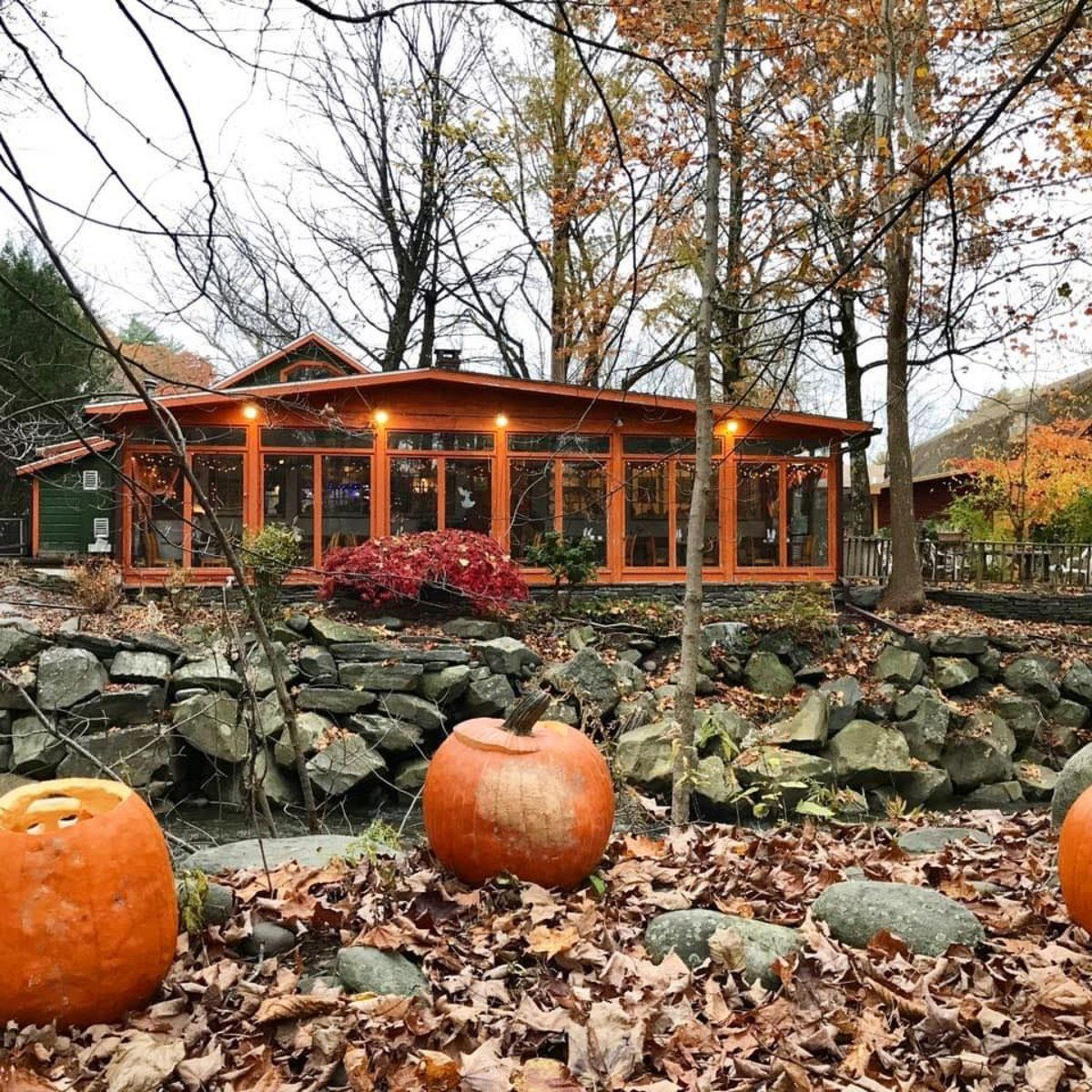
About The Little Bear
On Tinker Street in the heart of Woodstock, The Little Bear occupies a small but deliberate position in a town that has always taken its independent food culture seriously. The address — 295 Tinker St B — places it squarely in the village's walkable core, where the dining scene skews toward character over scale. A compact venue with a name that fits the surrounding folklore of the Catskills.
Tinker Street and the Woodstock Dining Character
Woodstock's restaurant culture has never followed the Hudson Valley's broader trend toward destination-dining grandeur. While properties like Blue Hill at Stone Barns in Tarrytown have built multi-acre, farm-to-table narratives with the weight of Michelin recognition behind them, Woodstock operates at a different register: smaller rooms, more personal programming, and a dining public that arrived here specifically to avoid the institutional. Tinker Street is the spine of that sensibility. The storefronts along it are narrow, the signage is modest, and the restaurants that survive here do so on repeat local business and the loyalty of weekenders who return to the same tables each season.
The Little Bear sits at 295 Tinker St B — the B suffix already signals something about scale and positioning. This is not a corner anchor or a landmark address. It is the kind of slot that, in a larger city, you would call a neighborhood find, and in Woodstock it fits a pattern of venues that earn their footing quietly. The town has a handful of restaurants that draw visitors from the broader Catskills corridor: Cucina has occupied its own lane with Italian-influenced cooking, Garden Cafe Woodstock holds the plant-forward position, and Century House brings a different kind of warmth to the village. The Little Bear enters this landscape as a smaller, more focused proposition.
What the Name Signals About the Experience
In a town as mythologized as Woodstock — the name carries the weight of 1969 even though the festival itself happened 60 miles west in Bethel , venues that lean into the local and the intimate tend to resonate more durably than those chasing a broader audience. The name The Little Bear is consistent with that register: it is specific, slightly whimsical, and self-contained. It does not announce ambition so much as it suggests a point of view. Across the Hudson Valley and Catskills corridor, this approach to identity has proven more resilient than the polished-branding playbooks that work in larger metro markets.
Compare the positioning here to, say, Single Thread Farm in Healdsburg or Smyth in Chicago , venues where the architecture of the experience is engineered and the name itself carries formal weight. The Little Bear operates at the opposite end of that scale, and in Woodstock that is not a shortcoming. It is a deliberate alignment with a town that has consistently pushed back against over-formalization.
Cultural Roots and the Catskills Food Tradition
The Catskills have their own food history, one that sits apart from the Hudson Valley's wine-country narrative. The region's culinary identity was shaped by decades of Borscht Belt resort culture , a tradition of abundant, communal cooking with Eastern European Jewish roots , and by the back-to-the-land movements that brought a different kind of cook to the hills from the late 1960s onward. What emerged from that collision was a food culture that values generosity over precision, sourcing over technique-display, and community over spectacle. That is the tradition The Little Bear inherits by virtue of its address, whether or not it consciously references it.
In a broader American context, the Catskills sit in an interesting peer position: close enough to New York City (roughly two hours north) to draw a sophisticated dining audience, but culturally distinct enough to resist the city's tendency to import its own formats wholesale. Restaurants here are not miniature versions of what you'd find on the Lower East Side or in the West Village. They are shaped by what the region produces, what the community asks for, and what survives a shoulder season. That filter produces a different kind of restaurant, and The Little Bear's compact footprint is consistent with what that filter tends to reward.
For visitors calibrating their Woodstock itinerary, the contrast with full-scale destination dining is instructive. The French Laundry in Napa, Le Bernardin in New York City, or Addison in San Diego represent a tier where the experience is engineered across every variable. The Little Bear does not compete in that tier, nor does it need to. Woodstock rewards a different kind of attention, and its leading venues operate accordingly. See our full Woodstock restaurants guide for broader context on how the town's dining scene is organized by neighborhood and format.
Planning a Visit
The Little Bear is located at 295 Tinker St B in Woodstock, New York 12498, placing it within walking distance of the village center and the concentrated stretch of independent retail and dining that defines the Tinker Street corridor. Woodstock is accessible from New York City via the New York Thruway (I-87) to Exit 19 in Kingston, then west on Route 28 before cutting north toward the village , a drive that typically runs 90 minutes to two hours depending on traffic out of the city. For visitors combining The Little Bear with a broader sweep of Woodstock dining, nearby options include Bub-Ba-Q for a different register entirely, and Good Night for an evening continuation. Because the venue database does not carry current hours, pricing, or reservation details for The Little Bear, checking directly on arrival or via local listings before your visit is the practical move. Woodstock's smaller venues can shift hours seasonally, and Tinker Street in particular sees fluctuating foot traffic between peak summer weekends and quieter midweek windows in spring and fall.
Frequently Asked Questions
Is The Little Bear good for families?
Woodstock's independent dining venues tend to be relaxed in format, and given The Little Bear's small-scale positioning on Tinker Street, it reads as more accommodating than formal , though without confirmed pricing or seating data, families with specific requirements should verify logistics directly before visiting.
What's the overall feel of The Little Bear?
The venue fits the character of Woodstock's independent dining scene: compact, personal, and aligned with a town that has always preferred substance over scale. Without formal awards on record, it occupies the kind of position where local reputation and repeat visitors carry more weight than external ratings , a pattern common to the stronger independents along Tinker Street.
What's the must-try dish at The Little Bear?
Specific menu and dish data is not available in the current record for The Little Bear, so making a dish recommendation without a verified source would be speculative. For cuisine-specific context on what the Catskills and Hudson Valley region tends to produce at its leading , seasonal, locally sourced, and shaped by the back-to-land food culture of the area , venues like Blue Hill at Stone Barns offer a documented point of comparison for how the region's agricultural traditions translate to the plate.
How does The Little Bear compare to other small venues in the Hudson Valley and Catskills?
The Hudson Valley and Catskills corridor ranges from high-profile farm-to-table operations with national recognition to tight, independently run village spots that serve primarily local and regional audiences. The Little Bear's Tinker Street address puts it in the latter category , a format that in this region tends to thrive on seasonal regulars and Catskills weekend visitors rather than destination-dining foot traffic. For those building a broader regional itinerary, venues like Lazy Bear in San Francisco, Providence in Los Angeles, or Emeril's in New Orleans illustrate how different American cities anchor their independent dining cultures , useful context for understanding where Woodstock's scene fits on that broader map. Locally, Cucina and Garden Cafe Woodstock represent the closest peer formats within the village itself. For those interested in how destination-level craft operates at the other end of the spectrum in Europe, Atelier Moessmer Norbert Niederkofler in Brunico or Atomix in New York City offer instructive contrasts, and The Inn at Little Washington shows how a small-town American setting can support destination-level ambition when the conditions are right.
Related editorial
- Asia's 50 Best Restaurants 2026: The Chairman and Wing Go 1-2 from the Same BuildingThe Chairman takes No. 1 and Wing climbs to No. 2 at Asia's 50 Best Restaurants 2026. Both operate from the same Hong Kong building. Here's what it means.
- Four Seasons Yachts Debut: 95 Suites, 11 Restaurants, and a March 2026 Maiden VoyageFour Seasons I launches March 20, 2026, with 95 suites, a one-to-one staff ratio, and 11 onboard restaurants. Worth tracking if you want hotel-grade service at sea.
- LA Michelin Guide 2026: Seven New Restaurants from Tlayudas to Uzbek DumplingsMichelin's March 2026 California Guide update adds six LA restaurants and one Montecito newcomer, spanning Oaxacan tlayudas, Uzbek manti, and Korean-Italian pasta.
Save or rate The Little Bear on Pearl
Keep this venue in your Pearl passport, rate it after you visit, and track it alongside every other place you collect.