
Restaurant in Vienna, Austria
Demel K.u.K. Hofzuckerbäckeri
100ptsImperial Zuckerbäckerei

About Demel K.u.K. Hofzuckerbäckeri
One of Vienna's most storied Ringstrasse-era cafés, Demel on Kärntner Strasse has been a fixture of the city's pastry culture since the imperial era and holds a 2025 Opinionated About Dining Cheap Eats in Europe recognition. It sits in the upper tier of Vienna's historic café institutions, drawing over 18,000 Google reviews at a 4.1 rating, and remains a reference point for Viennese Zuckerbäckerei tradition.
The Architecture of a Viennese Institution
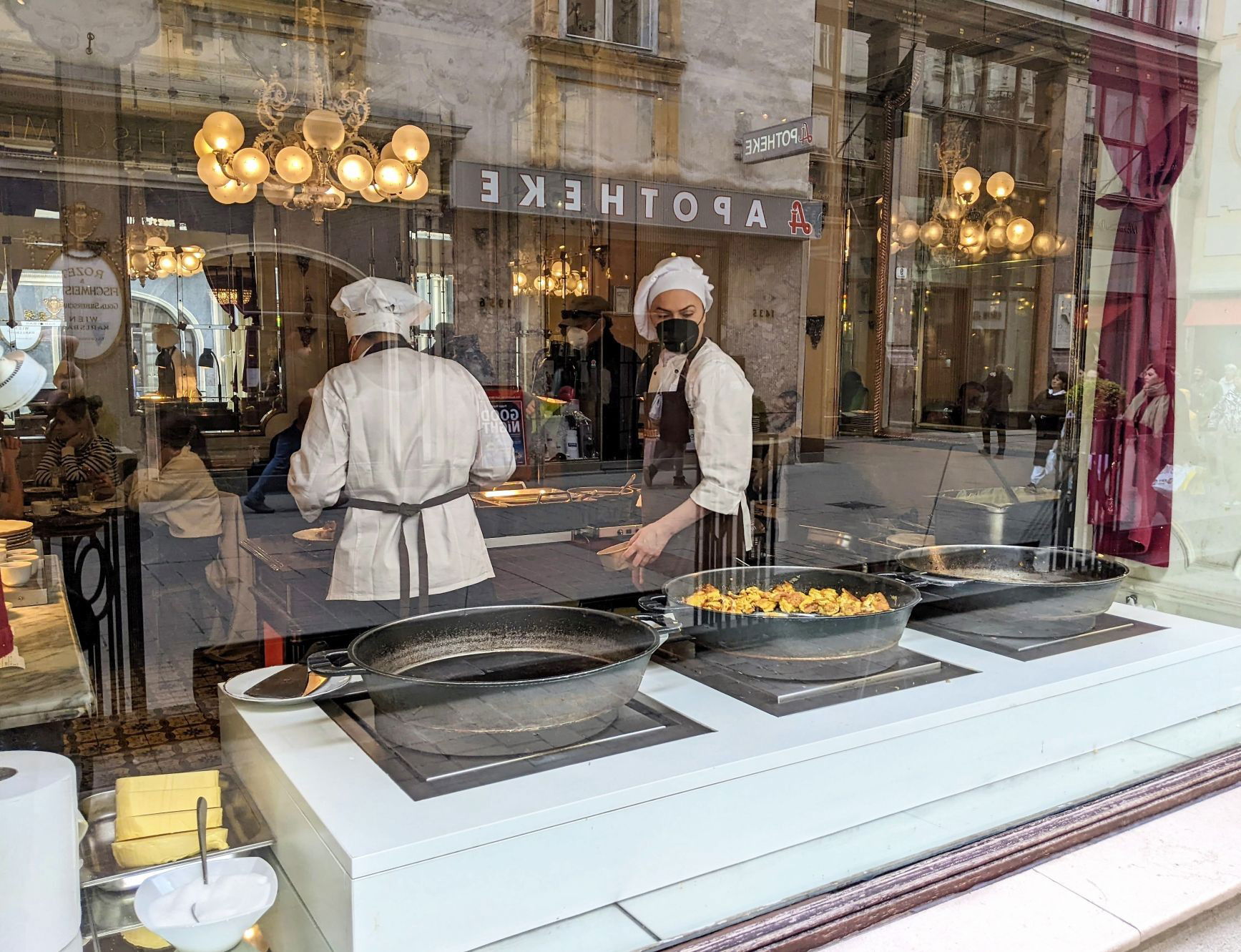
The grand café as a physical format has always been as much about space as it is about food. In Vienna, that relationship between architecture and ritual is particularly loaded: the city's historic cafés were designed to be inhabited, to slow the pace of a day, to make lingering feel productive rather than idle. Demel K.u.K. Hofzuckerbäckeri, at Kärntner Strasse 51 in the city's first district, belongs to this tradition at its most formal. The interiors operate in a register of gilded restraint — mirrors, polished surfaces, display cases arranged with the precision of a jeweller's window — where the visual weight of the room itself tells you something about how seriously Vienna has always taken its pastry culture.
The "K.u.K." in the name is more than historical branding. It denotes Kaiserlich und Königlich, the designation of imperial and royal warrant holders under the Austro-Hungarian monarchy. That lineage places Demel in a different institutional category from the city's broader café scene: it is not a neighbourhood coffeehouse or a modernist espresso bar, but a formal confectionery house with roots in court supply. The physical space reflects that origin, with a formality of presentation that sets it apart from the more relaxed Biedermeier atmosphere you encounter elsewhere along the Ringstrasse corridor.
Where Demel Sits in Vienna's Café Hierarchy
Vienna's café culture operates across several distinct tiers. At one end are the neighbourhood Kaffeehäuser , the kind of all-day institutions where a single Melange buys you an afternoon with a newspaper and nobody hurries you. At the other end are the grand tourist-facing venues on and near the first district, where the density of visitors changes the social contract considerably. Demel occupies a specific position within that upper tier: it draws both international visitors and Viennese residents who have reason to be in the city centre, and it holds a Google rating of 4.1 across more than 18,500 reviews , a volume that reflects sustained, high-traffic operation rather than a curated following.
The comparison that arrives most quickly is with Café Sacher, the other major imperial-era institution in the first district, and the question of which represents the more authentic experience of historic Viennese pastry culture is one the city has been debating for generations. Where Sacher is anchored by a single product , the Sachertorte , Demel's identity is broader, built around the full tradition of Viennese Zuckerbäckerei, or confectionery craft.
The 2025 Opinionated About Dining Cheap Eats in Europe recognition positions Demel interestingly relative to Vienna's fine-dining end, where venues like Steirereck im Stadtpark and Konstantin Filippou operate at the Michelin two- and three-star level. The OAD recognition situates Demel in a different register entirely: accessible, accessible, and defined by craft tradition rather than tasting-menu innovation. It is the kind of recognition that reflects longevity and consistency rather than culinary ambition in a contemporary sense.
The Pastry Tradition the Room Is Built Around
Viennese Zuckerbäckerei is a distinct culinary discipline, separate from French pâtisserie in its philosophical grounding and its relationship to the city's social rituals. Where French pastry culture tends toward technical display and visual architecture, the Viennese tradition is more focused on texture, on the interplay of butter-rich dough with creams and jams, and on pastries that are meant to accompany coffee rather than stand as independent confections. The Apfelstrudel, the Topfenstrudel, the various tortes and Schnitten that form the backbone of the genre have been refined over generations precisely because they are meant to be eaten at a marble table, in a room like this one, at a pace that the architecture itself seems to enforce.
Demel is most closely associated with its version of the Sachertorte , a source of documented, long-running legal and cultural dispute with the Hotel Sacher , but its pastry operation is considerably wider than that single item. The display cases on entry function as the clearest signal of the kitchen's scope: seasonal preparations, Konditorei classics, and items that shift with Vienna's calendar of celebration and observance.
Planning a Visit
Demel is located at Kärntner Strasse 51 in Vienna's first district, within walking distance of the Staatsoper and the Albertina, making it a natural stopping point on any itinerary that moves through the inner city. The first district is dense with competing claims on a visitor's time and budget, and Demel's position on Kärntner Strasse , one of the city's main pedestrian arteries , means foot traffic is constant, particularly in the mid-morning to mid-afternoon window. Arriving early in the morning or later in the afternoon reduces the ambient pressure considerably.
For those building a broader picture of Vienna's dining scene, the city's creative restaurant tier , Amador, Doubek, and the Michelin-recognised houses around the Ringstrasse , operates on a different logic entirely from historic café culture. The two are not in competition; they serve different hours, different purposes, and different registers of appetite. Demel fits most naturally into a morning or afternoon window, before or after the kind of evening that might end at one of Vienna's more contemporary tables. Our full Vienna restaurants guide, hotels guide, bars guide, wineries guide, and experiences guide cover the broader city in detail.
Austria's café and restaurant scene extends well beyond Vienna. For those travelling further, Ikarus in Salzburg, Döllerer in Golling an der Salzach, Landhaus Bacher in Mautern an der Donau, Kräuterreich by Vitus Winkler in Sankt Veit im Pongau, Gourmetrestaurant Tannenhof in Sankt Anton am Arlberg, and Griggeler Stuba in Lech each represent different facets of Austrian culinary tradition. For comparable European café culture in other cities, Annelies in Berlin and Apotek 57 in Copenhagen offer useful points of reference across different northern European traditions.
What Demel Is Famous For
What dish is Demel K.u.K. Hofzuckerbäckeri famous for?
Demel is most closely associated with the Sachertorte , the dense chocolate layer cake that became the subject of a famous mid-twentieth century legal dispute between Demel and the Hotel Sacher over which had the right to call its version the "original." Beyond that single item, Demel's broader reputation rests on the full tradition of Viennese Zuckerbäckerei: Apfelstrudel, Topfenstrudel, various seasonal tortes, and the kind of butter-rich pastry craft that the city's imperial-era confectionery houses built their identities around. The 2025 Opinionated About Dining Cheap Eats in Europe recognition reflects that sustained pastry tradition, and the venue's 4.1 rating across more than 18,500 Google reviews points to a consistently high volume of visitors engaging seriously with what the kitchen produces.
Recognized By

More restaurants in Vienna
- Steirereck im StadtparkAustria's most decorated restaurant by a wide margin — three Michelin stars, a top-25 World's 50 Best ranking, and a La Liste score of 98 points. Getting a table is genuinely hard (book four to six weeks out minimum), but Steirereck im Stadtpark justifies every effort with research-driven Austrian cuisine, an extraordinary wine programme, and service that makes three-star dining feel welcoming rather than forbidding.
- AmadorJuan Amador's three-Michelin-starred restaurant in Vienna's 19th district combines Spanish-influenced creativity with Austrian produce and Austria's top-ranked wine program. La Liste scores of 94-95 points and an OAD European ranking of #47 make the case clearly. Book at least six to eight weeks out for weekdays; Saturday tables require three to four months' notice minimum.
Similar venues by awards
Related editorial
- Asia's 50 Best Restaurants 2026: The Chairman and Wing Go 1-2 from the Same BuildingThe Chairman takes No. 1 and Wing climbs to No. 2 at Asia's 50 Best Restaurants 2026. Both operate from the same Hong Kong building. Here's what it means.
- Four Seasons Yachts Debut: 95 Suites, 11 Restaurants, and a March 2026 Maiden VoyageFour Seasons I launches March 20, 2026, with 95 suites, a one-to-one staff ratio, and 11 onboard restaurants. Worth tracking if you want hotel-grade service at sea.
- LA Michelin Guide 2026: Seven New Restaurants from Tlayudas to Uzbek DumplingsMichelin's March 2026 California Guide update adds six LA restaurants and one Montecito newcomer, spanning Oaxacan tlayudas, Uzbek manti, and Korean-Italian pasta.
Save or rate Demel K.u.K. Hofzuckerbäckeri on Pearl
Keep this venue in your Pearl passport, rate it after you visit, and track it alongside every other place you collect.