
.png?width=1200&quality=80)

Toriyaki Ohana
Chicken Specialities · Shibuya, Tokyo
Restaurant in Tokyo, Japan
 Book with Pearl
The Read
Single-Protein Kaiseki
Price
¥¥¥
Dress
Smart Casual
Why go
Toriyaki Ohana in Ebisu runs a kaiseki-format chicken tasting menu that earned Michelin Plate recognition in both 2024 and 2025. At ¥¥¥, it delivers technically disciplined multi-course cooking — char-grilled on the surface, precise in structure — at a price tier below most of Tokyo's top tasting rooms. Book if you want a focused, structured dinner without the ¥¥¥¥ commitment.
About Toriyaki Ohana
Verdict: A focused, technically accomplished chicken kaiseki that earns its Michelin Plate — and one of Ebisu's more interesting dinner decisions at ¥¥¥
Toriyaki Ohana runs a single-subject menu built entirely around chicken, executed in the multi-course kaiseki format. If that sounds narrow, that is the point: the kitchen's discipline across every technique — wrapping, soup-making, char-grilling, is what justifies the price tier and the two consecutive Michelin Plate recognitions (2024 and 2025). For a first-timer trying to decide whether to book, the answer is yes, provided you are coming specifically for a structured Japanese tasting experience with chicken as the sole protein. If you want variety across proteins or a more conventional yakitori format, look elsewhere.
What to Expect: Course by Course
The menu opens with precision-made appetisers: chicken breast wrapped with nori seaweed and a spring roll of minced chicken with miso. These are not large plates; they set the register, careful, clean, ingredient-focused. The soup course follows, built around chicken wonton in what the kitchen describes as a stocked broth. The grilling course is where the kitchen diverges most clearly from the yakitori category: chicken and duck are not skewered but char-grilled directly on a wire net, broiled close to a hot flame until the surface is deeply scorched. The aroma that comes with that technique, pungent, smoky, fat-rendered, is the sensory centrepiece of the meal. The sequence closes with chicken bone soup over rice, a deliberate nose-to-tail statement that nothing from the bird is wasted.
That final course matters. It signals that the kitchen is thinking about the whole animal and the whole meal arc, not just individual showpiece dishes. For a first-timer, understanding this structure before you arrive will help you pace accordingly: do not fill up early.
Technical Mastery: What the Kitchen Does Better Than Peers
The Michelin Plate designation, held in both 2024 and 2025, is the clearest external validation of what Toriyaki Ohana is doing technically. The kaiseki structure applied to a single protein is genuinely uncommon in Tokyo's dining scene. Most chicken-focused restaurants in the city operate in the yakitori register, skewered, counter-service, casual. Toriyaki Ohana applies kaiseki's sequencing logic (progression, balance, restraint, closing) to that same ingredient, which requires a different kind of kitchen rigour: stocks must be clean enough to carry a course on their own, grilling must produce both char and tenderness without the structural shortcut of a skewer, and the rice dish that closes the meal must feel like resolution rather than an afterthought.
It reflects consistent execution rather than a viral single visit. For a first-timer, that consistency matters: you are not gambling on a night that might or might not be exceptional.
Booking and Logistics
Toriyaki Ohana is located on the third floor of SreedEBISU2 in Ebisu, Shibuya, Tokyo. Ebisu is a walkable, well-connected neighbourhood with good transport links from central Tokyo. Booking difficulty is rated easy, which is a meaningful advantage in a city where many comparably priced restaurants require weeks of lead time or a Japanese-speaking intermediary. No phone or website is listed in Pearl's current data, so reservation logistics are best confirmed through a hotel concierge or a booking platform that covers Tokyo's restaurant scene. Hours are not confirmed in our data, verify before travelling.
Dress code information is not confirmed, but the kaiseki format and price tier suggest smart-casual is the appropriate register. Seat count is not confirmed in our data; the third-floor location and the style of service suggest an intimate room rather than a large one. Plan accordingly if you are visiting with a group larger than four.
Know Before You Go
- Cuisine: Chicken specialities in kaiseki multi-course format
- Price tier: ¥¥¥
- Awards: Michelin Plate 2024 and 2025
- Location: 3F SreedEBISU2, Ebisu 3-28-2, Shibuya, Tokyo
- Booking difficulty: Easy
- Leading for: Couples, small groups, structured tasting experience
- Confirm before visiting: Hours, booking method, and current menu via concierge or booking platform
How Toriyaki Ohana Fits Into a Tokyo Dining Trip
If you are building a multi-night itinerary across Tokyo, Toriyaki Ohana works well as a mid-week dinner that sits at a lower price point than the city's leading kaiseki and sushi rooms. For a broader picture of where it fits, see our full Tokyo restaurants guide. If you are also planning stays, our Tokyo hotels guide covers accommodation options across the city, and our Tokyo bars guide can help you plan the evening before or after.
For comparison with Tokyo's higher-tier tasting rooms, RyuGin and Sézanne both operate at ¥¥¥¥ and offer broader ingredient range. Harutaka is the reference point for precision sushi at ¥¥¥¥. L'Effervescence and Crony cover the French end of Tokyo's tasting menu market. Toriyaki Ohana's value is that it delivers Michelin-recognised execution at one price tier below most of those rooms.
If you are visiting Japan beyond Tokyo, HAJIME in Osaka, Gion Sasaki in Kyoto, akordu in Nara, Goh in Fukuoka, 1000 in Yokohama, and 6 in Okinawa are all worth adding to the shortlist depending on your route. For international context on what a focused tasting menu can achieve at the highest level, Le Bernardin in New York City and Lazy Bear in San Francisco offer useful reference points for how single-subject kitchen discipline translates across different culinary traditions. Pearl also covers Tokyo wineries and Tokyo experiences if you are planning beyond dining.
Frequently Asked Questions
What should I order at Toriyaki Ohana?
- The menu is set, so ordering decisions are limited, the kitchen runs a fixed kaiseki progression. Focus your attention on pacing: the char-grilled chicken and duck course is the technical highlight, and the closing chicken bone soup over rice is worth sitting with rather than rushing. Do not skip the opening appetisers; the nori-wrapped chicken breast and miso spring roll set the kitchen's register clearly.
Is the tasting menu worth it at Toriyaki Ohana?
- The format delivers more technical rigour than a standard yakitori counter at a similar or slightly lower price. If you are comparing against kaiseki rooms at ¥¥¥¥ like RyuGin, the trade-off is narrower ingredient range for lower spend. For chicken specifically, this kitchen is operating at a level that is hard to find elsewhere in this format.
Can Toriyaki Ohana accommodate groups?
- Seat count is not confirmed in Pearl's current data, but the third-floor intimate setting suggests the room is small. Groups of two to four are likely the most comfortable configuration. Larger groups should check capacity directly through a hotel concierge or booking platform before planning. The kaiseki format also requires all guests to follow the same course progression, which works well for groups who are aligned on that kind of structured meal.
Is Toriyaki Ohana worth the price?
- At ¥¥¥, it sits below Tokyo's top-tier tasting rooms and delivers Michelin-recognised execution on a genuinely focused concept. The value case is strongest if you want a structured, multi-course Japanese dinner without committing to ¥¥¥¥ spend. If the single-protein format does not appeal, or if you would prefer a broader kaiseki at a similar price tier, that is the one reason to look elsewhere. For what it sets out to do, the price-to-execution ratio is solid.
Planning details
- Location
- Japan, 〒150-0013 Tokyo, Shibuya, Ebisu, 3 Chome−28−2 SreedEBISU2 3F SP15 EBISU1F
- Website
- toriyaki-ohana.jp
- Phone
- +81 3-6455-7826
The take
The Take
The Vibe
Toriyaki Ohana is a quietly confident specialist kitchen that reduces its focus to a single ingredient and treats that constraint as the source of its artistry. Set on the third floor of a building on Ebisu's residential fringe, it pairs kaiseki discipline with the direct, smoky language of high-heat grilling. The writing privileges technique over flash — you read the menu as a progression of textures and temperatures rather than a parade of disparate flavours. Michelin recognition underscores the restaurant's refined restraint: this is a deliberate, classic approach to craft rather than a novelty-driven concept.
Best For
This is a restaurant for diners who want a considered, multi-course dinner that foregrounds technique and seasonal rhythm. The kaiseki structure makes it especially well suited to special occasions and intimate dinners where a slowed, sequential meal is the point. Groups that appreciate textural contrast and the argument of a single ingredient — in this case chicken executed across multiple registers — get the most from the experience. Because the menu reads as a formal progression, it rewards attention and time rather than quick, casual visits.
Ordering Tips
Embrace the kaiseki sequence: the menu is constructed to move from delicate cold-start appetizers through a restorative soup and into the grilling register, so allow the progression to play out. Be sure to try the signature items that illustrate the kitchen's range — the tsukune meatball, the chicken roll, the charcoal-grilled chicken thigh and a final yaki-onigiri — as they showcase both knife work and the char-grill technique the kitchen favours. Come prepared for a paced, formal meal and leave room to appreciate the shifting textures and temperatures.
Venue details
Ambiance
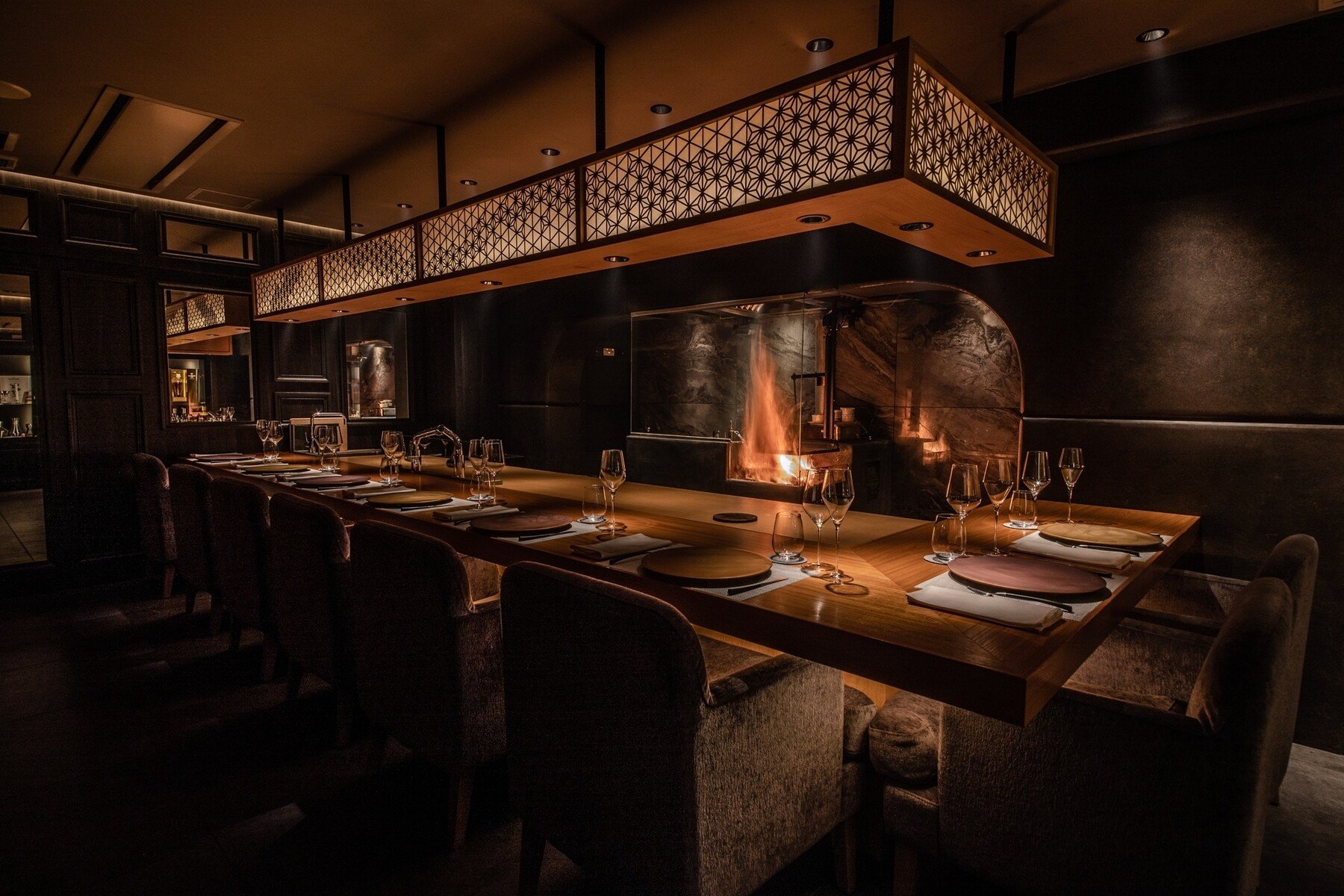
Calm and tasteful ambiance with stylish space, wooden counter seating for 10, and open kitchen view in a hideout location.
Tags
Vibe
Best For
Experience
Sourcing
At the Table
- Dress Code
- Smart Casual
- Noise Level
- Quiet
- Service Style
- Upscale Casual
- Meal Pacing
- Leisurely
- Capacity
- Intimate
Signature Dishes
- Tsukune meatball
- Chicken roll
- Charcoal grilled chicken thigh
- Yaki-onigiri
Know before you go
Know Before You Go
- Getting there
- Japan, 〒150-0013 Tokyo, Shibuya, Ebisu, 3 Chome−28−2 SreedEBISU2 3F SP15 EBISU1F
Planning details
Location
Japan, 〒150-0013 Tokyo, Shibuya, Ebisu, 3 Chome−28−2 SreedEBISU2 3F SP15 EBISU1F · Directions

Also consider
Also Consider
- Harutaka, Sushi, ¥¥¥¥
- RyuGin, Kaiseki, Japanese, ¥¥¥¥
- L'Effervescence, French, ¥¥¥¥
- HOMMAGE, Innovtive French, French, ¥¥¥¥
- Florilège, French, ¥¥¥
Restaurant context
Toriyaki Ohana sits at ¥¥¥ with Michelin Plate recognition, which makes it a practical alternative if you want structured Japanese tasting-menu execution without committing to the ¥¥¥¥ rooms. RyuGin at ¥¥¥¥ is the clearest reference point for what kaiseki looks like at full depth in Tokyo, broader ingredient range, more complex course progression, significantly higher spend. If kaiseki is new to you and you want to calibrate before spending at that level, Toriyaki Ohana is a sensible entry point. Harutaka at ¥¥¥¥ is the better booking if precision sushi is what you are actually after rather than a chicken-focused tasting format.
On the French side, L'Effervescence and HOMMAGE both operate at ¥¥¥¥ and offer broader creative range with more conventional tasting menu variety. Florilège at ¥¥¥ is the closest price-tier peer for a tasting menu format, though it operates in a completely different culinary register, French rather than Japanese, and without the single-protein constraint. If you are deciding between Toriyaki Ohana and Florilège purely on spend, the choice comes down to whether Japanese or French is the priority for that meal.
Booking difficulty at Toriyaki Ohana is rated easy, which is a genuine advantage over several of these peers. RyuGin, Harutaka, and L'Effervescence all require more lead time and, in some cases, a Japanese-speaking intermediary. If you are planning a Tokyo itinerary with limited flexibility, Toriyaki Ohana's accessibility is a meaningful practical factor alongside its culinary credentials.
Explore Tokyo
Around this place
Discover more on Pearl
Unlock the full Toriyaki Ohana guide in Pearl, including awards, comparisons, FAQs, planning details, and nearby places.
Compare Toriyaki Ohana
| Venue | Price | Awards |
|---|---|---|
| Toriyaki Ohana | ¥¥¥ | 2026 OAD Top Restaurants in Japan Recommended2026 Michelin PlateTabelog 100 - Chicken cuisine - 2025 · #42025 Michelin Plate2024 Michelin Plate |
| Harutaka | ¥¥¥¥ | 2026 Tabelog Silver · #312026 OAD Top Restaurants in Japan Ranked · #1282026 Michelin 3 Stars2026 La Liste Top RestaurantsTabelog 100 - Sushi - TOKYO - 2025 · #372025 Asia's 50 Best Restaurants · #762025 OAD Top Restaurants in Japan Ranked · #1172025 La Liste Top Restaurants2025 Tabelog Bronze |
| RyuGin | ¥¥¥¥ | 2026 OAD Top Restaurants in Japan Ranked · #802026 Tabelog Bronze · #3772026 Michelin 3 Stars2026 La Liste Top RestaurantsTabelog 100 - Japanese cuisine - TOKYO - 2025 · #212025 OAD Top Restaurants in Japan Ranked · #542025 Michelin 3 Stars2025 La Liste Top Restaurants2025 The Best Chef Three Knives |
| L'Effervescence | ¥¥¥¥ | 2026 Tabelog Silver · #682026 OAD Top Restaurants in Japan Ranked · #103Star Wine Lists 20262026 Black Pearl 2 Diamond2026 Relais Chateaux Restaurants2026 La Liste Top Restaurants2026 Michelin 3 Stars2025 Asia's 50 Best Restaurants · #692025 OAD Top Restaurants in Japan Ranked · #92 |
| HOMMAGE | ¥¥¥¥ | 2026 Tabelog Bronze · #1232026 OAD Top Restaurants in Japan Highly Recommended2026 Michelin 2 StarsTabelog 100 - French - TOKYO - 2025 · #762025 Asia's 50 Best Restaurants · #782025 OAD Top Restaurants in Japan Ranked · #1752025 Michelin 2 Stars2025 The Best Chef One Knife2025 La Liste Top Restaurants |
| Florilège | ¥¥¥ | 2026 Asia's 50 Best Restaurants · #312026 Tabelog Bronze · #712026 OAD Top Restaurants in Japan Ranked · #1242026 Black Pearl 1 Diamond2026 Michelin 2 Stars2026 La Liste Top Restaurants2025 Asia's 50 Best Restaurants · #172025 World's 50 Best Restaurants · #36Tabelog 100 - French - TOKYO - 2025 · #68 |











Side-by-side comparison to help you decide where to book.
FAQ
Frequently Asked Questions
What should I order at Toriyaki Ohana?
There is no à la carte option — the kitchen runs a fixed multi-course menu built entirely around chicken, in kaiseki format. The progression includes appetisers such as chicken breast wrapped with nori and a minced chicken spring roll with miso, chicken wonton soup, char-grilled chicken and duck cooked over direct flame, and a closing course of chicken bone soup over rice. Order the full menu; that is the only format available.
Is the tasting menu worth it at Toriyaki Ohana?
At ¥¥¥ pricing with a Michelin Plate in both 2024 and 2025, the value case is strong for what is technically accomplished kaiseki cooking. The single-subject format — chicken only, no padding — means every course earns its place, including a char-grilling technique that produces a properly scorched exterior without skewers. Compared to Tokyo's full omakase or multi-protein kaiseki options at higher price points, this is a focused, lower-risk spend.
Is Toriyaki Ohana worth the price?
Yes, at ¥¥¥, it is priced below Tokyo's top-tier kaiseki and omakase rooms while holding a Michelin Plate for two consecutive years (2024 and 2025). The kitchen's commitment to using every part of the chicken — from appetiser to the closing bone broth rice — signals genuine craft rather than a novelty concept. If you want a technically serious multi-course dinner in Ebisu without the highest-tier price tag, this is a sound decision.