
.png?width=1200&quality=80)

Ristorante HONDA
Italian · Minato, Tokyo
Restaurant in Tokyo, Japan
 Book with Pearl
The Read
Japanese-Seasonal Italian
Price
¥¥¥
Chef
Tetsuya Honda
Dress
Smart Casual
Why go
Ristorante HONDA in Kita-Aoyama delivers modern Italian cooking built around Japanese seasonal ingredients, with a signature Sea Urchin Tagliolini that justifies the visit. Michelin Plate recognised in both 2024 and 2025, it sits at ¥¥¥ — a full price tier below most comparable Tokyo restaurants. Kitchen runs until 11 PM, making it one of the more practical late-dinner options in the city's Italian category.
About Ristorante HONDA
The Verdict
If you have been to Ristorante HONDA once, the question on a return visit is not whether the cooking holds up — it does — but whether you time it right. The kitchen's entire logic is built around Japanese seasonal ingredients filtered through Italian technique, which means the restaurant you visit in late spring is meaningfully different from the one you visit in autumn. Come back in a new season and you are, in practical terms, eating at a different place. For first-timers, that same logic applies in reverse: book during a seasonal peak, spring (cherry blossom through early summer) or autumn (October into November), and the ingredient quality underpinning dishes like the signature Sea Urchin Tagliolini will be at its sharpest.
What to Expect
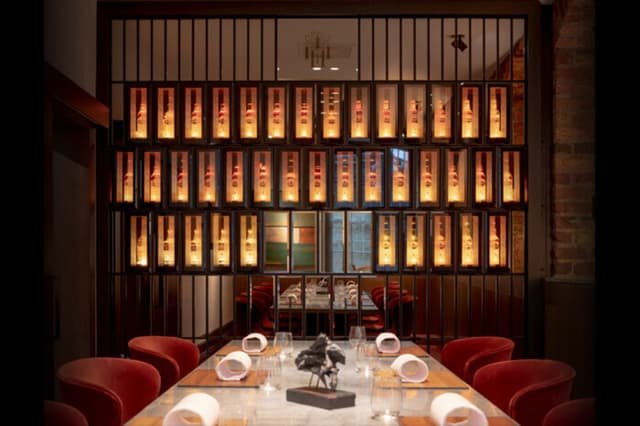
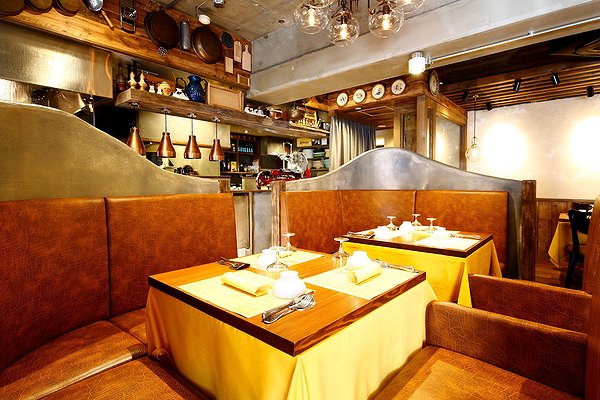
Ristorante HONDA is in Kita-Aoyama, Minato City, a part of Tokyo that sits comfortably between Omotesando's commercial energy and Aoyama's quieter residential streets. The restaurant occupies the ground floor of a low-rise building, and the room itself is on the compact side. Visually, expect the kind of stripped-back, focused interior that signals the kitchen is the main event: clean lines, nothing competing with the plate for your attention. For a first-timer, the setting will read as understated rather than dramatic, which is exactly the right register for a restaurant whose cooking relies on ingredient clarity over theatrical presentation.
Chef Tetsuya Honda's approach is genuinely specific: Italian culinary structure applied to Japanese seasonal produce. That is not a novelty concept, it is the restaurant's operational philosophy, and you can taste the difference between this and generic Italian-Japanese fusion. The Sea Urchin Tagliolini is the clearest example. No cream. The richness comes entirely from the volume and quality of sea urchin, which means the dish rises or falls on ingredient sourcing. When the uni is at its seasonal leading, it is one of the more technically precise pasta dishes you will find in Tokyo's Italian category. When it is not peak season for urchin, order around it.
The Michelin Plate recognition (2024 and 2025) and a consistent presence on the Opinionated About Dining rankings for Japan, rising from a general recommendation in 2023 to a ranked position of #418 in 2024 and #457 in 2025, confirm that this is a kitchen with a point of view that the critical community has taken seriously over multiple cycles.
Late Dining at HONDA
The evening service runs until 11 PM Tuesday through Sunday, which makes Ristorante HONDA one of the more practical options in Tokyo's Italian category for late sittings. Most comparable restaurants at this quality tier close their kitchens significantly earlier. If your evening itinerary involves another engagement before dinner, a concert, a private event, or simply the rhythm of a later Tokyo night out, a 9 PM or even 9:30 PM booking here is logistically possible where it would not be at many peers. The Monday closure is the only hard constraint to plan around. Tuesday through Sunday, the kitchen is accessible for both lunch (noon to 3:30 PM) and dinner through to 11 PM.
For solo diners, the compact room and counter-adjacent format common to restaurants of this scale in Tokyo tends to work well. A table for one at HONDA is not an afterthought. The focused menu structure means a solo diner can move through the meal at their own pace without feeling like the format requires a group to make sense of it. See the FAQ section below for more on solo dining here.
How It Compares
Ristorante HONDA sits at ¥¥¥ in a comparison set where most of its critical-circuit peers, Harutaka, L'Effervescence, RyuGin, HOMMAGE, and Crony, operate at ¥¥¥¥. That price differential is meaningful. You are getting Michelin Plate-level cooking at a lower outlay than starred alternatives in the same city. The trade-off is that HONDA does not carry the same international reservation pressure as a two-star kaiseki room or a top-10 OAD-ranked sushi counter, which in practical terms means it is easier to book.
Pearl Picks Nearby
If you are building an Italian-focused Tokyo itinerary, the restaurants worth cross-referencing are PRISMA, Aroma Fresca, Gucci Osteria da Massimo Bottura Tokyo, Principio, and AlCeppo. Each occupies a different position on the price and formality spectrum, so your choice should come down to what kind of Italian experience you are after. For Italy-meets-Japan cooking at a lower price point than the starred circuit, HONDA is the cleaner recommendation. For a wider view of what Tokyo's dining scene offers beyond Italian, see our full Tokyo restaurants guide.
If you are travelling across Japan, Italian done with serious local ingredient intent also appears at cenci in Kyoto. For the broader regional picture, HAJIME in Osaka, Gion Sasaki in Kyoto, akordu in Nara, Goh in Fukuoka, 1000 in Yokohama, and 6 in Okinawa are all worth considering depending on your itinerary. For comparable Italian ambition in another major Asian city, 8 1/2 Otto e Mezzo Bombana in Hong Kong is the obvious reference point.
For hotels, bars, wineries, and experiences in the city, see our Tokyo hotels guide, bars guide, wineries guide, and experiences guide.
Know Before You Go
- Price range: ¥¥¥ (mid-to-upper tier; lower than most Michelin-starred peers in Tokyo)
- Cuisine: Modern Italian with Japanese seasonal ingredients
- Location: Kita-Aoyama, Minato City, Tokyo (ground floor, 小島ビル 1F)
- Hours: Tue–Sun, lunch 12:00–3:30 PM / dinner 6:00–11:00 PM. Closed Monday.
- Late dining: Kitchen open until 11 PM, one of the later closings in Tokyo's Italian category at this quality level
- Booking difficulty: Easy, no heavy international reservation pressure at this tier
- Ideal time to visit: Spring or autumn for peak seasonal ingredient quality
- Solo dining: Well-suited, compact format works for one
- Awards: Michelin Plate (2024, 2025); Opinionated About Dining Leading Restaurants in Japan #418 (2024), #457 (2025)
Planning details
- Hours
- Monday: Closed · Tuesday: 12–3:30 pm, 6–11 pm
- Location
- Japan, 〒107-0061 Tokyo, Minato City, Kita-Aoyama, 2 Chome−12−35 小島ビル 1F
- Website
- retty.me/area/PRE13/ARE23/SUB2303/100000005602
- Phone
- +81 50-5461-6512
The take
The Take
The Vibe
Ristorante HONDA sits quietly in Kita-Aoyama as a considered, mid-to-upper-range neighborhood Italian that prioritizes seasonality and precision over theatrics. The kitchen practices a restrained synthesis of Italian technique and Japanese ingredient standards, producing food that reads as deliberate and contemporary rather than flashy. Service and pacing favor regulars and the local professional crowd, so the room feels composed and calm: conversational without being loud, refined without being fussy. If you come expecting dependable, ingredient-forward cooking in an intimate Tokyo setting, HONDA delivers a modern, relaxed dining atmosphere that rewards repeat visits across the seasons.
Best For
HONDA is best for midday and evening meals for locals and visitors who appreciate ingredient-led Italian cooking. Lunch service runs from noon to 3:30 pm, while dinner is served from 6 to 11 pm (closed Mondays), making it well suited to business lunches, neighborhood dinners, and date-night meals for those staying nearby. The restaurant’s focus on seasonal Japanese produce channeled through Italian forms means the menu changes frequently, so it’s a good choice for diners who enjoy evolving menus and repeated visits to track seasonal variations in seafood, mushrooms and vegetables.
Ordering Tips
The menu at HONDA is intentionally seasonal, so prioritize dishes that showcase current market produce and the kitchen’s house-made pastas. When available, the tagliolini with Hokkaido sea urchin is a signature highlight; the restaurant also emphasizes handmade pasta preparations across the menu. Because the offerings shift with the market, ask servers about the season’s standout ingredients and pasta shapes on the day you visit. Lunch and dinner windows are explicit (noon–3:30 pm and 6–11 pm), so plan visits within those hours to experience the full, seasonally updated menu.
Venue details
Ambiance
Stylish, calm, and cozy interior with beautifully presented artistic dishes in a small, intimate setting.
Tags
Vibe
Best For
Accessibility
At the Table
- Dress Code
- Smart Casual
- Noise Level
- Quiet
- Service Style
- Formal
- Meal Pacing
- Leisurely
- Capacity
- Intimate
Signature Dishes
- tagliolini with Hokkaido sea urchin
- handmade pasta
Know before you go
Know Before You Go
- Getting there
- Japan, 〒107-0061 Tokyo, Minato City, Kita-Aoyama, 2 Chome−12−35 小島ビル 1F
Planning details
Hours
- Monday
- Closed
- Tuesday
- 12–3:30 pm, 6–11 pm
- Wednesday
- 12–3:30 pm, 6–11 pm
- Thursday
- 12–3:30 pm, 6–11 pm
- Friday
- 12–3:30 pm, 6–11 pm
- Saturday
- 12–3:30 pm, 6–11 pm
- Sunday
- 12–3:30 pm, 6–11 pm
Location
Japan, 〒107-0061 Tokyo, Minato City, Kita-Aoyama, 2 Chome−12−35 小島ビル 1F · Directions
Recognition and awards

Also consider
Also Consider
- Harutaka, Sushi, ¥¥¥¥
- L'Effervescence, French, ¥¥¥¥
- RyuGin, Kaiseki, Japanese, ¥¥¥¥
- HOMMAGE, Innovtive French, French, ¥¥¥¥
- Crony, Innovative, French, ¥¥¥¥
Restaurant context
The most direct reason to choose Ristorante HONDA over its critical-circuit peers is price. L'Effervescence, RyuGin, HOMMAGE, and Crony all sit at ¥¥¥¥. HONDA sits at ¥¥¥ with Michelin Plate recognition and a ranked OAD position in Japan's Top 500. If your priority is finding the highest credential-to-cost ratio among Tokyo's serious restaurants, HONDA is the cleaner answer than any of the ¥¥¥¥ options listed here.
On booking difficulty, HONDA is also the more accessible choice. Harutaka at ¥¥¥¥ is well-known for its sushi counter and can be genuinely difficult to book, particularly for international visitors. RyuGin carries similar reservation pressure as one of Tokyo's most recognised kaiseki rooms. HONDA, without a Michelin star, does not face that same international demand ceiling, which means a week's notice is typically enough. For travellers who want serious cooking without the logistics of chasing a hard-to-book reservation, that accessibility is a practical advantage.
The cuisine distinction matters for how you choose. HONDA is the only one of these five peers offering Italian cooking anchored to Japanese seasonal ingredients. If you are building a Tokyo itinerary that already includes a sushi counter and a kaiseki dinner, HONDA provides a genuinely different eating experience rather than a variation on the same format. Diners choosing between HONDA and Crony or HOMMAGE on the innovative-French end should weigh cuisine preference first: the Italian structure at HONDA is not interchangeable with French-leaning innovation, even when both kitchens are working with Japanese produce.
Explore Tokyo
Around this place
Discover more on Pearl
Unlock the full Ristorante HONDA guide in Pearl, including awards, comparisons, FAQs, planning details, and nearby places.
Compare Ristorante HONDA
| Venue | Cuisine | Awards | Booking Difficulty |
|---|---|---|---|
| Ristorante HONDA | Italian | 2026 OAD Top Restaurants in Japan Recommended2026 Michelin PlateTabelog 100 - Italian - TOKYO - 2025 · #902025 OAD Top Restaurants in Japan Ranked · #4572025 Michelin Plate2024 OAD Top Restaurants in Japan Ranked · #4182024 Michelin Plate2023 OAD Top Restaurants in Japan Recommended | Easy |
| Harutaka | Sushi | 2026 Tabelog Silver · #312026 OAD Top Restaurants in Japan Ranked · #1282026 Michelin 3 Stars2026 La Liste Top RestaurantsTabelog 100 - Sushi - TOKYO - 2025 · #372025 Asia's 50 Best Restaurants · #762025 OAD Top Restaurants in Japan Ranked · #1172025 La Liste Top Restaurants2025 Tabelog Bronze | Unknown |
| L'Effervescence | French | 2026 Tabelog Silver · #682026 OAD Top Restaurants in Japan Ranked · #103Star Wine Lists 20262026 Black Pearl 2 Diamond2026 Relais Chateaux Restaurants2026 La Liste Top Restaurants2026 Michelin 3 Stars2025 Asia's 50 Best Restaurants · #692025 OAD Top Restaurants in Japan Ranked · #92 | Unknown |
| RyuGin | Kaiseki, Japanese | 2026 OAD Top Restaurants in Japan Ranked · #802026 Tabelog Bronze · #3772026 Michelin 3 Stars2026 La Liste Top RestaurantsTabelog 100 - Japanese cuisine - TOKYO - 2025 · #212025 OAD Top Restaurants in Japan Ranked · #542025 Michelin 3 Stars2025 La Liste Top Restaurants2025 The Best Chef Three Knives | Unknown |
| HOMMAGE | Innovtive French, French | 2026 Tabelog Bronze · #1232026 OAD Top Restaurants in Japan Highly Recommended2026 Michelin 2 StarsTabelog 100 - French - TOKYO - 2025 · #762025 Asia's 50 Best Restaurants · #782025 OAD Top Restaurants in Japan Ranked · #1752025 Michelin 2 Stars2025 The Best Chef One Knife2025 La Liste Top Restaurants | Unknown |
| Crony | Innovative, French | 2026 Asia's 50 Best Restaurants · #34Star Wine Lists 20262026 OAD Top Restaurants in Japan Recommended2026 Michelin 2 Stars2025 Asia's 50 Best Restaurants · #30Tabelog 100 - French - TOKYO - 2025 · #782025 OAD Top Restaurants in Japan Ranked · #227We're Smart World Top Restaurants 20252025 Michelin 2 Stars | Unknown |












What to weigh when choosing between Ristorante HONDA and alternatives.
FAQ
Frequently Asked Questions
Is Ristorante HONDA good for solo dining?
Yes, it suits solo diners well. The compact room format in Kita-Aoyama means you will not be seated at an oversized table built for groups. At ¥¥¥, it is a reasonable solo spend relative to Tokyo's Italian comparison set, and the Michelin Plate recognition signals consistent cooking worth experiencing alone.
Is the tasting menu worth it at Ristorante HONDA?
The awards record — Michelin Plate in both 2024 and 2025, plus a ranked OAD position in Japan's Top 500 — confirms the cooking is serious enough to justify a set format if that is what is offered. The kitchen's stated focus on seasonal Japanese ingredients expressed through Italian technique gives a tasting menu clear structural logic. Confirm the current format directly when booking, as the database does not specify whether à la carte runs alongside any set menu.
What should I order at Ristorante HONDA?
The Sea Urchin Tagliolini is the dish to order — it is the restaurant's signature and uses no cream, relying on uni alone for its richness. Timing matters: late spring through summer is broadly peak uni season in Japan, so a visit in that window gives you the best version of the dish. Outside that window, the kitchen's seasonal focus means other ingredients will be at their prime instead.
How far ahead should I book Ristorante HONDA?
Booking is relatively straightforward here — this is not a restaurant requiring weeks of advance planning or a lottery-style reservations window. A week or two out should be sufficient for most visits, though weekend lunch slots at a Michelin-recognised Aoyama address can move faster. Tuesday through Sunday service, with lunch from 12 PM and dinner running until 11 PM, gives you reasonable scheduling flexibility.
Is Ristorante HONDA worth the price?
At ¥¥¥, yes — the value case is credible. Two consecutive Michelin Plates and a ranked OAD position in Japan's Top 500 (up from recommended in 2023 to #418 in 2024 and #457 in 2025) put HONDA in a recognized critical tier while remaining more accessible in price than peers like L'Effervescence or RyuGin. If you are spending at this level in Tokyo, the seasonal Japanese-Italian framework and the signature uni dish give you a clear reason to be here over a generic Italian address.