.png?width=1200&quality=80)
Oryori Horiuchi
Japanese · Shinjuku, Tokyo
Restaurant in Tokyo, Japan
 Book with Pearl
The Read
Producer-Rooted Washoku
Price
¥¥¥
Chef
Sayaka Horiuchi
Dress
Smart Casual
Why go
A Michelin Plate-recognised Japanese restaurant in Shinjuku's quiet Arakicho district, Oryori Horiuchi earns its ¥¥¥ price through serious sourcing: vegetables from Nerima farmers, clams from Kyoto fishermen, and a chicken offal stew rooted in Yamanashi home cooking. Easy to book relative to the Tokyo market, and worth returning to — the second visit reveals more than the first.
About Oryori Horiuchi
Verdict
If you have already visited Oryori Horiuchi once and are wondering whether to return, the answer is yes — particularly between autumn and winter, when the sourcing philosophy that defines this Shinjuku kitchen is at its most coherent. This is a Michelin Plate-recognised Japanese restaurant (2024 and 2025) in Arakicho, a quietly residential pocket of Shinjuku City, where chef-owner Sayaka Horiuchi builds menus around direct relationships with farmers and fishermen rather than wholesale intermediaries.
The Portrait
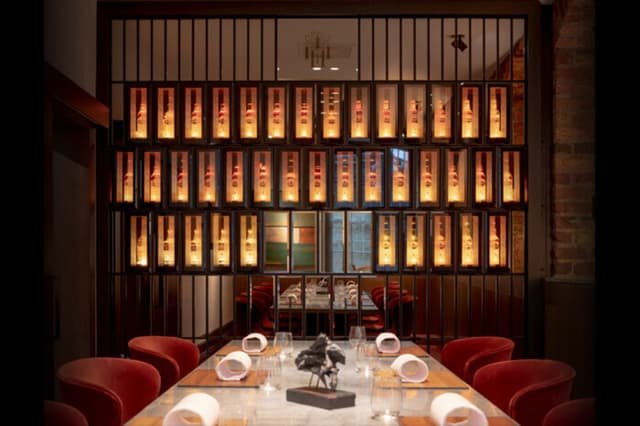
The atmosphere at Oryori Horiuchi is calm without being stiff. Arakicho is one of those Shinjuku sub-districts that feels removed from the station's commercial energy, and the restaurant sits on the ground floor of a low-rise building on that same residential logic. Expect a room where the sound level stays low enough for conversation throughout the evening — this is not a venue where you raise your voice over music or the energy of a packed open kitchen. For anyone who found the first visit slightly formal, know that the regulars treat this as a kitchen they trust rather than a performance they attend.
What separates Horiuchi from similarly priced Japanese restaurants in Tokyo is the sourcing structure underpinning every dish. The chef's framework, summarised in the Michelin-cited phrase about mountains watering villages and feeding the ocean, is not marketing language. It maps directly to procurement decisions: local vegetables from Nerima-based farmers, clams sourced through a direct relationship with fishermen in Kyoto, and a chicken offal stew that comes from home-cooking tradition in Yamanashi Prefecture, where Horiuchi grew up. These are not rotating specials designed to signal seasonality. They are the stable architecture of the menu, which means the second visit often reveals what the first one could not: how the sourcing relationships shape the texture and specificity of individual dishes rather than just the concept.
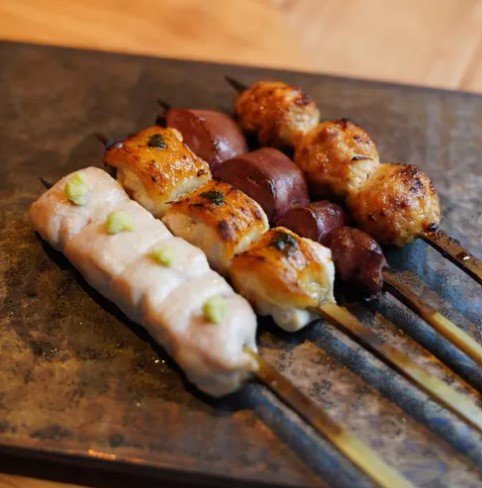
The chicken offal stew is worth ordering if you have not already. It sits outside the register of refined kaiseki and closer to the kind of food that exists because someone genuinely wanted to cook it. For a return visit, that dish is a reliable anchor. The sourcing of clams from Kyoto's fishermen, meanwhile, reflects a supply chain logic more common at restaurants sitting a price tier or two higher, the ¥¥¥ positioning becomes easier to justify when you understand what is driving ingredient cost.
Horiuchi's producer network spans the country, which puts her in the same category of sourcing seriousness as chefs at kaiseki rooms charging considerably more. Comparing her approach to peers like Kagurazaka Ishikawa or Azabu Kadowaki, both operating at higher price points with equivalent sourcing rigour, suggests Oryori Horiuchi is delivering meaningful value for what it charges. You are not paying for theatre or a long tasting menu structure; you are paying for ingredients that reflect genuine producer relationships and cooking that treats those ingredients without overworking them.
For context on the broader Japanese dining ecosystem, restaurants at this sourcing depth in Arakicho-adjacent neighbourhoods are worth noting alongside destinations further afield: Myojaku in Tokyo, Gion Sasaki in Kyoto, and HAJIME in Osaka all represent the wider network of Japanese restaurants where sourcing philosophy is a structural commitment rather than a menu note. Horiuchi belongs in that conversation, at a price point that makes repeat visits practical rather than occasional.
Pearl's full Tokyo restaurants guide covers the broader picture, with additional context available in our Tokyo hotels guide, Tokyo bars guide, and Tokyo experiences guide. For Japanese dining at comparable depth in Kyoto, Isshisoden Nakamura and Kashiwaya Osaka Senriyama are worth bookmarking.
Ratings
- Michelin Plate: 2024, 2025
Booking
Booking difficulty at Oryori Horiuchi is assessed as easy relative to the Tokyo market. Given the Arakicho location and the room's character, intimate, regular-friendly, lower profile than the Michelin-starred kaiseki circuit, you are unlikely to need weeks of advance planning. That said, no booking method or phone number is listed in our current data, so confirm reservation options directly. The address is 9-15 Tsuchida Building 1F, Arakicho, Shinjuku City, Tokyo 160-0007.
Practical Details
| Detail | Oryori Horiuchi | Kagurazaka Ishikawa | Ginza Fukuju |
|---|---|---|---|
| Price tier | ¥¥¥ | ¥¥¥¥ | ¥¥¥¥ |
| Cuisine | Japanese | Japanese (Kaiseki) | Japanese |
| Michelin recognition | Plate (2024, 2025) | Yes (starred) | Yes (starred) |
| Booking difficulty | Easy | Moderate–Hard | Moderate |
| Location | Arakicho, Shinjuku | Kagurazaka | Ginza |
| Atmosphere | Quiet, neighbourhood | Traditional, formal | Formal |
See also: Jingumae Higuchi, Ginza Fukuju, 1000 in Yokohama, akordu in Nara, Goh in Fukuoka, and 6 in Okinawa.
Planning details
- Location
- Japan, 〒160-0007 Tokyo, Shinjuku City, Arakicho, 9−15 土田ビル 1階
- Website
- lin.ee/U0BKuVd
- Phone
- +81 3-3226-2337
The take
The Take
The Vibe
Oryori Horiuchi settles into the quiet, small-scale tradition of Arakicho: an intimate, owner-operated dining room on a residential street where restraint and provenance are the point. It reads as refined home cooking—oryori—elevated through precise technique and a direct relationship with farmers and fishermen. The room is modest in size, the tone deliberately unflashy; recognition such as a Michelin Plate underscores quality without theatricality. The result is a compact, respectful dining environment that feels like a carefully cultivated local secret rather than a destination spectacle.
Best For
This is primarily an evening destination for diners who prize quiet, focused meals rooted in seasonality and producer relationships. With seating under twenty and an oryori approach that favours what’s fresh from specific farms and coasts, the restaurant suits date nights and special occasions that favour intimacy over fanfare. It also rewards repeat visits: the menu shifts with what individual producers are offering, so regulars see new variations across visits rather than a static repertoire.
Ordering Tips
The menu is shaped by producer relationships and the season, so be prepared to order with openness to daily or seasonal selections rather than fixed signatures alone. Ask staff about the day’s key suppliers and the dishes that best showcase current catches and harvests. Given the small dining room (fewer than twenty seats) and its reliance on repeat custom, plan ahead for limited availability; try the house-noted chicken offal stew if it appears on the menu, as it reflects the kitchen’s focus on traditional, crafted oryori preparations.
Venue details
Ambiance
Serene and elegant atmosphere reflecting natural beauty through beautifully presented cuisine.
Tags
Vibe
Best For
Experience
Sourcing
At the Table
- Dress Code
- Smart Casual
- Noise Level
- Quiet
- Service Style
- Formal
- Meal Pacing
- Leisurely
- Capacity
- Intimate
Signature Dishes
chicken_offal_stew
Know before you go
Know Before You Go
- Getting there
- Japan, 〒160-0007 Tokyo, Shinjuku City, Arakicho, 9−15 土田ビル 1階
Planning details
Location
Japan, 〒160-0007 Tokyo, Shinjuku City, Arakicho, 9−15 土田ビル 1階 · Directions
Recognition and awards
Also consider
Also Consider
- Harutaka, Sushi, ¥¥¥¥
- RyuGin, Kaiseki, Japanese, ¥¥¥¥
- L'Effervescence, French, ¥¥¥¥
- HOMMAGE, Innovtive French, French, ¥¥¥¥
- Florilège, French, ¥¥¥
Restaurant context
How It Compares
Oryori Horiuchi at ¥¥¥ is the practical choice if sourcing integrity matters to you and you do not need the formal kaiseki structure to justify the spend. RyuGin at ¥¥¥¥ delivers a fuller tasting menu architecture and higher Michelin recognition, but the price gap is significant. Harutaka, also at ¥¥¥¥, is the better option if sushi is your format, but Horiuchi's ingredient-driven Japanese cooking does not compete on the same axis. For a return visitor to Tokyo who has already done the headline kaiseki circuit, Horiuchi offers something more personal and considerably easier to book.
Against the French tier, Florilège at ¥¥¥ is the closest price-point comparison. Both restaurants prioritise sourcing over spectacle and both are more accessible than their reputation suggests. If you prefer French technique, Florilège is the call; if Japanese cooking rooted in regional producer relationships is the draw, Horiuchi wins on specificity. L'Effervescence and HOMMAGE, both at ¥¥¥¥, are harder to book and more expensive without offering a meaningfully better sourcing story for the premium.
For the reader deciding between these options: book Oryori Horiuchi if you want a quiet, relationship-driven Japanese dining room at a price that leaves room in the budget for the rest of a Tokyo trip. Book RyuGin if the full kaiseki format with higher Michelin credentials is the priority. Book Florilège if you want the same value-tier discipline applied to French cooking instead.
Explore Tokyo
Around this place
Discover more on Pearl
Unlock the full Oryori Horiuchi guide in Pearl, including awards, comparisons, FAQs, planning details, and nearby places.
Compare Oryori Horiuchi
| Venue | Awards | Price |
|---|---|---|
| Oryori Horiuchi | 2026 Michelin Plate2025 Michelin Plate2024 Michelin Plate | ¥¥¥ |
| Harutaka | 2026 Tabelog Silver · #312026 OAD Top Restaurants in Japan Ranked · #1282026 Michelin 3 Stars2026 La Liste Top RestaurantsTabelog 100 - Sushi - TOKYO - 2025 · #372025 Asia's 50 Best Restaurants · #762025 OAD Top Restaurants in Japan Ranked · #1172025 La Liste Top Restaurants2025 Tabelog Bronze | ¥¥¥¥ |
| RyuGin | 2026 OAD Top Restaurants in Japan Ranked · #802026 Tabelog Bronze · #3772026 Michelin 3 Stars2026 La Liste Top RestaurantsTabelog 100 - Japanese cuisine - TOKYO - 2025 · #212025 OAD Top Restaurants in Japan Ranked · #542025 Michelin 3 Stars2025 La Liste Top Restaurants2025 The Best Chef Three Knives | ¥¥¥¥ |
| L'Effervescence | 2026 Tabelog Silver · #682026 OAD Top Restaurants in Japan Ranked · #103Star Wine Lists 20262026 Black Pearl 2 Diamond2026 Relais Chateaux Restaurants2026 La Liste Top Restaurants2026 Michelin 3 Stars2025 Asia's 50 Best Restaurants · #692025 OAD Top Restaurants in Japan Ranked · #92 | ¥¥¥¥ |
| HOMMAGE | 2026 Tabelog Bronze · #1232026 OAD Top Restaurants in Japan Highly Recommended2026 Michelin 2 StarsTabelog 100 - French - TOKYO - 2025 · #762025 Asia's 50 Best Restaurants · #782025 OAD Top Restaurants in Japan Ranked · #1752025 Michelin 2 Stars2025 The Best Chef One Knife2025 La Liste Top Restaurants | ¥¥¥¥ |
| Florilège | 2026 Asia's 50 Best Restaurants · #312026 Tabelog Bronze · #712026 OAD Top Restaurants in Japan Ranked · #1242026 Black Pearl 1 Diamond2026 Michelin 2 Stars2026 La Liste Top Restaurants2025 Asia's 50 Best Restaurants · #172025 World's 50 Best Restaurants · #36Tabelog 100 - French - TOKYO - 2025 · #68 | ¥¥¥ |













Key differences to consider before you reserve.
FAQ
Frequently Asked Questions
Does Oryori Horiuchi handle dietary restrictions?
Chef Horiuchi builds her menu around specific producer relationships — clams from Kyoto fishermen, local Nerima vegetables, chicken offal from her native Yamanashi Prefecture — so the menu is not easily substituted without losing its structure. Flag any restrictions at the time of booking rather than on arrival. Strict vegetarian or shellfish-free requirements will limit your options more here than at a larger kitchen.
Is Oryori Horiuchi worth the price?
At ¥¥¥, yes — provided you value producer-sourced, regionally grounded Japanese cooking over prestige address or spectacle. The Michelin Plate recognition in both 2024 and 2025 reflects consistent kitchen quality. Compared to three-star venues in Tokyo at significantly higher price points, Horiuchi delivers a more personal, quieter experience. If you want ceremony and theatre, look elsewhere; if you want precise, honest cooking, the price is fair.
What should I wear to Oryori Horiuchi?
The Arakicho setting is calm and residential rather than formal. Neat, considered clothing is appropriate — think business casual rather than black tie. The room does not demand a jacket, but arriving in activewear or overly casual dress would feel out of step with the atmosphere.
What are alternatives to Oryori Horiuchi in Tokyo?
For Japanese fine dining with more ceremony and Michelin star weight, RyuGin or Harutaka are the relevant comparisons, both at higher price points and with harder bookings. For French-influenced Tokyo dining at a similar ¥¥¥ range, Florilège or L'Effervescence offer strong alternatives. HOMMAGE sits between those traditions. Horiuchi's advantage over all of them is accessibility: you can book without months of lead time.