.png?width=1200&quality=80)
Neki
French · Chūō, Tokyo
Restaurant in Tokyo, Japan
 Book with Pearl
The Read
Free-Form French Fermentation
Price
$50–100per person
Dress
Smart Casual
Why go
Neki holds a 2025 Michelin Plate and offers French cooking with Japanese ingredients and Middle Eastern spices in a casual, wine-bottle-lined room in Tokyo's Nihonbashikabutocho district. At ¥¥¥, it costs less than the city's formal French tier and books easily. The right choice if you want serious, free-styled cooking without a ceremonial dining format.
About Neki
A Michelin-recognised French restaurant in Tokyo's finance district that punches well above its price tier
If you're weighing Neki against Tokyo's ¥¥¥¥ French heavyweights — L'Effervescence, Sézanne, or Château Restaurant Joël Robuchon — the calculus is direct: Neki costs less, asks less of you in terms of formality, and still carries a 2025 Michelin Plate. For an explorer who wants serious cooking without the ceremony of a full-dress tasting room, Neki is the smarter booking.
The Venue
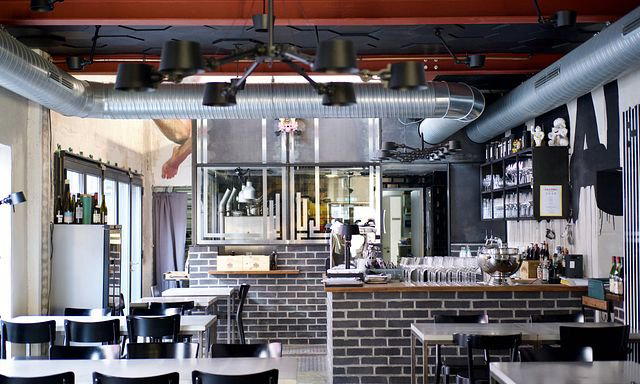
Neki sits in Nihonbashikabutocho, the old financial quarter of Chuo City, a neighbourhood that has been quietly converting vacant bank buildings and brokerage offices into dining and drinking spaces over the past several years. The address, 8-1, Kabutocho Heiwa Building No. 4, places it in that pocket of eastern Tokyo where the Edo-era money infrastructure still shapes the streetscape. That context matters because it sets the tone: Neki is not a white-tablecloth room trying to project prestige. The interior is stacked with wine bottles and hung with album covers, and the music playing in the background refuses to settle into a single genre. The atmosphere is casual in a way that feels considered rather than accidental.
That deliberate casualness is the whole argument for booking Neki. In a city where French dining frequently means kaiseki-adjacent formality or high-stakes prix-fixe menus with extended service rituals, Neki operates with a lighter hand. The chef's approach is French at its foundation but free-styled in execution, pulling Japanese ingredients into the framework, working with fermented vegetables as a recurring technique, and reaching for Middle Eastern spices in ways that are handled with enough skill to avoid novelty for its own sake. Organic wines anchor the drinks side, which aligns well with the ingredient-forward cooking style.
This kind of cooking, cross-cultural but technically grounded, casual in presentation but not in execution, has become a recognisable mode at a certain tier of Tokyo restaurant. What distinguishes Neki is that the Michelin Plate recognition suggests the kitchen is delivering on the concept reliably, not just occasionally.Florilège or ESqUISSE. If you want predictability and polish above all else, the ¥¥¥¥ options in Tokyo's French tier will serve you better.
Who Should Book
Neki is the right call for a specific type of diner: someone who has already done the formal French rooms in Tokyo and wants something with less ceremony, or someone visiting from outside Japan who finds the wine-bar-meets-bistro format more comfortable than a multi-hour tasting procession. The Nihonbashikabutocho location makes it an easy choice for an evening in that part of the city, and the ¥¥¥ price tier means you can eat and drink well without the commitment of a ¥¥¥¥ blowout. It also pairs naturally with broader Tokyo food exploration, for context on where Neki sits in the city's French dining map, our full Tokyo restaurants guide is a useful reference, along with our guides to Tokyo bars and Tokyo experiences.
For those planning a broader Japan itinerary, Neki's relaxed format offers a useful contrast to the more structured dining available at places like HAJIME in Osaka, Gion Sasaki in Kyoto, or akordu in Nara. If you are moving through the country and want to map the range of what Japanese-inflected European cooking can look like, Neki belongs on that itinerary. For completeness, Goh in Fukuoka, 1000 in Yokohama, and 6 in Okinawa represent other points on that spectrum worth considering.
Booking and Practicalities
Booking difficulty at Neki is rated Easy, which is a meaningful advantage in a Tokyo dining market where the most-discussed restaurants routinely require weeks of lead time or membership-adjacent access. No website or phone number is listed in current records, which means you will likely need to approach the booking through a third-party reservation platform or a hotel concierge if you are staying nearby. The Tokyo hotels guide includes properties with strong concierge services if that route is useful. No dress code is documented, and given the wine-bar atmosphere and album-cover interior, smart casual is a safe assumption, this is not a room where you need to dress for an occasion, though arriving well-dressed would not be out of place.
The Verdict
Neki earns its Michelin Plate by doing something harder than it looks: delivering technically credible French cooking with a genuine cross-cultural sensibility, in a casual room, at a price point below the city's top-tier French competition. It is not the right booking if you want the full Tokyo fine-dining experience with service choreography and an extended tasting arc. It is the right booking if you want a sharp, ingredient-driven meal with good organic wine in a room that takes the food seriously without making you feel like you are attending a ceremony. For comparable experiences outside Tokyo, Les Amis in Singapore and Hotel de Ville Crissier in Crissier represent what happens when French cooking in Asia and Europe each commits fully to the format, useful benchmarks if you are calibrating expectations.
Planning details
- Location
- Japan, 〒103-0026 Tokyo, Chuo City, Nihonbashikabutocho, 8−1 兜町第4平和ビル
- Reservations
- Book on TableCheck
- Website
- tablecheck.com/shops/neki/reserve
- Phone
- +81 3-6231-1988
The take
The Take
The Vibe
Neki occupies a compact room inside a Showa-era building in Kabutocho, and its interior signals the restaurant’s intent before any dish arrives. Wine bottles line the walls alongside album covers, and a low-key, genre-less soundtrack gives the space a personal, lived-in feeling. The setting reads like a neighbourhood bistrot de vins — less ceremony, more character — positioning itself as an alternative to Tokyo’s more formal French temples. The overall impression is quietly confident and distinctive: intimate, unpretentious and quietly anchored in the district’s old-money fabric.
Best For
Neki is best experienced in the evening and suits people who want a relaxed yet refined French meal. It works well for date night, discreet business dinners and casual hangouts where wine and atmosphere matter as much as the food. The space’s intimacy and wine-lined walls encourage lingering over bottles and conversation; it’s less about theatrical service and more about a convivial, wine-focused meal in a neighborhood that feels different from Tokyo’s polished restaurant corridors.
Ordering Tips
Lean into the wine-led nature of the room: with bottles on display and a bistrot-de-vins aesthetic, the list is likely a central part of the experience. Expect a relaxed service register rather than the timed choreography of Tokyo’s multi-starred houses, and allow time to settle in and enjoy the soundtrack and surroundings. Because the restaurant presents itself as an alternative to high‑ceremony dining, prioritize shared pacing and bottle selections rather than formality; the venue’s strengths are atmosphere and a wine-forward approach.
Venue details
Ambiance
Warm, modern interior with counter seating overlooking the open kitchen and small tables creating a stylish, relaxing atmosphere.
Tags
Vibe
Best For
Experience
Sourcing
Accessibility
At the Table
- Dress Code
- Smart Casual
- Noise Level
- Conversational
- Service Style
- Upscale Casual
- Meal Pacing
- Leisurely
- Capacity
- Small
- Kitchen
- Fusion
- Menu Format
- A la carte, Prix fixe
- Wine Program
- Curated
- Drinks Focus
- Natural wine
- Dietary
- Allergy accommodating
Know before you go
Know Before You Go
- Getting there
- Japan, 〒103-0026 Tokyo, Chuo City, Nihonbashikabutocho, 8−1 兜町第4平和ビル
Planning details
Location
Japan, 〒103-0026 Tokyo, Chuo City, Nihonbashikabutocho, 8−1 兜町第4平和ビル · Directions
Recognition and awards
Also consider
Also Consider
- Harutaka, Sushi, ¥¥¥¥
- RyuGin, Kaiseki, Japanese, ¥¥¥¥
- L'Effervescence, French, ¥¥¥¥
- HOMMAGE, Innovtive French, French, ¥¥¥¥
- Florilège, French, ¥¥¥
Restaurant context
Neki at ¥¥¥ sits a full price tier below most of its obvious French-leaning peers in Tokyo, and that gap matters when you are deciding where to spend. L'Effervescence and HOMMAGE are both ¥¥¥¥ operations that offer more structured tasting menus and higher service investment, if the occasion demands a formal arc and full-table theatre, either of those will deliver in ways Neki is not trying to. For value-per-plate, however, Neki's Michelin Plate recognition at the ¥¥¥ tier makes it the stronger argument for a casual weeknight dinner or a meal mid-itinerary where you want quality without a multi-hour commitment.
Florilège is the most direct peer comparison: also ¥¥¥, also French, also working with Japanese produce and a modern sensibility. Florilège has deeper award credentials and a more widely documented reputation, which makes it the safer booking if you want a name that will be recognised. Neki offers a more relaxed room and what the Michelin inspectors describe as a free-styled approach, more idiosyncratic, less predictable, and more interesting to an explorer who has already done the established circuit. If you have not yet eaten at Florilège, go there first. If you have, Neki is the logical next step.
Harutaka and RyuGin are not direct competitors in format, sushi counter and kaiseki respectively, both ¥¥¥¥, but they represent what a higher budget buys you in Tokyo's broader fine-dining field. If your priority for the trip is one destination-level meal rather than several good ones, Harutaka or RyuGin will be more memorable. If you are building a multi-night eating itinerary and need to distribute spend across several evenings, Neki earns its place as the meal where the cooking is serious and the bill is not alarming.
Explore Tokyo
Around this place
Discover more on Pearl
Unlock the full Neki guide in Pearl, including awards, comparisons, FAQs, planning details, and nearby places.
Compare Neki
| Venue | Price | Booking Difficulty | Awards |
|---|---|---|---|
| Neki | ¥¥¥ | Easy | 2025 Michelin Plate2024 Michelin Plate |
| Harutaka | ¥¥¥¥ | Unknown | 2026 Tabelog Silver · #312026 OAD Top Restaurants in Japan Ranked · #1282026 Michelin 3 Stars2026 La Liste Top RestaurantsTabelog 100 - Sushi - TOKYO - 2025 · #372025 Asia's 50 Best Restaurants · #762025 OAD Top Restaurants in Japan Ranked · #1172025 La Liste Top Restaurants2025 Tabelog Bronze |
| RyuGin | ¥¥¥¥ | Unknown | 2026 OAD Top Restaurants in Japan Ranked · #802026 Tabelog Bronze · #3772026 Michelin 3 Stars2026 La Liste Top RestaurantsTabelog 100 - Japanese cuisine - TOKYO - 2025 · #212025 OAD Top Restaurants in Japan Ranked · #542025 Michelin 3 Stars2025 La Liste Top Restaurants2025 The Best Chef Three Knives |
| L'Effervescence | ¥¥¥¥ | Unknown | 2026 Tabelog Silver · #682026 OAD Top Restaurants in Japan Ranked · #103Star Wine Lists 20262026 Black Pearl 2 Diamond2026 Relais Chateaux Restaurants2026 La Liste Top Restaurants2026 Michelin 3 Stars2025 Asia's 50 Best Restaurants · #692025 OAD Top Restaurants in Japan Ranked · #92 |
| HOMMAGE | ¥¥¥¥ | Unknown | 2026 Tabelog Bronze · #1232026 OAD Top Restaurants in Japan Highly Recommended2026 Michelin 2 StarsTabelog 100 - French - TOKYO - 2025 · #762025 Asia's 50 Best Restaurants · #782025 OAD Top Restaurants in Japan Ranked · #1752025 Michelin 2 Stars2025 The Best Chef One Knife2025 La Liste Top Restaurants |
| Florilège | ¥¥¥ | Unknown | 2026 Asia's 50 Best Restaurants · #312026 Tabelog Bronze · #712026 OAD Top Restaurants in Japan Ranked · #1242026 Black Pearl 1 Diamond2026 Michelin 2 Stars2026 La Liste Top Restaurants2025 Asia's 50 Best Restaurants · #172025 World's 50 Best Restaurants · #36Tabelog 100 - French - TOKYO - 2025 · #68 |













What to weigh when choosing between Neki and alternatives.
FAQ
Frequently Asked Questions
Is the tasting menu worth it at Neki?
At ¥¥¥ pricing with a Michelin Plate behind it, Neki's format delivers credible French cooking without the ceremony tax you pay at L'Effervescence or Sézanne. The chef's cross-cultural approach — Japanese ingredients, fermented vegetables, Middle Eastern spices — gives the menu a point of view that justifies the spend. If you want straightforward classic French, look elsewhere. If you want a kitchen that takes risks at a reasonable price point, it's worth it.
Is Neki worth the price?
Yes, for what it is. The ¥¥¥ tier is well below Tokyo's top French rooms, and the Michelin Plate recognition signals the kitchen is doing something right. The value case is strongest if you're comparing it against similarly priced options in the neighbourhood — not against ¥¥¥¥ destination restaurants where the room and service are part of what you're paying for.
What should a first-timer know about Neki?
The setting in Nihonbashikabutocho's old financial district is part of the appeal — this is a neighbourhood that has been converting former bank buildings into independent restaurants and bars, and Neki fits that mood. The interior is covered in wine bottles and album covers, with genre-less music playing throughout, so arrive expecting a relaxed room, not a formal dining experience. Booking is rated Easy relative to Tokyo's more competitive French tables.
What should I order at Neki?
The venue data doesn't specify individual dishes, so ordering blind is a real possibility here. The kitchen is built around French technique applied to Japanese ingredients and fermented vegetables, with Middle Eastern spices used selectively. Leaning into whatever the chef is featuring that day is the right approach — this is not a venue where the menu stays static. Pair with the organic wine list, which is matched to the modern cooking style.
What are alternatives to Neki in Tokyo?
HOMMAGE and Florilège are the closest comparisons if you want French cooking with a Japanese sensibility at a similar or adjacent price tier. L'Effervescence and RyuGin sit higher on formality and price. Harutaka is a different format entirely — omakase sushi — but competes for the same diner who wants technique without stiff ceremony. Neki is the most casual of the group and the easiest to book.
Does Neki handle dietary restrictions?
No specific dietary policy is documented for Neki. Given the kitchen's heavy use of fermented ingredients and cross-cultural spicing, it's worth contacting the restaurant directly before booking if you have specific restrictions. The French base cuisine typically involves dairy and meat, so vegetarians and vegans should confirm options in advance.
Is Neki good for a special occasion?
It works for a low-key celebration with someone who appreciates creative cooking over formal atmosphere. The wine-bottle-lined room and ambient music make it feel like a knowing local pick rather than a white-tablecloth event. For a milestone dinner where the setting needs to signal significance, a ¥¥¥¥ room like L'Effervescence would read as more intentional.