.png?width=1200&quality=80)

misola
Italian · Minato, Tokyo
Restaurant in Tokyo, Japan
 Book with Pearl
The Read
Seafood-Forward Prix Fixe
Price
¥¥¥
Dress
Smart Casual
Why go
A Venetian-inflected prix fixe Italian in Minami-Aoyama, misola holds a Michelin Plate for 2024 and 2025 and centres its menu on seafood with a clear culinary argument behind it. At the ¥¥¥ tier it is among the more accessible serious Italian options in Tokyo. Book if you want a focused, structured dinner; look elsewhere if you need à la carte flexibility.
About misola
A prix-fixe Italian in Minami-Aoyama that punches above its price point
At the ¥¥¥ price tier, misola asks for a meaningful commitment by Tokyo standards, but it is positioned as one of the more accessible entry points into serious Italian dining in the city. The restaurant sits in Minami-Aoyama, one of Tokyo's most considered dining neighbourhoods, where the competition is exacting and underfunded concepts do not last. The fact that misola has earned a Michelin Plate in both 2024 and 2025 tells you the kitchen is operating with consistency. If you are a food-focused traveller building a Tokyo itinerary around Italian cuisine, this is worth serious consideration before you look elsewhere.
The Room and the Concept
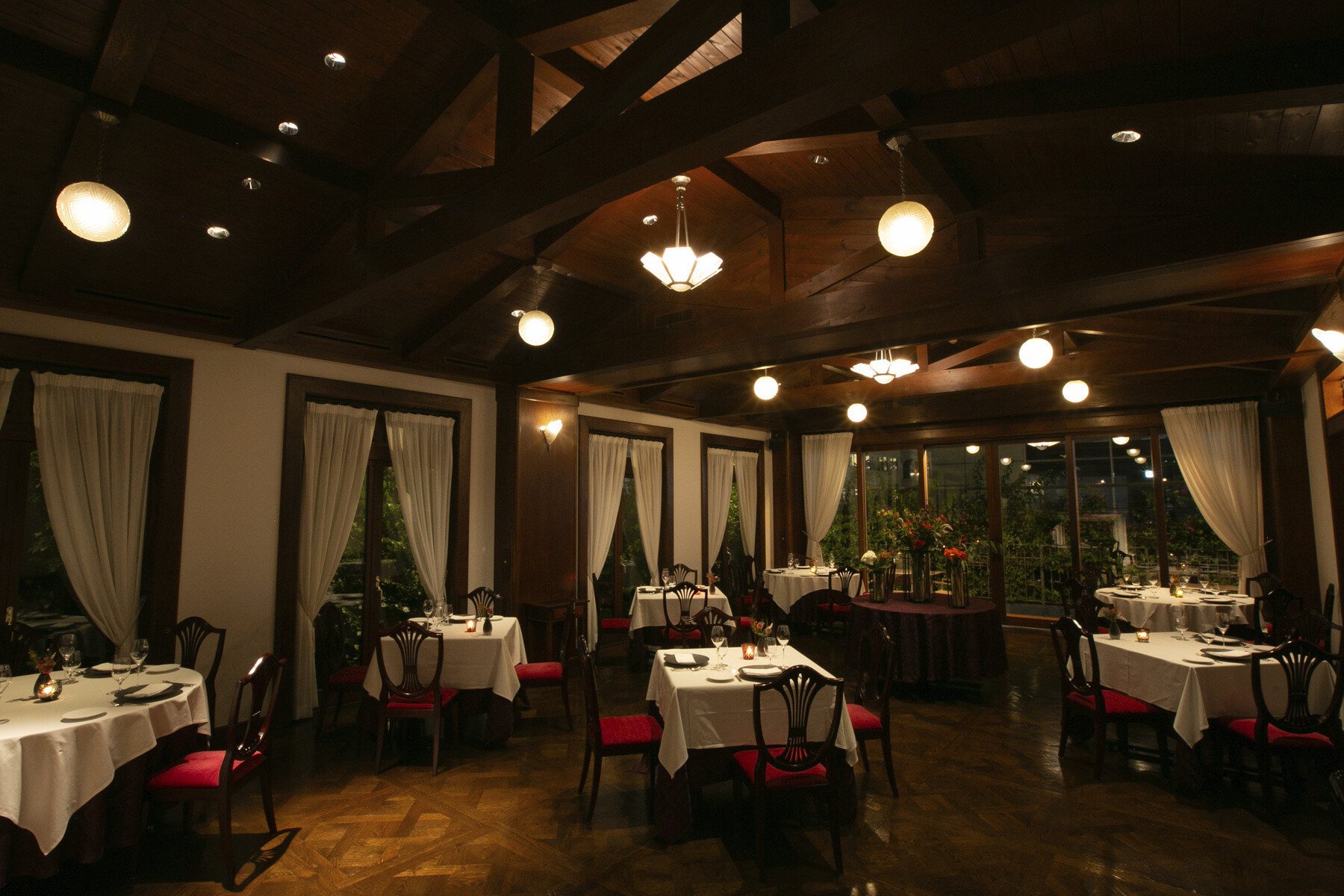
Walk in and the first thing you register is the colour. The walls are sky blue, and the space is arranged around a recurring motif of birds in flight rendered through objets d'art throughout the room. It is a deliberate, cohesive aesthetic rather than decoration for its own sake, and it gives misola a visual identity that distinguishes it from the minimalist interiors that dominate fine dining in this part of Tokyo. The name misola translates loosely to "my sky" in Italian, and the room makes that legible without being heavy-handed about it.
The format is prix fixe, which is the right choice for what the chef is doing. The kitchen's foundation is seafood, shaped by the chef's time cooking in Venice, and a structured menu lets that throughline come through properly. The meal opens with a paste of salt cod, the Venetian dish known as baccalà mantecato, which signals immediately that this is not a generic Tokyo-Italian interpolation but a kitchen with a specific culinary point of view. Vegetables are sourced fresh each morning, and meat, when it appears, is kept light. The cooking reads as Italian in its bones, refined through a Japanese attention to ingredient quality and restraint.
For food enthusiasts who seek context alongside the meal, misola rewards the curious diner. The Venetian reference point is not merely decorative: Venice's cucina di mare tradition is among the most technically demanding in northern Italy, and a chef who trained there has been through a particular kind of rigour. That gives the seafood-forward menu a credibility that menus assembled from trend rather than experience tend to lack.
Booking and Logistics
Reservations at misola are rated as direct to obtain relative to the broader Tokyo fine-dining market, where venues at this recognition level can require weeks of advance planning. That said, Minami-Aoyama dining draws a consistent crowd of both local regulars and international visitors, so booking ahead rather than attempting a walk-in is the practical move. No booking method is listed in the venue's public record, so check current reservation platforms or contact the restaurant directly through its listed address at 3 Chome-10-38 Minamiaoyama, Minato City. A two-week lead time is a reasonable baseline; during peak Tokyo travel periods, extend that buffer.
Dress expectations at a Michelin Plate venue in this neighbourhood tend toward smart-casual at minimum. Tokyo dining culture generally rewards effort in presentation, and misola's considered interior suggests the kitchen takes the full experience seriously. Come dressed accordingly.
Where misola Sits in Tokyo's Italian Scene
Tokyo's Italian restaurant tier is more competitive than most visitors expect. At the higher end of the Italian price range you have venues like Aroma Fresca and Gucci Osteria da Massimo Bottura Tokyo, both operating with greater international profile and deeper award recognition. PRISMA and Principio represent other strong options at varying price points, while AlCeppo has a loyal following among Tokyo's Italian dining regulars. Against that field, misola's case rests on specificity: a Venetian seafood lens, a cohesive room, and a prix fixe format that does not try to be everything. For a diner who wants Italian that has a genuine culinary argument behind it, rather than a broad menu built to please the widest possible audience, misola earns its place on the shortlist.
If your Tokyo trip is taking you beyond the capital, the broader region has compelling Italian alternatives worth knowing. cenci in Kyoto is a strong Italian option in a different register, grounded in seasonal Kyoto produce. For a wider view of Japan's serious Italian dining, 8 1/2 Otto e Mezzo Bombana in Hong Kong remains the regional benchmark for comparison. And if you are building out a full Japan itinerary, Pearl's coverage of HAJIME in Osaka, Gion Sasaki in Kyoto, akordu in Nara, Goh in Fukuoka, 1000 in Yokohama, and 6 in Okinawa gives you a strong foundation across Japanese cities.
For everything else in Tokyo, start with our full Tokyo restaurants guide, and extend your planning with hotels, bars, wineries, and experiences in Tokyo.
The Verdict
Book misola if you want Italian dining in Tokyo with a clear culinary identity, a room that has been thought through, and a price point that does not require the same financial commitment as the city's Michelin-starred Italian leaders. It is not the right choice if you want à la carte flexibility or a menu that covers broad Italian territory. But for a prix fixe seafood-forward dinner in one of Tokyo's leading neighbourhoods, with two consecutive years of Michelin recognition behind it, misola is a well-reasoned booking.
Planning details
- Location
- 3 Chome-10-38 Minamiaoyama, Minato City, Tokyo 107-0062, Japan
- Website
- mi-sola.com
- Phone
- +81 3-3479-3700
The take
The Take
The Vibe
Misola presents a quietly confident neighborhood take on Italian in Minami-Aoyama. It sits among galleries and ateliers, favoring smaller rooms and a considered pace over theatrical dining. The kitchen leans on precise Italian technique and seasonal specificity—the write-up traces a "Venetian thread" through its approach—so the room feels intimate and understated rather than loudly styled. Locals, rather than destination diners, form the core clientele, which gives the place the feel of a well-kept local secret: elegant in execution but discreet in presentation, with a gentle, unhurried rhythm throughout service.
Best For
This is a spot for quiet, refined dinners and occasions when you want focused cooking without the ostentation of flagship hotel rooms. Its neighborhood orientation and fixed-menu rhythm make it well suited to date nights, business dinners and small special occasions that favor conversation and culinary detail. The ¥¥¥ pricing signals measured quality rather than extravagance, and the compact scale of the rooms keeps the experience concentrated—you go for the food and the attentive pace rather than a loud, high-energy night out.
Ordering Tips
Menus at Misola lean into regional Italian technique and seasonality, and the house signatures provide a reliable guide to the kitchen’s style—note the tagliolini with crab uni sauce and the pan-fried scallop. Dining here often follows fixed menus, so expect a thoughtful sequence rather than à la carte abundance. Given the venue’s neighborhood focus and smaller rooms, plan for a measured meal that highlights texture and ingredient clarity: choose a tasting route or the chef’s set to experience the restaurant’s Venetian-influenced cooking in full.
Venue details
Ambiance
Sky blue walls with bird sculptures create an elegant, intimate, and relaxing atmosphere with stylish, relaxing space.
Tags
Vibe
Best For
Experience
Sourcing
Accessibility
At the Table
- Dress Code
- Smart Casual
- Noise Level
- Quiet
- Service Style
- Upscale Casual
- Meal Pacing
- Leisurely
- Capacity
- Intimate
Signature Dishes
- tagliolini with crab uni sauce
- pan-fried scallop
Know before you go
Know Before You Go
- Getting there
- 3 Chome-10-38 Minamiaoyama, Minato City, Tokyo 107-0062, Japan
Planning details
Location
3 Chome-10-38 Minamiaoyama, Minato City, Tokyo 107-0062, Japan · Directions
Recognition and awards
Also consider
Also Consider
- Harutaka, Sushi, ¥¥¥¥
- RyuGin, Kaiseki, Japanese, ¥¥¥¥
- L'Effervescence, French, ¥¥¥¥
- HOMMAGE, Innovtive French, French, ¥¥¥¥
- Florilège, French, ¥¥¥
Restaurant context
Comparing misola against Tokyo's broader fine dining field requires separating it from venues that are not really its peers. Harutaka and RyuGin operate in entirely different cuisine categories at ¥¥¥¥, and while both carry greater award weight, they answer a different question for the diner. The more instructive comparisons are against French venues at similar or adjacent price points: Florilège at ¥¥¥ is the most direct structural peer, a prix fixe French restaurant with strong critical recognition. Between the two, Florilège carries more international profile and is a harder reservation to land. Misola is the easier booking and the better choice if Italian specifically is the goal.
At the ¥¥¥¥ end of the French tier, L'Effervescence and HOMMAGE both offer more ambitious tasting menu experiences with deeper award credentials. If your priority is the most technically accomplished fine dining Tokyo can offer and price is secondary, either of those outranks misola on prestige. But misola's ¥¥¥ pricing means you can eat at a Michelin-recognised Italian restaurant in one of Tokyo's best dining neighbourhoods without the full financial commitment those venues require. For a food-focused traveller who wants genuine Italian, not just a category placeholder, misola is the practical answer at its price tier.
Within Tokyo's Italian category specifically, Aroma Fresca and Gucci Osteria da Massimo Bottura Tokyo sit above misola on recognition and price. If the splurge is on the table, Aroma Fresca is the more compelling step up. If you want the Bottura name and a more international atmosphere, Gucci Osteria fits that profile. Misola's position is as the focused, Venetian-rooted option that does not try to compete on scale or celebrity, which for the right diner is precisely its appeal.
Explore Tokyo
Around this place
Discover more on Pearl
Unlock the full misola guide in Pearl, including awards, comparisons, FAQs, planning details, and nearby places.
Compare misola
| Venue | Cuisine | Awards | Booking Difficulty |
|---|---|---|---|
| misola | Italian | 2026 Michelin PlateTabelog 100 - Italian - TOKYO - 2025 · #522025 Michelin Plate2024 Michelin Plate | Easy |
| Harutaka | Sushi | 2026 Tabelog Silver · #312026 OAD Top Restaurants in Japan Ranked · #1282026 Michelin 3 Stars2026 La Liste Top RestaurantsTabelog 100 - Sushi - TOKYO - 2025 · #372025 Asia's 50 Best Restaurants · #762025 OAD Top Restaurants in Japan Ranked · #1172025 La Liste Top Restaurants2025 Tabelog Bronze | Unknown |
| RyuGin | Kaiseki, Japanese | 2026 OAD Top Restaurants in Japan Ranked · #802026 Tabelog Bronze · #3772026 Michelin 3 Stars2026 La Liste Top RestaurantsTabelog 100 - Japanese cuisine - TOKYO - 2025 · #212025 OAD Top Restaurants in Japan Ranked · #542025 Michelin 3 Stars2025 La Liste Top Restaurants2025 The Best Chef Three Knives | Unknown |
| L'Effervescence | French | 2026 Tabelog Silver · #682026 OAD Top Restaurants in Japan Ranked · #103Star Wine Lists 20262026 Black Pearl 2 Diamond2026 Relais Chateaux Restaurants2026 La Liste Top Restaurants2026 Michelin 3 Stars2025 Asia's 50 Best Restaurants · #692025 OAD Top Restaurants in Japan Ranked · #92 | Unknown |
| HOMMAGE | Innovtive French, French | 2026 Tabelog Bronze · #1232026 OAD Top Restaurants in Japan Highly Recommended2026 Michelin 2 StarsTabelog 100 - French - TOKYO - 2025 · #762025 Asia's 50 Best Restaurants · #782025 OAD Top Restaurants in Japan Ranked · #1752025 Michelin 2 Stars2025 The Best Chef One Knife2025 La Liste Top Restaurants | Unknown |
| Florilège | French | 2026 Asia's 50 Best Restaurants · #312026 Tabelog Bronze · #712026 OAD Top Restaurants in Japan Ranked · #1242026 Black Pearl 1 Diamond2026 Michelin 2 Stars2026 La Liste Top Restaurants2025 Asia's 50 Best Restaurants · #172025 World's 50 Best Restaurants · #36Tabelog 100 - French - TOKYO - 2025 · #68 | Unknown |












A quick look at how misola measures up.
FAQ
Frequently Asked Questions
Is misola worth the price?
At ¥¥¥, misola sits in a mid-to-upper tier that is competitive for Tokyo's Italian segment but not its ceiling. The prix-fixe format with a Venetian seafood identity and two consecutive Michelin Plates (2024, 2025) gives it a clear credential for the price. If you want Italian dining with a defined point of view rather than a generic tasting menu, it holds up. If you are comparing against Japanese fine dining at the same spend, the calculus shifts.
What should a first-timer know about misola?
This is a prix-fixe-only restaurant, so there is no à la carte option — commit to the full menu or book elsewhere. The chef's background is in Venice, so seafood drives the menu, opening with a salt cod paste that references Italian regional cooking directly. The room is small and visually considered, with a sky-blue interior and a bird motif throughout. Reservations are reportedly more accessible than many Tokyo fine-dining venues at this recognition level.
Is the tasting menu worth it at misola?
Yes, if the format suits you. The prix fixe at misola has a coherent logic: Venetian seafood technique, vegetables sourced daily, and meat dishes kept deliberately light. That restraint is a feature, not a gap. If you want a bolder, meat-forward tasting menu, look at alternatives in the Tokyo Italian tier instead.
What should I wear to misola?
The venue data does not specify a dress code, but the room design and prix-fixe format point to a considered dining environment rather than a casual one. In Tokyo's fine-dining context at the ¥¥¥ tier, dressing neatly — business casual at minimum — is a safe and appropriate call.
What should I order at misola?
misola is prix fixe only, so ordering is not a decision you make at the table. The menu is built around the chef's seafood-forward approach, with salt cod paste as a documented opening course. Vegetables are sourced fresh each morning and incorporated throughout. Arrive prepared to follow the menu as presented.
Is misola good for a special occasion?
It works for a special occasion where intimacy and a clear culinary identity matter more than spectacle. The small room, considered design, and set-menu format make it a focused, personal experience. For a celebration where a more dramatic or grand setting is the priority, larger venues in Tokyo's Italian or French fine-dining tier may be a better fit.
What are alternatives to misola in Tokyo?
For Italian fine dining in Tokyo at a higher price tier, Aroma Fresca and Il Teatro are relevant comparisons with longer track records. If you want to stay in the prix-fixe format but shift to French, L'Effervescence and Florilège both operate in a similar register with stronger award histories. misola's Michelin Plate recognition positions it as a credible but entry-level option relative to Michelin-starred Italian venues in the city.