.png?width=1200&quality=80)
Matsunozushi
Sushi · Shinagawa, Tokyo
Restaurant in Tokyo, Japan
 Book with Pearl
The Read
Showa-Era Edomae Counter
Price
¥¥
Chef
Yoshinori Tezuka
Dress
Smart Casual
Why go
A Michelin Bib Gourmand Edo-style sushi counter in Shinagawa, Matsunozushi delivers classical Edomae technique — marinated tuna, sweet-sauced conger eel, kurakake egg — at ¥¥ pricing. Chef Yoshinori Tezuka cuts and serves everything himself. For traditionally grounded sushi without the financial commitment of a prestige omakase, it is one of the most defensible bookings in Tokyo.
About Matsunozushi
The Verdict
If you are choosing between Matsunozushi and one of Tokyo's high-end omakase counters, the decision is simpler than you think: they are not the same product. Matsunozushi, in Shinagawa's Minamioi neighbourhood, is a Michelin Bib Gourmand-recognised Edo-style sushi shop where the price point sits firmly at ¥¥ and the format ranges from omakase sets to à la carte. It is not competing with Harutaka or Sukiyabashi Jiro Roppongiten for prestige. It is doing something different and arguably harder: delivering technically grounded, traditionally correct Edomae sushi at a price most diners can afford, in a setting that has not been softened for tourists. Book it.
What Matsunozushi Does Technically
Chef Yoshinori Tezuka runs this counter the way Edo-style sushi was always meant to be run: he cuts and serves the sushi himself, without delegation. The technique here is rooted in the pre-refrigeration traditions that define classic Edomae style. Tuna is marinated in soy sauce, a method called zuke that was the original approach before cold storage made raw serving the default. Conger eel comes coated in a thick, sweet sauce, the kind of preparation that requires consistent execution to avoid becoming cloying. The egg piece is served kurakake — layered into a cake and split over a mound of vinegared rice — a presentational detail that marks the difference between a sushi shop with a working knowledge of tradition and one that merely claims it.
These are not nostalgic affectations. They are technical choices that reflect a specific culinary argument: that the original purpose of Edomae technique was flavour development and preservation, not minimalism for its own sake. The Bib Gourmand recognition from Michelin in 2024 confirms that the execution holds up against scrutiny. At ¥¥ pricing, the value case is direct. For comparison, achieving this level of classical precision at Sushi Kanesaka or Edomae Sushi Hanabusa will cost you considerably more per head.
The Atmosphere
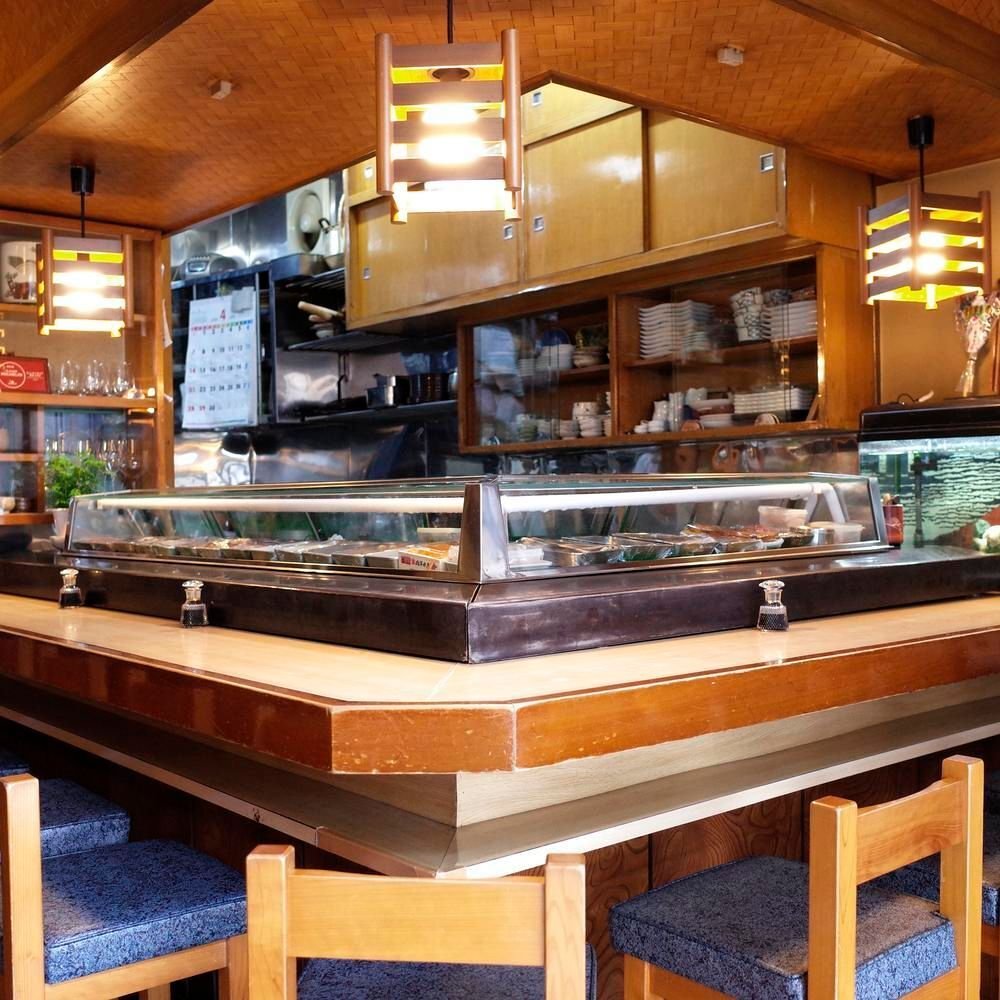
The room reads Showa era immediately. Glass display cases hold sushi items in the manner of a neighbourhood shop rather than a destination restaurant. The energy is quiet and focused, without the performance anxiety that can accompany counter dining at higher-priced venues. There is no background music designed to signal sophistication. The ambient feel is that of a craftsman at work in a space built for function, not atmosphere management. For a special occasion, this can read as either refreshingly direct or underwhelming, depending on what you value. If the occasion calls for visual drama, soft lighting, and attentive front-of-house ceremony, look elsewhere. If what matters to you is sitting in front of a chef who has spent a career refining a specific set of techniques and watching that work up close, the atmosphere here supports exactly that.
Noise levels are low. Conversations at the counter carry, which makes it a reasonable choice for a date or a small celebratory meal where you want to talk. It would not be the right call for a large group looking for a lively evening.
Who Should Book This
Matsunozushi works well for diners who already have a baseline understanding of Edomae sushi and want to see its classical forms executed with care at an accessible price. It is a strong option for solo diners, for couples marking an occasion without the financial commitment of a high-end omakase, and for food-focused visitors to Tokyo who want to understand what the tradition looks like before spending serious money on a prestige counter. If you are travelling to Tokyo and planning a broader dining itinerary, cross-reference our full Tokyo restaurants guide to see where this sits alongside the city's full range. You may also find it useful to browse our Tokyo hotels guide if you are planning around the Shinagawa area.
For diners whose primary interest is the broader Japanese dining spectrum, Tokyo also gives you access to kaiseki at venues like Hiroo Ishizaka, and further afield, the precision of Gion Sasaki in Kyoto or the creative range at HAJIME in Osaka. If sushi specifically is your focus while travelling the region, Sushi Shikon in Hong Kong and Shoukouwa in Singapore are the closest comparators in Southeast Asia for Edomae style at a high level, though at significantly higher price points.
Booking and Practical Details
Booking difficulty at Matsunozushi is rated Easy. The venue is located at 3 Chome-31-14 Minamioi, Shinagawa City, Tokyo. Hours, phone, and website are not confirmed in our current data, so verify directly before visiting. The format covers both omakase set menus and à la carte, which gives you flexibility in how much you spend per visit. At ¥¥ pricing, this is accessible by Tokyo dining standards.
Michelin Bib Gourmand, 2024.
Quick reference: Bib Gourmand sushi counter in Shinagawa; ¥¥ pricing; omakase and à la carte; easy to book; confirm hours before visiting.
Planning details
- Location
- 3 Chome-31-14 Minamioi, Shinagawa City, Tokyo 140-0013, Japan
- Website
- matsunozushi.com
- Phone
- +81 3-3761-5622
The take
The Take
The Vibe
Matsunozushi feels like a preserved corner of Tokyo’s Showa-era dining scene. The glass-fronted display case, handwritten price boards and the single chef working the counter create an old-school rhythm: deliberate, focused and quietly confident. It doesn’t chase destination gloss; instead the place leans into the lived-in character of a neighbourhood sushiya. Lighting and pace are understated, and the emphasis is on technique and the day’s fish rather than theatrical presentation. The mood is intimate and historically rooted, a small, comforting pocket of traditional Edo-style sushi in a modern city.
Best For
This is a spot for people who want authentically made Edo-style sushi without the fuss and pricing of Tokyo’s top-tier counters. It suits local diners seeking a well-executed, reasonably priced set of nigiri or those who appreciate watching a single chef at work. The Bib Gourmand recognition underscores its value: expect quality and consistency rather than a showy, reservation-only spectacle. It’s particularly well matched to solo patrons or small, low-key nights out where the food and craft are the main event.
Ordering Tips
Sit at the counter and let the display case guide you: the glass-fronted showcase is the operational heart of the meal and shows what’s freshest that day. Handwritten price boards signal the daily selection and give a sense of what to expect cost-wise. Given the single-chef format and traditional Edo technique described, follow the chef’s lead rather than demanding an elaborate tasting menu; the house’s strengths are in carefully prepared nigiri and straightforward, consistent service. The Bib Gourmand status indicates accessible pricing, so expect good value for well-executed sushi.
Venue details
Ambiance
Intimate counter seating in a classic, traditional setting with attentive personal service.
Tags
Vibe
Best For
Experience
At the Table
- Dress Code
- Smart Casual
- Noise Level
- Quiet
- Service Style
- Omakase Bar
- Meal Pacing
- Leisurely
- Capacity
- Intimate
Know before you go
Know Before You Go
- Getting there
- 3 Chome-31-14 Minamioi, Shinagawa City, Tokyo 140-0013, Japan
Planning details
Location
3 Chome-31-14 Minamioi, Shinagawa City, Tokyo 140-0013, Japan · Directions
Recognition and awards
Also consider
Also Consider
- Harutaka, Sushi, ¥¥¥¥
- L'Effervescence, French, ¥¥¥¥
- RyuGin, Kaiseki, Japanese, ¥¥¥¥
- HOMMAGE, Innovtive French, French, ¥¥¥¥
- Crony, Innovative, French, ¥¥¥¥
Restaurant context
The comparison that matters most here is between Matsunozushi and Tokyo's high-end sushi counters. Harutaka sits at ¥¥¥¥ and delivers exceptional precision in a more formal setting, worth the premium if you want the full white-glove omakase experience and have booked well in advance. Matsunozushi at ¥¥ is the right call when you want classical Edomae technique without that level of expenditure. The Michelin Bib Gourmand tells you the quality holds up; the price tier tells you it is genuinely accessible. These are two different decisions, not two versions of the same one.
Against non-sushi options at ¥¥¥¥, RyuGin for kaiseki, L'Effervescence for French, or the creative menus at HOMMAGE and Crony, Matsunozushi occupies a completely different position on both price and format. If your Tokyo dining budget has room for one serious splurge, those ¥¥¥¥ options will deliver a more produced, multi-course experience. Matsunozushi is the answer to a different question: where do you eat well-executed sushi without planning three months ahead or spending at the top of the market.
For the sushi-focused diner deciding between multiple Tokyo counters, the practical recommendation is this: use Matsunozushi as your accessible, high-confidence booking and reserve your budget and lead time for one premium counter if the itinerary allows. The two experiences complement rather than duplicate each other.
Explore Tokyo
Around this place
Discover more on Pearl
Unlock the full Matsunozushi guide in Pearl, including awards, comparisons, FAQs, planning details, and nearby places.
Compare Matsunozushi
| Venue | Awards | Price |
|---|---|---|
| Matsunozushi | 2026 Bib Gourmand2024 Michelin Bib Gourmand | ¥¥ |
| Harutaka | 2026 Tabelog Silver · #312026 OAD Top Restaurants in Japan Ranked · #1282026 Michelin 3 Stars2026 La Liste Top RestaurantsTabelog 100 - Sushi - TOKYO - 2025 · #372025 Asia's 50 Best Restaurants · #762025 OAD Top Restaurants in Japan Ranked · #1172025 La Liste Top Restaurants2025 Tabelog Bronze | ¥¥¥¥ |
| L'Effervescence | 2026 Tabelog Silver · #682026 OAD Top Restaurants in Japan Ranked · #103Star Wine Lists 20262026 Black Pearl 2 Diamond2026 Relais Chateaux Restaurants2026 La Liste Top Restaurants2026 Michelin 3 Stars2025 Asia's 50 Best Restaurants · #692025 OAD Top Restaurants in Japan Ranked · #92 | ¥¥¥¥ |
| RyuGin | 2026 OAD Top Restaurants in Japan Ranked · #802026 Tabelog Bronze · #3772026 Michelin 3 Stars2026 La Liste Top RestaurantsTabelog 100 - Japanese cuisine - TOKYO - 2025 · #212025 OAD Top Restaurants in Japan Ranked · #542025 Michelin 3 Stars2025 La Liste Top Restaurants2025 The Best Chef Three Knives | ¥¥¥¥ |
| HOMMAGE | 2026 Tabelog Bronze · #1232026 OAD Top Restaurants in Japan Highly Recommended2026 Michelin 2 StarsTabelog 100 - French - TOKYO - 2025 · #762025 Asia's 50 Best Restaurants · #782025 OAD Top Restaurants in Japan Ranked · #1752025 Michelin 2 Stars2025 The Best Chef One Knife2025 La Liste Top Restaurants | ¥¥¥¥ |
| Crony | 2026 Asia's 50 Best Restaurants · #34Star Wine Lists 20262026 OAD Top Restaurants in Japan Recommended2026 Michelin 2 Stars2025 Asia's 50 Best Restaurants · #30Tabelog 100 - French - TOKYO - 2025 · #782025 OAD Top Restaurants in Japan Ranked · #227We're Smart World Top Restaurants 20252025 Michelin 2 Stars | ¥¥¥¥ |















Side-by-side comparison to help you decide where to book.
FAQ
Frequently Asked Questions
Is Matsunozushi good for solo dining?
Yes, and it may be the format where this counter performs best. Chef Yoshinori Tezuka cuts and serves the sushi himself, which means a solo diner at the counter gets direct engagement with the chef and the full Showa-era rhythm of service. At the ¥¥ price point, it is one of the more accessible solo sushi experiences in Tokyo with a Michelin Bib Gourmand credential behind it.
Is the tasting menu worth it at Matsunozushi?
At ¥¥ pricing, the omakase set menu here is a straightforward case for value: you get Edomae technique — soy-marinated tuna, sweet-glazed conger eel, kurakake egg — from a chef who has held a Michelin Bib Gourmand since at least 2024. If you want à la carte flexibility rather than a set progression, that option exists too, which is uncommon at counters of this calibre.
What should I wear to Matsunozushi?
The room is a neighbourhood sushi shop in Shinagawa, not a high-end omakase counter in Ginza. The Showa-era atmosphere and glass display cases signal an informal setting, so tidy casual clothing is appropriate. Leave the jacket-and-tie logic for the ¥¥¥¥ counters in central Tokyo.
Can Matsunozushi accommodate groups?
This is a traditional counter-format sushi shop, not a venue built around group bookings. Small groups of two or three will fit the format naturally; larger parties should confirm capacity before booking, as the counter and prep workflow are designed around the chef serving individually. Contact via the Shinagawa address directly if phone or web details become available.
Can I eat at the bar at Matsunozushi?
Counter seating is the format here. Chef Tezuka works directly at the counter, cutting and serving each piece himself, so eating at the bar is not a secondary option — it is the primary experience. This is how Edo-style sushi is meant to be eaten, and it is central to what makes this counter worth visiting.
Does Matsunozushi handle dietary restrictions?
The menu is built around classical Edomae sushi — fish-forward by definition — and the kitchen operates in a traditional single-chef format. Significant dietary restrictions (shellfish allergies, vegetarian requirements) are likely to be difficult to accommodate given the format. If restrictions are a factor, confirm directly before booking; this is not a counter that re-engineers its menu around substitutions.
What should I order at Matsunozushi?
The preparations specific to this counter — soy-marinated tuna, conger eel with thick sweet sauce, and the kurakake egg layered saddle-style over vinegared rice — are the reason to come. These are Edomae signatures that most modern omakase counters have moved away from. If you want to see the full range, the omakase set menu is the most direct way to let Chef Tezuka structure the order; à la carte is available if you have specific pieces in mind.