.png?width=1200&quality=80)

Ichiu
Japanese · Shinjuku, Tokyo
Restaurant in Tokyo, Japan
 Book with Pearl
The Read
Sushi-Anchored Ritual Dining
Price
¥¥¥
Dress
Smart Casual
Why go
A Michelin Plate-recognised Japanese counter in Kagurazaka, Ichiu takes first-timers through a structured evening: sake on arrival, soup and steamed courses, sushi as the centrepiece, and takikomi gohan to close. At ¥¥¥, it delivers a coherent traditional Japanese tasting sequence at a more accessible price than Tokyo's starred alternatives. Book one to two weeks ahead for weekends.
About Ichiu
Who Should Book Ichiu — and When
Ichiu is the right choice if you want a structured, intimate Japanese dinner that moves through a considered sequence rather than a parade of courses ordered off a menu. This is a venue for someone marking an occasion — a birthday, an anniversary, or a first serious dining night in Tokyo, who wants a meal with a clear beginning, middle, and end rooted in Japanese culinary tradition. It sits in Kagurazaka, one of Tokyo's quieter dining neighbourhoods, which makes the evening feel genuinely unhurried. Come on a weekday if you can; the neighbourhood is calmer and the experience lands better without the weekend foot traffic outside.
The Meal at Ichiu
The structure at Ichiu follows a deliberate arc. The evening opens with a cup of sake, which functions as both a welcome and a palate primer before the kitchen begins. Soup and steamed dishes follow, establishing a warm, savoury foundation before the meal's central movement: the sushi. Chef Koichi Hamano has built his reputation in Japanese cuisine with sushi at its core, and the progression here reflects that, the early courses exist to prepare you for the sushi, not to compete with it. The meal closes with takikomi gohan, a rice dish cooked with various ingredients, which brings the sequence back to something grounding and complete. It is a classical structure: aperture, development, resolution. First-timers to this format should know that the pacing is intentional and the closing rice course is not an afterthought, it is the meal's conclusion, and it earns its place.
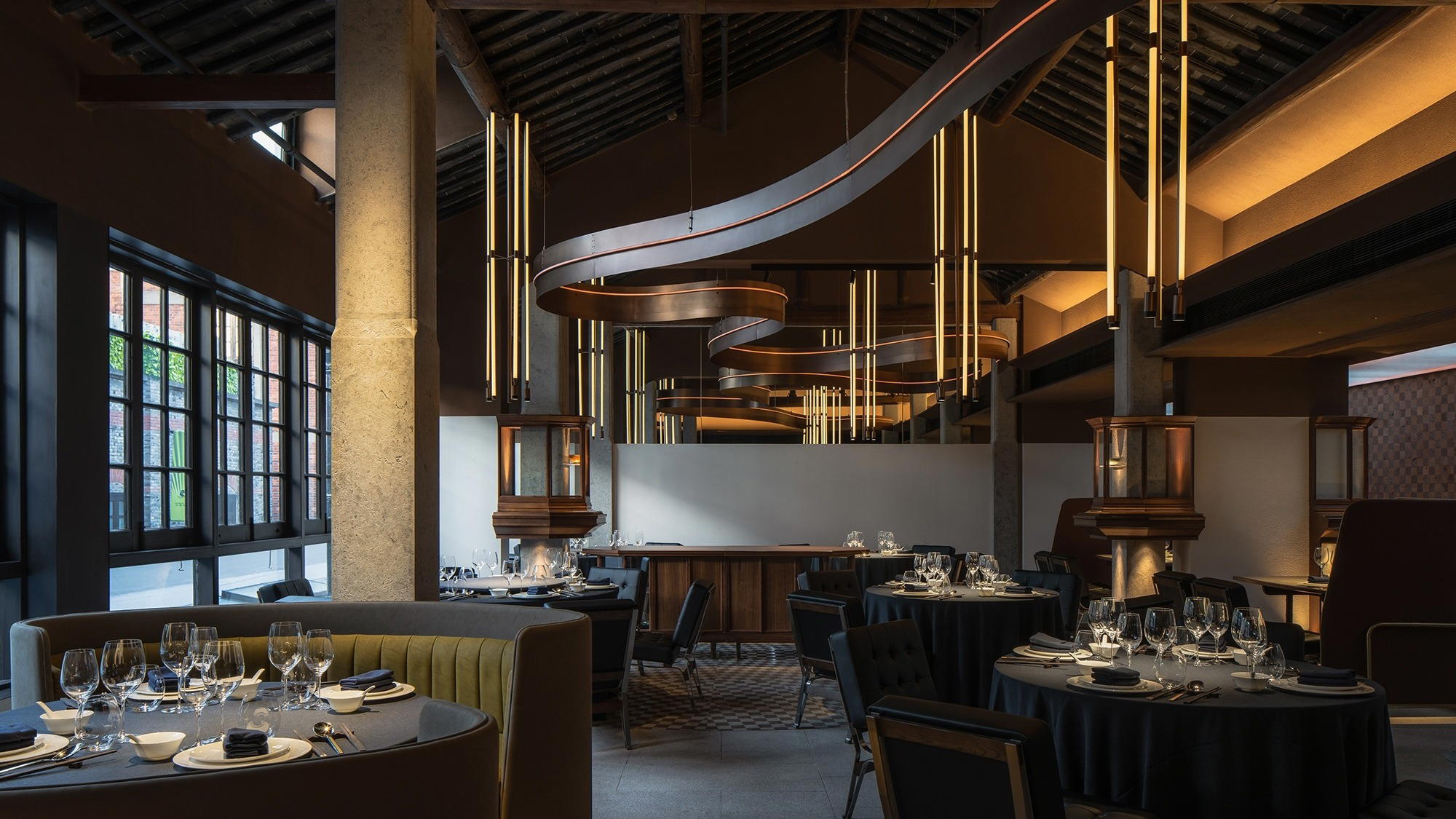
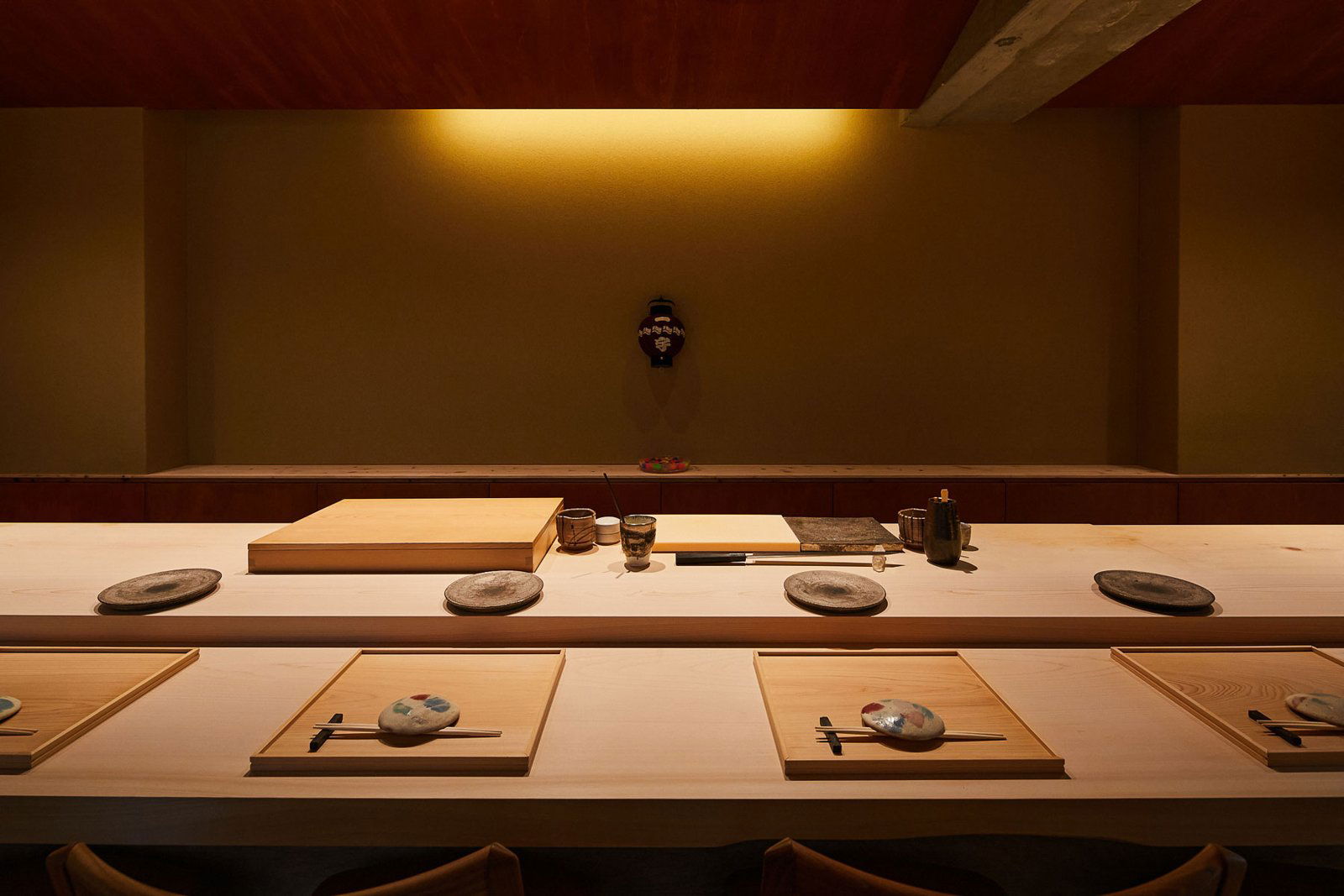
The physical space reinforces this sense of intention. A cedar bark door, roof tiles used as a nameplate, and a rope curtain that mirrors the geometry of the ceiling: the room is built around the concept that gives the restaurant its name. 'Ichiu' translates as 'under one roof', and the ceiling is shaped like a roof to make that point concrete. For a first-time visitor, the room itself communicates what kind of evening you are in for before the first course arrives. It is not showy; it is precise.
Ichiu holds a Michelin Plate in both 2024 and 2025, recognition that signals consistent, quality cooking without the price escalation that comes with starred venues. A Michelin Plate is the Guide's acknowledgment of good food; it does not carry the same weight as a star, but it is a meaningful credential in a city where the competition is as dense as anywhere on earth. At the ¥¥¥ price tier, Ichiu sits below Tokyo's starred sushi counters and kaiseki rooms, which makes it a more accessible entry point into serious Japanese dining without sacrificing the structured experience that makes those formats worthwhile.
Kagurazaka as a Dining Decision
Kagurazaka is worth understanding before you book. The neighbourhood has a long association with traditional Japanese hospitality, it was historically a geisha district, and several of Tokyo's more considered dining rooms are concentrated here. Kagurazaka Ishikawa is the neighbourhood's flagship, a three-Michelin-starred kaiseki room that operates at a significantly higher price point than Ichiu. Ichiu benefits from being in the same neighbourhood without carrying the same booking difficulty or price. If you are spending several nights in Tokyo and want to distribute your dining budget across different experiences, Ichiu fits well as your mid-range structured dinner alongside a higher-spend evening elsewhere. For broader planning across the city, our full Tokyo restaurants guide covers the range, and you can also reference our Tokyo hotels guide, bars guide, and experiences guide for planning the rest of your trip.
If you are visiting Japan beyond Tokyo, comparable structured Japanese dining experiences are available at Gion Sasaki in Kyoto, HAJIME in Osaka, and Kashiwaya Osaka Senriyama. For something further afield, akordu in Nara and Isshisoden Nakamura in Kyoto are worth considering as part of a wider Japan itinerary. Within Tokyo itself, Myojaku, Azabu Kadowaki, Ginza Fukuju, and Jingumae Higuchi all operate in the same serious Japanese dining category and are worth comparing depending on your preferred neighbourhood and format. Venues outside the main cities, Goh in Fukuoka, 1000 in Yokohama, and 6 in Okinawa, round out a Japan dining itinerary if your travels extend that far.
Booking and Practical Details
Booking at Ichiu is rated Easy. No website or phone number is listed in current records, which means you will likely need to use a third-party reservation platform or contact the venue directly through a hotel concierge if you are staying locally. Given the Michelin Plate recognition and the small size typical of this format, booking at least one to two weeks ahead is sensible for weekends; weekday availability is likely more open. The address is 2 Chome-22 1F, Kagurazaka, Shinjuku City, Tokyo. The neighbourhood is walkable from Kagurazaka Station on the Tokyo Metro Tozai Line.
Dress code information is not confirmed, but for a traditional Japanese counter of this type, smart casual is the appropriate default. Loud or overly casual clothing tends to read as incongruous in rooms built with this level of material care.
Quick reference:
How It Compares
Planning details
- Location
- Japan, 〒162-0825 Tokyo, Shinjuku City, Kagurazaka, 2 Chome−22 1F
- Website
- ichiu-kagurazaka.com
- Phone
- +81 3-6280-7047
The take
The Take
The Vibe
Ichiu presents a restrained, classic expression of Japanese hospitality that favors ritual and architecture over spectacle. The cedar-bark door, repurposed roof tiles and a roof-form ceiling create an inward-focused, tactile environment that amplifies the feeling of dining under one roof. The counter-centered layout and deliberate pacing cultivate an intimate, composed atmosphere where the sequence of courses is as meaningful as any single dish. The overall effect is quietly formal and attentive: a place that privileges tradition, materiality and the choreography of a shared evening.
Best For
Ichiu is best for an intentional evening: diners who value a measured, multi-course progression and focused sushi service. The experience is built around an evening rhythm—starting with a cup of sake, moving through soup and steamed courses, arriving at sushi and concluding with takikomi gohan—so it suits date nights and small special occasions that benefit from attentive, ceremonial dining. Chef Koichi Hamano’s faithful approach to classic sequence-driven Japanese meals makes the restaurant especially fitting for guests who want a composed, chef-led dinner experience.
Ordering Tips
Follow the restaurant’s sequence rather than piecemeal ordering: the meal is structured to begin with a sake and lighter courses, progress through steamed preparations and sushi, and finish with takikomi gohan, which is presented as the proper, grounding close. Accepting the prescribed flow lets you experience the intended pacing and balance. Given the counter format and emphasis on choreography, lean into the chef-led progression and enjoy the transitions between courses as part of the meal’s meaning.
Venue details
Ambiance
Cozy and elegant space with roof-shaped beams evoking traditional Japanese architecture, hinoki cypress counter, and relaxing Horikawa incense aroma.
Tags
Vibe
Best For
Experience
Sourcing
At the Table
- Dress Code
- Smart Casual
- Noise Level
- Quiet
- Service Style
- Formal
- Meal Pacing
- Leisurely
- Capacity
- Intimate
Signature Dishes
tuna noten
Know before you go
Know Before You Go
- Getting there
- Japan, 〒162-0825 Tokyo, Shinjuku City, Kagurazaka, 2 Chome−22 1F
Planning details
Location
Japan, 〒162-0825 Tokyo, Shinjuku City, Kagurazaka, 2 Chome−22 1F · Directions
Recognition and awards
Also consider
Also Consider
- Harutaka, Sushi, ¥¥¥¥
- RyuGin, Kaiseki, Japanese, ¥¥¥¥
- L'Effervescence, French, ¥¥¥¥
- HOMMAGE, Innovtive French, French, ¥¥¥¥
- Florilège, French, ¥¥¥
Restaurant context
Ichiu sits at ¥¥¥ with Michelin Plate recognition, which positions it as the practical choice for serious Japanese dining in Tokyo without committing to starred prices. Harutaka is the direct sushi comparison at ¥¥¥¥, technically at a higher level and carrying greater booking difficulty, but worth it if sushi precision is your primary criterion and budget is not. For a kaiseki format rather than sushi, RyuGin at ¥¥¥¥ operates in a different register entirely and is the better choice if you want the full theatrical range of Japanese tasting cuisine. Ichiu is the right call if you want sushi-centred structure at a price point that leaves room in your Tokyo dining budget for a second serious meal.
If your preference runs to French rather than Japanese, Florilège matches Ichiu on price tier (¥¥¥) and offers a contemporary French tasting format with comparable Michelin credibility. L'Effervescence and HOMMAGE both step up to ¥¥¥¥ and deliver at a higher level of ambition and service polish. Between Ichiu and Florilège, the decision comes down to format preference: Japanese counter tradition versus French tasting menu. Both represent good value relative to their ¥¥¥¥ peers.
For first-time visitors choosing between these options, Ichiu is the easiest to book and offers a culturally specific experience that French restaurants in Tokyo cannot replicate. If your trip allows for only one structured Japanese dinner, Ichiu gives you the format clearly and at a price that does not require the level of advance planning that Harutaka or RyuGin demand.
Explore Tokyo
Around this place
Discover more on Pearl
Unlock the full Ichiu guide in Pearl, including awards, comparisons, FAQs, planning details, and nearby places.
Compare Ichiu
| Venue | Cuisine | Price | Awards | Booking Difficulty |
|---|---|---|---|---|
| Ichiu | Japanese | ¥¥¥ | 2026 Michelin PlateTabelog 100 - Japanese cuisine - TOKYO - 2025 · #122025 Michelin Plate2024 Michelin Plate | Easy |
| Harutaka | Sushi | ¥¥¥¥ | 2026 Tabelog Silver · #312026 OAD Top Restaurants in Japan Ranked · #1282026 Michelin 3 Stars2026 La Liste Top RestaurantsTabelog 100 - Sushi - TOKYO - 2025 · #372025 Asia's 50 Best Restaurants · #762025 OAD Top Restaurants in Japan Ranked · #1172025 La Liste Top Restaurants2025 Tabelog Bronze | Unknown |
| RyuGin | Kaiseki, Japanese | ¥¥¥¥ | 2026 OAD Top Restaurants in Japan Ranked · #802026 Tabelog Bronze · #3772026 Michelin 3 Stars2026 La Liste Top RestaurantsTabelog 100 - Japanese cuisine - TOKYO - 2025 · #212025 OAD Top Restaurants in Japan Ranked · #542025 Michelin 3 Stars2025 La Liste Top Restaurants2025 The Best Chef Three Knives | Unknown |
| L'Effervescence | French | ¥¥¥¥ | 2026 Tabelog Silver · #682026 OAD Top Restaurants in Japan Ranked · #103Star Wine Lists 20262026 Black Pearl 2 Diamond2026 Relais Chateaux Restaurants2026 La Liste Top Restaurants2026 Michelin 3 Stars2025 Asia's 50 Best Restaurants · #692025 OAD Top Restaurants in Japan Ranked · #92 | Unknown |
| HOMMAGE | Innovtive French, French | ¥¥¥¥ | 2026 Tabelog Bronze · #1232026 OAD Top Restaurants in Japan Highly Recommended2026 Michelin 2 StarsTabelog 100 - French - TOKYO - 2025 · #762025 Asia's 50 Best Restaurants · #782025 OAD Top Restaurants in Japan Ranked · #1752025 Michelin 2 Stars2025 The Best Chef One Knife2025 La Liste Top Restaurants | Unknown |
| Florilège | French | ¥¥¥ | 2026 Asia's 50 Best Restaurants · #312026 Tabelog Bronze · #712026 OAD Top Restaurants in Japan Ranked · #1242026 Black Pearl 1 Diamond2026 Michelin 2 Stars2026 La Liste Top Restaurants2025 Asia's 50 Best Restaurants · #172025 World's 50 Best Restaurants · #36Tabelog 100 - French - TOKYO - 2025 · #68 | Unknown |












How Ichiu stacks up against the competition.
FAQ
Frequently Asked Questions
Is the tasting menu worth it at Ichiu?
For the format, yes. The sequence — sake on arrival, soup, steamed dishes, sushi, then takikomi gohan — is a coherent arc, not a loose collection of courses. At ¥¥¥ pricing, you are paying for structure and intent, which is appropriate for a Michelin Plate-recognised kitchen. If you want à la carte flexibility, this is the wrong room.
What are alternatives to Ichiu in Tokyo?
For high-precision sushi omakase with stronger name recognition, Harutaka in Ginza operates at a higher price point but carries more accolades. RyuGin offers a modern kaiseki format if you want a broader sequence than sushi-led dining. Ichiu sits in a more intimate, neighbourhood register than either — Kagurazaka rather than central Tokyo, which is part of the appeal.
Does Ichiu handle dietary restrictions?
No phone number or website is listed for Ichiu in current records, which makes communicating restrictions before arrival harder than at venues with direct booking infrastructure. Use whatever third-party platform you book through to flag requirements in advance. A structured omakase with a fixed arc — including sushi and rice — has limited flexibility by design, so confirm before you commit.
How far ahead should I book Ichiu?
No direct booking channel is publicly listed, so you will need a third-party reservation service. Build in enough lead time to secure a slot through that route — at least two to three weeks is a reasonable starting point for a Michelin Plate venue in a neighbourhood like Kagurazaka. Booking is rated Easy, but that refers to difficulty of the process, not same-week availability.
Is Ichiu good for solo dining?
Probably yes. The cedar-bark door and rope curtain entrance, the roof-shaped ceiling, and a menu that opens with a personal cup of sake all point toward an intimate, counter-style setting — the kind of room where solo diners are a natural fit rather than an afterthought. The omakase format also removes the awkwardness of ordering alone.
Is Ichiu worth the price?
At ¥¥¥, Ichiu sits in the mid-to-upper range for Tokyo omakase. The Michelin Plate recognition in both 2024 and 2025 signals consistent kitchen quality, not just a good run. For that price in Kagurazaka, you are getting a considered sequence rooted in Chef Koichi Hamano's sushi background — reasonable value if the format suits you, less so if you are comparing raw prestige to Ginza-tier options.
Is Ichiu good for a special occasion?
Yes, with the right expectations. The room has deliberate symbolic design — the name means 'under one roof', the ceiling is shaped like a roof to reinforce it — and a meal structure that builds toward a closing rice course rather than ending abruptly. That kind of considered arc suits an anniversary or a meaningful dinner more than a business meal or a casual group night out.