.png?width=1200&quality=80)
DAN
French · Setagaya, Tokyo
Restaurant in Tokyo, Japan
 Book with Pearl
The Read
Japanese-Ingredient French Counter
Price
$100–150per person
Dress
Smart Casual
Why go
DAN is casual French dining in Setagaya with Michelin Plate recognition in 2024 and 2025, a counter that puts you directly in front of the kitchen, and a ¥¥¥ price tier that makes it one of the more accessible Michelin-acknowledged French addresses in Tokyo. Best for food-focused diners who want proximity to the cooking over ceremony, and strongest in autumn when the Japanese seasonal larder is at its peak.
About DAN
DAN, Tokyo: The Verdict
If you want casual French cooking that genuinely engages with Japanese ingredients rather than simply importing European technique wholesale, DAN in Setagaya is worth booking. This is not a destination for grand-occasion theatre or prestige-driven tasting menus. It is a restaurant for food-focused diners who want to eat well without the formality or the four-figure bill that defines much of Tokyo's French dining scene.
The Room and the Format
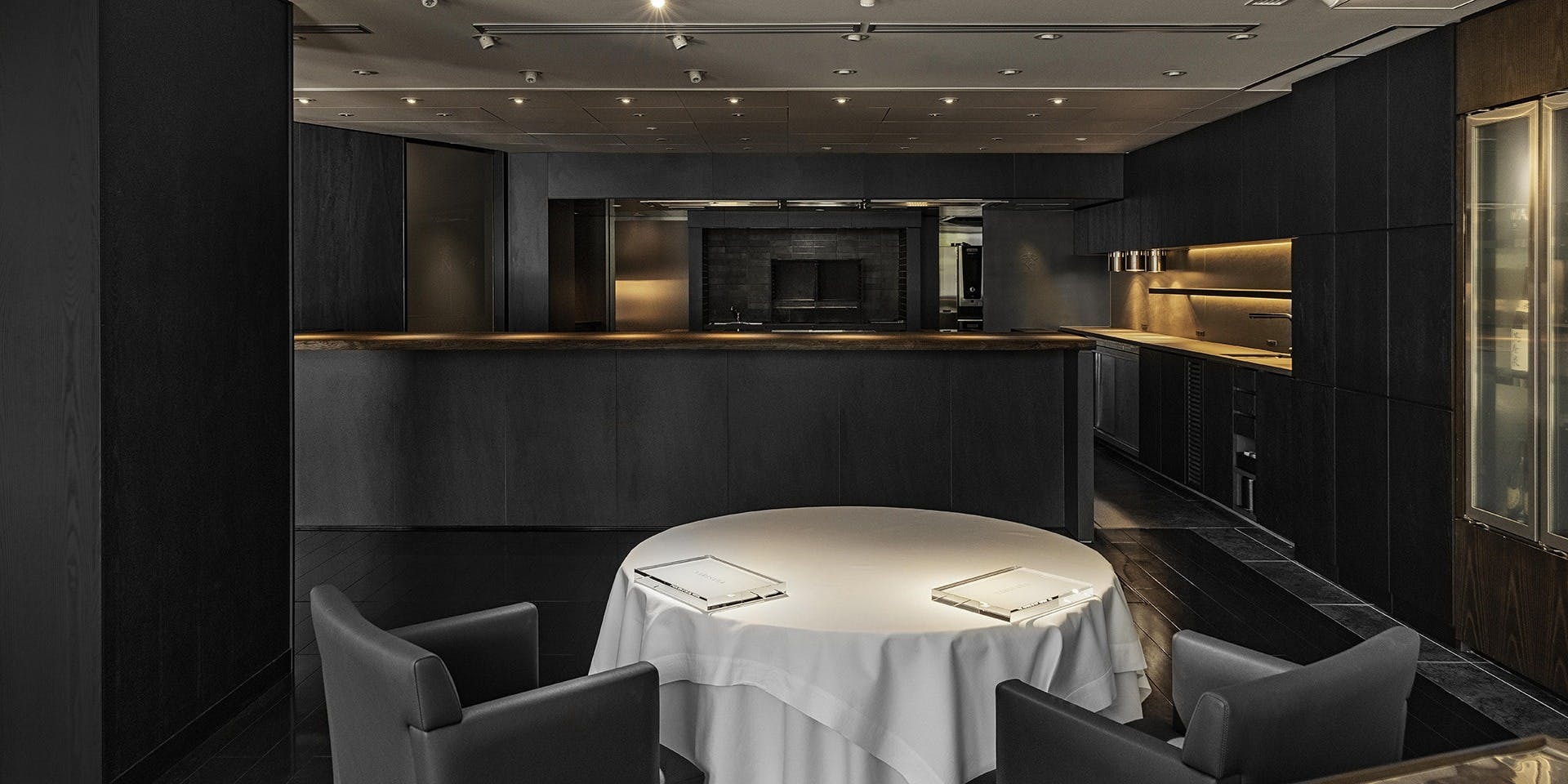
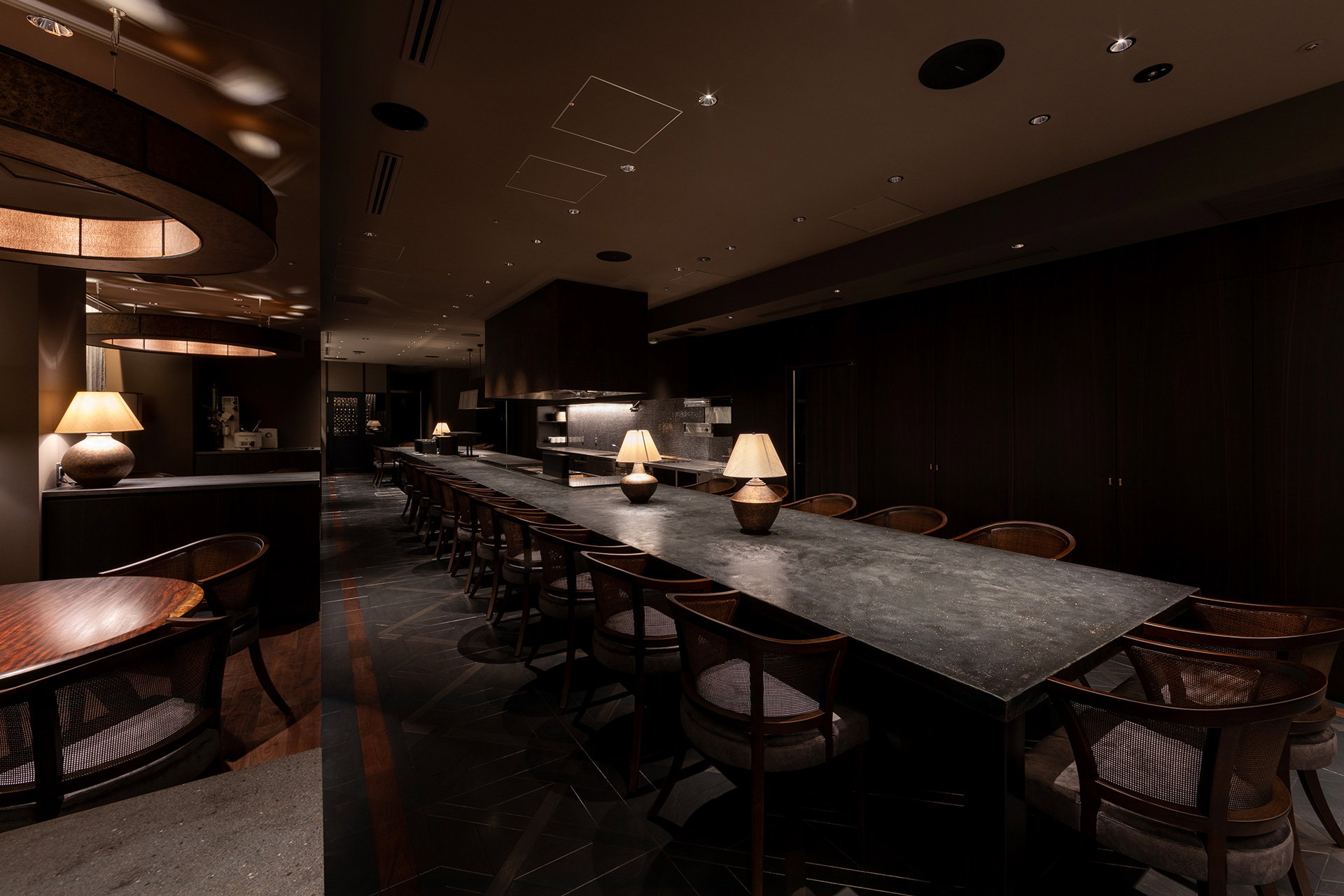
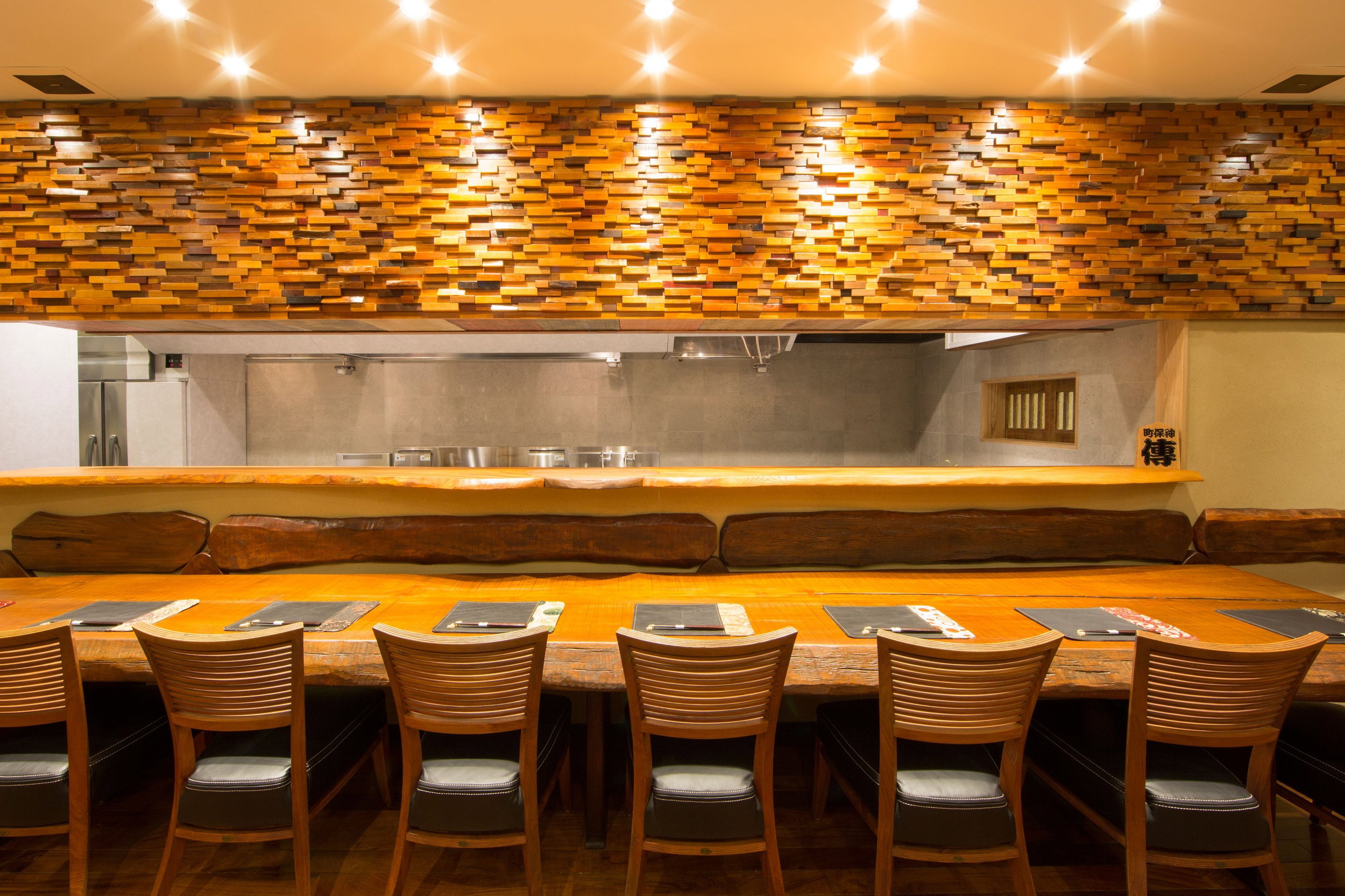
The defining visual at DAN is the arc of the counter. It wraps around the kitchen and puts you directly in the sightline of the cooking, dissolving the usual separation between diner and kitchen. For solo diners and couples especially, this format rewards attention: you watch the preparation unfold rather than waiting for plates to arrive at a distance. The room is intimate by design, and the guest count stays small, which means the atmosphere on any given evening is shaped largely by who is sitting around the counter. On most reported visits, that produces a cheerful, engaged dynamic rather than the hushed reverence of a high-end kaiseki or a three-star French room. If you are coming from the more austere end of Tokyo dining, the register here will feel noticeably warmer.
French Technique, Japanese Ingredients, and the Seasonal Logic
The kitchen's approach is to take French recipes and run them through a Japanese ingredient filter. The most cited example is the risotto, which appears as a perennial on the menu and works precisely because rice is the natural meeting point between the two traditions. This is not fusion for its own sake: it is a considered position that the affinity between French culinary structure and Japanese seasonal produce is genuine, not forced.
That seasonal orientation matters for timing your visit. Japanese ingredient calendars are granular and deeply observed, and a kitchen operating at this level will shift what it prioritises as the seasons move. In the colder months, expect root vegetables, brassicas, and game-adjacent preparations to feature more prominently. Spring brings mountain vegetables and early greens that translate well into French-style reductions and sauces. Summer in Tokyo is humid and intense, and lighter preparations tend to dominate. Autumn, when the Japanese larder is arguably at its most expressive, is the strongest case for visiting: mushrooms, chestnuts, sweet potato, and the tail end of the fishing calendar all give the French-Japanese synthesis here its most persuasive argument. If you have flexibility, book in October or November.
First-time visitors should know that menu specifics are not published in advance. Given the small scale and the seasonal rotation, asking the kitchen about what is driving the menu on the night of your visit is entirely appropriate, and the counter format makes that conversation easy. This is not a restaurant where you read the menu in isolation: the format invites dialogue.
Booking and Getting There
DAN is in Daizawa, Setagaya City, at 4 Chome-34-10 YK Building 1F. Setagaya is residential and quieter than the central dining districts, so factor that into your evening. The booking difficulty is rated easy, which reflects the relatively low profile of this address compared to Tokyo's higher-wattage French rooms. You are unlikely to need weeks of advance planning here, though the small seat count means leaving it to the day of is a risk. A few days' notice is a sensible baseline, and midweek evenings will generally be more available than Fridays and Saturdays. Phone and website details are not publicly confirmed in the Pearl database, so approaching via a hotel concierge or one of the Japanese reservation platforms is the most reliable path.
Value and Who Should Book
At ¥¥¥, DAN is priced well below Tokyo's French flagship tier. Compare it to L'Effervescence, Sézanne, or ESqUISSE, all of which sit at ¥¥¥¥ and carry higher Michelin recognition, and DAN offers a meaningfully different proposition: less ceremony, more proximity to the cooking, and a price point that makes returning easier to justify. Against Florilège, the closest ¥¥¥ peer in the French-in-Tokyo category, DAN trades Florilège's more pronounced creative tension for a warmer, counter-led format. For a food-focused explorer who wants Michelin-acknowledged quality without the stiffness that can accompany it, DAN makes a strong case. For a special occasion that calls for a grander room or a longer tasting arc, look at Château Restaurant Joël Robuchon instead.
The Michelin Plate recognition in both 2024 and 2025 signals consistent quality without the full-star pressure that can push smaller restaurants towards over-formality.
For context on how DAN fits into Tokyo's broader dining picture, see our full Tokyo restaurants guide. If you are extending your trip, HAJIME in Osaka, Gion Sasaki in Kyoto, and akordu in Nara each offer compelling regional alternatives for the same food-focused traveller. Elsewhere in Japan, Goh in Fukuoka, 1000 in Yokohama, and 6 in Okinawa are worth the detour. For French dining at this level outside Japan, Les Amis in Singapore and Hotel de Ville Crissier are the peer comparisons worth having. You can also use our Tokyo hotels guide, our Tokyo bars guide, our Tokyo wineries guide, and our Tokyo experiences guide to plan around your visit.
The Bottom Line
Book DAN if you want Michelin-acknowledged French cooking that takes Japanese ingredients seriously, presented at counter distance at a price that does not require a special justification. If you are visiting Tokyo in autumn, this is a particularly strong moment to come. If you need a grander room or a longer formal tasting, spend up to one of the ¥¥¥¥ French addresses instead. But for an informed, relaxed evening of French cooking in a neighbourhood setting, DAN earns its 4.9.
Planning details
- Location
- Japan, 〒155-0032 Tokyo, Setagaya City, Daizawa, 4 Chome−34−10 YKビル 1階
- Reservations
- Book on the venue's website
- Website
- dan-daizawa.com
- Phone
- +81 3-4400-9986
The take
The Take
The Vibe
DAN presents a low-key, tightly focused approach to French cooking that privileges technique over ceremony. The arc-shaped counter is the defining architectural fact, orienting the room around direct exchanges between chef and guest. It sits in Daizawa’s residential fabric rather than the city’s flashy dining districts, so the mood feels more relaxed and quietly exacting than performative. Consecutive Michelin Plate recognitions underline the kitchen’s seriousness even as the format keeps service unpretentious and personal. The result is an intimate, unobtrusive atmosphere where the food — and the chef’s craft on display — take center stage.
Best For
DAN is best for diners who prize thoughtful, regular meals over spectacle: locals, couples, and solo guests who appreciate close-up cooking and personable service. It is not framed as a destination restaurant but as a neighbourhood counter where people return to eat well without fuss. The counter layout favors small parties and individual diners who want to watch technique unfold and converse with the cook. If you’re seeking a formal tasting-room experience, DAN is intentionally more relaxed; if you value precise, quietly confident French cooking in an intimate setting, it fits perfectly.
Ordering Tips
Sit at the counter whenever possible — the arc-shaped seating is central to the experience and facilitates direct interaction with the chef. Expect a pared-back, service-forward rhythm rather than a ceremonious multi-course theater; the kitchen emphasizes technical rigor and seasonal ingredient work over flourish. Because the restaurant operates as a small neighbourhood counter for a close circle of regulars, lean into the chef-guest exchange: ask about ingredients and techniques and allow the pacing to be guided by the kitchen. The tone is informal but exacting, so arrive ready to enjoy the cooking up close.
Venue details
Ambiance
Cozy hideaway with all counter seating fostering a warm, lively, and intimate atmosphere.
Tags
Vibe
Best For
Experience
At the Table
- Dress Code
- Smart Casual
- Noise Level
- Quiet
- Service Style
- Upscale Casual
- Meal Pacing
- Leisurely
- Capacity
- Intimate
- Kitchen
- Modern
- Menu Format
- Tasting menu, Counter dining
- Wine Program
- Curated
Know before you go
Know Before You Go
- Getting there
- Japan, 〒155-0032 Tokyo, Setagaya City, Daizawa, 4 Chome−34−10 YKビル 1階
Planning details
Location
Japan, 〒155-0032 Tokyo, Setagaya City, Daizawa, 4 Chome−34−10 YKビル 1階 · Directions
Recognition and awards
Also consider
Also Consider
- Harutaka, Sushi, ¥¥¥¥
- RyuGin, Kaiseki, Japanese, ¥¥¥¥
- L'Effervescence, French, ¥¥¥¥
- HOMMAGE, Innovtive French, French, ¥¥¥¥
- Florilège, French, ¥¥¥
Restaurant context
Against Tokyo's ¥¥¥¥ French tier, DAN offers a clear trade-off: less ambition on the plate and less formal architecture, but more immediate access to the cooking and a bill that is noticeably lower. L'Effervescence and HOMMAGE both carry stronger Michelin credentials and larger creative footprints, and if you are in Tokyo for a single high-investment French meal and want the full formal experience, either of those is the more defensible choice. DAN is not competing on that axis.
The closer comparison is Florilège, which shares both the ¥¥¥ tier and a genuine investment in French cooking with Japanese ingredient thinking. Florilège has a sharper creative edge and more critical attention, which makes it the better call if you want a restaurant that is pushing hard against category boundaries. DAN, by contrast, is calmer and more convivial: the counter arc and the intimate guest count make it a better fit if the priority is a warm evening with good food rather than a technically ambitious set piece. For solo diners, DAN's counter is particularly well-suited.
Harutaka and RyuGin are in different categories entirely, high-end sushi and kaiseki respectively, both at ¥¥¥¥, and serve a different purpose in a Tokyo itinerary. If you are building a multi-night dining plan, DAN fits well as the accessible, neighbourhood-scaled counterpoint to one of those heavier investments. It is not a substitute for them, but it fills a different slot in the week without repeating the same register.
Explore Tokyo
Around this place
Discover more on Pearl
Unlock the full DAN guide in Pearl, including awards, comparisons, FAQs, planning details, and nearby places.
Compare DAN
| Venue | Cuisine | Awards | Booking Difficulty |
|---|---|---|---|
| DAN | French | 2026 Michelin Plate2025 Michelin Plate2024 Michelin Plate | Easy |
| Harutaka | Sushi | 2026 Tabelog Silver · #312026 OAD Top Restaurants in Japan Ranked · #1282026 Michelin 3 Stars2026 La Liste Top RestaurantsTabelog 100 - Sushi - TOKYO - 2025 · #372025 Asia's 50 Best Restaurants · #762025 OAD Top Restaurants in Japan Ranked · #1172025 La Liste Top Restaurants2025 Tabelog Bronze | Unknown |
| RyuGin | Kaiseki, Japanese | 2026 OAD Top Restaurants in Japan Ranked · #802026 Tabelog Bronze · #3772026 Michelin 3 Stars2026 La Liste Top RestaurantsTabelog 100 - Japanese cuisine - TOKYO - 2025 · #212025 OAD Top Restaurants in Japan Ranked · #542025 Michelin 3 Stars2025 La Liste Top Restaurants2025 The Best Chef Three Knives | Unknown |
| L'Effervescence | French | 2026 Tabelog Silver · #682026 OAD Top Restaurants in Japan Ranked · #103Star Wine Lists 20262026 Black Pearl 2 Diamond2026 Relais Chateaux Restaurants2026 La Liste Top Restaurants2026 Michelin 3 Stars2025 Asia's 50 Best Restaurants · #692025 OAD Top Restaurants in Japan Ranked · #92 | Unknown |
| HOMMAGE | Innovtive French, French | 2026 Tabelog Bronze · #1232026 OAD Top Restaurants in Japan Highly Recommended2026 Michelin 2 StarsTabelog 100 - French - TOKYO - 2025 · #762025 Asia's 50 Best Restaurants · #782025 OAD Top Restaurants in Japan Ranked · #1752025 Michelin 2 Stars2025 The Best Chef One Knife2025 La Liste Top Restaurants | Unknown |
| Florilège | French | 2026 Asia's 50 Best Restaurants · #312026 Tabelog Bronze · #712026 OAD Top Restaurants in Japan Ranked · #1242026 Black Pearl 1 Diamond2026 Michelin 2 Stars2026 La Liste Top Restaurants2025 Asia's 50 Best Restaurants · #172025 World's 50 Best Restaurants · #36Tabelog 100 - French - TOKYO - 2025 · #68 | Unknown |













How DAN stacks up against the competition.
FAQ
Frequently Asked Questions
Is DAN good for solo dining?
Yes — the arc counter is the ideal solo format. You sit directly facing the kitchen, which means the cooking becomes the company. Solo diners are well-served at counter restaurants like this, and DAN's described atmosphere of a 'cheerful circle of guests' makes it less isolating than a table-for-one at a conventional restaurant.
Is DAN worth the price?
At ¥¥¥, DAN sits well below Tokyo's French flagship tier — L'Effervescence, Sézanne, and ESqUISSE all run ¥¥¥¥ and carry heavier booking demands. For Michelin Plate-recognised French cooking with a clear culinary point of view, DAN delivers strong value at its price point.
How far ahead should I book DAN?
DAN is a small, intimate counter in a residential Setagaya neighbourhood, not a high-traffic central Tokyo venue — but that also means fewer available seats per service. Book at least 2–3 weeks ahead to be safe, and further out if you're visiting on a weekend or have a fixed travel window.
What should a first-timer know about DAN?
DAN is in Daizawa, Setagaya City — residential and quieter than Shinjuku or Ginza, so plan your transit rather than assuming a short walk from a major hub. The counter format means you're watching the kitchen throughout the meal, which is part of the experience. The cooking takes French recipes and applies Japanese ingredients, with the risotto being the most cited example of how that logic plays out.
What are alternatives to DAN in Tokyo?
For French cooking at a higher price and more formal setting, L'Effervescence and Florilège are the benchmark alternatives, both carrying stronger award profiles. HOMMAGE is another French option worth comparing at a similar intimacy level. If you want Japanese counter dining rather than French, Harutaka or RyuGin shift the cuisine but preserve the precision-focused counter format.
Is DAN good for a special occasion?
It works for a low-key special occasion — the counter format is intimate and the Michelin Plate recognition gives it credibility, but the 'casual' positioning means it reads more as a considered dinner than a formal celebration. If the occasion calls for white-tablecloth ceremony, L'Effervescence or ESqUISSE are better fits. If it calls for genuine cooking in a convivial room, DAN delivers.