.png?width=1200&quality=80)
Chugokusai KAKYU-BOU
Chinese · Minato, Tokyo
Restaurant in Tokyo, Japan
 Book with Pearl
The Read
Orthodox Chinese, Seasonal Sourcing
Price
$150–200per person
Dress
Smart Casual
Why go
A Michelin Plate Chinese restaurant in Takanawa, KAKYU-BOU delivers orthodox Chinese technique at a ¥¥¥ price point that undercuts comparable serious restaurants in Tokyo. Consecutive Michelin recognition in 2024 and 2025 confirms consistency. Book when you want disciplined, philosophy-driven Chinese cooking without committing a ¥¥¥¥ budget — reservations are straightforward to secure with reasonable notice.
About Chugokusai KAKYU-BOU
Verdict
Chugokusai KAKYU-BOU earns its Michelin Plate recognition at a price point (¥¥) that makes it one of the more accessible serious Chinese restaurants in Tokyo. If you are returning after a first visit, what you will find is consistency rather than transformation: the same commitment to orthodox Chinese technique, the same unhurried atmosphere in Takanawa, and the same appetiser assortment that opens the meal as a deliberate statement of intent. That reliability is the point. For explorers who want to understand what disciplined, technique-first Chinese cooking looks like in a Japanese context, this is worth booking. For those chasing novelty or theatrical presentation, look elsewhere.
Portrait
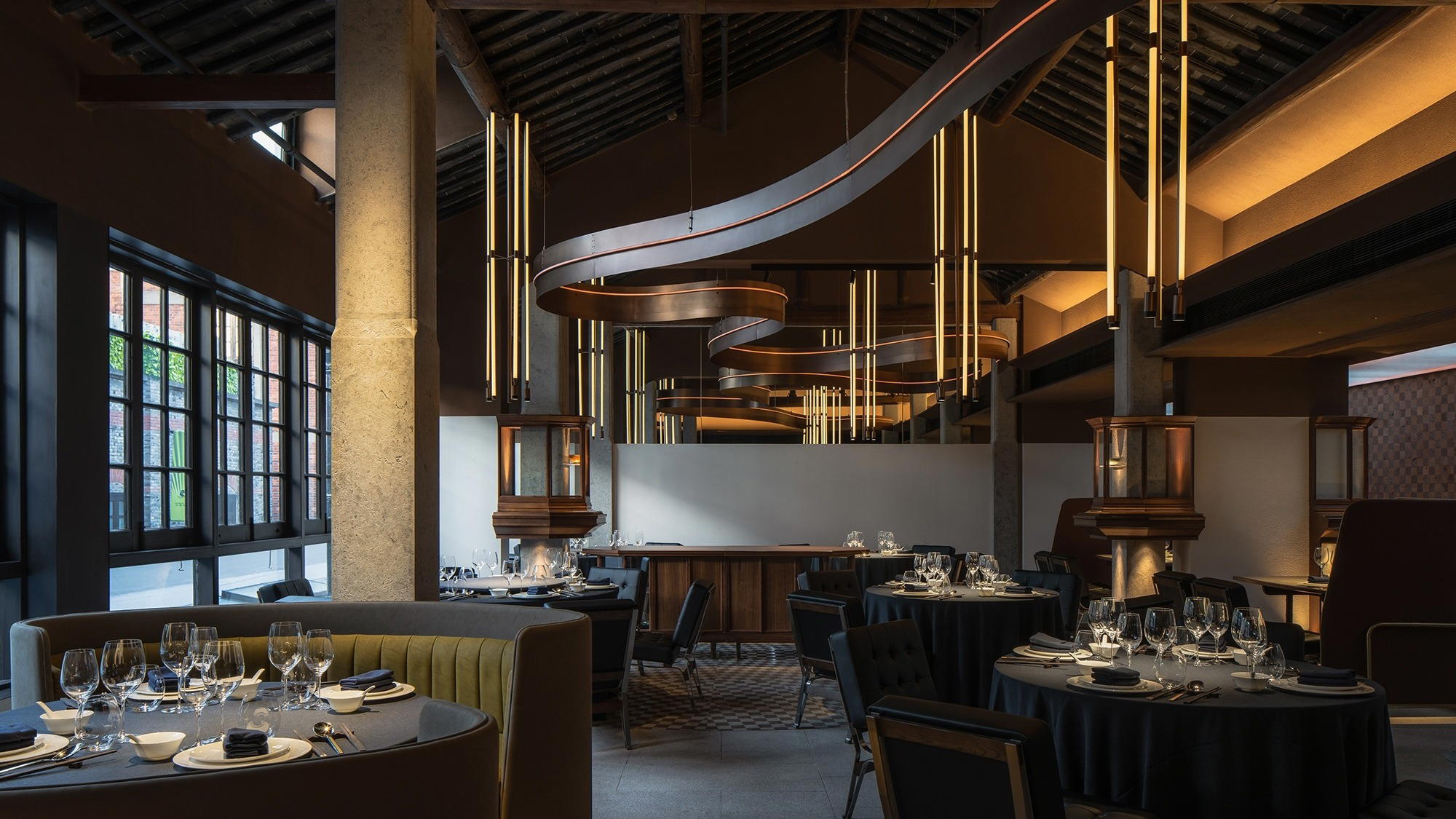
The name tells you what to expect before you sit down. Kakyu-bou translates loosely as 'Kitchen of Mount Huaqiu' — a reference to a holy mountain in Chinese philosophy where the earth produces abundantly, and where cooking is framed as an act of thanksgiving rather than performance. That philosophy shapes the room's mood before a single dish arrives. The atmosphere in Takanawa is measured and calm, not hushed in the way of a reverent omakase counter, and not loud in the way of a Shinjuku dining room packed at 8 PM. The energy here sits somewhere between those poles: attentive, deliberate, and without the ambient noise that makes conversation difficult at many of Tokyo's more fashionable Chinese addresses.
For the food-focused traveller, that sonic environment matters. You can actually talk through a meal here. If you are visiting with someone you want to discuss the food with — or someone you want to have a real conversation, the room supports that in a way that many comparable restaurants in the city do not. Compare that to some of the livelier Chinese dining rooms in Tokyo, where the energy is part of the draw but makes sustained conversation effortful. KAKYU-BOU does not offer that kind of electricity, and it is not trying to.
The service philosophy at this price tier is worth examining carefully, because it is where KAKYU-BOU makes its clearest argument. At ¥¥, you are not paying for the ceremony or the theatre of luxury service. What you get instead is attentive, knowledgeable handling of the meal, the kind of service that explains without lecturing, and that moves the progression of dishes at a pace that respects both the kitchen and the diner. That approach earns the price rather than undermining it. At the ¥¥¥¥ tier, where peers like RyuGin or L'Effervescence operate, you would expect formality proportionate to the spend. Here, the service is calibrated to a different contract: skilled, present, and without pretension. That calibration is correct for what this restaurant is.
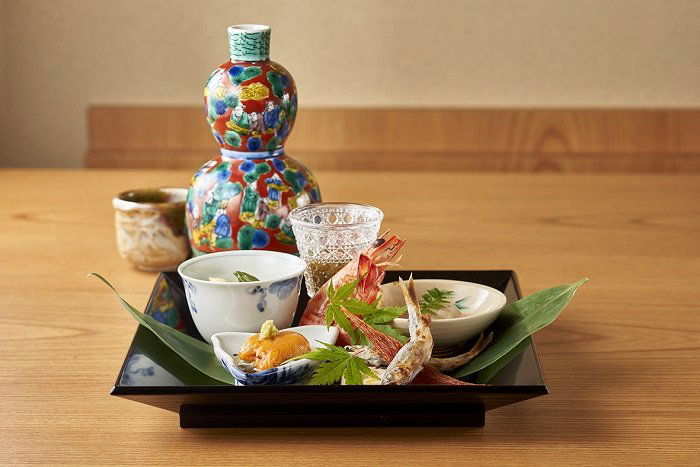
The kitchen's stated philosophy, that innovation only becomes possible after the basics are mastered, is visible in the structure of the meal. The appetiser assortment, which draws from both sea and land and applies Chinese technique throughout, functions as a kind of proof of competence before the main courses. This is not a gimmick. It is a way of telling the diner what the restaurant values. For explorers who want to read a meal as a document of a kitchen's priorities, there is real information in that opening sequence. For diners who find such framing overly earnest, the food itself is the argument.
Tokyo has no shortage of Chinese restaurants that position themselves as destinations, and the city's Chinese dining scene spans an enormous range, from the elaborate Cantonese rooms in luxury hotels to small neighbourhood spots that serve regional Chinese food to Japanese diners who grew up eating it. KAKYU-BOU sits closer to the serious end of that spectrum without requiring a ¥¥¥¥ budget to access. That positioning is genuinely useful if you are planning a Tokyo itinerary where your major dining spend is allocated elsewhere, perhaps to Harutaka for sushi, or to a kaiseki dinner at RyuGin. KAKYU-BOU can absorb a meal in a broader Tokyo itinerary without requiring you to reorganise your priorities around it.
The restaurant is located in Minato City's Takanawa district, a quieter residential and hotel zone that sits apart from the denser tourist circuits. Getting there is direct by Tokyo Metro or JR from central Tokyo, and the neighbourhood itself contributes to the mood: this is not a place you stumble across. You choose to come here, which means the room tends to be occupied by diners who have made a deliberate decision to eat Chinese food at this level, rather than those who drifted in from a nearby attraction. That self-selection shapes the atmosphere in ways that are hard to quantify but easy to feel once you are seated.
For a Chinese restaurant in Tokyo at this price tier, two consecutive Michelin acknowledgements is a meaningful credential. It does not put KAKYU-BOU in the same conversation as three-starred kaiseki rooms, but it does confirm that the food is being taken seriously by people who evaluate it systematically. Booking is direct, this is not a reservation that requires weeks of planning or a local contact to secure, which makes it a realistic option to add to a Tokyo trip on reasonable notice.
For context beyond Tokyo, if Chinese cooking done with Japanese precision and philosophy interests you, the category extends to venues like Restaurant Tim Raue in Berlin and Mister Jiu's in San Francisco, both of which pursue Chinese cuisine through a distinct cultural lens. Within Japan's broader dining landscape, explorers building a multi-city itinerary might also consider HAJIME in Osaka, Gion Sasaki in Kyoto, or Goh in Fukuoka for the range of what serious Japanese dining looks like across the country.
For Tokyo Chinese dining specifically, Chugoku Hanten Fureika, Chugoku Hanten Kohakukyu (Amber Palace), Ippei Hanten, itsuka, and Koshikiryori Koki all represent distinct positions in the category and are worth comparing depending on what you are prioritising. Our full Tokyo restaurants guide covers the broader landscape, and if you are planning around accommodation or other activities, the Tokyo hotels guide, Tokyo bars guide, Tokyo wineries guide, and Tokyo experiences guide are useful resources.
Ratings & Recognition
- Michelin Plate, 2025
- Michelin Plate, 2024
Booking
Booking difficulty is low. KAKYU-BOU does not require the advance planning of Tokyo's most sought-after counters. You can realistically plan this as part of a Tokyo itinerary with a week or so of lead time rather than months. The Takanawa address is accessible from central Tokyo without difficulty.
Planning details
- Location
- 2 Chome-1-62 Takanawa, Minato City, Tokyo 108-0074, Japan
- Reservations
- Book on TableCheck
- Website
- tablecheck.com/ja/kakyubou
- Phone
- +81 3-6432-5647
The take
The Take
The Vibe
Chugokusai KAKYU-BOU reads as a quietly assured neighbourhood Chinese kitchen. It leans into the calm of Takanawa rather than competing with Ginza or Roppongi’s bustle, and the name’s reference to a classical Chinese text signals a thoughtful, rooted approach. The dining room favors restraint over spectacle: the copy emphasizes orthodox technique and seasonal sourcing, so the overall impression is contemplative and refined rather than flashy. Prices sit in the mid-range, which keeps the place approachable while the kitchen’s commitment to provenance and craft gives the meal a deliberate, classical character.
Best For
This is a restaurant for diners who prefer considered, technique-driven Chinese cooking in a low-key setting. Because the neighbourhood is residential and the venue prizes seasonal sourcing, it suits quiet business dinners or understated special occasions where foodcraft matters more than theatrics. It’s not a high-traffic, late-night spot; instead it rewards guests who come with the intention to linger and appreciate seasonal plates. If you want a polished but relaxed meal away from Tokyo’s busiest corridors, KAKYU-BOU fits that bill.
Ordering Tips
Start with the restaurant’s signature assorted appetizers and lean into shared plates—the kitchen’s philosophy centers on seasonal sourcing and orthodox technique, so asking what’s freshest that day will pay dividends. Expect dishes that showcase ingredients rather than heavy novelty, so order a selection to sample the kitchen’s approach across textures and flavours. Given the mid-range pricing and neighbourhood focus, pacing the meal and sharing several seasonal items makes for the most revealing and satisfying experience.
Venue details
Ambiance
Clean and compact dining space evoking joy of cooking and eating with orthodox Chinese roots.
Tags
Vibe
Best For
At the Table
- Dress Code
- Smart Casual
- Noise Level
- Quiet
- Service Style
- Upscale Casual
- Meal Pacing
- Leisurely
- Capacity
- Intimate
- Kitchen
- Modern
- Menu Format
- A la carte
- Wine Program
- Curated
Signature Dishes
assorted appetizers
Know before you go
Know Before You Go
- Getting there
- 2 Chome-1-62 Takanawa, Minato City, Tokyo 108-0074, Japan
Planning details
Location
2 Chome-1-62 Takanawa, Minato City, Tokyo 108-0074, Japan · Directions
Recognition and awards
Also consider
Also Consider
- Harutaka, Sushi, ¥¥¥¥
- RyuGin, Kaiseki, Japanese, ¥¥¥¥
- L'Effervescence, French, ¥¥¥¥
- HOMMAGE, Innovtive French, French, ¥¥¥¥
- Florilège, French, ¥¥¥
Restaurant context
KAKYU-BOU's most direct competition is not the ¥¥¥¥ Japanese restaurants that dominate Tokyo's international reputation, it is the city's other serious Chinese rooms. Against Chugoku Hanten Fureika and Chugoku Hanten Kohakukyu (Amber Palace), KAKYU-BOU differentiates on philosophy rather than scale: the kitchen frames its cooking explicitly around mastery of fundamentals, while the Chugoku Hanten group operates with a broader Cantonese register and a more formal dining room scale. If Chinese cuisine is your primary interest for a Tokyo meal, the choice between them comes down to whether you prefer that tighter, more personal approach or a grander room with wider menu range.
Measured against the ¥¥¥¥ venues in this comparison set, KAKYU-BOU operates in a different tier by design. RyuGin and L'Effervescence both require significantly more spend and significantly more advance planning, RyuGin in particular is one of Tokyo's harder reservations to secure. HOMMAGE and Florilège cover innovative and classic French cooking at ¥¥¥¥ and ¥¥¥ respectively. None of them compete directly with KAKYU-BOU on cuisine type, so the comparison is really about how you allocate a Tokyo dining budget across an itinerary.
The practical recommendation: if your trip includes one ¥¥¥¥ booking, whether that is Harutaka for sushi or RyuGin for kaiseki, KAKYU-BOU works well as a complement rather than an alternative. It delivers genuine kitchen ambition at ¥¥, is accessible on reasonable notice, and covers a cuisine category that none of the French or Japanese comparison venues address. For travellers who want Chinese cooking specifically and are not committed to spending at the top tier, it is the clearer booking over more expensive rooms that may not justify the premium through the food alone.
Explore Tokyo
Around this place
Discover more on Pearl
Unlock the full Chugokusai KAKYU-BOU guide in Pearl, including awards, comparisons, FAQs, planning details, and nearby places.
Compare Chugokusai KAKYU-BOU
| Venue | Awards | Price |
|---|---|---|
| Chugokusai KAKYU-BOU | 2026 Michelin Plate2025 Michelin Plate2024 Michelin Plate | ¥¥ |
| Harutaka | 2026 Tabelog Silver · #312026 OAD Top Restaurants in Japan Ranked · #1282026 Michelin 3 Stars2026 La Liste Top RestaurantsTabelog 100 - Sushi - TOKYO - 2025 · #372025 Asia's 50 Best Restaurants · #762025 OAD Top Restaurants in Japan Ranked · #1172025 La Liste Top Restaurants2025 Tabelog Bronze | ¥¥¥¥ |
| RyuGin | 2026 OAD Top Restaurants in Japan Ranked · #802026 Tabelog Bronze · #3772026 Michelin 3 Stars2026 La Liste Top RestaurantsTabelog 100 - Japanese cuisine - TOKYO - 2025 · #212025 OAD Top Restaurants in Japan Ranked · #542025 Michelin 3 Stars2025 La Liste Top Restaurants2025 The Best Chef Three Knives | ¥¥¥¥ |
| L'Effervescence | 2026 Tabelog Silver · #682026 OAD Top Restaurants in Japan Ranked · #103Star Wine Lists 20262026 Black Pearl 2 Diamond2026 Relais Chateaux Restaurants2026 La Liste Top Restaurants2026 Michelin 3 Stars2025 Asia's 50 Best Restaurants · #692025 OAD Top Restaurants in Japan Ranked · #92 | ¥¥¥¥ |
| HOMMAGE | 2026 Tabelog Bronze · #1232026 OAD Top Restaurants in Japan Highly Recommended2026 Michelin 2 StarsTabelog 100 - French - TOKYO - 2025 · #762025 Asia's 50 Best Restaurants · #782025 OAD Top Restaurants in Japan Ranked · #1752025 Michelin 2 Stars2025 The Best Chef One Knife2025 La Liste Top Restaurants | ¥¥¥¥ |
| Florilège | 2026 Asia's 50 Best Restaurants · #312026 Tabelog Bronze · #712026 OAD Top Restaurants in Japan Ranked · #1242026 Black Pearl 1 Diamond2026 Michelin 2 Stars2026 La Liste Top Restaurants2025 Asia's 50 Best Restaurants · #172025 World's 50 Best Restaurants · #36Tabelog 100 - French - TOKYO - 2025 · #68 | ¥¥¥ |













How Chugokusai KAKYU-BOU stacks up against the competition.
FAQ
Frequently Asked Questions
Is the tasting menu worth it at Chugokusai KAKYU-BOU?
At ¥¥ pricing, KAKYU-BOU sits well below what most Michelin-recognised restaurants in Tokyo charge, and the philosophy here is orthodox Chinese technique applied with care rather than spectacle. The appetiser assortment alone — sea and soil prepared with classical Chinese methods — signals that the kitchen takes its foundations seriously. If you want boundary-pushing modernism, look elsewhere; if you want precise, grounded cooking at a fair price, the menu justifies the booking.
What are alternatives to Chugokusai KAKYU-BOU in Tokyo?
KAKYU-BOU is a Chinese specialist in a Tokyo dining scene dominated by Japanese and French formats. For high-end Japanese cooking, Harutaka (omakase sushi) and RyuGin (contemporary kaiseki) are the benchmark comparisons, both at significantly higher price points. If French fine dining is on the table, L'Effervescence and Florilège offer similar seriousness with more booking competition. HOMMAGE covers French-Japanese crossover territory. None of these are direct substitutes for KAKYU-BOU's Chinese focus, which makes it a useful counterpoint on any multi-restaurant Tokyo trip.
What should I wear to Chugokusai KAKYU-BOU?
The venue data does not specify a dress code, and at a ¥¥ price point in Takanawa, Minato City, the expectation is unlikely to be formal. Neat, presentable clothing is a safe baseline for any Michelin Plate restaurant in Tokyo. Avoid overly casual attire; Tokyo dining rooms at this level tend to set an understated, respectful tone.
Does Chugokusai KAKYU-BOU handle dietary restrictions?
No dietary accommodation policy is documented in the available data. The kitchen's identity is built around orthodox Chinese technique, so significant departures from the set format may be limited. Raise any restrictions directly when booking; at a ¥¥ price point with manageable booking demand, the restaurant is more likely to be flexible than a higher-pressure Michelin counter.
Is Chugokusai KAKYU-BOU good for a special occasion?
Yes, with the right expectations. KAKYU-BOU holds a Michelin Plate in 2024 and 2025, which gives the meal a grounded sense of occasion without the price pressure of a starred room. The name itself — 'Kitchen of Mount Huaqiu,' drawn from Chinese philosophy — frames the experience around gratitude and craft rather than performance. For a dinner where the food matters more than the spectacle, this works well. If you need a grand room or a famous chef's name on the reservation, look at RyuGin or L'Effervescence instead.