
Restaurant in Osaka, Japan
Temmabashi Fujikawa
290Pearl PointsKaiseki counter, accessible booking, serious cooking.

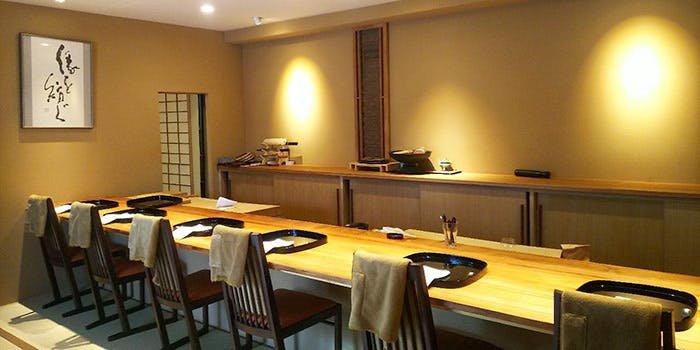
About Temmabashi Fujikawa
A Michelin Plate kaiseki counter in Osaka's Tenma district, Temmabashi Fujikawa runs a seasonal prix fixe with tempura served mid-sequence as a centrepiece. Priced at ¥¥¥ with easy booking, it sits well below the city's starred rooms in both cost and difficulty. The evening menu in late autumn is the strongest version of the experience.
Verdict: A Kaiseki Counter Worth Booking in Osaka's Tenma District
Getting a seat at Temmabashi Fujikawa is easier than at Osaka's trophy tables — booking difficulty is rated easy — but that accessibility should not make you underestimate what you're walking into. This is a Michelin Plate-recognised kaiseki counter in the Tenma neighbourhood, operating at the ¥¥¥ price tier, and it earns its recognition through a specific combination: a chef-led tasting format that integrates tempura mid-sequence, a counter built from Yoshino cedar, and a seasonal philosophy that shapes the menu from first course to last. If you've visited once and are considering a return, the seasonal angle is your reason to come back. The menu moves with the calendar, and what you ate in autumn is not what you'll eat in spring.
The Counter and the Format
The Yoshino cedar counter is not decorative detail, it signals the register of the experience. Yoshino cedar is prized in Japanese craft for its grain and scent, and a counter built from it carries a faint woody warmth that frames the meal before a dish arrives. The open kitchen means the chef's work is visible throughout, which is relevant given that the tasting format places tempura at its centre stage. Most kaiseki menus treat tempura as a minor supporting act if they include it at all; here, it sits in the middle of the prix fixe as a focal point, with each piece fried individually to order. That decision shapes the pacing of the meal and gives the open kitchen a practical purpose: you're watching technique that directly affects what lands on your plate.
Lunch and dinner operate differently enough that your choice between them matters. At lunch, the menu leads with appetisers designed as visual set pieces, precision plating is part of the offer. In the evening, the number of courses increases and the ingredient focus sharpens. If you've done lunch and want to understand what Fujikawa is genuinely capable of, an evening visit is the logical next step. The fuller course count gives the seasonal ingredient sourcing more room to express itself, and the tempura mid-sequence lands with more weight when it follows several preceding courses rather than arriving close to the start.
The Seasonal Rotation: When to Visit
This is where repeat visits earn their justification. Kaiseki is structurally seasonal, the format exists to track Japan's ingredient calendar, and Fujikawa's menu is described as reflecting the chef's original vision within that framework. That means the seasonal produce choices are not simply traditional; they reflect a specific editorial perspective on what's worth cooking at each point in the year.
Spring brings bamboo shoots, mountain vegetables, and early bonito. Summer shifts to cold preparations, ayu (sweetwater trout), and dishes designed to register lightness against Osaka's heat. Autumn is the richest season for kaiseki: matsutake mushroom, Pacific saury, and the first of the season's cold-weather fish. Winter runs toward blowfish (fugu) and hearty broth-based courses. Each season produces a materially different menu, which makes Fujikawa one of the Osaka restaurants where the question "when should I go" has a real answer rather than a generic one. If you can only go once, late autumn, October through November, is when kaiseki ingredients are at their most concentrated and the evening format gives them the most space.
For a broader picture of what Osaka's dining scene offers across price tiers and styles, see our full Osaka restaurants guide. If you're planning a wider Kansai trip, Gion Sasaki in Kyoto operates in a comparable seasonal kaiseki register at a higher price point and booking difficulty.
Ratings and Recognition
Temmabashi Fujikawa holds a Michelin Plate in both 2024 and 2025, the guide's acknowledgement of quality cooking that does not yet carry star status. For context within Osaka's kaiseki tier, this positions Fujikawa as a well-regarded neighbourhood counter rather than a destination restaurant requiring international trip-planning. The Michelin Plate is not a consolation; it means the guide found the cooking worth flagging. Whether you need a star to justify the spend depends on your reference point, at ¥¥¥, you are paying considerably less than the city's starred kaiseki rooms.
Comparable kaiseki experiences elsewhere in Japan worth benchmarking against: Myojaku in Tokyo and Azabu Kadowaki in Tokyo for the capital's take on the format; akordu in Nara for a kaiseki-adjacent experience in a quieter city. Within Osaka, Kashiwaya Osaka Senriyama and Taian are the relevant same-tier comparisons.
Practical Details
Reservations: Booking difficulty is rated easy, call or book in advance, but this is not a weeks-out scramble like Osaka's starred rooms. Budget: ¥¥¥ tier; expect a meaningful spend per head, but well below the ¥¥¥¥ benchmark of Hajime or La Cime. Location: Tenma, Kita Ward, Osaka, a neighbourhood with good public transport access. Format: Prix fixe tasting menu with tempura mid-sequence; lunch and dinner menus differ in course count and emphasis. Counter: Yoshino cedar counter seating with open kitchen view. Leading timing: Evening in late autumn for the fullest seasonal menu; lunch if you prefer a shorter, lighter format.
If you're building a broader Osaka itinerary, our full Osaka hotels guide and our full Osaka bars guide cover where to stay and drink around a dinner here. For other Osaka Japanese restaurants worth considering alongside Fujikawa: Miyamoto, Oimatsu Hisano, Tenjimbashi Aoki, and Yugen. For Japanese fine dining beyond Osaka, Harutaka in Tokyo, Goh in Fukuoka, 1000 in Yokohama, and 6 in Okinawa offer useful regional comparisons. See also our full Osaka experiences guide and our full Osaka wineries guide for broader trip planning.
Frequently Asked Questions
What should a first-timer know about Temmabashi Fujikawa?
The format is kaiseki prix fixe — you are not ordering from a menu, you are surrendering to a structured seasonal progression. The Yoshino cedar counter is the focal point, and the kitchen is open, so the cooking is part of the experience. Budget ¥¥¥ and know that the middle section of the menu features individually deep-fried tempura, which is the chef's signature move within the format. Michelin awarded it a Plate in both 2024 and 2025, which signals recognised quality without the price escalation that comes with starred rooms.
Is Temmabashi Fujikawa good for a special occasion?
Yes, provided the person you are booking for is comfortable with a structured tasting format and counter seating. The Yoshino cedar counter and open kitchen create a considered, intimate atmosphere that works well for two. It holds a Michelin Plate for 2024 and 2025, which gives it enough formal recognition to feel occasion-appropriate without the pressure or price ceiling of Osaka's starred kaiseki rooms. If your group needs a private room or a la carte flexibility, look elsewhere.
How far ahead should I book Temmabashi Fujikawa?
Booking difficulty is rated easy — this is not a weeks-out scramble like Osaka's Michelin-starred counters. Booking in advance is still advisable, particularly for dinner, since the evening menu is more extensive and likely in higher demand. Same-week availability is plausible, but do not leave it to the day of if the visit matters.
What should I order at Temmabashi Fujikawa?
There is no ordering — the kaiseki format is a fixed progression set by the chef, and that is the entire point. At lunch, the appetisers are a particular draw; the evening menu expands in scope and sharpens its ingredient focus. The tempura course, individually fried during service, is the distinctive element within the prix fixe structure.
What are alternatives to Temmabashi Fujikawa in Osaka?
For starred kaiseki with a higher price ceiling, Kashiwaya Osaka Senriyama and Taian are the reference points. La Cime and Fujiya 1935 offer French-influenced tasting menus for diners who want the prix fixe structure without the kaiseki framework. HAJIME operates at the top of the city's fine dining tier and is a different commitment in both price and formality. Temmabashi Fujikawa sits between those extremes: recognised quality, accessible booking, and a ¥¥¥ price range that does not require the same financial commitment as the starred competition.
Is Temmabashi Fujikawa worth the price?
At ¥¥¥, it sits in the mid-to-upper range for Osaka dining, and the Michelin Plate recognition in 2024 and 2025 supports the case that the cooking justifies that spend. Compared to Osaka's starred kaiseki rooms, you are getting a similar format — seasonal ingredients, structured progression, open counter — at a lower price point and with easier access. If kaiseki is your format, this is a strong value case.
Is the tasting menu worth it at Temmabashi Fujikawa?
Yes, on the terms the format demands. The prix fixe menu builds in structure — appetisers, a tempura mid-section, and an escalating ingredient focus through the evening — which means the experience rewards patience with the format. Diners who prefer to order freely or skip courses will not get value here. For those already sold on kaiseki, the Michelin Plate and accessible booking make this a practical choice over harder-to-book alternatives.
Location
Japan, 〒530-0043 Osaka, Kita Ward, Tenma, 2 Chome−2−21 ヒロビル 1F
Osaka, Japan
Compare Temmabashi Fujikawa
| Venue | Cuisine | Price | Awards | Booking Difficulty |
|---|---|---|---|---|
| Temmabashi Fujikawa | Japanese | ¥¥¥ | Easy | |
| HAJIME | French, Innovative | ¥¥¥¥ | Michelin 3 Star, World's 50 Best | Unknown |
| La Cime | French | ¥¥¥¥ | Michelin 2 Star, World's 50 Best | Unknown |
| Kashiwaya Osaka Senriyama | Japanese | ¥¥¥ | Michelin 3 Star | Unknown |
| Taian | Kaiseki, Japanese | ¥¥¥ | Michelin 3 Star | Unknown |
| Fujiya 1935 | Innovative | ¥¥¥¥ | Michelin 2 Star | Unknown |
How Temmabashi Fujikawa stacks up against the competition.
Also Consider
- HAJIME, French, Innovative, ¥¥¥¥
- La Cime, French, ¥¥¥¥
- Kashiwaya Osaka Senriyama, Japanese, ¥¥¥
- Taian, Kaiseki, Japanese, ¥¥¥
- Fujiya 1935, Innovative, ¥¥¥¥
Temmabashi Fujikawa's closest same-tier comparisons are Kashiwaya Osaka Senriyama and Taian, both operating at ¥¥¥ in the kaiseki and Japanese format. Kashiwaya carries stronger name recognition and a longer track record; Taian is a kaiseki specialist with a more formal register. Fujikawa's distinction is the tempura mid-sequence integration and the Yoshino cedar counter, which give it a specific identity within the price tier. If booking ease and price are your primary criteria, all three are comparable, Fujikawa's easy booking difficulty is a practical advantage over any room with a longer lead time.
Step up to ¥¥¥¥ and the comparison set changes entirely. HAJIME is Osaka's most ambitious room in the French-innovative category, with multiple Michelin stars and a higher degree of booking complexity. La Cime and Fujiya 1935 operate in the innovative ¥¥¥¥ tier with French influences. These are not direct substitutes for Fujikawa, the cuisine styles, price points, and occasion registers differ substantially. If you want seasonal Japanese kaiseki at a manageable price, Fujikawa is the more practical choice. If you want Osaka's most technically ambitious cooking and are willing to pay and plan further ahead, HAJIME is the room to target.
The decision is straightforward: book Fujikawa if you want kaiseki at ¥¥¥ with easy access and a chef-driven seasonal format, and you value the tempura sequence as a focal point. Book Kashiwaya or Taian if you want a more traditional kaiseki structure at the same tier. Go to HAJIME or La Cime if budget is not the constraint and you want the highest technical register Osaka offers, in a French-influenced rather than Japanese format.
Recognized By

Explore Osaka
Save or rate Temmabashi Fujikawa on Pearl
Keep this venue in your Pearl passport, rate it after you visit, and track it alongside every other place you collect.