
Restaurant in Osaka, Japan
Takeda
290Pearl PointsRegional Japanese cooking worth the detour.
.png?width=144&height=144&quality=80)
About Takeda
Takeda is a Tokushima-rooted Japanese restaurant in Osaka's Nishi Ward where the entire menu is built around a single prefecture's seafood, vegetables, and noodle traditions. With Michelin Plate recognition in 2024 and 2025 and a 4.7 Google rating, it delivers focused regional cooking at a ¥¥¥ price point that's easier to book than most Osaka rooms of comparable quality.
Should You Book Takeda?
If you're choosing between Takeda and the kaiseki institutions that dominate Osaka's Japanese dining conversation — places like Taian or Kashiwaya Osaka Senriyama — the decision comes down to what kind of story you want your meal to tell. Those venues are rooted in Osaka or Kyoto traditions. Takeda is something more specific: a Tokushima chef making a case for his hometown in a city famous for eating well.
The Portrait
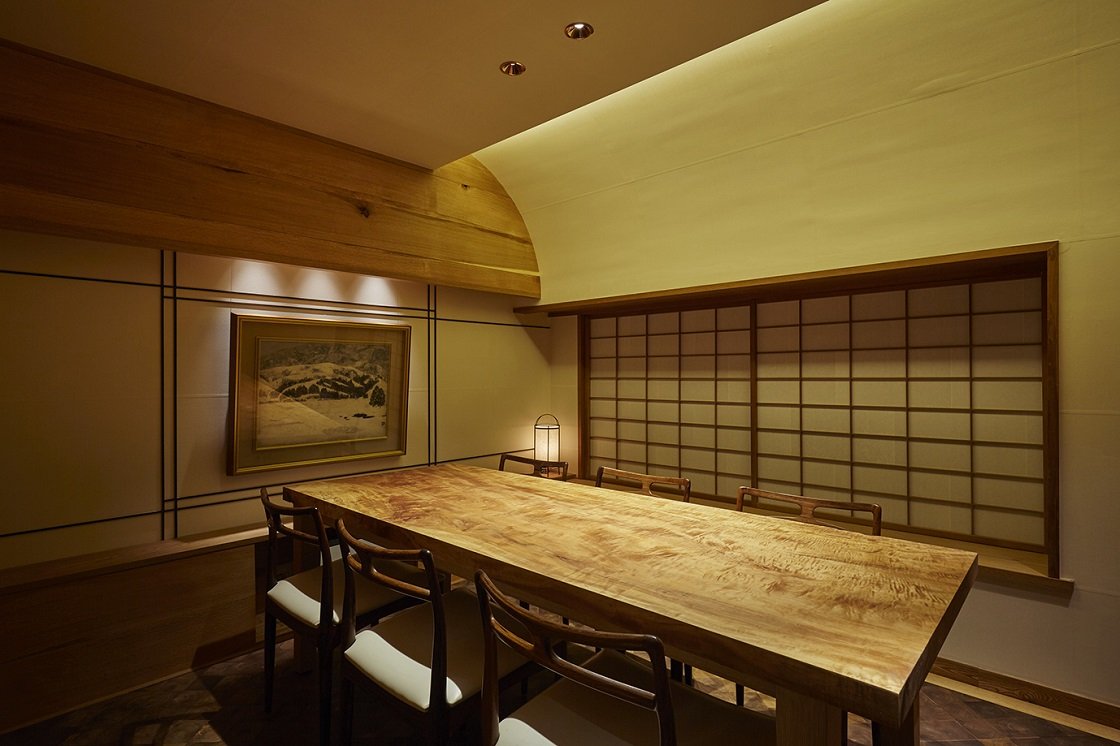
Walk into Takeda and the colour tells you where you are before the menu does. The indigo-dyed norens hanging at the entrance are not decorative, they are a traditional craft of Tokushima Prefecture, the chef's birthplace, and the same indigo blue carries through to the chairs and trays. It's a quiet, deliberate atmosphere: the kind of room where the design earns its meaning rather than performing it. For a food-focused explorer visiting Osaka, this level of conceptual coherence is worth paying attention to. The mood is contemplative rather than celebratory, the energy calibrated for a diner who wants to understand what's on the plate, not just appreciate it.
The sourcing is the backbone of the experience. Seafood arrives from fishermen in Naruto and Minami, both coastal areas of Tokushima known for the strength of their tidal currents, which produce shellfish and fish with pronounced flavour. Vegetables and soy sauce are specially sourced from the region, and the brand-name citrus, Tokushima is a major producer of sudachi and yuzu, is a genuine point of pride rather than a garnish. If you've eaten at places like Miyamoto or Yugen in Osaka and noticed how the leading rooms here use provenance as a narrative device, Takeda takes that logic further: the entire menu is structured around a single prefecture's identity.
Two dishes define what Takeda is doing. The soba-gome jiru is a porridge made with buckwheat seeds and vegetables, a dish that belongs to the domestic cooking of Tokushima farmhouses rather than fine dining, the chef is presenting hometown food in an Osaka context without apologising for its simplicity. The nyumen, made with Handa somen (hand-stretched noodles from a town in Tokushima with a documented somen-making tradition going back several centuries), is the kind of dish that rewards a diner who knows what they're eating. Handa somen is thicker and firmer than most somen varieties, and presenting it as nyumen, served in a warm broth, is a winter preparation that shows regional specificity rather than menu trend-chasing.
On the question of whether this food travels well: it doesn't, and that's the point. Takeda's cooking is built around textures and temperatures that require the room, the soba-gome jiru loses its character cold, and the nyumen is a hot-broth dish by design. This is not a venue to approach through delivery or takeout. The experience is the act of being present in a Tokushima-sourced, indigo-framed dining room in the middle of Osaka's Nishi Ward. Explorers who have eaten at Gion Sasaki in Kyoto or Harutaka in Tokyo will recognise the same principle: the full value of this kind of Japanese cooking is only accessible at the table.
Booking is direct by Osaka standards. The Michelin Guide has recognised it with a Plate in both 2024 and 2025, which signals consistent quality without the booking pressure that comes with a star. You should contact the venue directly, phone and website details are best confirmed through current Osaka listings, as contact information changes, and reservations a week to ten days in advance should be sufficient for most evenings. The address is 3 Chome-9-2 Shinmachi, Nishi Ward, a district with good transport access from central Osaka.
For context on how Takeda sits in its broader Japan network: the chef's apprenticeship was in Osaka, giving the venue a dual identity as both a hometown showcase and a product of Osaka's culinary training tradition. Diners exploring the Kansai region who have already visited akordu in Nara or are planning to will find Takeda a complementary experience: regionality expressed through Japanese idioms rather than European ones. For those ranging further, to Goh in Fukuoka or 1000 in Yokohama, Takeda represents the kind of mid-range, high-conviction dining that a Japan itinerary benefits from having alongside its marquee bookings.
Venues with similar regional-specificity approaches in Tokyo include Myojaku and Azabu Kadowaki, though both operate in a different price tier and city context. Closer to Takeda's format and price level in Osaka are Oimatsu Hisano and Tenjimbashi Aoki, both worth considering for a multi-night Osaka dining programme. See our full Osaka restaurants guide for a broader view of the city's current dining options, and our Osaka hotels guide, bars guide, wineries guide, and experiences guide if you're building a full Osaka programme.
Ratings & Recognition
- Michelin Plate, 2025
- Michelin Plate, 2024
Practical Details
Takeda is at 3 Chome-9-2 Shinmachi, Nishi Ward, Osaka. Price tier: ¥¥¥. Booking is easy relative to comparable Osaka rooms, aim for a week to ten days ahead for most dates. Contact details and current hours are best confirmed directly; Michelin Plate recognition at this price point means demand is present but manageable. This is a sit-down-only experience; the cooking is not suited to off-premise formats.
Frequently Asked Questions
What should I wear to Takeda?
There is no dress code documented for Takeda, but at ¥¥¥ pricing with Michelin Plate recognition, the room skews toward understated and neat. Leave the branded sportswear at the hotel. A collared shirt or equivalent for women is a safe call for any Osaka dining room at this tier.
Can I eat at the bar at Takeda?
Seating configuration details are not confirmed in available records for Takeda. check the venue's official channels or check with your hotel concierge before planning around bar or counter seating specifically.
What are alternatives to Takeda in Osaka?
If you want kaiseki at a higher prestige tier, Taian and Kashiwaya Osaka Senriyama are the Osaka benchmarks — both harder to book and more expensive. For French-influenced Japanese cooking in Osaka, La Cime and Fujiya 1935 are strong alternatives. Takeda's appeal is its specific angle: Tokushima-sourced ingredients and regional dishes you won't find at any of those rooms.
Does Takeda handle dietary restrictions?
No dietary restriction policy is documented for Takeda. Japanese tasting menus at this level are generally structured around a fixed progression, so flag restrictions well in advance when booking — ideally at reservation stage, not on arrival.
Is Takeda good for a special occasion?
Yes, with the right expectations. Takeda holds a Michelin Plate (2024 and 2025) and delivers a distinct Tokushima-rooted experience at ¥¥¥ — meaningful without the pressure of a three-star bill. It works well for occasions where the food is the point, not the status of the room. For a milestone anniversary requiring maximum prestige, Taian or Kashiwaya Osaka Senriyama carry more weight.
Location
3 Chome-9-2 Shinmachi, Nishi Ward, Osaka, 550-0013, Japan
Osaka, Japan
Compare Takeda
| Venue | Price | Booking Difficulty |
|---|---|---|
| Takeda | ¥¥¥ | Easy |
| HAJIME | ¥¥¥¥ | Unknown |
| La Cime | ¥¥¥¥ | Unknown |
| Kashiwaya Osaka Senriyama | ¥¥¥ | Unknown |
| Taian | ¥¥¥ | Unknown |
| Fujiya 1935 | ¥¥¥¥ | Unknown |
Comparing your options in Osaka for this tier.
Also Consider
- HAJIME, French, Innovative, ¥¥¥¥
- La Cime, French, ¥¥¥¥
- Kashiwaya Osaka Senriyama, Japanese, ¥¥¥
- Taian, Kaiseki, Japanese, ¥¥¥
- Fujiya 1935, Innovative, ¥¥¥¥
Among Osaka's Japanese restaurants at the ¥¥¥ tier, Takeda's closest peers are Kashiwaya Osaka Senriyama and Taian. Both carry stronger Michelin standing, Taian in particular is a destination kaiseki room with a more demanding reservation process. Kashiwaya operates with a formal kaiseki structure rooted in Osaka and Kyoto tradition. Takeda sits alongside them on price but argues a different case: regional specificity over format classicism. If you want a meal that reads as a declaration of place, Tokushima, in this instance, Takeda is the clearest expression of that in the ¥¥¥ bracket. If you want the most technically rigorous kaiseki experience at this price level, Taian has the edge.
At the ¥¥¥¥ tier, HAJIME, La Cime, and Fujiya 1935 are all operating in a different register entirely, French-influenced, internationally recognised, and significantly harder to book. HAJIME holds three Michelin stars and is Osaka's most decorated restaurant by that measure; La Cime and Fujiya 1935 are Michelin-starred rooms that attract international diners. None of them are direct comparisons to Takeda's format, but they are relevant if you're building a multi-dinner Osaka programme and deciding where to concentrate your spending.
The practical booking picture also differentiates Takeda from its peers. The Michelin Plate (not a star) means you get Michelin-level ingredient seriousness without the reservation scramble. Taian and the ¥¥¥¥ venues all require more lead time. For an explorer who wants to eat well in Osaka across three or four nights, Takeda is the room to book without stress, save your planning energy for the harder-to-access tables and let Takeda be the focused, lower-friction choice that still delivers regional depth.
Recognized By

Explore Osaka
Save or rate Takeda on Pearl
Keep this venue in your Pearl passport, rate it after you visit, and track it alongside every other place you collect.