
Restaurant in Tokyo, Japan
Sushi Masashi
550ptsMichelin-starred tuna focus, ¥¥¥¥ Aoyama counter.


About Sushi Masashi
Sushi Masashi holds a Michelin star and an OAD top-500 ranking, delivering a tuna-focused omakase in Minami-Aoyama that balances creative appetisers with orthodox nigiri technique. At the ¥¥¥¥ tier with a 4.7 Google rating, it is a credible choice for a serious sushi occasion in Tokyo — but booking is hard and requires advance planning through a concierge or reservation platform.
Verdict
Sushi Masashi holds a Michelin star and a place in Opinionated About Dining's top 500 restaurants in Japan — credentials that, at the ¥¥¥¥ price point, set clear expectations. Chef Masashi Yamaguchi runs a counter that balances creative appetisers with orthodox nigiri technique, with tuna as the centrepiece. If you are planning a serious sushi meal in Minami-Aoyama and want a room with culinary ambition and critical recognition, this is a credible choice. Book well in advance: this is not a walk-in counter.
The Counter, the Chef, and What You Are Actually Buying
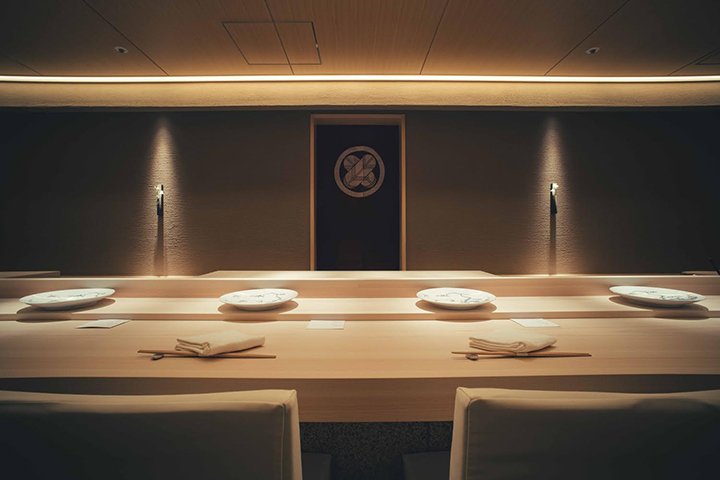
Sushi Masashi occupies the seventh floor of a building on Kita-Aoyama's gingko-lined stretch — a neighbourhood that already signals a certain register before you arrive. The room sits above the street-level noise, and the view from that height across one of Tokyo's more considered residential and dining quarters gives the meal a sense of remove from the city's pace below. That visual framing matters: this is a counter built for focus.
What you are paying for at the ¥¥¥¥ tier is a structured omakase that moves through two distinct registers. The appetiser course is where Yamaguchi expresses range , tuna sukiyaki is cited as a prime example of his willingness to work outside the conventional pre-nigiri format. These courses are designed to demonstrate originality and set a rhythm before the main event. Then the tone shifts. For the nigiri sequence, Yamaguchi commits to orthodox Edomae technique: no flourishes, no theatre, just precision. The tuna progression , lean, medium fatty, fatty , is the spine of the nigiri sequence, and the vinegared rice is calibrated to the fish's fat content rather than treated as a neutral carrier. That level of tuning is what separates a Michelin-recognised counter from a competent one.
The Google rating of 4.7 across 178 reviews confirms that this calibration lands consistently with guests, not just critics. A high review count at this price point in Tokyo is a meaningful signal: enough diners are returning or recommending the counter to sustain that score without outlier inflation.
Drinks at Sushi Masashi
The venue database does not include a breakdown of the drinks programme, so specific sake labels, pairings, or cocktail options cannot be confirmed here. What the Michelin and OAD recognition imply, however, is that beverage service at this level is unlikely to be an afterthought. Serious Tokyo sushi counters at the ¥¥¥¥ tier typically offer curated sake selections that complement the rice and fish pairing philosophy , if the rice is tuned to the fish, expect the same logic to extend to what is poured alongside it. Confirm the pairing options directly with the counter when booking, and ask whether a sake pairing can be arranged in advance. At this price tier, arriving without a drinks plan is a missed opportunity.
Know Before You Go
- Location: Kita-Aoyama, Minato City, Tokyo , 7th floor, Gaien Icho no Mori building
- Price range: ¥¥¥¥ (high-end omakase tier)
- Awards: Michelin 1 Star (2024); Opinionated About Dining Leading Restaurants in Japan, Ranked #503 (2025)
- Google rating: 4.7 / 5 (178 reviews)
- Booking difficulty: Hard , plan well in advance
- Format: Omakase counter; creative appetisers followed by orthodox nigiri
- Signature focus: Tuna in three cuts (lean, medium fatty, fatty); vinegared rice calibrated to fish
- Phone / website: Not publicly listed , book via a concierge or dedicated reservation platform
- Hours: Not confirmed in available data , verify before travel
How It Compares
At the ¥¥¥¥ tier in Tokyo, your sushi options are genuinely strong, and the choice between them depends on what you want from the meal. Harutaka is the counter most serious sushi travellers benchmark against: it is harder to book than Masashi, carries comparable critical weight, and leans more purely into Edomae orthodoxy without the creative appetiser detour. If you want the most technically rigorous nigiri experience in the city, Harutaka is where you should be directing your efforts. Masashi sits a tier below in booking difficulty and offers more range in its opening courses , a better fit if you want a meal that builds through multiple registers rather than committing entirely to nigiri from the first plate. For other high-precision sushi options in Tokyo, Sushi Kanesaka and Sukiyabashi Jiro Roppongiten represent the most established names at this price point, with Jiro carrying a heavier legacy and Kanesaka offering a more accessible booking window.
If you are considering the ¥¥¥¥ tier more broadly and are open to formats beyond sushi, RyuGin gives you a kaiseki experience with comparable critical standing and a more elaborate seasonal structure. For French at the same price tier, L'Effervescence and HOMMAGE are both worth considering if the cuisine format is flexible. Masashi's advantage over these alternatives for a sushi-focused traveller is the combination of Michelin recognition, a tuna-forward programme with clear philosophy, and a counter that is difficult but not impossible to access.
For food and travel explorers extending their Japan trip beyond Tokyo, HAJIME in Osaka, Gion Sasaki in Kyoto, and Goh in Fukuoka are each worth building an itinerary around. For sushi specifically in other Asian cities, Sushi Shikon in Hong Kong and Shoukouwa in Singapore offer the closest regional equivalents to the Edomae counter format.
Explore More in Tokyo and Japan
Compare Sushi Masashi
| Venue | Cuisine | Awards | Booking Difficulty | Value |
|---|---|---|---|---|
| Sushi Masashi | Sushi | In pursuit of new heights, the chef relocated to a new setting, riding the waves of change with his love for the sea, fish, and surfing. His appetisers showcase originality and creativity, with tuna sukiyaki as a prime example. For nigiri, however, he remains committed to orthodox techniques, crafting a menu with a carefully measured rhythm. The spotlight is on tuna, presented in a trio of lean, medium, and fatty cuts. Even the vinegared rice is finely tuned to complement the fish’s rich flavours.; Opinionated About Dining Top Restaurants in Japan Ranked #503 (2025); Michelin 1 Star (2024) | Hard | — |
| Harutaka | Sushi | Michelin 3 Star, World's 50 Best | Unknown | — |
| RyuGin | Kaiseki, Japanese | Michelin 3 Star, World's 50 Best | Unknown | — |
| L'Effervescence | French | Michelin 3 Star, World's 50 Best | Unknown | — |
| HOMMAGE | Innovtive French, French | Michelin 2 Star, World's 50 Best | Unknown | — |
| Florilège | French | Michelin 2 Star, World's 50 Best | Unknown | — |
Comparing your options in Tokyo for this tier.
Frequently Asked Questions
Is Sushi Masashi good for a special occasion?
Yes, with the right expectations. A Michelin-starred omakase counter on the seventh floor of a Kita-Aoyama building is a high-ceremony format by design, which suits milestone dinners well. The tightly structured menu — appetisers with genuine creativity, then orthodox nigiri anchored by a tuna trio — gives a special meal a clear arc. Just confirm your group can commit to the full counter experience; this is not a venue where you order flexibly or linger over your own timeline.
Does Sushi Masashi handle dietary restrictions?
The venue database does not confirm a specific dietary restriction policy. Omakase formats at this price tier generally require advance notice of restrictions, and the menu at Sushi Masashi centres on fish — particularly tuna — making significant dietary departures difficult. check the venue's official channels before booking if you have restrictions; do not assume accommodation is possible.
Is Sushi Masashi good for solo dining?
A strong yes. Counter omakase is one of the few formats that actively rewards solo diners — you get full access to the chef's rhythm and the pacing of the meal without negotiating with a group. Sushi Masashi's structured menu, from inventive appetisers through to the nigiri sequence, plays out best when you can follow it without distraction. Solo booking may also be easier to secure than a table for multiple guests.
Is Sushi Masashi worth the price?
At ¥¥¥¥, it is justified if orthodox nigiri technique and a tuna-led menu are what you are after. The Michelin star (2024) and OAD top-500 ranking for Japan (2025) are meaningful validators at this price point, not just marketing. If you want more theatrical innovation across the full meal, Tokyo has other ¥¥¥¥ options; but if precise, classically grounded sushi with creative starters is the goal, the credentials here support the spend.
What are alternatives to Sushi Masashi in Tokyo?
Harutaka is the closest comparison for purist nigiri at a similar tier. RyuGin sits in the same price bracket but delivers kaiseki rather than sushi, so it suits diners who want a broader multi-course format. L'Effervescence and Florilège are French-influenced fine dining alternatives for those open to moving away from sushi entirely. HOMMAGE is worth considering if a French-Japanese fusion approach appeals. The choice depends on whether sushi technique specifically is the priority.
What should a first-timer know about Sushi Masashi?
Book well in advance — a Michelin-starred omakase counter in Kita-Aoyama at the ¥¥¥¥ level does not have walk-in availability. The venue is on the seventh floor at 2-9-9 Kita-Aoyama, Minato City, so build in time to locate it. The menu follows a deliberate rhythm: creative appetisers first, then a nigiri sequence with a clear focus on tuna across lean, medium, and fatty cuts — knowing that structure helps you pace yourself through the meal.
Recognized By


More restaurants in Tokyo
- SézanneOccupying the seventh floor of the Four Seasons Hotel Tokyo at Marunouchi, Sézanne earned its first Michelin star within months of opening in July 2021 and now holds three. British chef Daniel Calvert applies French technique to Japanese ingredients, producing a prix-fixe format that Tabelog has recognised with Silver awards every year from 2023 through 2026. It ranked 4th in Asia's 50 Best Restaurants in 2025 and 15th globally in 2024.
- SazenkaSazenka is the address for Chinese cuisine in Tokyo at its most technically demanding. Chef Tomoya Kawada's wakon-kansai approach — Japanese seasonal ingredients applied through Chinese culinary technique — has earned consecutive Tabelog Gold Awards from 2019 to 2026, a #71 ranking on the World's 50 Best 2025, and 99 points from La Liste 2026. At JPY 50,000–59,999 per head, it is one of the hardest tables in the city to book and worth the effort.
- NarisawaNarisawa is Tokyo's most credentialled innovative tasting menu restaurant — two Michelin stars, Asia's 50 Best number 12, and a Tabelog Silver award — running at JPY 80,000–99,999 per head. Book for a milestone occasion, confirm vegetarian or vegan needs in advance, and reserve at least two to three months out. With 15 seats and reservation-only access, this is one of Tokyo's hardest tables to secure.
- FlorilègeFlorilège delivers two Michelin stars and an Asia's 50 Best #17 ranking at a dinner price of ¥22,000 — competitive for Tokyo at this level. Chef Hiroyasu Kawate's plant-forward tasting menus around an open-kitchen counter at Azabudai Hills make this the strongest choice for contemporary French dining in Tokyo if theatrical, produce-led cooking is what you want. Book well in advance; availability is near-impossible at short notice.
- DenDen holds two Michelin stars, a World's 50 Best top-25 Asia ranking, and a Tabelog Silver Award running back to 2017 — and it books out within hours of the two-month reservation window opening. Chef Zaiyu Hasegawa's daily-changing seasonal omakase runs JPY 30,000–39,999 at dinner in a relaxed house-restaurant setting near Gaiemmae. Book by phone only, noon–5 PM JST. Lunch is irregular; plan around dinner.
- MyojakuMyojaku is a 2-Michelin-star, 14-course French-leaning omakase in Nishiazabu holding a 4.47 Tabelog score, Tabelog Silver 2025–2026, and Asia's 50 Best #45 (2025). Chef Hidetoshi Nakamura's water-forward, no-dashi approach shifts meaningfully with the seasons — making timing your reservation as important as getting one. Budget JPY 50,000–59,999 per head plus 10% service charge; reservations only, near-impossible to secure.
Related editorial
- Best Fine Dining Restaurants in ParisFrom three-Michelin-star icons to the next generation of Parisian chefs pushing boundaries, these are the restaurants that define fine dining in the world's culinary capital.
- Best Luxury Hotels in RomeFrom rooftop terraces overlooking ancient ruins to Michelin-starred hotel dining, these are the luxury hotels that make Rome unforgettable.
- Best Cocktail Bars in KyotoFrom sleek lounges to hidden speakeasies, Kyoto's cocktail scene blends Japanese precision with global influence in ways you won't find anywhere else.
Save or rate Sushi Masashi on Pearl
Keep this venue in your Pearl passport, rate it after you visit, and track it alongside every other place you collect.