
Restaurant in Tokyo, Japan
Spice Lab Tokyo
100ptsSubcontinental Spice Precision

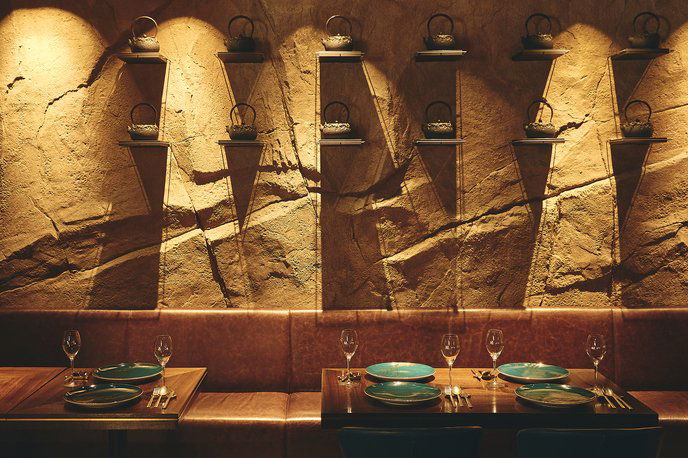
About Spice Lab Tokyo
Indian fine dining occupies a narrow but growing niche in Tokyo, and Spice Lab Tokyo, on the tenth floor of Gicros Ginza Gems, addresses that space with serious intent. Chef Tejas Sovani's kitchen applies technical rigour to subcontinental sourcing and spice logic, earning a 2025 ranking on Opinionated About Dining's top restaurants in Japan list. The result is one of Ginza's more considered non-Japanese addresses.
Indian Fine Dining in Tokyo: A Category With Real Stakes
Tokyo's non-Japanese fine dining tier has always rewarded kitchens that engage seriously with their source tradition rather than softening it for local palates. French and Italian have long held prominent positions at this level, with venues like L'Effervescence demonstrating what happens when a foreign culinary form is pursued with rigour on Japanese terms. Indian cuisine has been slower to claim equivalent standing, but the ground has shifted. A cohort of serious Indian kitchens now operates in the city, and the question is no longer whether Indian food belongs at the Tokyo fine dining table but which kitchens are doing it with sufficient depth and sourcing discipline to hold that position.
Spice Lab Tokyo sits on the tenth floor of Gicros Ginza Gems, 6 Chome, Ginza, placing it in one of the most commercially competitive dining districts in the world. Ginza's ground-level and mid-tower restaurants compete against omakase counters charging well above ¥30,000 per head, multi-Michelin French rooms, and kaiseki houses with decades of standing. To operate at that address with a 4.4 rating across 282 Google reviews, and to earn a place on Opinionated About Dining's 2025 ranked list of leading restaurants in Japan at number 588, is not incidental — it reflects a kitchen that has built a credible argument for its presence in that company.
Where the Ingredients Come From, and Why That Matters
The editorial case for Indian fine dining in Japan often rests on technique — the tandoor work, the layered spice construction, the slow-braised protein preparations that can take 24 hours or more. But the more interesting argument, and the one that separates destination-grade Indian cooking from competent reproduction, is sourcing. Indian cuisine at its most serious is a cuisine of provenance: Kashmiri saffron rather than Spanish, Telangana turmeric over commodity powder, Malabar black pepper from a specific coastal belt, long-grain basmati from Punjab's river-fed plains. The difference between these inputs and their generic substitutes is measurable in the finished dish, not merely theoretical.
Chef Tejas Sovani's kitchen at Spice Lab Tokyo engages this sourcing question directly. The Ginza address demands a supply chain with genuine intent , the neighbourhood's dining clientele is experienced enough to distinguish between Indian food that uses Japanese-market spice blends and Indian food built on ingredients from their actual origin regions. The ability to source and present subcontinental produce in a Tokyo fine dining context is itself a logistical and culinary position, comparable in effort to what French kitchens in Asia do when importing specific AOC dairy, charcuterie, or regional produce.
This framing also connects Spice Lab Tokyo to a wider global shift in how Indian restaurants outside India are being evaluated. At venues like Trèsind Studio in Dubai and Opheem in Birmingham, the conversation has moved decisively away from generic subcontinental comfort food toward ingredient-led Indian cooking where sourcing credentials are part of the menu's argument. Spice Lab Tokyo belongs to that same conversation, operating on a different geography but with comparable ambitions.
The Ginza Context: Competing on Difficult Ground
Ginza imposes a specific competitive pressure. The district is not simply expensive , it is a place where decades-old omakase counters and Michelin-listed French rooms have trained a clientele with high reference points and genuine curiosity. Restaurants at this address are not insulated by novelty. A kitchen that opens in Ginza is immediately measured against Harutaka and its peers, not by choice but by proximity and price expectation.
For an Indian kitchen, this context has an additional dimension. Tokyo diners familiar with kaiseki's seasonal discipline and sushi's obsessive sourcing logic will apply a similar standard to any cuisine that presents itself as serious. The question they bring to an Indian fine dining room is the same one they bring to any room in Ginza: does this kitchen know its source material at the ingredient level, and does the dish on the plate reflect that knowledge? Spice Lab Tokyo's sustained rating across a substantial review base suggests the kitchen is answering that question adequately.
Spice Lab Within Tokyo's Indian Dining Set
Tokyo has developed a meaningful cluster of Indian restaurants across different formats and price points. Biriyani Osawa has built a following through its focused approach to a single dish tradition. Katchar Batchar operates in a different register, and Santosham represents yet another strand of the city's subcontinental offering. Spice Lab Tokyo occupies the formal fine dining position within that set, with a Ginza address and a chef-led kitchen that situates it closer to the restaurant experiences than the casual dining tier.
The 2025 Opinionated About Dining ranking provides a useful external calibration. OAD rankings are built from surveyed opinion among a self-selecting base of serious restaurant visitors, which makes them a reasonable proxy for critical standing rather than popular volume. A place at number 588 on a national Japan list, which includes several hundred highly regarded Japanese establishments across kaiseki, sushi, and contemporary formats, is a credible signal that Spice Lab Tokyo has established itself beyond the novelty bracket.
For context on how fine dining operates across Japan's other major cities, EP Club covers HAJIME in Osaka, Gion Sasaki in Kyoto, akordu in Nara, Goh in Fukuoka, 1000 in Yokohama, and 6 in Okinawa.
Planning Your Visit
Address: 10F, Gicros Ginza Gems, 6-4-3 Ginza, Chuo City, Tokyo 104-0061. Reservations: Booking in advance is advised for a Ginza fine dining room of this standing; check current availability through the venue directly. Dress: Ginza's fine dining standard applies , smart casual at minimum, with the majority of the clientele dressed formally. Budget: Price range is not confirmed in current data; expect Ginza fine dining pricing given the address and format. Getting there: Ginza Station on the Ginza, Hibiya, and Marunouchi lines is the most direct approach.
For broader Tokyo planning, EP Club's full guides cover restaurants, hotels, bars, wineries, and experiences across the city.
Frequently Asked Questions
What do regulars order at Spice Lab Tokyo?
Specific signature dishes are not confirmed in current data, and attributing particular menu items without a verified source would be unreliable for a kitchen that likely adjusts its programme with the seasons. What the OAD ranking and review volume suggest is that the kitchen has built loyalty across multiple visits , which at a Ginza fine dining address points toward a tasting format or chef's selection rather than à la carte repetition. Chef Tejas Sovani's kitchen frames itself around spice intelligence and subcontinental sourcing, so the dishes that draw return visitors are likely those where that sourcing argument is most legible on the plate.
How hard is it to get a table at Spice Lab Tokyo?
Demand at Ginza fine dining rooms with OAD recognition and a 4.4 rating across 282 reviews tends to run ahead of casual walk-in availability, particularly at dinner. Indian fine dining at this level in Tokyo occupies a narrow category, which concentrates bookings rather than distributing them across many interchangeable options. The practical advice is to book as far ahead as the venue's system allows, especially for weekend sittings or larger groups. Current booking method and lead time are not confirmed in the data, so contacting the venue directly is the most reliable approach.
What's the defining dish or idea at Spice Lab Tokyo?
The defining idea, rather than a single dish, is the application of fine dining sourcing standards to subcontinental ingredients and spice logic. The kitchen operates in a city where ingredient provenance is treated as a primary quality signal across every serious cuisine, and the argument Spice Lab Tokyo makes is that Indian cooking at this level demands the same scrutiny: where the spices originate, how the proteins are sourced, and whether the construction on the plate reflects genuine knowledge of regional Indian cooking traditions rather than a generalised interpretation. The OAD recognition in 2025 suggests that argument has been received credibly by the critical audience most likely to press on exactly those questions.
Recognized By

More restaurants in Tokyo
- SézanneOccupying the seventh floor of the Four Seasons Hotel Tokyo at Marunouchi, Sézanne earned its first Michelin star within months of opening in July 2021 and now holds three. British chef Daniel Calvert applies French technique to Japanese ingredients, producing a prix-fixe format that Tabelog has recognised with Silver awards every year from 2023 through 2026. It ranked 4th in Asia's 50 Best Restaurants in 2025 and 15th globally in 2024.
- SazenkaSazenka is the address for Chinese cuisine in Tokyo at its most technically demanding. Chef Tomoya Kawada's wakon-kansai approach — Japanese seasonal ingredients applied through Chinese culinary technique — has earned consecutive Tabelog Gold Awards from 2019 to 2026, a #71 ranking on the World's 50 Best 2025, and 99 points from La Liste 2026. At JPY 50,000–59,999 per head, it is one of the hardest tables in the city to book and worth the effort.
- NarisawaNarisawa is Tokyo's most credentialled innovative tasting menu restaurant — two Michelin stars, Asia's 50 Best number 12, and a Tabelog Silver award — running at JPY 80,000–99,999 per head. Book for a milestone occasion, confirm vegetarian or vegan needs in advance, and reserve at least two to three months out. With 15 seats and reservation-only access, this is one of Tokyo's hardest tables to secure.
- FlorilègeFlorilège delivers two Michelin stars and an Asia's 50 Best #17 ranking at a dinner price of ¥22,000 — competitive for Tokyo at this level. Chef Hiroyasu Kawate's plant-forward tasting menus around an open-kitchen counter at Azabudai Hills make this the strongest choice for contemporary French dining in Tokyo if theatrical, produce-led cooking is what you want. Book well in advance; availability is near-impossible at short notice.
- DenDen holds two Michelin stars, a World's 50 Best top-25 Asia ranking, and a Tabelog Silver Award running back to 2017 — and it books out within hours of the two-month reservation window opening. Chef Zaiyu Hasegawa's daily-changing seasonal omakase runs JPY 30,000–39,999 at dinner in a relaxed house-restaurant setting near Gaiemmae. Book by phone only, noon–5 PM JST. Lunch is irregular; plan around dinner.
- MyojakuMyojaku is a 2-Michelin-star, 14-course French-leaning omakase in Nishiazabu holding a 4.47 Tabelog score, Tabelog Silver 2025–2026, and Asia's 50 Best #45 (2025). Chef Hidetoshi Nakamura's water-forward, no-dashi approach shifts meaningfully with the seasons — making timing your reservation as important as getting one. Budget JPY 50,000–59,999 per head plus 10% service charge; reservations only, near-impossible to secure.
Related editorial
- Best Fine Dining Restaurants in ParisFrom three-Michelin-star icons to the next generation of Parisian chefs pushing boundaries, these are the restaurants that define fine dining in the world's culinary capital.
- Best Luxury Hotels in RomeFrom rooftop terraces overlooking ancient ruins to Michelin-starred hotel dining, these are the luxury hotels that make Rome unforgettable.
- Best Cocktail Bars in KyotoFrom sleek lounges to hidden speakeasies, Kyoto's cocktail scene blends Japanese precision with global influence in ways you won't find anywhere else.
Save or rate Spice Lab Tokyo on Pearl
Keep this venue in your Pearl passport, rate it after you visit, and track it alongside every other place you collect.