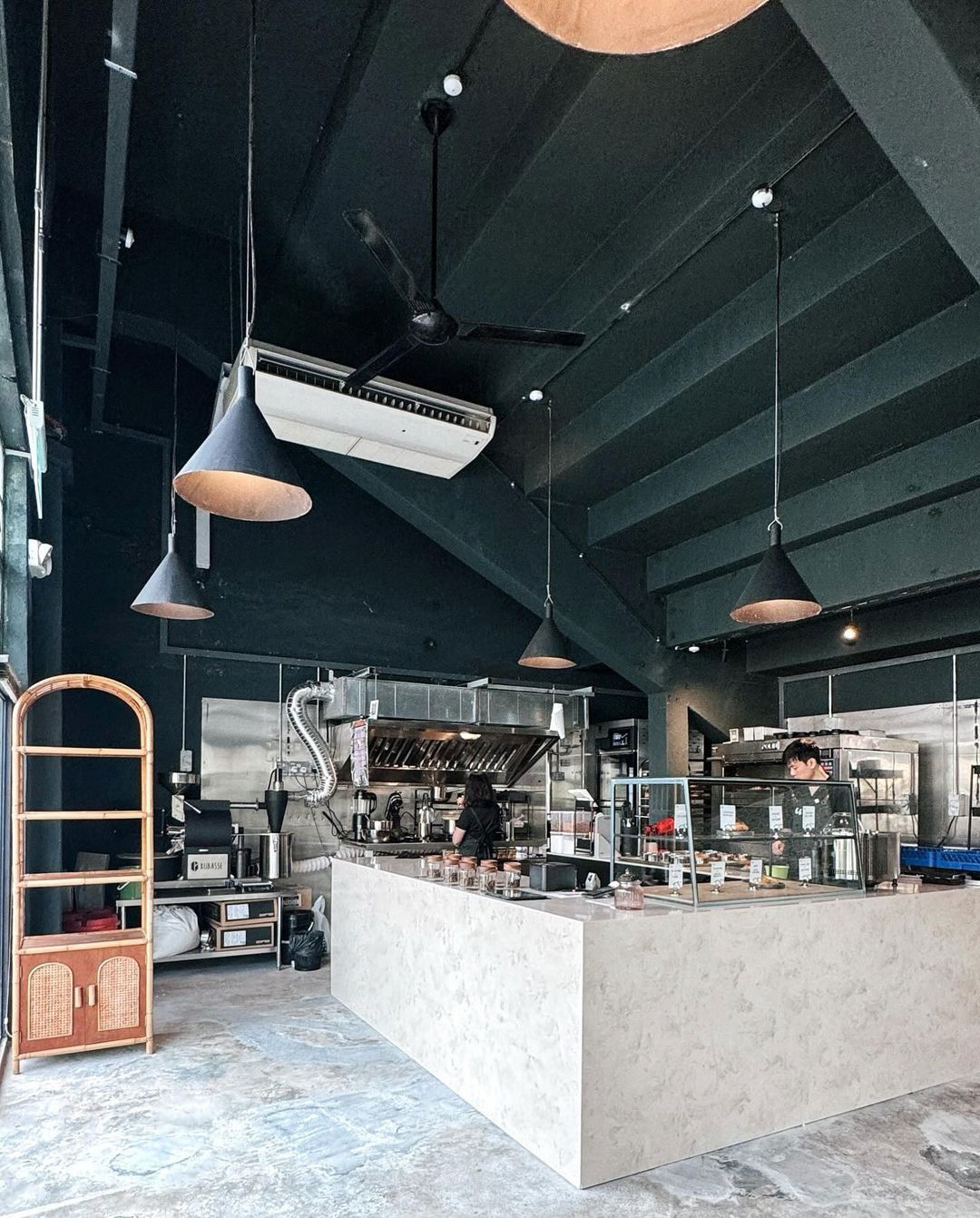
Restaurant in Singapore, Singapore
Vernacular Coffee
100ptsOrigin-to-Counter Roasting

About Vernacular Coffee
Singapore's third-wave coffee scene has its purists, and Vernacular Coffee sits at the serious end of that spectrum. The flagship outpost roasts its own beans in-house, positioning it among the city's craft-focused operators rather than the lifestyle-café set. For regulars, it functions less like a coffee shop and more like a standing appointment.
There is a particular type of Singapore coffee shop that announces itself without signage or spectacle. The space does the talking: a clean counter, the faint mineral smell of freshly ground beans, the low mechanical hum of a roaster somewhere in the back. Vernacular Coffee's flagship outpost belongs to that category, where the room is spare enough that the coffee itself has nowhere to hide.
Where Vernacular Sits in Singapore's Coffee Tier
Singapore's specialty coffee scene has matured considerably over the past decade, splitting into two broad camps. The first is café culture as lifestyle product: photogenic interiors, matcha lattes, and menus that treat coffee as one item among many. The second is the craft operator, defined by sourcing transparency, in-house roasting, and a counter culture where the barista's knowledge is part of what you are paying for. Vernacular Coffee operates firmly in the second tier.
In-house roasting is the key differentiator at this level. It places a café in a different competitive conversation than venues that source from third-party roasters, however good those roasters may be. The decision to roast on-site carries logistical weight — equipment investment, space allocation, sourcing relationships — and signals a particular kind of commitment to controlling the final cup from green bean to extraction. Among Singapore's coffee-focused independents, that vertical approach remains a minority position, which is why regulars at venues like Vernacular tend to treat the space as something closer to a wine bar than a café: a place where the product has provenance, and where the person making your drink can account for it.
For context on how Singapore's broader dining and drinking scene layers its specialists, our full Singapore restaurants guide maps the city's options across price and category. The fine-dining tier , houses like Odette (French Contemporary), Les Amis (French), and Zén (European Contemporary) , occupies one end of the specialist spectrum. Vernacular Coffee sits at the other: lower price point, walk-in format, but the same underlying logic of depth over breadth.
What Keeps Regulars Returning
The regulars' relationship with a serious coffee counter is different from the one formed at a neighbourhood café. It is built around repeatability and specificity. A customer who returns weekly to the same in-house roaster is, in effect, tracking the roaster's decisions across batches and origins. When a new single-origin lot appears on the board, it reads as an event rather than a menu update. That dynamic , coffee as an ongoing conversation rather than a transactional product , is what separates a place with a loyal following from one with high foot traffic.
At the craft coffee level in Singapore, regulars also tend to arrive with a degree of fluency. They know the difference between a washed and a natural process. They have preferences about brew method. Some will specify dose and yield. This is not the majority of any café's clientele, but it is the core that sustains a specialist operator, and it shapes the atmosphere in ways that are immediately legible to anyone who walks in with similar knowledge. There is a calibration that happens at a serious counter , a shorthand between barista and customer , that simply does not exist at scale-focused operations.
Singapore's café scene includes a wide range of operators across the city's neighbourhoods. Options like Cicheti in Rochor and Béni in Orchard illustrate how the city's independent hospitality operators cluster around district character. Vernacular's flagship format follows a similar logic: the space is a fixed point of reference for a particular kind of customer, not a scalable hospitality concept.
The In-House Roasting Argument
The decision to roast beans on-site is worth unpacking in detail, because it changes what the café actually is. A venue that purchases from an external roaster, even an excellent one, is essentially a retailer of someone else's product at the point of extraction. An in-house roaster is making a claim about the full chain of quality. The beans were sourced directly or through established relationships. The roast profile was developed in-house. The resting period was controlled. When something goes wrong with the cup, there is no one else to attribute it to.
That accountability is part of the appeal for regulars. It also means the product has more variation than a café running a fixed commercial blend: different harvests, different origins, different roast decisions across the year. For customers who find that kind of variation interesting rather than inconsistent, an in-house roaster functions as a standing reason to return. The menu at a place like Vernacular is not static, even if the format is.
Compare that to Singapore's hawker coffee tradition , the kopi culture anchored in places like KTMW chicken rice tea-cafe in Bedok , where the product is deliberately consistent, often roasted with sugar and butter, and tied to a very specific local identity. Specialty coffee operators in Singapore exist in conscious contrast to that tradition, serving a different type of customer and making a different kind of product claim. Neither is more legitimate; they are simply different responses to what coffee can be.
Planning a Visit
Vernacular Coffee's flagship operates as a walk-in venue in the craft coffee format: no reservations, counter service, and a pace determined by the queue rather than a booking system. The leading time to visit, as with most serious coffee counters in Singapore, is mid-morning on a weekday, when the post-breakfast rush has cleared and the afternoon crowd has not yet arrived. Address and operating hours should be confirmed directly through current listings or the venue's own channels, as these details are not fixed in the public record at time of publication.
For visitors building a broader Singapore itinerary alongside a stop at Vernacular, the city's dining range extends well beyond coffee. The fine-dining tier includes Jaan by Kirk Westaway (British Contemporary) and Meta (Innovative) at the ambitious end, while more casual neighbourhood options span from Ah Ter Teochew Fishball Noodles in Downtown Core to Etna Restaurant in Outram and Little Italy in Marine Parade. For reference points outside Singapore, the craft-focused operator model has parallels in venues like Lazy Bear in San Francisco, where commitment to a specific product philosophy drives a loyal returning clientele.
Frequently Asked Questions
- What dish is Vernacular Coffee (flagship outpost) famous for?
- Vernacular Coffee is a coffee-specialist operation rather than a food-focused venue. Its primary draw is the in-house roasting program, which positions it in a different category from cafés with signature food items. The menu centres on the coffee itself, with the selection varying by batch and origin. For Singapore venues with notable signature dishes, see options like Odette or Les Amis at the fine-dining level.
- Do I need a reservation for Vernacular Coffee (flagship outpost)?
- Vernacular Coffee operates in the walk-in format standard to Singapore's specialty coffee sector, meaning no reservation is required or available. Timing matters more than advance planning: weekday mid-mornings typically offer the most relaxed experience. Given the flagship's craft-focused positioning in Singapore's coffee scene, it draws a consistent local following, so some wait should be expected during peak periods.
- Does Vernacular Coffee roast its beans on-site, and what does that mean for the product?
- Yes, Vernacular Coffee roasts beans in-house at the flagship, which places it in a distinct tier within Singapore's specialty coffee market. In-house roasting means the venue controls quality across the full chain, from sourcing to roast profile to extraction, and typically results in a rotating selection tied to seasonal harvests and origin availability rather than a fixed commercial blend. For customers interested in single-origin coffee or traceability, that model offers a different kind of engagement than cafés working with external roasters. It also means the menu has built-in variation across visits, which is one of the primary reasons the venue develops a repeat-visit following in Singapore's craft coffee community.
More restaurants in Singapore
- Burnt EndsTatler's 2025 Restaurant of the Year and a World's 50 Best fixture, Burnt Ends is Singapore's most compelling case for fire-forward cooking. Bookings are near-impossible — plan three to four weeks ahead minimum. At $$$, the combination of Dave Pynt's dry-aged steaks, a four-tonne wood-fired oven, and a sharp, relaxed floor earns the price. Counter seats are the move for returning guests.
- OdetteOdette holds three Michelin stars, a Pearl 3 Diamond rating, and ranked #7 in Asia on the World's 50 Best list in 2025. Julien Royer's French contemporary tasting menu at the National Gallery Singapore draws on Southeast Asian and Japanese produce within a classically French framework. At $$$$ per head with near-impossible booking difficulty, this is Singapore's most decorated table and should be prioritised before you book your flights.
- Les AmisLes Amis holds three Michelin stars, Asia's 50 Best #28, and one of the largest wine cellars in Asia — making it Singapore's most credentialled French fine dining address. The seven-course degustation with wine pairing is the move. Book as far ahead as possible; this is near impossible to secure at short notice.
- Jaan by Kirk WestawayJaan by Kirk Westaway holds two Michelin stars, an Asia's 50 Best #77 ranking, and a Les Grandes Tables du Monde listing — all at the $$$ tier, which makes it one of Singapore's stronger value cases in top-tier fine dining. The "Reinventing British" tasting menu, served on Level 70 with panoramic city views, demands an early reservation: book four to six weeks out minimum.
- ZénZén holds three Michelin stars, 97.5 La Liste points, and an OAD Asia #3 ranking — the credentialing case for booking it is as strong as anything in Singapore. Chef Martin Öfner runs a Scandinavian-European tasting menu out of a Bukit Pasoh shophouse, Wednesday to Saturday only. Book months in advance; this is one of the hardest tables in the city to secure.
- MetaMeta is one of Singapore's strongest cases for a $$$-tier tasting menu: two Michelin stars, a top-40 position in World's 50 Best Asia (2025), and consistent OAD Asia rankings since 2023. Chef Sun Kim's Korean-rooted, globally informed cooking on Mohamed Sultan Road is serious competition for anything in the city at any price. Book weeks ahead — availability is near impossible at short notice.
Related editorial
- Asia's 50 Best Restaurants 2026: The Chairman and Wing Go 1-2 from the Same BuildingThe Chairman takes No. 1 and Wing climbs to No. 2 at Asia's 50 Best Restaurants 2026. Both operate from the same Hong Kong building. Here's what it means.
- Four Seasons Yachts Debut: 95 Suites, 11 Restaurants, and a March 2026 Maiden VoyageFour Seasons I launches March 20, 2026, with 95 suites, a one-to-one staff ratio, and 11 onboard restaurants. Worth tracking if you want hotel-grade service at sea.
- LA Michelin Guide 2026: Seven New Restaurants from Tlayudas to Uzbek DumplingsMichelin's March 2026 California Guide update adds six LA restaurants and one Montecito newcomer, spanning Oaxacan tlayudas, Uzbek manti, and Korean-Italian pasta.
Save or rate Vernacular Coffee on Pearl
Keep this venue in your Pearl passport, rate it after you visit, and track it alongside every other place you collect.