
Tosokchon Samgyetang
Ginseng Chicken Soup · 효자동, Seoul
Restaurant in Seoul, South Korea
 Book with Pearl
The Read
Heritage Ginseng Table
Price
$10–20per person
Chef
Various
Dress
Casual
Why go
Tosokchon Samgyetang has held a position on the Opinionated About Dining Casual in Asia list three consecutive years running, and its reputation rests on one dish done with discipline. Book it as your casual Seoul anchor: ginseng chicken soup with real sourcing intent, walk-in friendly, and open daily from 10 am. Skip it only if single-dish formats are not your preference.
About Tosokchon Samgyetang
Is Tosokchon Samgyetang worth the queue?
Yes, with conditions. If you are visiting Seoul for the first time and want a single meal that connects you directly to Korean everyday food culture, Tosokchon Samgyetang is the right call. It has held a position on the Opinionated About Dining Casual in Asia list three years running, ranked #100 in 2023, #121 in 2024, and climbing to #148 in 2025, which confirms it is drawing serious eaters alongside the tourist crowd. The format is narrow: one dish, done with discipline. Come for the samgyetang, not for range.
What you are booking
Tosokchon built its reputation on a single-minded focus. Samgyetang, a whole young chicken slow-simmered in a broth with ginseng, jujube, garlic, and glutinous rice, is a dish where the quality of ingredients determines almost everything. Ginseng is the ingredient that separates a credible samgyetang from a pedestrian one. The version here centres on that sourcing logic: the broth should carry a clear, slightly bitter mineral quality from proper ginseng, and the rice should absorb the chicken fat gradually as you eat, which means pace matters at this table. For a first-timer, know that you are not ordering from a menu. You are ordering samgyetang, and the kitchen's job is to execute it faithfully. The dish arrives intact and you pull it apart yourself at the table, which is standard for the format.
The restaurant is open seven days a week, 10 am to 10 pm, which gives you real flexibility in planning around the rest of your Seoul itinerary. The address is 5 Jahamun-ro 5-gil, in the Chebu-dong area near Gyeongbokgung Palace, a part of Seoul that draws both locals and visitors throughout the day. If you are also exploring the palace or the nearby Bukchon Hanok Village, this fits naturally into a morning or afternoon on that side of the city.
The sourcing argument
In a dish with so few components, the ginseng is not a supporting ingredient. It is the point. Good samgyetang broth requires ginseng that has been properly prepared, contributing depth without bitterness that overwhelms. The jujubes add a quiet sweetness, the garlic grounds the broth, and the glutinous rice binds it all as the meal progresses. At a venue that has been cooking this dish long enough to hold consistent OAD recognition across three consecutive years, the sourcing decisions behind those ingredients are the reason the dish performs. For a first-time visitor comparing this to other samgyetang options in Seoul, the OAD Casual Asia ranking offers a useful external check: this is not a tourist trap with an old reputation, but a place that continues to be assessed and ranked by serious food-focused evaluators.
Volume at that level with a maintained rating suggests consistent execution rather than occasional brilliance.
Know Before You Go
- Address: 5 Jahamun-ro 5-gil, Seoul, South Korea
- Hours: Monday to Sunday, 10 am – 10 pm
- Booking difficulty: Easy — walk-ins are the norm here; no reservation system is typically required for this format
- Price range: Not listed in our data, but samgyetang restaurants in this tier typically price per bowl; expect a modest per-head spend relative to Seoul's fine dining options
- Awards: OAD Casual in Asia: #100 (2023), #121 (2024), #148 (2025)
- Dress code: Casual — this is a working lunch spot, not a formal dining room
- Leading for: Solo diners, pairs, small groups; the format works at any table size
How It Compares
See the comparison section below for how Tosokchon sits against Seoul's wider restaurant scene.
Explore More in Seoul and Beyond
If Tosokchon anchors your casual end of the Seoul trip, you may want to balance it with something from the city's more ambitious end. Mingles and Jungsik are the right comparisons at the contemporary Korean end. For innovative tasting menus, Soigné and alla prima cover that territory. Kwonsooksoo sits closer to the traditional Korean end with a more formal execution. Beyond Seoul, Mori in Busan and Double T Dining in Gangneung are worth knowing if you are extending the trip.
For full Seoul planning, see our Seoul restaurants guide, Seoul hotels guide, Seoul bars guide, Seoul wineries guide, and Seoul experiences guide. If you are exploring beyond the capital, Doosoogobang in Suwon, Injegol in Inje County, and Pool House in Incheon offer strong regional options. For international context on what serious single-dish focus looks like elsewhere, Le Bernardin in New York City and Lazy Bear in San Francisco show how format discipline translates across very different culinary registers.
Planning details
- Hours
- Monday: 10 am–10 pm · Tuesday: 10 am–10 pm
- Location
- 5 Jahamun-ro 5-gil, Jongno-gu, Seoul, South Korea
- Reservations
- Book on the venue's website
- Phone
- +82 2-737-7444
The take
The Take
The Vibe
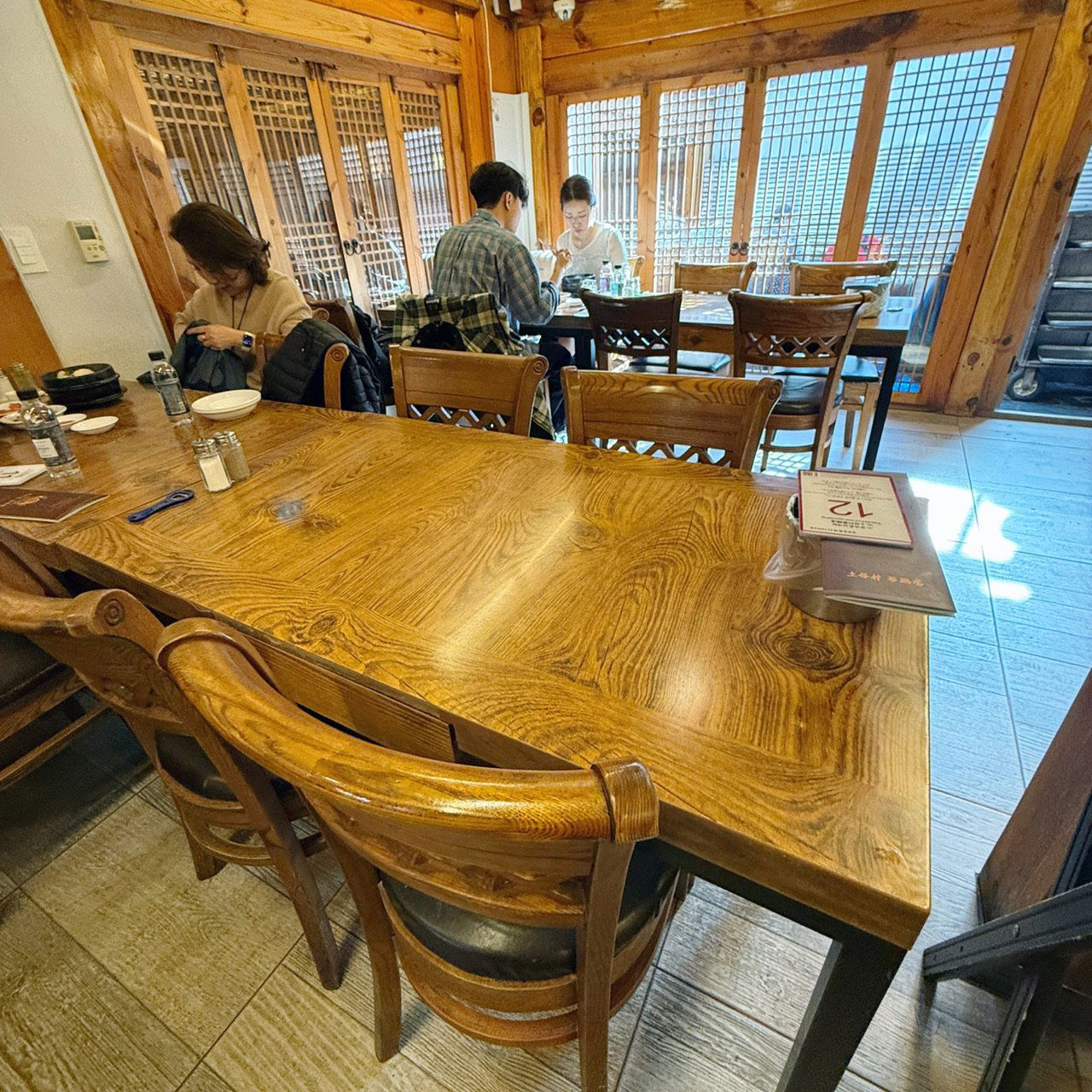
Tosokchon Samgyetang presents a distinctly historic and traditionally rooted atmosphere. A striking hanok entrance ushers diners into a space that leans on Seoul’s architectural past while the kitchen sustains a single-minded focus on a classic Korean restorative: samgyetang. Inside, servers move briskly between low tables and Western seating, and the steady steam of simmering broth creates a warm, aromatic presence throughout the dining room. Founded in 1983, the restaurant reads as an institutional, culturally resonant stop where careful technique and long-cultivated recipes meet a bustling, authentic setting.
Best For
This is primarily a place for straightforward, restorative meals enjoyed by locals and visitors alike. The menu centers on variations of samgyetang—its flagship dish—so it suits family outings and casual gatherings focused on shared, comforting Korean classics. Diners come year-round, and the restaurant’s reputation and high-volume service model make it a reliable choice for satisfying lunch or dinner meals rooted in tradition. Proximity to Gyeongbokgung Palace also makes it an accessible stop for those exploring the neighborhood’s historic sites.
Ordering Tips
Stick to what Tosokchon is known for: order the flagship Samgyetang (young chicken with glutinous rice, whole ginseng, garlic and jujube) and consider the Black Chicken Samgyetang variation if you want a different take on the signature soup. The kitchen uses four-year-old ginseng, jujube and ginkgo nuts for a clear, nutty, medicinal broth—expect piping-hot bowls with aromatic garlic and tender meat. The menu also includes a handful of traditional accompaniments and items like haemul pajeon; these pair naturally with the soup-focused menu.
Venue details
Ambiance
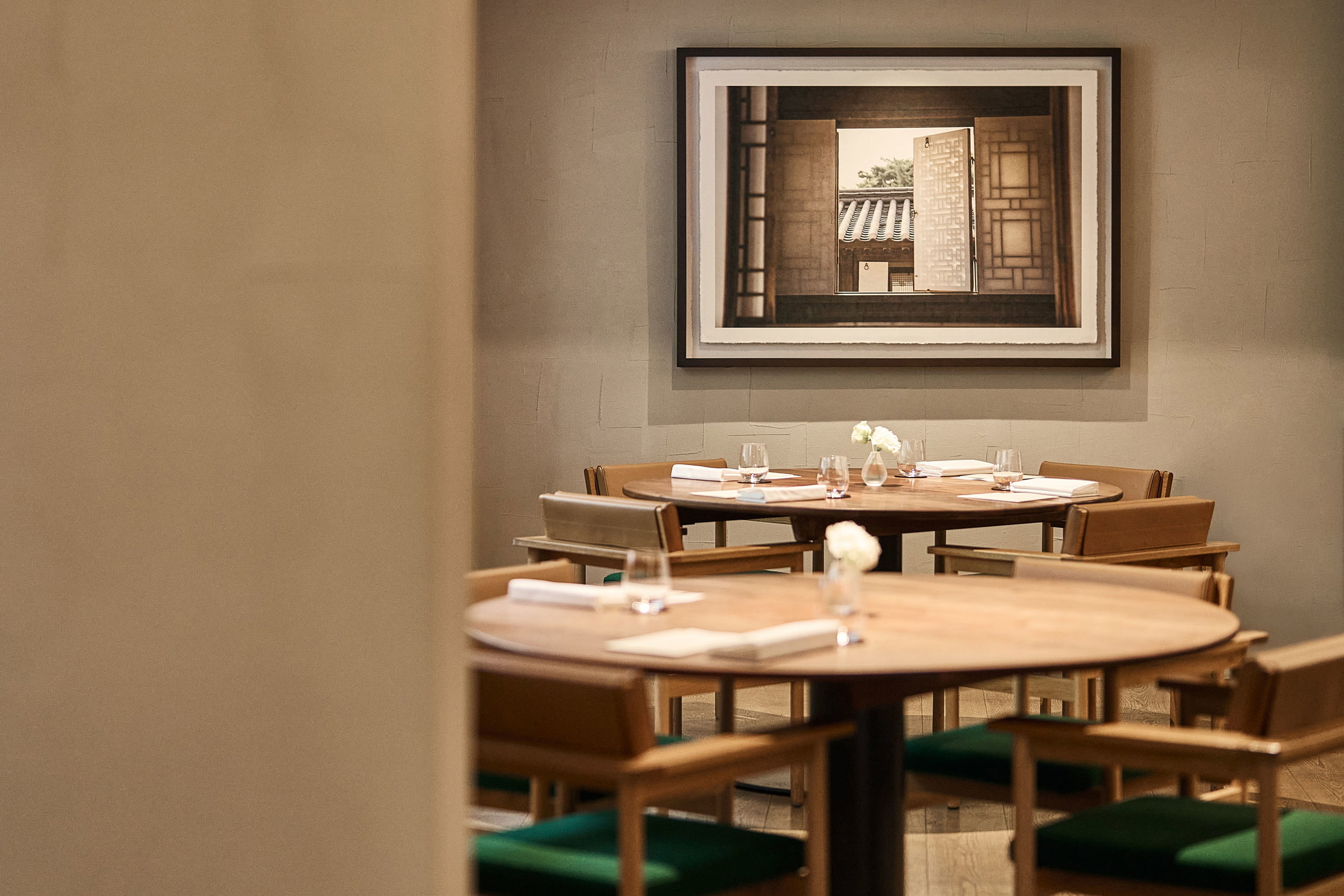
Traditional hanok-style interior with pretty decor, fans for comfort, and a bustling atmosphere.
Tags
Vibe
Best For
Experience
Sourcing
At the Table
- Dress Code
- Casual
- Noise Level
- Lively
- Service Style
- Casual
- Meal Pacing
- Standard
- Capacity
- Large
- Kitchen
- Traditional
- Menu Format
- A la carte
- Drinks Focus
- Ginseng wine
Signature Dishes
- Samgyetang
- Black Chicken Samgyetang
- Haemul Pajeon
Know before you go
Know Before You Go
- Getting there
- 5 Jahamun-ro 5-gil, Jongno-gu, Seoul, South Korea
Planning details
Hours
- Monday
- 10 am–10 pm
- Tuesday
- 10 am–10 pm
- Wednesday
- 10 am–10 pm
- Thursday
- 10 am–10 pm
- Friday
- 10 am–10 pm
- Saturday
- 10 am–10 pm
- Sunday
- 10 am–10 pm
Location
5 Jahamun-ro 5-gil, Jongno-gu, Seoul, South Korea · Directions

Also consider
Also Consider
- 7th Door, Korean, Contemporary, ₩₩₩₩
- Solbam, Contemporary, ₩₩₩₩
- Onjium, Korean, ₩₩₩₩
- L'Amitié, French, ₩₩₩
- Zero Complex, Korean-French, Innovative, ₩₩₩₩
Restaurant context
Tosokchon occupies a completely different tier and format from Seoul's ₩₩₩₩ contemporary Korean restaurants. Comparing it directly to 7th Door, Solbam, Onjium, or Zero Complex is the wrong frame. Those are tasting-menu experiences with multi-course ambitions and corresponding price points. Tosokchon is a single-dish specialist in the casual category, and it earns its OAD Casual Asia ranking precisely because it does not try to be anything else. If your Seoul trip includes one serious tasting menu and you want to balance it with something grounded in everyday Korean food culture, Tosokchon is the right counterpart, not a competitor.
Within the casual end of the Seoul dining spectrum, Tosokchon's clearest advantage is format clarity and booking ease. Walk-in access, daily hours from 10 am to 10 pm, and a menu that requires no decision-making make it the lowest-friction high-quality meal in the city for a first-time visitor. L'Amitié at ₩₩₩ sits closer in price range but operates in a completely different culinary register (French), so the overlap is minimal. If you are choosing between spending your casual meal budget at Tosokchon or at a mid-tier Korean barbecue spot, Tosokchon wins on the strength of its OAD recognition and the sourcing discipline behind its broth.
For visitors building a full Seoul restaurant itinerary, the practical recommendation is this: use Tosokchon for a daytime meal early in your trip, and pair it with one of Seoul's stronger contemporary Korean options for your evening anchor. Onjium is the right call if you want a formal exploration of traditional Korean cuisine. 7th Door or Zero Complex work better if you want Korean-influenced innovation. Tosokchon does not compete with those meals; it complements them.
Explore Seoul
Around this place
Discover more on Pearl
Unlock the full Tosokchon Samgyetang guide in Pearl, including awards, comparisons, FAQs, planning details, and nearby places.
Compare Tosokchon Samgyetang
| Venue | Location | Cuisine | Awards | Price |
|---|---|---|---|---|
| Tosokchon Samgyetang | Seoul | Ginseng Chicken Soup | 2026 OAD Casual in Asia Highly Recommended2025 OAD Casual in Asia Ranked · #1482024 OAD Casual in Asia Ranked · #1212023 OAD Casual in Asia Ranked · #100 | , |
| 7th Door | Seoul | Korean, Contemporary | 2026 Asia's 50 Best Restaurants · #492026 OAD Top Restaurants in Asia Ranked · #842026 Black Pearl 1 DiamondMichelin Guide Seoul & Busan 20262026 La Liste Top Restaurants2025 Asia's 50 Best Restaurants · #232025 Michelin 1 Star2025 La Liste Top Restaurants2024 OAD Top Restaurants in Asia Ranked · #192 | ₩₩₩₩ |
| Solbam | Seoul | Contemporary | 2026 Asia's 50 Best Restaurants · #552026 Wine Spectator Best of Award of Excellence2026 OAD Top Restaurants in Asia RecommendedMichelin Guide Seoul & Busan 20262026 La Liste Top Restaurants2025 Asia's 50 Best Restaurants · #552025 OAD Top Restaurants in Asia Ranked · #277Tatler Best Restaurants Asia-Pacific 20252025 Wine Spectator Best of Award of Excellence | ₩₩₩₩ |
| Onjium | Seoul | Korean | 2026 Asia's 50 Best Restaurants · #142026 OAD Top Restaurants in Asia Ranked · #852026 La Liste Top RestaurantsMichelin Guide Seoul & Busan 20262026 Wine Spectator Best of Award of Excellence2025 Asia's 50 Best Restaurants · #102025 World's 50 Best Restaurants · #572025 OAD Top Restaurants in Asia Ranked · #1342025 La Liste Top Restaurants | ₩₩₩₩ |
| L'Amitié | Seoul | French | 2026 La Liste Top Restaurants2025 La Liste Top Restaurants2025 Michelin 1 Star2024 Michelin 1 Star | ₩₩₩ |
| Zero Complex | Seoul | Korean-French, Innovative | Star Wine Lists 20262026 OAD Top Restaurants in Asia Recommended2026 La Liste Top Restaurants2025 OAD Top Restaurants in Asia Ranked · #1992025 La Liste Top Restaurants2025 Michelin 1 Star2025 The Best Chef One Knife2024 OAD Top Restaurants in Asia Ranked · #2792024 Michelin 1 Star | ₩₩₩₩ |









How Tosokchon Samgyetang Seoul compares with similar nearby venues.
FAQ
Frequently Asked Questions
How far ahead should I book Tosokchon Samgyetang?
Tosokchon does not take reservations — it is walk-in only. That means your planning is about timing, not booking. Arrive before 11am on weekdays to avoid the worst of the queue; weekends and public holidays see lines that can stretch past an hour. Factor this into your Seoul itinerary rather than assuming you can drop in mid-afternoon.
Is lunch or dinner better at Tosokchon Samgyetang?
Lunch is the practical choice: the queue is more predictable early, you can be out well before peak midday crowds hit, and samgyetang is traditionally a daytime restorative in Korean food culture. Dinner works fine — the kitchen runs until 10pm daily — but there is no meaningful difference in what arrives in the bowl. Go early if queue time matters to you.
What should I order at Tosokchon Samgyetang?
The menu is built around samgyetang: a whole young chicken simmered with ginseng, jujube, and garlic. That is what Tosokchon's three consecutive Opinionated About Dining Casual Asia rankings (2023–2025) reflect, and it is what the kitchen does exclusively. Order it, add the accompanying kimchi and salt on the side, and do not expect a broad menu — this is a one-dish operation.
Can Tosokchon Samgyetang accommodate groups?
Yes, but manage expectations on logistics. The dining room is large by Seoul standards, so groups of four to six can usually be seated together once you clear the queue. Larger groups should split arrival times slightly to avoid a long collective wait. There are no private rooms or booking options to coordinate around.
Is Tosokchon Samgyetang good for solo dining?
It is one of the more comfortable solo dining options in Seoul's traditional food scene — the format is single-bowl, the pace is quick, and counter-style seating means you will not feel out of place eating alone. Solo diners often clear the queue faster than groups. If you want a low-friction, high-signal meal on your own, this works well.