.png?width=1200&quality=80)
Bongsanok
Mandu · 이태원동, Seoul
Restaurant in Seoul, South Korea
 Book with Pearl
The Read
Bogwang-ro Mandu Craft
Price
$10–20per person
Dress
Casual
Why go
Bongsanok holds Michelin Bib Gourmand recognition for 2024 and Michelin Selected recognition for 2025 and — at ₩ pricing in Yongsan District, Seoul. It is one of the city's clearest value cases for mandu, and booking difficulty is rated Easy. Aim for early lunch to avoid peak waits.
About Bongsanok
Bongsanok: Seoul's Michelin-Recognised Mandu Spot Worth Planning Around
Seats at Bongsanok move quickly. If you are visiting Seoul and mandu is on your list, book this before you land, not after you arrive.
What Bongsanok Is
Bongsanok specialises in mandu, the Korean dumpling tradition that spans everything from hand-folded steamed dumplings to pan-fried and boiled variations. The ₩ price range puts this firmly in the accessible bracket — you are not paying fine-dining prices for Michelin-acknowledged cooking, which is the core of its appeal. For the food-focused traveller who wants to understand Korean cuisine at its most elemental, a meal focused entirely on mandu at this level of recognition is a more instructive use of time than a tasting menu that layers international technique over Korean ingredients.
The Yongsan District address places it in a part of Seoul that rewards walking and exploration. Itaewon and its surroundings have long attracted a mix of international residents and local professionals, and the neighbourhood energy around Bogwang-ro is lower-key than the tourist-heavy corridors of Myeongdong or Insadong. If you are managing a tight itinerary, treat reservation confirmation, or early arrival, as non-negotiable.
The Experience on the Ground
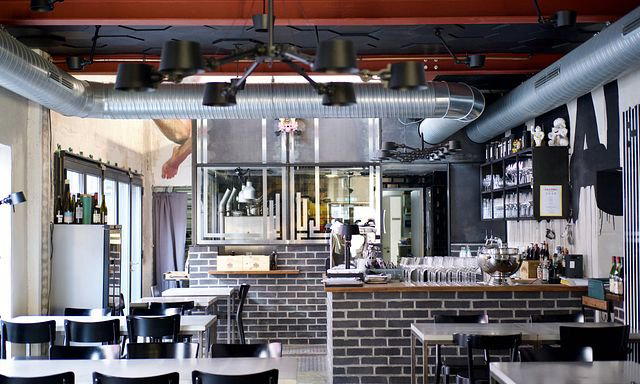
Mandu restaurants in Seoul tend to run busy and informal. The format at neighbourhood-level spots in this price tier is typically counter-adjacent seating, shared tables, or compact dining rooms where the ambient noise reflects genuine turnover rather than engineered atmosphere. At Bongsanok, the energy is working-lunch rather than contemplative, this is a place where the food is the experience, not the room. If you are looking for a quieter setting for a considered conversation, adjust your expectations accordingly; if you want to eat well and efficiently in a room that feels genuinely local, that same energy works in your favour.
For the explorer who travels specifically to eat, the practical upside here is significant: you can eat exceptionally well at Bongsanok for a fraction of what Seoul's ₩₩₩₩ restaurants charge, and the Michelin Plate signals that the quality differential between this and more expensive options is narrower than the price gap implies. Compare this to venues like Mingles, which operates at a much higher price point and requires considerably more planning to book, Bongsanok's ₩ pricing and relatively accessible booking profile make it a high-value anchor for a Seoul food itinerary.
Takeout and Delivery: Does Bongsanok Travel?
Mandu is one of the Korean food formats that holds up reasonably well off-premise, steamed dumplings decline faster than pan-fried ones, but the latter retain texture and flavour better than most noodle or rice dishes when boxed. Whether Bongsanok formally offers takeout or delivery is not confirmed in available data, but the ₩ price tier and neighbourhood-restaurant format makes counter pickup a reasonable expectation at many comparable spots in Seoul. If eating in the dining room is not possible, whether due to wait times or schedule, it is worth asking directly about takeout on arrival. Mandu eaten within fifteen minutes of leaving the kitchen is still mandu at its finest; anything longer and the texture of steamed varieties begins to suffer. For delivery across any meaningful distance, pan-fried options travel more reliably than steamed.
For Seoul-based diners considering Bongsanok against other recognised mandu specialists, Gaeseong Mandu Koong, Jaha Son Mandu, Mandujip, and Mipildam each represent distinct approaches to the format and are worth cross-referencing depending on your district and schedule. If your Seoul trip extends beyond the capital, Mori in Busan and Double T Dining in Gangneung are worth noting for regional contrast.
Booking and Logistics
That accessibility is part of the value proposition: you do not need to plan weeks in advance in the way you would for a Michelin-starred tasting menu elsewhere. That said, peak meal times on weekends will draw queues, and the combination of high rating and neighbourhood foot traffic means spontaneous visits carry risk. A practical approach is to aim for early lunch service, typically the most available window at Seoul's busier casual spots, or to arrive at opening. Check for any online reservation option when planning your visit, and have a fallback from the mandu specialist shortlist above if timing does not work.
For broader Seoul planning, our full Seoul restaurants guide covers the full range of options across price tiers. If you are building out the rest of your trip, our Seoul hotels guide, bars guide, wineries guide, and experiences guide cover the surrounding decisions. For regional South Korea planning beyond the capital, Doosoogobang in Suwon, Injegol in Inje County, and Pool House in Incheon are all worth considering as day-trip anchors.
The Verdict
For the food traveller who wants to understand what Korean mandu looks like when it is done with genuine care, this is a high-confidence booking. The informal atmosphere and accessible price tier make it suitable as an everyday meal rather than a special-occasion destination, but the quality ceiling is higher than the setting implies. Book it early in your Seoul itinerary so you have the option to return.
Planning details
- Location
- 1 floor, 118 Bogwang-ro, Yongsan District, Seoul, South Korea
- Website
- instagram.com/bogwangjung_official
- Phone
- +82 10-3648-3118
The take
The Take
The Vibe
Bongsanok reads like a classic neighbourhood mandu shop that quietly resists the churn of Seoul’s dining scene. Set on a single ground-floor address along Bogwang-ro, it leans on repetition and familiarity rather than flash, and that steady craft earns it a Michelin Plate. The room is compact and unpretentious, the kind of place where local regulars keep the lights on and the menu anchored. Expect an intimate, casual atmosphere that values consistency and straightforward comfort over theatrical dining gestures.
Best For
This is a place for everyday, unfussy dining: solo lunches, quick dinners, and casual meetups with friends. Operating in the guide’s lowest price bracket, Bongsanok delivers Michelin-recognized cooking without tasting-menu formality, so it suits visitors who want well-made mandu and comforting Korean snacks at approachable prices. The tone is local and reliable rather than ceremonial, making it a good stop when you’re after authentic, expertly executed pan-Korean dumplings rather than a formal multi-course experience.
Ordering Tips
Stick to the house specialties and let the provenance speak for itself: the mandu (including the Mandukuk) and the Ojingeo Sundae are cited as signatures and are the clearest expressions of the kitchen’s craft. The restaurant’s Michelin Plate recognition and a very high Google rating underline consistent execution at an accessible price point, so order à la carte and sample a few of the staple items rather than expecting a tasting-menu progression. Prioritize the signature dumpling preparations to appreciate why this neighbourhood spot endures.
Venue details
Ambiance
Small casual eatery with light, comforting dishes in a cozy neighborhood setting.
Tags
Vibe
Best For
At the Table
- Dress Code
- Casual
- Noise Level
- Conversational
- Service Style
- Casual
- Meal Pacing
- Standard
- Capacity
- Small
- Kitchen
- Traditional
- Menu Format
- A la carte
Signature Dishes
- Mandukuk
- Ojingeo Sundae
Know before you go
Know Before You Go
- Getting there
- 1 floor, 118 Bogwang-ro, Yongsan District, Seoul, South Korea
Planning details
Location
1 floor, 118 Bogwang-ro, Yongsan District, Seoul, South Korea · Directions
Recognition and awards
Also consider
Also Consider
- 7th Door, Korean, Contemporary, ₩₩₩₩
- Solbam, Contemporary, ₩₩₩₩
- Onjium, Korean, ₩₩₩₩
- L'Amitié, French, ₩₩₩
- Zero Complex, Korean-French, Innovative, ₩₩₩₩
Restaurant context
Bongsanok sits in a different tier from most of Seoul's other Michelin-recognised dining. Where 7th Door, Solbam, Onjium, and Zero Complex all operate at ₩₩₩₩ with tasting-menu formats and the booking difficulty that accompanies them, Bongsanok is ₩ with Easy booking difficulty. That is not a consolation prize, it reflects a genuinely different format. If your priority is understanding Korean culinary tradition at its most direct, Bongsanok's mandu focus is more specific and arguably more instructive than a multi-course contemporary Korean menu that touches many techniques briefly.
For value comparison, L'Amitié at ₩₩₩ sits between Bongsanok and the ₩₩₩₩ tier, it is a better choice if you want French technique in Seoul rather than Korean tradition. Onjium is the strongest alternative if you want a deeply researched Korean dining experience at a higher price point, with a formal setting that suits special occasions better. Zero Complex is the pick if Korean-French fusion with a creative tasting menu is the goal. None of these are direct substitutes for Bongsanok, they serve different decisions.
The practical answer: book Bongsanok if you want Michelin-acknowledged mandu without the planning overhead or the cost of Seoul's upper tier. Book Onjium or 7th Door if you are planning a formal or celebratory meal and want a setting to match. The two categories do not compete, they answer different questions.
Explore Seoul
Around this place
Discover more on Pearl
Unlock the full Bongsanok guide in Pearl, including awards, comparisons, FAQs, planning details, and nearby places.
Compare Bongsanok
| Venue | Price | Booking Difficulty | Awards |
|---|---|---|---|
| Bongsanok | ₩ | Easy | No published awards |
| 7th Door | ₩₩₩₩ | Unknown | 2026 Asia's 50 Best Restaurants · #492026 OAD Top Restaurants in Asia Ranked · #842026 Black Pearl 1 DiamondMichelin Guide Seoul & Busan 20262026 La Liste Top Restaurants2025 Asia's 50 Best Restaurants · #232025 Michelin 1 Star2025 La Liste Top Restaurants2024 OAD Top Restaurants in Asia Ranked · #192 |
| Solbam | ₩₩₩₩ | Unknown | 2026 Asia's 50 Best Restaurants · #552026 Wine Spectator Best of Award of Excellence2026 OAD Top Restaurants in Asia RecommendedMichelin Guide Seoul & Busan 20262026 La Liste Top Restaurants2025 Asia's 50 Best Restaurants · #552025 OAD Top Restaurants in Asia Ranked · #277Tatler Best Restaurants Asia-Pacific 20252025 Wine Spectator Best of Award of Excellence |
| Onjium | ₩₩₩₩ | Unknown | 2026 Asia's 50 Best Restaurants · #142026 OAD Top Restaurants in Asia Ranked · #852026 La Liste Top RestaurantsMichelin Guide Seoul & Busan 20262026 Wine Spectator Best of Award of Excellence2025 Asia's 50 Best Restaurants · #102025 World's 50 Best Restaurants · #572025 OAD Top Restaurants in Asia Ranked · #1342025 La Liste Top Restaurants |
| L'Amitié | ₩₩₩ | Unknown | 2026 La Liste Top Restaurants2025 La Liste Top Restaurants2025 Michelin 1 Star2024 Michelin 1 Star |
| Zero Complex | ₩₩₩₩ | Unknown | Star Wine Lists 20262026 OAD Top Restaurants in Asia Recommended2026 La Liste Top Restaurants2025 OAD Top Restaurants in Asia Ranked · #1992025 La Liste Top Restaurants2025 Michelin 1 Star2025 The Best Chef One Knife2024 OAD Top Restaurants in Asia Ranked · #2792024 Michelin 1 Star |









Key differences to consider before you reserve.
FAQ
Frequently Asked Questions
Is Bongsanok good for a special occasion?
Only if the occasion calls for casual and low-key. For a celebratory meal with more ceremony, Onjium or L'Amitié suit the occasion better. Bongsanok is the right pick if the celebration is about eating well without fuss.
What are alternatives to Bongsanok in Seoul?
For a similar value-driven approach with Michelin recognition, Solbam is worth comparing. If you want to step up in formality and cuisine scope, Onjium offers Korean fine dining with documented credentials. Zero Complex suits groups looking for a broader food-and-drink format, while L'Amitié and 7th Door operate at higher price points with different cuisine profiles entirely.
Is Bongsanok worth the price?
Yes, straightforwardly. At this price tier, Bongsanok overdelivers relative to comparable neighbourhood mandu spots in Seoul that carry no equivalent recognition.
Can Bongsanok accommodate groups?
This is a single-floor neighbourhood mandu restaurant at 118 Bogwang-ro — the format points to modest capacity and fast table turnover rather than private dining infrastructure. Small groups of two to four should manage fine, but larger parties should plan around the likely tight seating and expect a busy, informal room rather than a reserved event setup.
What should I wear to Bongsanok?
Casual clothes are the right call. The ₩ price range and neighbourhood mandu format signal no dress expectations beyond everyday comfortable wear. Arriving in anything formal would be out of place here.
Is Bongsanok good for solo dining?
Yes. Casual mandu restaurants at this price tier and volume in Seoul are well-suited to solo diners — counter-adjacent seating, quick service, and no expectation of a full table make it easy to eat alone without friction.