
Restaurant in Santiago, Chile
Yumcha
330Pearl PointsTen courses, tea pairings, no wine list.


About Yumcha
Yumcha is not a dim sum restaurant — it is a 10-course pescatarian tasting menu in Providencia where every dish is paired with a different tea, blending Chinese and Chilean culinary traditions under Chef Nicolás Tapia. Book it if you want a structured, concept-driven evening that sits well outside Santiago's standard tasting menu circuit. Reservations are relatively easy to secure.
Verdict: Book Yumcha if the Concept Fits Your Trip
The most common misconception about Yumcha is that it is a dim sum restaurant. It is not. Chef Nicolás Tapia runs a 10-course pescatarian tasting menu in Providencia where every dish is paired with a different tea, drawing on Chinese and Chilean culinary traditions in a format that is closer in spirit to Atomix in New York City than to anything you would find in a Cantonese teahouse. If you arrive expecting pork dumplings and steamer baskets, you will be disoriented. If you arrive expecting an intimate, structured tasting experience with a coherent concept threading through every course, you will find exactly that.
Book it. The format is specific enough that it is not for every night out in Santiago, but if you are visiting as a food-focused traveler who wants something architecturally distinct from the modern Chilean canon, Yumcha earns its place on the itinerary.
The Room
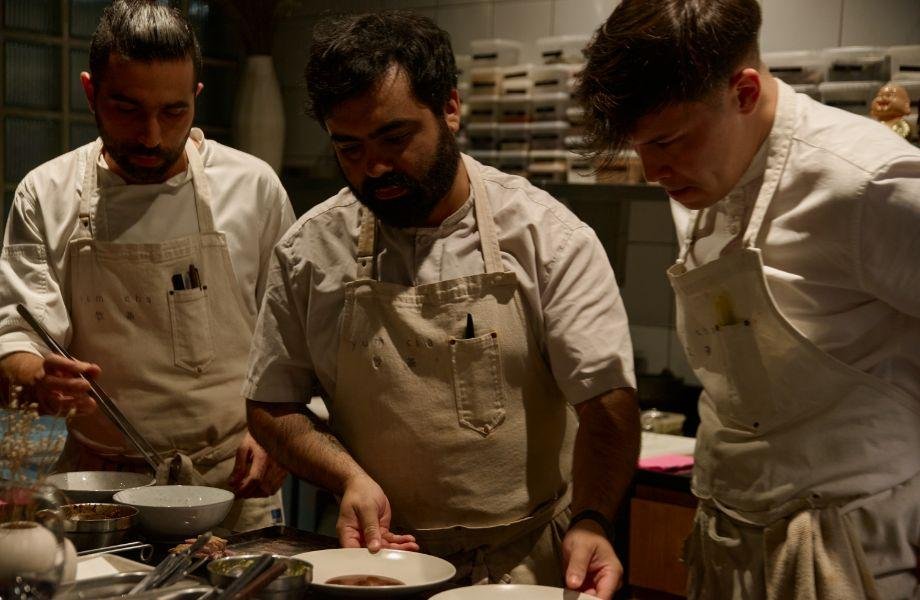
Yumcha operates in Providencia, one of Santiago's more residential and walkable neighborhoods. The dining room is intimate by design: this is a tasting menu operation, and the spatial experience reflects that. Expect a quiet, contained room that keeps the focus on the progression of courses and their tea pairings rather than on spectacle or social energy. This is not the venue for a large group celebration or a loud birthday dinner. It is better suited to two people who want to eat and pay close attention, or a small group of four who are genuinely interested in the concept. For reference, nearby Allería in Providencia offers a different but comparably intimate register if the tea-pairing format is not what you are after.
The Concept and What to Expect Seasonally
The structure of the menu at Yumcha is the point. Ten courses, each paired with a distinct tea rather than wine, built around pescatarian ingredients that reflect the intersection of Chilean coastal produce and Chinese culinary technique. Chef Tapia's framing is deliberate: tea is not a novelty here, it is the primary beverage architecture of the meal.
Because the menu is a tasting format, seasonal rotation is built into the logic of the experience. Chilean seafood availability shifts meaningfully across the year: colder months in the south push different species to market, and summer brings lighter, more delicate options from Pacific coastal waters. What this means practically is that the experience you have in June will differ from the one in November, and returning guests report that the tea pairings shift to track those ingredient changes. If you are planning around a specific season, austral summer (December through February) tends to bring lighter preparations; winter (June through August) often tilts toward more structured, warming dishes. Neither window is wrong, but they are different meals. For a comparable commitment to seasonal ingredient logic in Santiago, Boragó is the reference point, though its approach is rooted in native Chilean botanicals rather than a cross-cultural tea structure.
For the food-focused traveler who has already visited the expected stops on Santiago's tasting menu circuit, Yumcha's differentiation is real. The tea pairing format is not common in South America at this level, and the pescatarian constraint, rather than limiting the menu, tends to sharpen it. If you have eaten at 99 Restaurante or Demencia and want something that sits outside the Chilean-produce-forward tasting menu archetype, this is a logical next choice.
How It Fits a Santiago Itinerary
Yumcha makes most sense as a destination dinner rather than a spontaneous choice. The 10-course format requires a full evening, and the tea pairing structure means you should arrive ready to engage with the progression rather than skip ahead. It is not a venue where you can drop in for two courses and leave. Plan accordingly.
If your Santiago trip includes broader exploration, the city's dining scene has enough depth to support several strong evenings. See our full Santiago restaurants guide for the wider picture, and check our full Santiago hotels guide, bars guide, and experiences guide if you are building a longer itinerary. For wine-focused travelers, our Santiago wineries guide covers the day-trip options from the city.
Further afield in Chile, the dining programs at Awasi Atacama and Awasi Patagonia offer comparable attention to ingredient provenance in radically different landscapes, as does CasaMolle in El Molle and Clos Apalta Residence in wine country. For Asian-inflected fine dining in Santiago, Naoki in Vitacura is worth knowing about as a counterpoint, though the format and price point differ.
Practical Details
Reservations: Booking is relatively easy compared to the harder-to-secure Santiago tasting menus; reserve in advance to confirm availability, but this is not a months-out situation. Format: 10-course pescatarian tasting menu with tea pairings throughout. Group size: Leading for parties of 2 to 4; the intimate room is not suited to large groups. Dietary note: The menu is pescatarian by design, which is the concept rather than an accommodation. Confirm any additional restrictions directly with the venue when booking. Location: La Herradura 2722, Providencia, Santiago.
FAQs
Does Yumcha handle dietary restrictions?
The menu is pescatarian throughout — that is the structure of the concept, not a flexible option. If you eat seafood and fish, the format works. If you are fully vegetarian or vegan, confirm with the restaurant directly before booking, as the menu may or may not accommodate that depending on the current seasonal lineup. Guests with shellfish or other specific seafood allergies should also verify in advance. The 10-course format leaves limited room for ad hoc substitutions, so the clearest advice is to contact the restaurant before you commit.
What should I order at Yumcha?
There is no à la carte menu. Chef Nicolás Tapia's tasting menu is a fixed 10-course pescatarian progression, and every course comes with a tea pairing selected to complement the dish. You are not choosing individual items — you are committing to the full sequence. The closest decision you make is timing: because the menu rotates seasonally with Chilean seafood availability, austral summer (December to February) and winter (June to August) deliver meaningfully different menus. If you have a preference for lighter, more delicate preparations, summer is the better window. If you want something with more structure and weight, the winter menu tends in that direction. For a sense of how tea-forward tasting menus work at the highest level internationally, Le Bernardin in New York City offers a useful reference point for the pescatarian fine dining category, though the format and cultural framing at Yumcha are entirely different.
Frequently Asked Questions
Does Yumcha handle dietary restrictions?
The menu is pescatarian across all ten courses, so committed meat-eaters will want to confirm that format works before booking. Vegans and guests with specific allergies should check the venue's official channels before reserving, as each course is pre-set and tea-paired — there is no à la carte fallback. This is a fixed-structure experience built around Chef Nicolás Tapia's concept, not a kitchen that builds menus to individual preference on the night.
What should I order at Yumcha?
There is no ordering at Yumcha: the format is a single 10-course pescatarian tasting menu, with each course paired to a specific tea. Choosing this restaurant is itself the decision — you are committing to Nicolás Tapia's full sequence, not selecting dishes. If you want flexibility or à la carte options, a different Santiago restaurant is the better fit.
What is Yumcha known for?
Yumcha is primarily known for its core concept and execution in Santiago.
Where is Yumcha located?
Yumcha is located in Santiago, at La Herradura 2722, 7530001 Providencia, Región Metropolitana, Chile.
Location
La Herradura 2722, 7530001 Providencia, Región Metropolitana, Chile
Santiago, Chile
Compare Yumcha
| Venue | Awards | Price | Value |
|---|---|---|---|
| Yumcha | Chef: Nicolás Tapia document.addEventListener("DOMContentLoaded", function() { var el = document.getElementById("Achievements_chefs"); if (el && el.parentNode) { el.parentNode.removeChild(el); } });; Tea-led dining fusing Chinese and Chilean gastronomy. Chef Nicolás Tapia's 10-course pescatarian tasting menu pairs each dish with a different tea, offering an intimate and serene dining experience in Providencia. | — | |
| Boragó | World's 50 Best | — | |
| Ambrosia | — | ||
| La Calma by Fredes | World's 50 Best | — | |
| Bocanáriz | — | ||
| The Singular Santiago, Lastarria Hotel | — |
Side-by-side comparison to help you decide where to book.
Also Consider
- Boragó — Modern Chilean, Modern Chilean
- Ambrosia — French - Chilean, French - Chilean
- La Calma by Fredes — Seafood, Seafood
- Bocanáriz — Wine Bar, Wine Bar
- The Singular Santiago, Lastarria Hotel — Chilean Modern, Chilean Modern
How Yumcha Compares in Santiago
Among Santiago's tasting menu options, Yumcha occupies a lane of its own. Boragó is the city's reference point for ambitious long-format dining — it is more internationally recognized, harder to book, and rooted in native Chilean botanicals in a way that makes it the default recommendation for first-time visitors to the Santiago tasting menu scene. Yumcha is the better choice if you have already done Boragó or want something with a different cultural architecture: the tea-pairing format and pescatarian constraint give it a distinct identity that Boragó does not replicate. Ambrosia sits closer to a French-Chilean bistro register and is the stronger pick if you want a more relaxed, less structured evening with à la carte flexibility.
La Calma by Fredes is the direct comparison for seafood-focused dining in Santiago — if Chilean Pacific fish and shellfish are the draw, La Calma's seafood-specialist format may be more satisfying than Yumcha's cross-cultural tea structure. For a broader group that includes non-pescatarians, La Calma is also the safer booking. Bocanáriz is the right call if your priority is Chilean wine over a structured tasting menu: it is a wine bar with serious depth in the bottle list and a more social, flexible format. Yumcha and Bocanáriz are not really competing for the same evening.
The Singular Santiago, Lastarria Hotel offers Chilean Modern cooking in a polished hotel setting — the better option if you want reliable execution, a strong room, and the option of walking to Lastarria's bars afterward. Yumcha wins on concept originality; The Singular wins on ease and setting. For a food-focused traveler building a multi-night Santiago itinerary, the most logical sequence is Boragó for the canonical modern Chilean experience, Yumcha for the cross-cultural tasting format, and Bocanáriz for a wine-led evening in between.
Recognized By


Explore Santiago
Save or rate Yumcha on Pearl
Keep this venue in your Pearl passport, rate it after you visit, and track it alongside every other place you collect.