
Restaurant in Santiago, Chile
Demencia
310Pearl PointsNear-impossible to book. Worth the effort.


About Demencia
Demencia is chef Benjamín Nast's circus-themed restobar in Vitacura, ranked No. 95 on Latin America's 50 Best Restaurants 2025 extended list. The small-plates menu, built around ceviches and technically precise hot dishes, makes it Santiago's most entertaining argument for serious cooking in a social format. Book well ahead: availability is near-impossible.
Verdict: Book Demencia if You Want Proof That Santiago's Dining Scene Has Its Own Distinctive Register
Demencia earns a clear recommendation for food-focused visitors to Santiago who want something with a defined point of view. Chef Benjamín Nast has built a circus-themed restobar in Vitacura that operates with genuine technical ambition, not just aesthetic novelty. A placement on the Latin America's 50 Best Restaurants 2025 extended list at No. 95 confirms it belongs in the conversation with the city's most serious kitchens, and the small-plates format makes it well-suited to exploratory eating. The caveat: this is near-impossible to book without planning ahead, and Vitacura is a different Santiago from the central neighbourhoods where most visitors base themselves.
The Room and the Concept
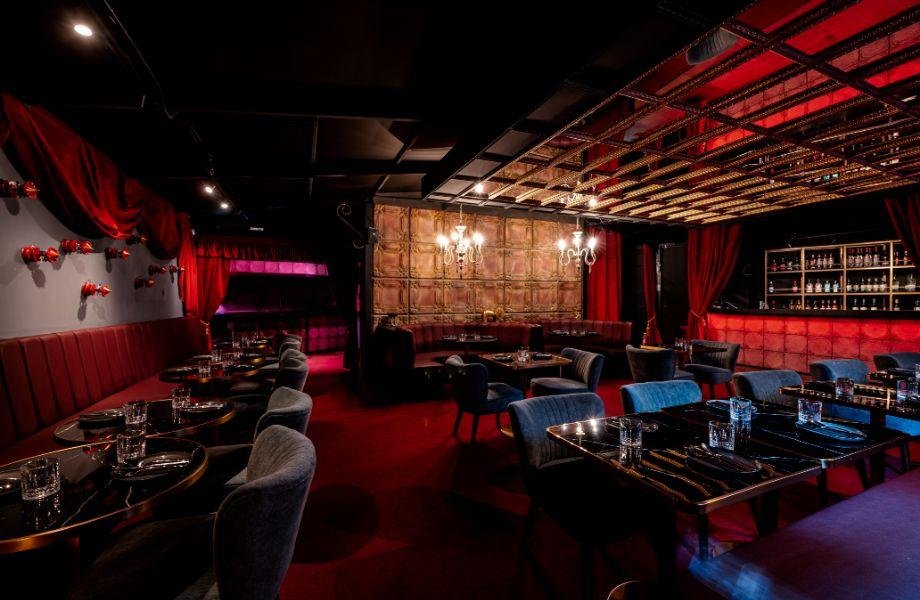
Demencia translates directly to 'madness,' and the circus-themed interior is the first signal that this is not a conventional fine-dining address. The spatial energy here is theatrical: expect a room designed for visual impact rather than hushed formality. For the explorer-type diner, that matters because the room and the food operate in the same register: playful, precise, and confident in its own logic. The seating arrangement and scale reflect the restobar format, which sits between a full restaurant and a bar, with all the looseness in pacing and order-sharing that implies. It is not an intimate space in the sense that a tasting-menu counter is intimate; it is communal and lively, and the format rewards going with people who want to eat broadly across the menu rather than settling into a single main course.
Vitacura is Santiago's most affluent residential and commercial corridor, and Demencia at Av Vitacura 3520 is positioned as a neighbourhood anchor for a district that has the spending power to support ambitious cooking. For visitors, that means the surrounding area offers good context: Naoki in Vitacura is a nearby reference point for the neighbourhood's appetite for technically driven restaurants. Vitacura is not the easiest area to reach without a taxi or rideshare, but it is worth the trip if Demencia is your target.
The Food
The menu follows a small-plates structure built around ceviches and hot dishes. The kitchen's approach to ceviche is described as expertly balanced, and a dish like black rice with chiperónes (small squid) signals that Nast is working with Chilean and broader Latin American ingredients in a way that goes beyond surface-level fusion. The small-plates format suits the circus-restobar concept: order widely, share across the table, and let the meal move at its own pace. This is not a kitchen trying to mimic the tasting-menu formality of Boragó; it is doing something more immediate and social, with the same calibre of sourcing and technique applied to a less ceremonial framework.
For context on what the 50 Best extended list recognition means in practice: the list functions as a peer-reviewed benchmark across Latin America, and a No. 95 placement puts Demencia in the same certified tier as a small number of Santiago restaurants. Ambrosia and 99 Restaurante are among the Santiago kitchens operating in adjacent registers of ambition, and each offers a different trade-off in terms of format and formality.
Booking and Timing
Booking difficulty at Demencia is rated near-impossible. That is not hyperbole: the combination of a Latin America's 50 Best extended list placement, a distinctive concept, and what is likely a modest seat count means demand consistently outpaces availability. Book as far in advance as your schedule allows, and treat any last-minute availability as good fortune rather than a reasonable plan. If Demencia is a fixed priority on a Santiago itinerary, lock in the reservation before anything else.
On timing: the restobar format typically runs better later in the evening when the room reaches its intended energy, and Santiago dining culture skews later than northern European or North American norms. Arriving at or after 9 PM is generally well-suited to the local rhythm. Weekday bookings, if available, will be marginally easier to secure than weekend slots.
Practical Comparison
| Venue | Format | Booking Difficulty | Price Tier | Leading For |
|---|---|---|---|---|
| Demencia | Restobar / Small Plates | Near Impossible | Not confirmed | Exploratory group dining, theatrical setting |
| Boragó | Tasting Menu | Very Hard | High | Formal deep-dive into Chilean terroir |
| Ambrosia | À la carte / French-Chilean | Moderate | Mid-High | Refined but less theatrical dining |
| La Calma by Fredes | Seafood | Moderate | Mid | Seafood-focused, less conceptual |
| Av. Apoquindo 5106 | Contemporary Chilean | Moderate | Mid-High | Accessible contemporary cooking |
For a broader view of where Demencia sits in the city's dining options, see our full Santiago restaurants guide. For planning the rest of your trip, our Santiago hotels guide, bars guide, and wineries guide cover the adjacent decisions. If you are travelling further into Chile, Awasi Atacama, Awasi Patagonia, and Clos Apalta Residence are worth adding to your list.
FAQs
- Does Demencia handle dietary restrictions? No confirmed information is available on specific dietary accommodation policies. Given the small-plates format and technically driven menu, it is worth contacting the restaurant directly before booking if dietary restrictions are a serious consideration. Menus built around ceviches and rice dishes can sometimes flex more than tasting-menu formats, but do not assume without checking.
- Can I eat at the bar at Demencia? The restobar format implies bar seating exists and is likely a workable option, but confirmed details on walk-in bar availability are not in the public record. Given the near-impossible booking difficulty, do not rely on bar walk-ins as your primary plan. If you are in Vitacura and want a back-up, Naoki is in the same neighbourhood.
- What should I wear to Demencia? No confirmed dress code exists in the available data. The circus-themed, restobar concept in a Vitacura address suggests smart-casual is the practical calibration: dressed up enough for a neighbourhood that trends affluent, relaxed enough for a format that is playful rather than ceremonial. Vitacura's dining culture skews polished without being formally prescriptive.
- Is Demencia good for a special occasion? Yes, with the right expectations set. The theatrical room and technically ambitious food make it a strong choice for a celebration where the atmosphere is part of the experience. It is not the right venue if you want hushed, formal pacing; it is the right venue if you want a meal with energy and a distinct character. The 50 Best extended list recognition gives it the credibility to anchor a significant evening.
- What are alternatives to Demencia in Santiago? For tasting-menu depth and formal Chilean terroir focus, Boragó is the benchmark, though it is also very hard to book. For a less theatrical but technically strong option, Ambrosia offers French-Chilean cooking at a format that is easier to access. La Calma by Fredes is the better call if seafood is the priority and you want something less conceptual. For exploratory dining in a different part of the city, Allería in Providencia is worth considering. See our full Santiago restaurants guide for a wider view.
Frequently Asked Questions
Does Demencia handle dietary restrictions?
The venue database does not include documented dietary accommodation details for Demencia. Given the small-plates format and a menu built around ceviches and hot dishes like black rice with chiperónes, pescatarian and seafood-forward diners are well served by the kitchen's natural orientation. If you have specific allergies or restrictions, check the venue's official channels before booking — particularly important given how difficult reservations are to secure.
Can I eat at the bar at Demencia?
Demencia operates as a restobar, which typically means bar seating is part of the concept rather than a fallback option. Given the near-impossible reservation difficulty driven by its Latin America's 50 Best 2025 extended list placement, bar seats — if available — may be your most realistic entry point. Confirm current bar walk-in policy directly with the venue before planning around it.
What should I wear to Demencia?
The circus-themed interior and restobar format signal that this is not a white-tablecloth address. Smart casual fits the room: well-put-together but not formal. Overly dressed guests will look out of place; overly casual ones may feel it. Think dinner-out clothes, not a board meeting.
Is Demencia good for a special occasion?
Yes, with the right expectations. The eccentric concept, chef Benjamín Nast's reputation, and a Latin America's 50 Best 2025 extended list ranking make it a genuinely impressive booking to land. It suits occasions where a memorable, playful atmosphere matters more than classical formality. If you want a quiet, traditional anniversary dinner, look elsewhere — but for a celebration that doubles as a great meal, Demencia delivers.
What are alternatives to Demencia in Santiago?
Boragó is the comparison for ambitious tasting-menu dining with a strong local identity and a higher 50 Best ranking — expect a more serious, formal register. Ambrosia suits diners who want approachable Chilean cooking without the booking difficulty. La Calma by Fredes is worth considering for seafood-led small plates at a lower stress level to secure. Bocanáriz is the call if natural wine and sharing plates are the priority over chef-driven cuisine. The Singular Santiago, Lastarria Hotel covers you if you want a polished hotel dining experience in a different neighbourhood entirely.
Location
Av Vitacura 3520, 7630523 Vitacura, Región Metropolitana, Chile
Santiago, Chile
Compare Demencia
| Venue | Price | Value |
|---|---|---|
| Demencia | — | |
| Boragó | — | |
| Ambrosia | — | |
| La Calma by Fredes | — | |
| Bocanáriz | — | |
| The Singular Santiago, Lastarria Hotel | — |
Key differences to consider before you reserve.
Also Consider
- Boragó — Modern Chilean, Modern Chilean
- Ambrosia — French - Chilean, French - Chilean
- La Calma by Fredes — Seafood, Seafood
- Bocanáriz — Wine Bar, Wine Bar
- The Singular Santiago, Lastarria Hotel — Chilean Modern, Chilean Modern
Demencia and Boragó are the two Santiago restaurants with the clearest international recognition, but they serve fundamentally different purposes. Boragó is a tasting-menu address where the commitment is to a single extended experience rooted in Chilean terroir; Demencia is a restobar where the format is social, the pacing is loose, and the small-plates structure rewards groups who want to eat widely. Both are very hard to book. If you can only get one reservation and want a formal deep-dive, Boragó is the call. If you want energy and flexibility alongside technical cooking, Demencia wins.
Ambrosia is the easier booking in this tier and offers French-Chilean cooking with genuine refinement, but it operates without the theatrical concept that makes Demencia distinctive. For a special-occasion dinner where ambiance matters as much as the plate, Demencia has the stronger identity. La Calma by Fredes is the right alternative if you are prioritising seafood over concept, and it is more accessible on both price and availability. For wine-led dining with a broader selection lens, Bocanáriz is the Santiago wine bar that earns a separate visit rather than a direct comparison.
The practical advice: if your itinerary allows only one high-effort booking in Santiago, decide between Demencia and Boragó based on format preference alone. Both deliver on their premises. Demencia is the better choice for groups of three or more, for diners who want to eat across multiple dishes, and for anyone who values atmosphere as a deliberate part of the meal. Boragó is the choice for a more singular, immersive experience. Ambrosia and La Calma by Fredes are the sensible pivots if neither leading option is available when you try to book.
Recognized By


Explore Santiago
Save or rate Demencia on Pearl
Keep this venue in your Pearl passport, rate it after you visit, and track it alongside every other place you collect.