
Restaurant in Osaka, Japan
tanpopo
350Pearl PointsBib Gourmand teppanyaki. Book it.
.png?width=144&height=144&quality=80)
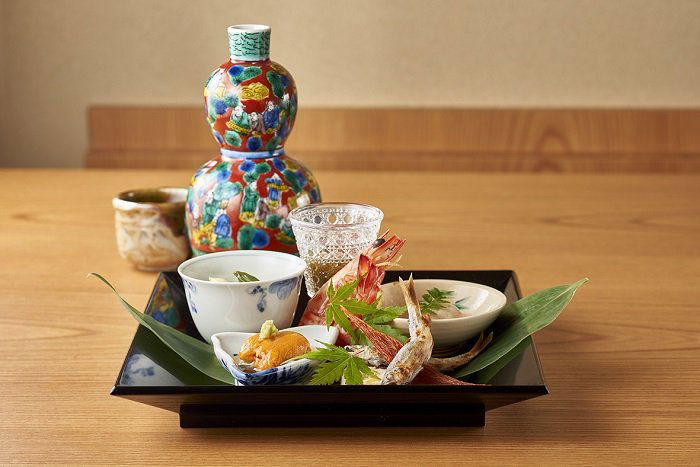
About tanpopo
Tanpopo holds back-to-back Michelin Bib Gourmand awards (2024–2025) for teppanyaki that takes its craft seriously without the corresponding price tag. Iron plates for aroma, copper for precision, and a menu that spans okonomiyaki to seasonal fish cake — this is the clearest value-for-occasion argument in Osaka's Kita Ward. Book a few days ahead; demand is steady but not punishing.
The Verdict
If you are choosing between a high-concept teppanyaki counter in Osaka and Tanpopo, the calculus is direct: Tanpopo costs less, holds two consecutive Michelin Bib Gourmand awards (2024 and 2025), and serves a broader range of iron-plate cooking than most teppanyaki specialists bother with. For a special occasion that does not require a four-figure bill, this sixth-floor counter in Kita Ward is one of the clearest yes-decisions in the city.
Portrait
Tanpopo sits on the sixth floor of the Eiraku Building in Sonezakishinchi, the dense nightlife and dining quarter that forms the western spine of Osaka's Kita Ward. This is not a neighbourhood you stumble into — Sonezakishinchi draws locals who know exactly where they are going, and Tanpopo has become one of the addresses they return to. The Bib Gourmand recognition from Michelin, awarded in both 2024 and 2025, reflects what regulars already understood: this is serious cooking at a price point that does not require advance saving.
The kitchen's identity is built around two metals. Iron plates are used when the goal is aroma — the char and caramelisation that comes when protein or batter hits a searingly hot surface. Copper plates come into play when the cooking requires precision and gentleness, coaxing flavour rather than forcing it. That distinction is not cosmetic. It reflects a considered approach to heat management that separates Tanpopo from teppanyaki counters that treat the griddle as a single-speed tool.
The menu covers more ground than a specialist teppanyaki list. Okonomiyaki , the savoury pancake that Osaka has made its own , appears alongside Tonpeiyaki, a Western-inflected preparation of stir-fried pork and vegetables wrapped in an omelette. That combination of familiar local standards and more creative compositions gives the menu range without feeling unfocused. For a special occasion, the breadth matters: two guests with different appetites can order differently and both eat well.
What distinguishes Tanpopo further is the deep-fried fish cake program. The kitchen kneads fish cake with seasonal ingredients , butterbur sprout in spring, fresh ginger in autumn , producing preparations that change with the calendar and reward repeat visits at different times of year. This is the kind of detail that signals a kitchen paying attention to its ingredients rather than running on autopilot. If you visit in spring or autumn specifically, the seasonal fish cake is the thing to prioritise.
For a date or celebration dinner, the setting on the sixth floor provides some separation from the street-level noise of Sonezakishinchi. The ¥¥ price range means you can order generously , multiple preparations across iron and copper, the seasonal fish cake, the Tonpeiyaki , without the bill becoming an event in itself. At this price tier, Tanpopo competes more with izakayas and mid-range okonomiyaki specialists than with the kaiseki counters further east. Against that peer group, the Michelin recognition and the technical coherence of the cooking make it the stronger choice for anyone who wants a meal that feels deliberate rather than casual.
Sonezakishinchi itself is worth accounting for when you plan the evening. The area is compact and walkable, with bars and late-night venues within easy reach after dinner. If you are building a night around the meal rather than just the meal itself, the location works in your favour. Pair dinner at Tanpopo with a stop at one of the bars in our full Osaka bars guide and the neighbourhood logistics make sense. For broader dining context across the city, see our full Osaka restaurants guide.
For teppanyaki comparisons elsewhere in Japan, Ishigaki Yoshida in Tokyo operates at a higher price tier with a more premium ingredient focus, while Hibana by Koki in Hanoi shows how the format travels internationally. Within the Kansai region, Gion Sasaki in Kyoto and akordu in Nara represent different price tiers and formats for multi-city planning. Further afield, Harutaka in Tokyo, Goh in Fukuoka, 1000 in Yokohama, and 6 in Okinawa round out a national picture of serious cooking at various price points.
Within Osaka's Kita Ward specifically, JIBUNDOKI and Oribe are worth knowing about for different formats and occasions. For hotel planning around a Tanpopo visit, our full Osaka hotels guide covers options across price tiers in Kita Ward and beyond. See also our Osaka wineries guide and Osaka experiences guide for broader trip planning.
Booking & Practical Details
Booking difficulty at Tanpopo is rated Easy. The ¥¥ price tier and the Bib Gourmand profile mean demand is consistent but not at the level of a starred counter. Booking a few days ahead should be sufficient for most visits, though weekend evenings in Sonezakishinchi can fill faster. The venue is on the sixth floor of the Eiraku Building at 1 Chome-10-16 Sonezakishinchi, Kita Ward, Osaka. Google reviews sit at 4.2 across 77 ratings.
How It Compares
See the comparison section below for Tanpopo's positioning against Osaka's broader dining field.
Pearl Picks , Also in Osaka
- HAJIME , French, Innovative, ¥¥¥¥
- La Cime , French, ¥¥¥¥
- Kashiwaya Osaka Senriyama , Japanese, ¥¥¥
- JIBUNDOKI , Osaka
- Oribe , Osaka
Frequently Asked Questions
What should I wear to tanpopo?
Tanpopo is a ¥¥ neighbourhood teppanyaki counter in Sonezakishinchi, not a formal dining room. Casual is fine. The cooking involves open flames and iron plates, so avoid anything you would not want to smell of smoke.
How far ahead should I book tanpopo?
Tanpopo's booking difficulty is rated Easy, so a few days' notice is typically sufficient rather than weeks. That said, the Bib Gourmand recognition drives consistent demand, so same-day walk-ins on busy Friday and Saturday evenings carry some risk. If you have a fixed date, book ahead to be certain.
What should a first-timer know about tanpopo?
The kitchen uses both iron and copper plates, selecting each to suit the ingredient: iron for aroma, copper for subtlety. The menu covers okonomiyaki, the Western-style Tonpeiyaki, and seasonal deep-fried fish cake. Go in knowing this is teppanyaki with a clear point of view, not a generic grill-and-serve operation.
Is the tasting menu worth it at tanpopo?
Tanpopo's menu structure is not documented in available detail, so a verdict on a specific tasting format is not possible here. What is clear is that at ¥¥ with two consecutive Bib Gourmand awards, the value-to-quality ratio is strong across the menu. Order the seasonal fish cake and the Tonpeiyaki as anchors and build around those.
What are alternatives to tanpopo in Osaka?
For a step up in formality and price, Taian and Kashiwaya Osaka Senriyama are the obvious moves. For high-concept fine dining at a significantly higher spend, HAJIME, La Cime, and Fujiya 1935 are all in a different category. Tanpopo is the call when you want Michelin-recognised quality without the multi-course price commitment.
Is tanpopo good for a special occasion?
It works for a relaxed celebratory dinner, but the ¥¥ price point and teppanyaki counter format mean it does not deliver the ceremonial feel of a starred room. If the occasion calls for a private room or a long tasting progression, Taian or Kashiwaya Osaka Senriyama are more appropriate. Tanpopo is better suited to a low-key celebration than a milestone dinner.
Is tanpopo worth the price?
Yes. Two consecutive Michelin Bib Gourmand awards at a ¥¥ price point is a reliable signal that the kitchen is overdelivering for the cost. Among Osaka teppanyaki options with any formal recognition, Tanpopo is one of the clearest value cases.
Location
Japan, 〒530-0002 Osaka, Kita Ward, Sonezakishinchi, 1 Chome−10−16 永楽ビル 6F
Osaka, Japan
Compare tanpopo
| Venue | Price | Value |
|---|---|---|
| tanpopo | ¥¥ | , |
| HAJIME | ¥¥¥¥ | , |
| La Cime | ¥¥¥¥ | , |
| Kashiwaya Osaka Senriyama | ¥¥¥ | , |
| Taian | ¥¥¥ | , |
| Fujiya 1935 | ¥¥¥¥ | , |
A quick look at how tanpopo measures up.
Also Consider
- HAJIME, French, Innovative, ¥¥¥¥
- La Cime, French, ¥¥¥¥
- Kashiwaya Osaka Senriyama, Japanese, ¥¥¥
- Taian, Kaiseki, Japanese, ¥¥¥
- Fujiya 1935, Innovative, ¥¥¥¥
Tanpopo and Osaka's top-tier dining options occupy entirely different price bands, which makes the comparison less about quality than about what kind of evening you are planning. HAJIME and La Cime are both ¥¥¥¥ French-influenced operations with Michelin recognition well above Bib Gourmand level, if the occasion calls for maximum ceremony and you are prepared for the bill, either will deliver. Fujiya 1935 sits in the same ¥¥¥¥ tier with an innovative Japanese-French approach. None of these compete with Tanpopo on value; they compete on ambition and formality.
For mid-range occasions, Kashiwaya Osaka Senriyama and Taian both operate at ¥¥¥ in kaiseki format, more expensive than Tanpopo, more structured in their progression, and better suited to guests who want a multi-course Japanese meal rather than a teppanyaki-driven one. If the format matters to you, Kashiwaya and Taian are the right call. If you want iron-plate cooking with genuine technique at a price that leaves room in the evening budget, Tanpopo is the stronger choice.
On booking difficulty, Tanpopo is the easiest of this group to secure. The ¥¥¥¥ venues require advance planning, often weeks or months out for prime slots. Tanpopo's accessibility, both in price and in reservations, makes it the practical anchor for Osaka dining trips where flexibility matters. For a special occasion that does not hinge on a tasting menu format, it outperforms its price tier convincingly.
Recognized By

Explore Osaka
Save or rate tanpopo on Pearl
Keep this venue in your Pearl passport, rate it after you visit, and track it alongside every other place you collect.