
Sugimachi
Japanese · Chūō, Osaka
Restaurant in Osaka, Japan
 Book with Pearl
The Read
Calculated Ingredient Architecture
Price
¥¥¥
Dress
Smart Casual
Why go
Sugimachi in Osaka's Chuo Ward holds a 2025 Michelin Plate and for Japanese cooking built around calculated ingredient combinations — sea and mountain produce structured through dashi technique. At ¥¥¥, it sits below Osaka's most expensive tier but delivers a level of culinary precision that makes it worth prioritising over similarly priced alternatives, particularly for repeat visitors who want to track the menu across seasons.
About Sugimachi
Should You Book Sugimachi?
If you have already eaten at Sugimachi once, the question on a return visit is not whether the cooking is still worth your time — it is whether the season has shifted enough to make the menu feel new. That is exactly how this Senba address works: the kitchen's logic is built around what the sea and the mountains are offering right now, which means repeat visits in different seasons genuinely produce different meals.
What Sugimachi Is
Sugimachi operates from the ground floor of Grande Maison Senba in Osaka's Chuo Ward, a central location that puts it within reach of the city's main dining and hotel corridor. The cooking is Japanese, and Michelin's 2025 Plate recognition describes the owner-chef's approach with unusual specificity: he combines ingredients from the sea and the mountains, drawing on studied technique to create combinations that are calculated rather than intuitive. That word — calculated — is the one to hold onto. This is not a kitchen that improvises around a seasonal ingredient. It works out in advance how flavours interact, then builds the dish backward from that logic.
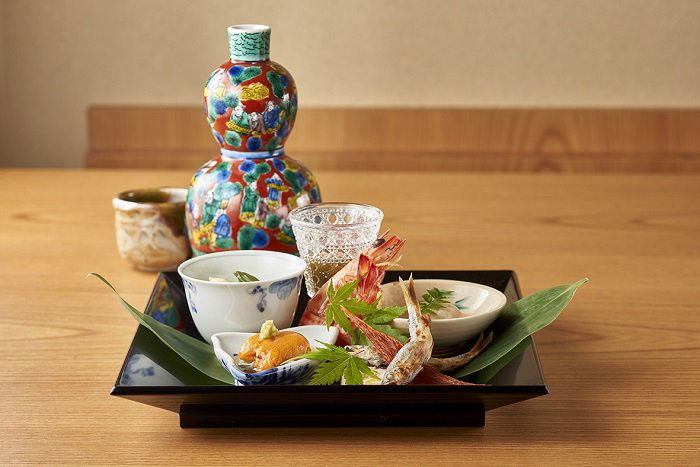
The visual cue that matters here is on the plate itself. Michelin's notes single out unseasoned grilled eel with stir-fried great burdock as an example of the approach, a dish derived from the Yawatamaki roll tradition but stripped of seasoning so that the base ingredients carry the full weight. Kombu kelp, dried tuna, and bonito flakes form the dashi stock foundation that runs beneath much of the menu. Tomatoes appear in hot pots. Chicken dashi stock goes into the takikomi-gohan (seasoned rice cooked with other ingredients). These are not decorative flourishes, they are structural choices that change the flavour calculus of each dish. For a food-focused traveller, that level of intentionality is what separates Sugimachi from the broader field of Japanese restaurants in this price range.
When to Go and What Changes by Season
The seasonal angle at Sugimachi is not marketing language, it reflects the actual architecture of the menu. Japanese cuisine at this level is governed by what the market offers each season, and a kitchen that explicitly positions itself around combining sea and mountain produce will cook very differently in autumn, when burdock root, matsutake mushrooms, and fatty autumn fish are available, than it does in early spring, when mountain vegetables and lighter whitefish dominate. The takikomi-gohan and hot pot elements on the menu are particularly responsive to season: the vegetables and proteins that go into them shift with what is at peak quality. If you are visiting Osaka in autumn and are choosing between this and a similar restaurant, Sugimachi's approach to earthy, umami-forward combinations makes it a stronger fit for that time of year than for, say, early summer, when lighter preparations tend to read better. First-time visitors should note that the dashi-led flavour profile runs consistently through the meal, this is a menu built on depth and layering rather than brightness and acidity.
For current hours and specific booking details, contact the restaurant directly or use a concierge service at your Osaka hotel. Booking difficulty is rated easy, meaning you are unlikely to need weeks of lead time, but confirming in advance is still advisable.
Who Sugimachi Is Right For
Book here if you want Japanese cooking at a ¥¥¥ price point that has a clear intellectual framework behind it, not just seasonal produce handled well, but a chef who has documented reasons for putting specific ingredients together. It works particularly well for travellers who have already covered the kaiseki fundamentals elsewhere (perhaps at Gion Sasaki in Kyoto or Kashiwaya Osaka Senriyama) and want something that pushes the logic of combination and technique further. If you are new to Japanese fine dining and want a cleaner introduction to kaiseki structure, Taian may be a more readable starting point. For those who have already dined at Myojaku in Tokyo or Azabu Kadowaki and are seeking an Osaka equivalent with its own distinct character, Sugimachi delivers that.
Sugimachi is less suited to diners who prioritise room atmosphere or wine depth over food precision; the Senba address is a commercial building rather than a heritage property. The draw here is the cooking itself.
How It Compares
Know Before You Go
- Address
- Grande Maison Senba 1F, 1 Chome-6-22 Azuchimachi, Chuo Ward, Osaka
- Cuisine
- Japanese
- Price Range
- ¥¥¥
- Awards
- Michelin Plate 2025
- Booking Difficulty
- Easy, advance reservation still recommended
- Hours
- Contact restaurant directly to confirm
- Getting There
- Chuo Ward, central Osaka, well-connected by subway
- Also in Osaka
- Miyamoto, Oimatsu Hisano, Tenjimbashi Aoki, Yugen
- Osaka Guides
- Restaurants · Hotels · Bars · Wineries · Experiences
- Further Afield
- akordu in Nara · Harutaka in Tokyo · Goh in Fukuoka · 1000 in Yokohama · 6 in Okinawa
Planning details
- Location
- Japan, 〒541-0052 Osaka, Chuo Ward, Azuchimachi, 1 Chome−6−22 Grande Maison Senba, 1F
- Website
- retty.me/area/PRE27/ARE91/SUB9102/100001505124
- Phone
- +81 6-6484-8313
The take
The Take
The Vibe
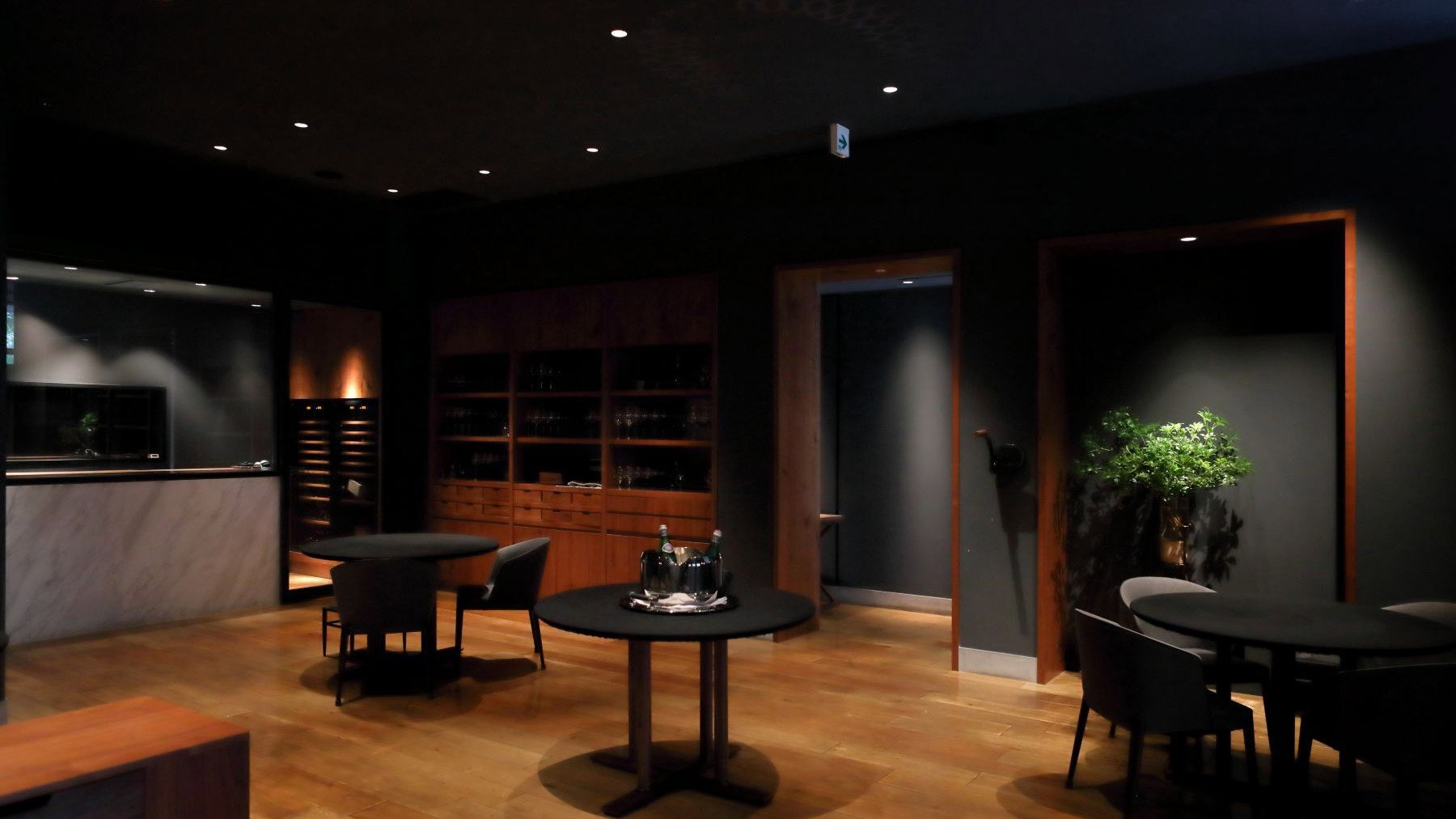
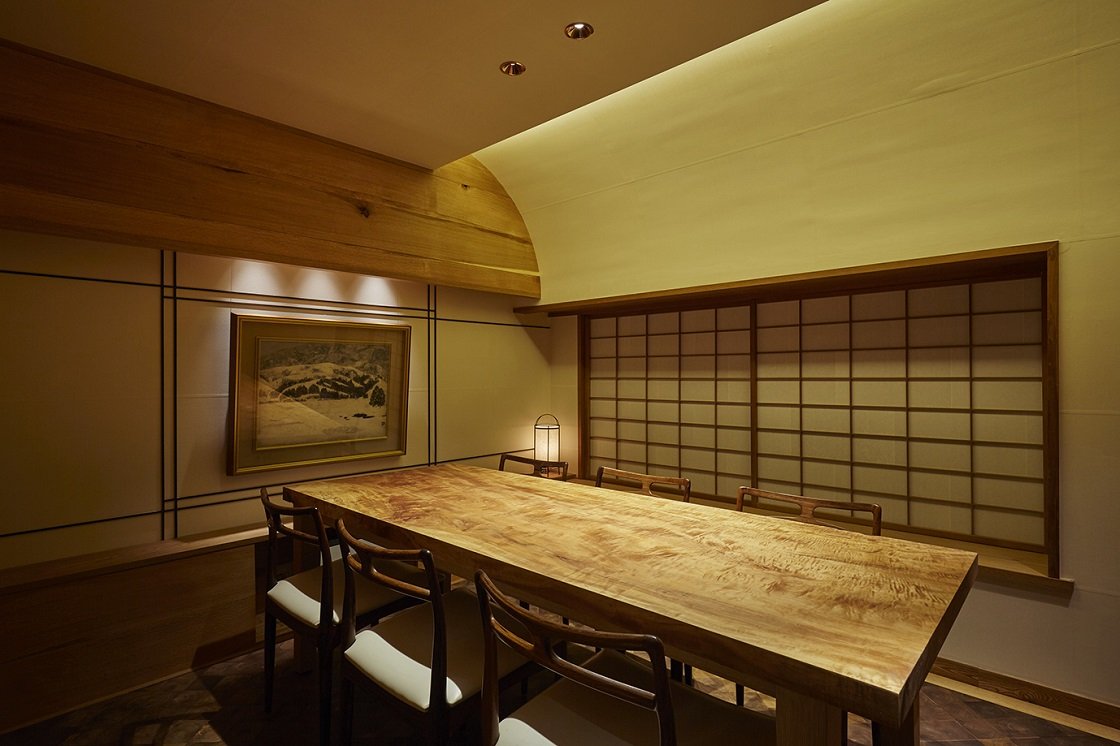
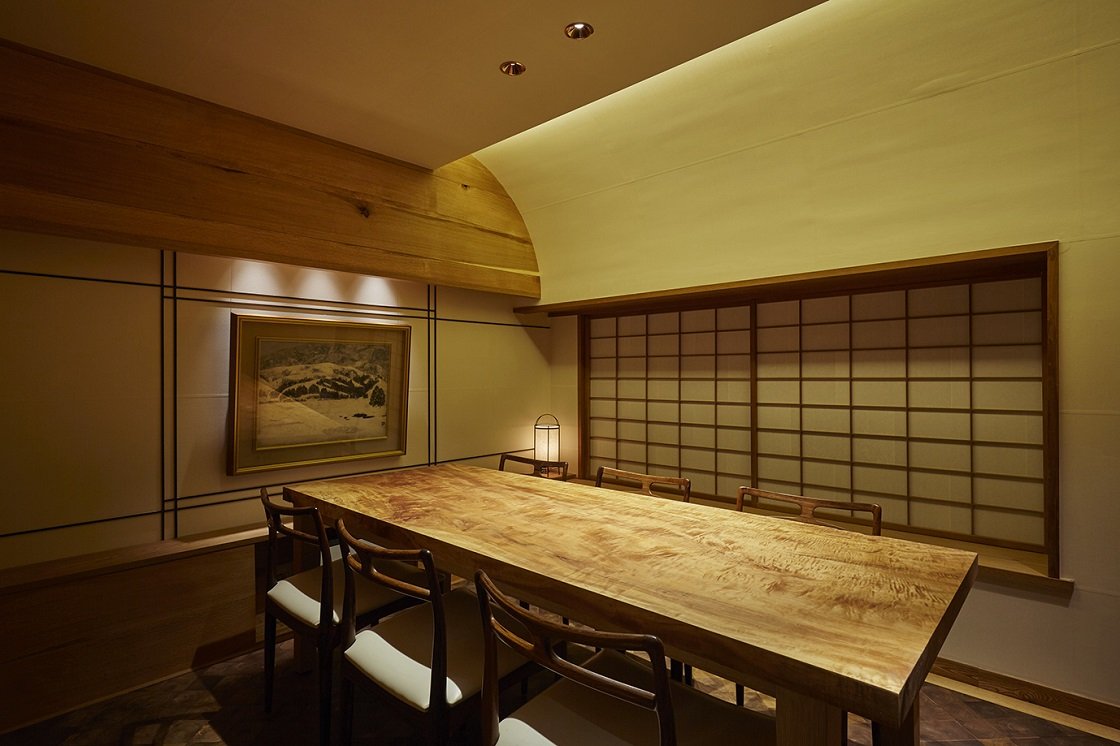
Sugimachi cultivates a restrained, classical elegance: the street frontage is modest and the interior work is where the restaurant reveals itself. The writing emphasizes technical rigor over spectacle—kaiseki-adjacent structure, a Michelin Plate mention and a meticulous commitment to kombu-and-bonito dashi. That focus produces a quiet, inward-facing experience for diners who prize craft and balance. The effect is understated rather than showy: service and food read as deliberately measured, and the room rewards attention to nuance rather than theatrical arrival.
Best For
This is a place for evening meals when precision and ingredient sourcing matter. At the ¥¥¥ price point and with a regular clientele, Sugimachi suits date nights and special-occasion dinners as well as business meals where a composed, technically assured meal is the priority. It is not a tourist spectacle but a destination for those who appreciate classical Japanese technique—diners seeking considered flavour combinations and a quiet setting will find it especially satisfying.
Ordering Tips
The kitchen’s philosophy centers on dashi as the structural backbone, so favour dishes that let that foundation show through. The menu’s signatures—grilled eel, takikomi-gohan and hot pot—are highlighted for a reason and give a clear sense of the restaurant’s strengths. Expect classical pairings and carefully calculated combinations rather than improvisational theatrics; choose items that emphasize umami and balance to experience what the kitchen is building from its kombu-and-bonito stock.
Venue details
Ambiance
Serene sanctuary of refined simplicity with meticulous presentation and contemplative pacing.
Tags
Vibe
Best For
Sourcing
At the Table
- Dress Code
- Smart Casual
- Noise Level
- Quiet
- Service Style
- Upscale Casual
- Meal Pacing
- Leisurely
- Capacity
- Small
Signature Dishes
- grilled eel
- takikomi-gohan
- hot pot
Know before you go
Know Before You Go
- Getting there
- Japan, 〒541-0052 Osaka, Chuo Ward, Azuchimachi, 1 Chome−6−22 Grande Maison Senba, 1F
Planning details
Location
Japan, 〒541-0052 Osaka, Chuo Ward, Azuchimachi, 1 Chome−6−22 Grande Maison Senba, 1F · Directions
Recognition and awards
Also consider
Also Consider
- HAJIME, French, Innovative, ¥¥¥¥
- La Cime, French, ¥¥¥¥
- Kashiwaya Osaka Senriyama, Japanese, ¥¥¥
- Taian, Kaiseki, Japanese, ¥¥¥
- Fujiya 1935, Innovative, ¥¥¥¥
Restaurant context
Against Osaka's ¥¥¥¥ tier, HAJIME, La Cime, and Fujiya 1935, Sugimachi is the more accessible entry point both in price and booking difficulty. HAJIME in particular demands significantly more planning and spend for its three-Michelin-star French-innovative format. If the priority is technical ambition without the ¥¥¥¥ commitment, Sugimachi makes a stronger case than any of those three for a first Osaka fine-dining meal.
Within the ¥¥¥ tier, the closest comparisons are Kashiwaya Osaka Senriyama and Taian. Kashiwaya Senriyama offers a more classically structured kaiseki experience with a longer institutional track record, better suited to diners who want the established form. Taian is the stronger choice if you want kaiseki that is easier to read as a first-time visitor to the format. Sugimachi sits apart from both because its logic is explicitly about ingredient combination and technique-derived inspiration rather than seasonal kaiseki convention, a meaningful distinction if that kind of precision matters to you.
The practical decision comes down to this: if you want to spend less and still eat at a Michelin-recognised table in central Osaka, Sugimachi is easy to book and consistent by the evidence available. If you want the full weight of Osaka's fine-dining hierarchy and are prepared to spend and plan accordingly, HAJIME is the ceiling. For everything in between, Kashiwaya Senriyama and Taian are safer structural bets, while Sugimachi rewards diners who want something with a more idiosyncratic culinary argument behind it.
Explore Osaka
Around this place
Discover more on Pearl
Unlock the full Sugimachi guide in Pearl, including awards, comparisons, FAQs, planning details, and nearby places.
Compare Sugimachi
| Venue | Price | Awards |
|---|---|---|
| Sugimachi | ¥¥¥ | Michelin Guide Kyoto Osaka 20262026 Michelin Plate2025 Michelin Plate2024 Michelin Plate |
| HAJIME | ¥¥¥¥ | Star Wine Lists 2026 · #12026 Tabelog Bronze · #922026 OAD Top Restaurants in Japan Ranked · #98Michelin Guide Kyoto Osaka 20262026 La Liste Top RestaurantsTabelog 100 - Innovative / Creative cuisine - 2025 · #692025 Asia's 50 Best Restaurants · #832025 OAD Top Restaurants in Japan Ranked · #87We're Smart World Top Restaurants 2025 |
| La Cime | ¥¥¥¥ | 2026 Asia's 50 Best Restaurants · #132026 OAD Top Restaurants in Japan Ranked · #1492026 Tabelog Bronze · #231Michelin Guide Kyoto Osaka 20262026 La Liste Top Restaurants2025 Asia's 50 Best Restaurants · #82025 World's 50 Best Restaurants · #44Tabelog 100 - French - WEST - 2025 · #932025 OAD Top Restaurants in Japan Ranked · #123 |
| Kashiwaya Osaka Senriyama | ¥¥¥ | 2026 Tabelog Bronze · #1682026 OAD Top Restaurants in Japan Recommended2026 Relais Chateaux RestaurantsMichelin Guide Kyoto Osaka 20262026 La Liste Top RestaurantsTabelog 100 - Japanese cuisine - WEST - 2025 · #772025 OAD Top Restaurants in Japan Ranked · #1552025 Relais Chateaux Award2025 Michelin 3 Stars |
| Taian | ¥¥¥ | 2026 OAD Top Restaurants in Japan RecommendedMichelin Guide Kyoto Osaka 20262026 La Liste Top Restaurants2025 OAD Top Restaurants in Japan Ranked · #2042025 La Liste Top Restaurants2025 Michelin 3 Stars2024 OAD Top Restaurants in Japan Ranked · #1912024 Michelin 3 Stars2023 OAD Top Restaurants in Japan Highly Recommended |
| Fujiya 1935 | ¥¥¥¥ | 2026 Tabelog Bronze · #752026 OAD Top Restaurants in Japan RecommendedMichelin Guide Kyoto Osaka 20262026 La Liste Top Restaurants2025 Michelin 2 Stars2025 Tabelog Silver2025 La Liste Top Restaurants2024 OAD Top Restaurants in Japan Ranked · #2392024 Michelin 2 Stars |
.png?width=1200&quality=80)









Key differences to consider before you reserve.
FAQ
Frequently Asked Questions
What should a first-timer know about Sugimachi?
Come knowing the cooking has a specific intellectual framework: the owner-chef builds dishes around studied technique and deliberate ingredient pairings, combining sea and mountain produce in ways that reference traditional forms like Yawatamaki roll. This is not a venue for casual drop-ins. At ¥¥¥ with a 2025 Michelin Plate, expectations should be set for a structured, chef-led format. Book in advance and treat the menu as the main event.
Is the tasting menu worth it at Sugimachi?
At ¥¥¥, Sugimachi sits in a range where the value case rests on the distinctiveness of the cooking rather than just quality of produce. The Michelin Plate recognition in 2025 confirms a base level of execution, but what justifies the spend here is the chef's approach: dashi stocks built from kombu kelp, dried tuna, and bonito flakes; tomato-laced hot pots; and takikomi-gohan finished with chicken dashi are examples of a menu that rewards attention. If you want technically curious Japanese cooking rather than a prestige name, this delivers.
What are alternatives to Sugimachi in Osaka?
For a step up in formality and star recognition, Kashiwaya Osaka Senriyama and Taian both carry Michelin stars and offer kaiseki at comparable or higher price points. La Cime is the choice if you want French-Japanese technique rather than a purely Japanese framework. Fujiya 1935 suits diners who want avant-garde structure in a historic setting. Sugimachi sits in the range for those who want ingredient-focused Japanese cooking with a clear chef perspective, without the full kaiseki ceremony of the starred options.