.png?width=1200&quality=80)

Shitennoji Hayauchi
Soba · Tennōji, Osaka
Restaurant in Osaka, Japan
 Book with Pearl
The Read
Dual-Grind Soba Counter
Price
$30–50per person
Dress
Smart Casual
Why go
Two-time Michelin Bib Gourmand winner in Osaka's Tennoji Ward, Shitennoji Hayauchi serves fine-ground seiro and coarse-ground inaka soba from a folk-art interior of earthen walls and potter-made crockery. At the ¥ price tier with a queue before opening most lunchtimes, it is one of the clearest value decisions in the city. Reserve ahead for the soba tray with snacks.
About Shitennoji Hayauchi
The queue outside Shitennoji Hayauchi tells you everything you need to know
Seats at this single-price soba counter in Osaka's Tennoji Ward fill before the door opens. Diners line up on the pavement: not because there is nothing else nearby, but because this is the kind of place that earns a return visit on the strength of its noodles alone. Two consecutive Michelin Bib Gourmand awards (2024 and 2025) confirm what the queue already suggests: Shitennoji Hayauchi is delivering quality at a price point that makes the decision to book almost automatic. At the ¥ price tier, it is one of the most credentialled value propositions in Osaka's dining scene.
Two sobas, one decision
The menu centres on a clear choice: fine-ground seiro soba or coarse-ground inaka soba. Both are rolled to the same thickness, which is an unusual and deliberate constraint: it means the textural difference between the two comes entirely from the grind, not the hand. Seiro tends toward refinement and a cleaner finish; inaka carries more buckwheat weight and a rougher draw on the palate. If you have not eaten much soba, order the seiro first. If you know the category, the inaka is the more interesting call. At lunchtime, the 'soba tray' format, soba accompanied by small snacks, is available with reservations, and it is the way to get the most complete read on what the kitchen is doing. Reserve ahead if you want this option; walk-ins take their chances with the standard service.
What the room adds
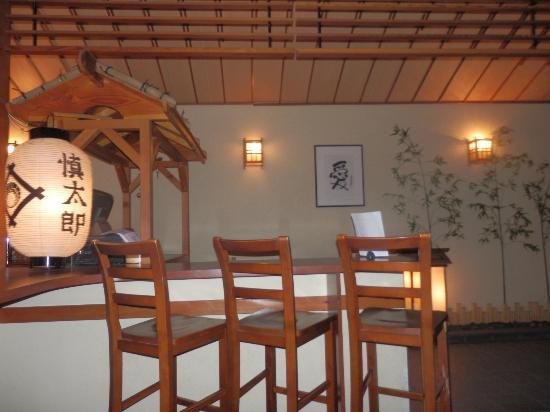
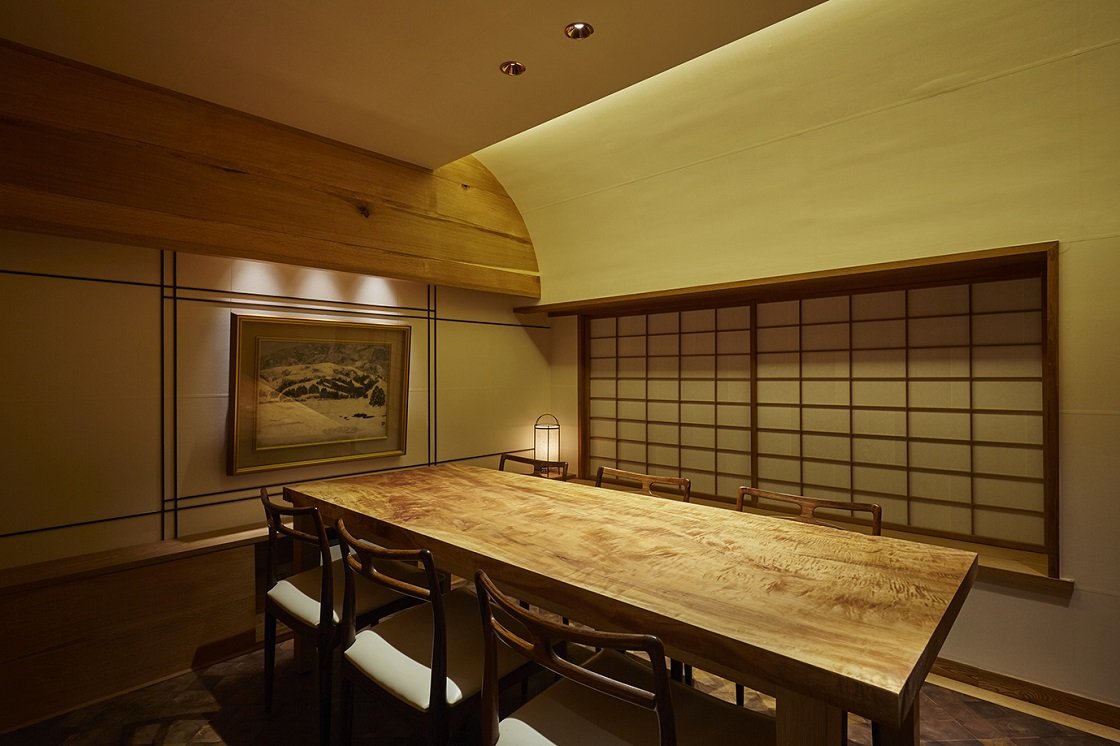
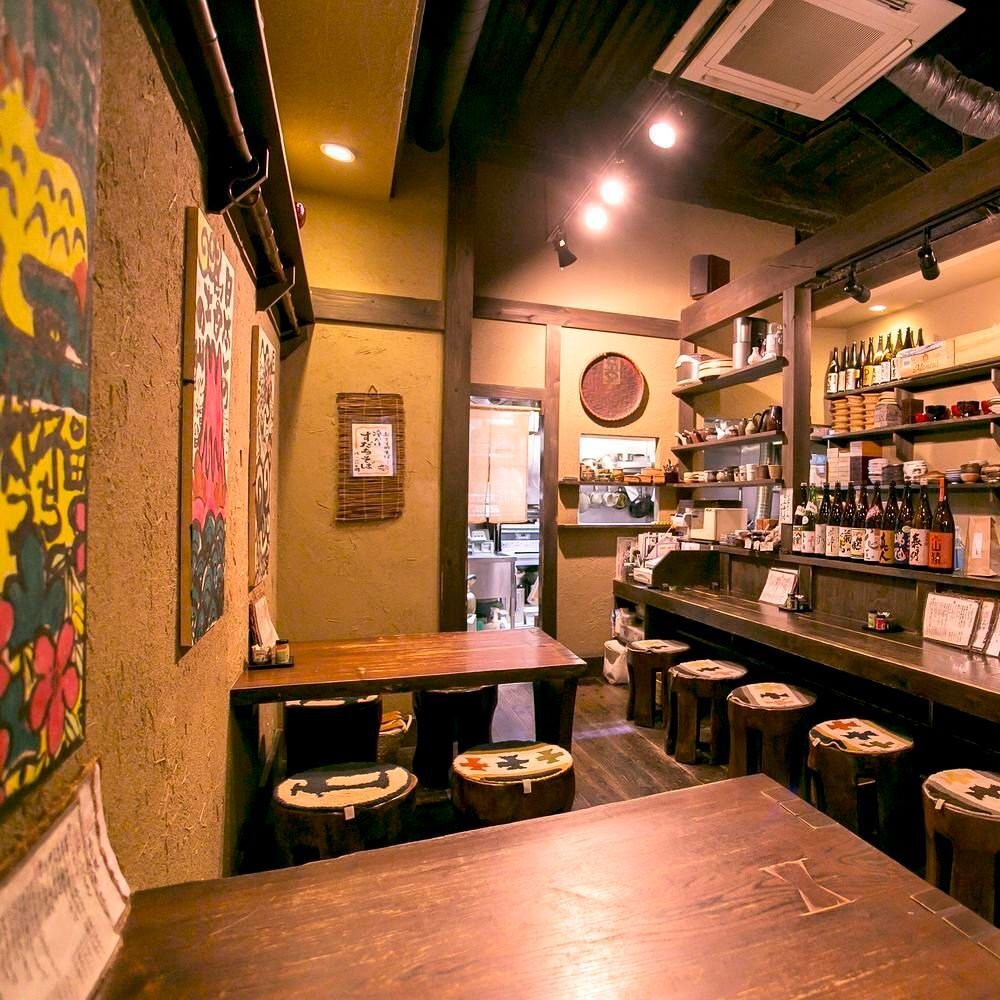
The interior is not decorative in the way that Osaka's higher-spend restaurants tend to be. Oribe stoneware, earthen walls, recycled materials, and folk-art paintings give the space a textured, deliberate roughness that reads as considered rather than casual. The crockery is produced by a potter with whom the owner-chef has a direct working relationship, so what you eat from carries the same specificity as what you eat. This matters at counter and table alike: the physical experience of handling the bowls and trays is part of the meal's register. The aroma of freshly milled buckwheat in a small room with earthen walls is close and immediate, it arrives before the food does, and it sets the frame for what follows. For a food enthusiast eating through Osaka's soba options, the room at Shitennoji Hayauchi offers more contextual depth than most in this price tier. Compare it with Sobadokoro Toki or Soba Takama if you want to triangulate the category across Osaka.
Booking and timing
Queue dynamic is the key logistical fact here. Lunchtime is the peak window, and the shop is known to attract a line before opening. Arriving early is the practical answer. For the 'soba tray' format with snacks, reservations are required, this is not optional if you want the full picture. Booking difficulty is rated easy, which means you are not dealing with a weeks-long reservation window, but you should not assume walk-in access during peak lunch hours. Tennoji Ward is accessible from central Osaka; the address at 1 Chome-12-16 Shitennoji places it close to the temple grounds, which draws visitors throughout the day and adds to foot traffic around midday.
Know Before You Go
- Price tier: ¥, among the most affordable Michelin-recognised soba in Osaka
- Awards: Michelin Bib Gourmand 2024 and 2025
- Cuisine: Soba, seiro (fine-ground) and inaka (coarse-ground), rolled to the same thickness
- Soba tray with snacks: Available at lunch with reservations only
- Queue warning: Diners line up before opening at lunchtime, arrive early
- Booking difficulty: Easy, but reserve ahead for the soba tray format
- Address: 1 Chome-12-16 Shitennoji, Tennoji Ward, Osaka 543-0051
- Interior: Earthen walls, Oribe stoneware, potter-made crockery, folk-art aesthetic
How it sits in the wider Osaka and Japan context
For a food enthusiast working through Osaka's restaurant options, Shitennoji Hayauchi occupies a specific and useful position: it is the kind of place you build a morning or afternoon around rather than a special-occasion dinner. If you are comparing soba across Japan's cities, the benchmark Tokyo equivalents are Akasaka Sunaba and Azabukawakamian, both credentialled, both operating in a similar register. Osaka's soba scene is smaller and less documented than Tokyo's, which makes Hayauchi's Bib Gourmand recognition more meaningful as a signal: it is not one of many, it is one of few. Within Osaka, Ayamedo, Naniwa Okina, and Sobakiri Arabompu cover adjacent ground if you want to build a fuller picture of the city's noodle options. Further afield, Gion Sasaki in Kyoto and akordu in Nara are worth pairing into a Kansai itinerary if Japanese craft dining is your focus. See our full Osaka restaurants guide, Osaka hotels guide, Osaka bars guide, Osaka experiences guide, and Osaka wineries guide for broader planning context. If your Japan trip extends beyond Kansai, Harutaka in Tokyo, Goh in Fukuoka, 1000 in Yokohama, and 6 in Okinawa represent a range of price tiers and formats worth considering.
The verdict
Book Shitennoji Hayauchi. The queue is the only friction. Plan around it by arriving early or reserving ahead, and this becomes one of the easiest decisions on an Osaka itinerary.
Planning details
- Hours
- Monday: 11:30 AM–3 PM · Tuesday: 11:30 AM–3 PM
- Location
- 1 Chome-12-16 Shitennoji, Tennoji Ward, Osaka, 543-0051, Japan
- Website
- shitennoji-hayauchi.com
- Phone
- +81 6-6773-2858
The take
The Take
The Vibe
Shitennoji Hayauchi reads like a neighbourhood craft workshop translated into a soba shop. Earthen walls, recycled materials and Oribe stoneware give the interior a deliberately rough-hewn, tactile character; the pottery is made in collaboration with the owner-chef, so plates feel intentional rather than mass-produced. The setting is quietly historic, sitting near Shitennoji temple places it in a calmer, older part of Tennoji, and the overall temperament favors close attention to material and technique over flash. The result is a modest, handcrafted atmosphere that feels both rooted and quietly charming.
Best For
Hayauchi suits diners who value craft and calm: neighbourhood regulars, solo diners and anyone seeking a quietly considered meal away from Osaka’s louder tourist corridors. The place emphasizes technical control and material honesty rather than theatrical presentation, so it’s ideal for people who enjoy watching carefully made soba and appreciating the ceramics and simple surroundings. It’s less about loud groups or late-night revelry and more about an attentive, unhurried bowl in a low-key, intimate setting.
Ordering Tips
The menu centers on two contrasting soba styles: fine-ground seiro soba and coarser inaka soba, both rolled to the same thickness: a technical choice the kitchen deliberately highlights. Try both to compare the delicacy of the seiro with the chew and earthiness of the inaka; ordering a tempura soba gives you the signature fried accompaniment. Note the crockery is part of the experience (Oribe stoneware), so take a moment to appreciate presentation and texture as well as flavor when your bowl arrives.
Venue details
Ambiance
Rough-hewn folk-art charm with recycled timber, earthen plastered walls, simple lighting, Oribe stoneware, and Japanese-style paintings creating an intimate, authentic, and tactile atmosphere focused on the food.
Tags
Vibe
Best For
Sourcing
At the Table
- Dress Code
- Smart Casual
- Noise Level
- Conversational
- Service Style
- Casual
- Meal Pacing
- Standard
- Capacity
- Intimate
- Kitchen
- Traditional
- Menu Format
- A la carte
- Drinks Focus
- Sake, Shochu
Signature Dishes
- seiro soba
- inaka soba
- tempura soba
Know before you go
Know Before You Go
- Getting there
- 1 Chome-12-16 Shitennoji, Tennoji Ward, Osaka, 543-0051, Japan
Planning details
Hours
- Monday
- 11:30 AM–3 PM
- Tuesday
- 11:30 AM–3 PM
- Wednesday
- Closed
- Thursday
- 11:30 AM–3 PM
- Friday
- 11:30 AM–3 PM, 5–8 PM
- Saturday
- 11:30 AM–3 PM, 5–8 PM
- Sunday
- 11:30 AM–3 PM, 5–8 PM
Location
1 Chome-12-16 Shitennoji, Tennoji Ward, Osaka, 543-0051, Japan · Directions
Recognition and awards
Also consider
Also Consider
- HAJIME: French, Innovative, ¥¥¥¥
- La Cime: French, ¥¥¥¥
- Kashiwaya Osaka Senriyama: Japanese, ¥¥¥
- Taian: Kaiseki, Japanese, ¥¥¥
- Fujiya 1935: Innovative, ¥¥¥¥
Restaurant context
Shitennoji Hayauchi sits at the opposite end of the price spectrum from most of Osaka's Michelin-recognised restaurants. HAJIME, La Cime, and Fujiya 1935 all operate at ¥¥¥¥, offering multi-course innovative or French-influenced tasting menus that run to a fundamentally different budget and time commitment. If your Osaka visit has room for one high-spend dinner, those three are the field to choose from. Hayauchi answers a different question: where do you go for a serious, credentialled meal at lunch without spending serious money? The answer is here, and the Bib Gourmand recognition makes the case plainly.
Against mid-range Japanese options, the comparison is sharper. Kashiwaya Osaka Senriyama and Taian both operate at ¥¥¥ in kaiseki and Japanese formats: more elaborate, more service-intensive, and more demanding on both time and budget. If kaiseki is your format and you want the full ceremonial dining register, either of those is the correct call. If you want craft and precision in a faster, more casual frame at a fraction of the cost, Hayauchi is the better fit. The two venues are not really competing for the same meal slot.
Within Osaka's soba category specifically, Hayauchi's dual Bib Gourmand awards give it a documented edge over most alternatives. For a food-focused visitor building a multi-stop Kansai itinerary, it pairs well with a higher-spend dinner elsewhere: use it as a calibration point for Japanese craft dining before committing budget to an evening at Kashiwaya or Taian. Booking difficulty across all five comparison venues is higher than at Hayauchi, which makes this the easiest decision in the group to act on.
Explore Osaka
Around this place
Discover more on Pearl
Unlock the full Shitennoji Hayauchi guide in Pearl, including awards, comparisons, FAQs, planning details, and nearby places.
Compare Shitennoji Hayauchi
| Venue | Cuisine | Price | Booking Difficulty | Awards |
|---|---|---|---|---|
| Shitennoji Hayauchi | Soba | ¥ | Easy | 2026 Bib GourmandTabelog 100 - Soba - WEST - 2025 · #92025 Michelin Bib Gourmand2024 Michelin Bib Gourmand |
| HAJIME | French, Innovative | ¥¥¥¥ | Unknown | Star Wine Lists 2026 · #12026 Tabelog Bronze · #922026 OAD Top Restaurants in Japan Ranked · #98Michelin Guide Kyoto Osaka 20262026 La Liste Top RestaurantsTabelog 100 - Innovative / Creative cuisine - 2025 · #692025 Asia's 50 Best Restaurants · #832025 OAD Top Restaurants in Japan Ranked · #87We're Smart World Top Restaurants 2025 |
| La Cime | French | ¥¥¥¥ | Unknown | 2026 Asia's 50 Best Restaurants · #132026 OAD Top Restaurants in Japan Ranked · #1492026 Tabelog Bronze · #231Michelin Guide Kyoto Osaka 20262026 La Liste Top Restaurants2025 Asia's 50 Best Restaurants · #82025 World's 50 Best Restaurants · #44Tabelog 100 - French - WEST - 2025 · #932025 OAD Top Restaurants in Japan Ranked · #123 |
| Kashiwaya Osaka Senriyama | Japanese | ¥¥¥ | Unknown | 2026 Tabelog Bronze · #1682026 OAD Top Restaurants in Japan Recommended2026 Relais Chateaux RestaurantsMichelin Guide Kyoto Osaka 20262026 La Liste Top RestaurantsTabelog 100 - Japanese cuisine - WEST - 2025 · #772025 OAD Top Restaurants in Japan Ranked · #1552025 Relais Chateaux Award2025 Michelin 3 Stars |
| Taian | Kaiseki, Japanese | ¥¥¥ | Unknown | 2026 OAD Top Restaurants in Japan RecommendedMichelin Guide Kyoto Osaka 20262026 La Liste Top Restaurants2025 OAD Top Restaurants in Japan Ranked · #2042025 La Liste Top Restaurants2025 Michelin 3 Stars2024 OAD Top Restaurants in Japan Ranked · #1912024 Michelin 3 Stars2023 OAD Top Restaurants in Japan Highly Recommended |
| Fujiya 1935 | Innovative | ¥¥¥¥ | Unknown | 2026 Tabelog Bronze · #752026 OAD Top Restaurants in Japan RecommendedMichelin Guide Kyoto Osaka 20262026 La Liste Top Restaurants2025 Michelin 2 Stars2025 Tabelog Silver2025 La Liste Top Restaurants2024 OAD Top Restaurants in Japan Ranked · #2392024 Michelin 2 Stars |










Comparing your options in Osaka for this tier.
FAQ
Frequently Asked Questions
Can Shitennoji Hayauchi accommodate groups?
Groups are possible, but the counter-style format and pre-opening queues at this Tennoji Ward soba shop mean larger parties need to arrive together and early. Reservations are available for 'soba trays', soba served with snacks, which is the practical route for groups who want to guarantee seats rather than queue. For groups of four or more, booking the soba tray format is the more reliable option than a walk-in.
Can I eat at the bar at Shitennoji Hayauchi?
Counter seating is the format here, consistent with traditional Japanese soba shops. The interior features Oribe stoneware, earthen walls, and folk-craft materials, so the counter experience is considered and deliberate rather than incidental. Walk-in counter seats are available but fill quickly given that customers queue before the shop opens.
Is the tasting menu worth it at Shitennoji Hayauchi?
There is no tasting menu in the conventional sense. The 'soba tray', soba paired with snacks, available by reservation, is the closest equivalent. At the ¥ price tier with two consecutive Bib Gourmand awards (2024 and 2025), this is craft soba at accessible pricing. If you want a reservation-only set with snacks rather than à la moment walk-in soba, book the soba tray.
How far ahead should I book Shitennoji Hayauchi?
For the soba tray with reservation, book as soon as your dates are confirmed: Bib Gourmand recognition in back-to-back years has made this one of the more sought-after low-price lunch slots in Osaka's Tennoji Ward. For walk-in soba, arrive before opening: customers regularly queue on the pavement before the shop opens at lunch. Same-day walk-ins are possible but not guaranteed.