Restaurant in Osaka, Japan
Seasonal ritual dining at ¥¥¥ tier.
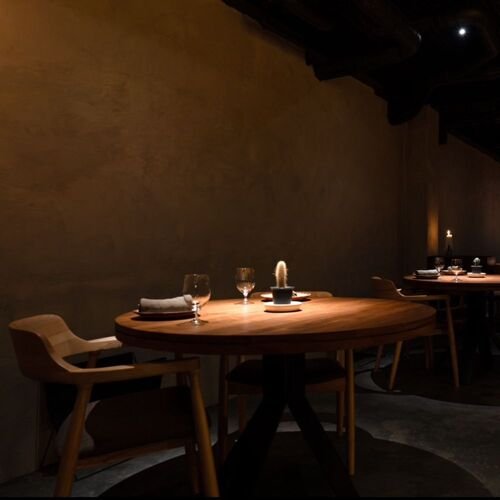
Shimmachi Adachi (Michelin Plate 2025) builds its tasting menu around Japan's ceremonial calendar — New Year, setsubun, the Doll Festival — with serving-ware and ingredients shifting to match each seasonal moment. At the ¥¥¥ tier, it offers more cultural depth than most Osaka peers at the same price. Time your visit deliberately: the experience changes meaningfully with the calendar.
At the ¥¥¥ price tier, Shimmachi Adachi earns its Michelin Plate recognition (2025) by doing something most restaurants at this level do not attempt: turning the Japanese ceremonial calendar into the architecture of a meal. If you've already eaten here once and are wondering whether to return, the answer is yes — but time your visit deliberately. The experience changes meaningfully with the seasons, and arriving at the wrong time of year means missing the specific visual and culinary logic the kitchen builds around each ceremony. That's not a minor detail; it's the entire premise.
The progression here follows the rhythm of Japan's traditional calendar rather than a conventional tasting arc of light-to-rich or raw-to-cooked. The chef structures each menu around cultural events — New Year, the setsubun bean-scattering ceremony, the Doll Festival , and the kitchen's serving-ware, garnishes, and ingredient choices shift in step. At the harvest moon, lacquerware bowls decorated with susuki (silvergrass) arrive at the table, and plates carry motifs of rabbits and the moon. Ears of susuki garnish the food itself. This is not decoration for its own sake: it is a legible visual argument about where the meal sits in the year.
Each practice is explained on the menu, which means you are not left to decode symbolism alone. For a returning guest, this is worth paying attention to on your second visit: the explanatory text rewards closer reading once you know the general shape of the meal. On a first visit, it can feel like context; on a return, it reads more like a score you can follow in real time.
The seasonal ingredient discipline reinforces the ceremonial logic throughout. Ingredients are chosen for their proper seasonal timing rather than availability or cost efficiency , a commitment that places Shimmachi Adachi in a tradition of kaiseki-adjacent thinking even if the format is not strictly kaiseki. For context, restaurants like Taian and Kashiwaya Osaka Senriyama operate at the same ¥¥¥ tier with comparable seasonal rigour, but neither frames the meal as explicitly through ceremony and cultural explanation. If that pedagogical layer appeals to you, Shimmachi Adachi is the clearer choice in Osaka at this price point.
This restaurant rewards guests who want the meal to mean something beyond the plate. If you are bringing someone who wants to understand Japanese seasonal culture through food rather than just eat well, Shimmachi Adachi delivers that clearly and without pretension. The format suits two people more comfortably than a large group: the ceremonial context and the menu explanations are better absorbed at a pace you control, and larger groups tend to dilute the focus the experience requires.
For a special occasion, the ceremonial framing does the emotional work for you. You do not need to choose a month with a famous festival , any seasonal turning point in the Japanese calendar gives the kitchen a hook, and the harvest moon period in particular produces some of the most visually considered presentations you will find at this price tier in Osaka. Compare this to Miyamoto or Yugen if you want strong Japanese cooking without the ceremonial narrative layer.
Solo diners will find the format accessible. The menu explanations give you something to engage with between courses, and the experience is structured enough that the absence of a dining companion does not leave you without a frame of reference. For solo Japanese dining in the broader region, Harutaka in Tokyo and Gion Sasaki in Kyoto offer comparable counter-oriented formality if you are building a multi-city itinerary.
Booking difficulty is rated Easy. At 4.4 stars across 36 Google reviews, this is not a restaurant where demand outpaces supply to the degree that you need to plan months in advance. Book a few weeks ahead for weekend slots and you should be fine. Weekday availability is likely more flexible, but confirm directly since hours are not published in the current data.
The ¥¥¥ price tier places this comfortably below the ¥¥¥¥ restaurants in Osaka's competitive set , HAJIME, La Cime, and Fujiya 1935 all sit a tier above. For the ceremonial depth and seasonal precision on offer, the price-to-experience ratio is strong. If you are comparing purely on value, this is one of the better arguments for staying at ¥¥¥ rather than moving up.
For broader context on where Shimmachi Adachi fits within the city's dining options, see our full Osaka restaurants guide. If you are planning an extended stay, our full Osaka hotels guide, our full Osaka bars guide, and our full Osaka experiences guide cover the rest of the city well.
For Japanese restaurants at this level elsewhere in Japan, akordu in Nara, Goh in Fukuoka, and Myojaku in Tokyo each bring their own regional logic to seasonal Japanese cooking and are worth considering as part of a wider Japan itinerary. Azabu Kadowaki in Tokyo and Oimatsu Hisano in Osaka offer additional reference points for the style. Tenjimbashi Aoki is another Osaka option worth comparing at a similar tier.
Quick reference: ¥¥¥ price tier | Michelin Plate 2025 | 4.4 stars (36 reviews) | Easy to book | Leading timed to the Japanese ceremonial calendar.
| Venue | Awards | Price | Value |
|---|---|---|---|
| Shimmachi Adachi | The chef weaves the culture of everyday Japanese life, including events such as New Year, the setsubun bean-scattering ceremony and the Doll Festival, into his creations. The practices of each event are explained on the menu, so that ancient customs may never be forgotten. Each season is honoured with its proper ingredients, as well as serving-ware decorations and arrangements based on seasonal themes. At the harvest moon, cuisine is served on lacquerware bowls decorated with images of susuki (Silvergrass) and plates bearing harvest motifs such as rabbits and the moon, and garnished with ears of susuki.; Michelin Plate (2025) | ¥¥¥ | — |
| HAJIME | Michelin 3 Star, World's 50 Best | ¥¥¥¥ | — |
| La Cime | Michelin 2 Star, World's 50 Best | ¥¥¥¥ | — |
| Kashiwaya Osaka Senriyama | Michelin 3 Star | ¥¥¥ | — |
| Taian | Michelin 3 Star | ¥¥¥ | — |
| Fujiya 1935 | Michelin 2 Star | ¥¥¥¥ | — |
How Shimmachi Adachi stacks up against the competition.
Dress respectfully — this is a ¥¥¥ Michelin Plate restaurant where the dining ritual mirrors Japan's ceremonial calendar. Business casual or above is appropriate. Overly casual clothing would feel out of step with the formality the experience is designed around.
The menu follows Japan's traditional seasonal calendar, with ingredients, serving-ware, and garnishes tied to specific events and harvests, so there is no à la carte picking and choosing — commit to the full tasting format. The menu itself explains each ceremony referenced, so let it guide you rather than arriving with specific requests.
For higher ambition and a heavier price commitment, HAJIME and Fujiya 1935 both carry full Michelin stars and push into avant-garde territory. Kashiwaya Osaka Senriyama and Taian are stronger choices if you want traditional kaiseki with deeper prestige credentials. La Cime is the better option if you prefer a French-influenced tasting menu over a ceremonially Japanese one.
Yes — the counter format and educational menu, which explains each Japanese ceremony and seasonal custom, actually make this a stronger solo experience than a group one. With a 4.4-star rating across 36 Google reviews and Easy booking difficulty, you can plan this without stress.
It works well if the occasion has cultural or seasonal significance — a birthday timed near a Japanese festival, or a meaningful meal for someone who wants context behind the food. For a straightforwardly celebratory dinner where the focus is on prestige and spectacle, a fully starred restaurant like Taian or HAJIME may land harder.
At the ¥¥¥ tier with a 2025 Michelin Plate, it delivers reasonable value if the ceremonial, calendar-driven format appeals to you — the experience is deliberately educational and seasonally specific, which most restaurants at this price point do not attempt. If you want pure technique and star-level cooking, HAJIME or Fujiya 1935 are better uses of a higher spend. Shimmachi Adachi earns its price through intention and distinctiveness, not through raw culinary prestige.
Keep this venue in your Pearl passport, rate it after you visit, and track it alongside every other place you collect.