
Sennarizushi
Sushi · Higashiyodogawa, Osaka
Restaurant in Osaka, Japan
 Book with Pearl
The Read
Edomae Precision, Osaka Bay Larder
Price
¥¥¥
Dress
Smart Casual
Why go
Sennarizushi is a Michelin Plate-recognised omakase counter in Higashiyodogawa Ward, Osaka, where Edomae technique meets Osaka Bay seafood, including sea bream, sand shrimp, and egg cockle, formed over red-vinegar rice. Booking is straightforward by Osaka fine-dining standards. At ¥¥¥, it is the right call for a special occasion sushi dinner without the reservation difficulty of a starred counter.
About Sennarizushi
Verdict
Sennarizushi is worth booking if you want omakase sushi that reflects Osaka's own waters rather than a Tokyo template. Getting a seat is not difficult by Osaka fine-dining standards, and at ¥¥¥ it sits in a manageable price tier. The reservation effort is low; the reward is a counter experience built around Edomae technique applied to local Osaka Bay seafood. If you are planning a special occasion dinner in Higashiyodogawa and want something more personal than a hotel restaurant, this is a credible answer.
About Sennarizushi
The shop's history as a delivery-focused sushi operation matters here, because it explains what makes the current format distinctive. When the present owner took over, he converted the business into a sit-down restaurant and rebuilt the menu around Edomae training, a style traditionally associated with Tokyo-style vinegared preparations and a more deliberate handling of each piece. The pivot was complete enough to earn a Michelin Plate recognition in 2025, a signal that the cooking is technically sound even if it has not yet reached star level.
The address in Higashiyodogawa Ward, at 5 Chome-5-13 Sugahara, puts Sennarizushi away from Osaka's tourist-dense dining corridors. That matters for a special occasion booking: the room is unlikely to feel like a conveyor belt of international visitors, which tends to make counter sushi more intimate. For a date or a celebratory dinner with a small group, the neighbourhood setting works in your favour. Visitors exploring our full Osaka restaurants guide will find the ward less referenced than Namba or Kitashinchi, but that is part of the draw.
Omakase format here has a practical flexibility worth knowing: the chef adjusts the ratio of nigiri to small dishes based on whether the guest is drinking. If you plan to work through sake, the progression shifts toward more drinking accompaniments before the sushi sequence. That is a useful detail for a business dinner or a long celebratory evening where the meal is as much about the table conversation as the food itself.
Seafood selection anchors to Osaka Bay catch, with sea bream, sand shrimp, and egg cockle appearing alongside the standard omakase progression. Red-vinegar rice is used for the nigiri, a choice that gives the sushi a more pronounced, savoury base than white-vinegar preparations. Edomae technique applied to local fish is the clearest statement the kitchen makes about its identity.
On the Delivery Question
Shop's origin as a delivery business is now historical context rather than current practice. The current owner moved decisively toward a restaurant model, and the Michelin recognition reflects that transition. The restaurant does not offer off-premise or delivery service. If eating in is not possible, Sushi Harasho and Matsuzushi are worth checking for alternative counter experiences in Osaka. For sushi that explicitly travels well, counter dining is the format that leading serves the Edomae style regardless of venue.
How It Compares
Within Osaka's sushi options at the ¥¥¥ tier, Sennarizushi competes most directly with Sushi Hoshiyama, Sushi Murakami Jiro, and Sushi Sanshin. The Michelin Plate at Sennarizushi is a meaningful differentiator at this price point, and the Osaka Bay seafood focus gives it a regional character that generic omakase menus do not. For sushi outside Osaka, Harutaka in Tokyo represents what a fully starred Edomae counter looks like at a higher price tier, and Sushi Shikon in Hong Kong shows the format exported internationally. Sennarizushi sits below those benchmarks in recognition but above generic sushi counters in execution.
If you are deciding between Sennarizushi and kaiseki at the same price tier, Taian and Kashiwaya Osaka Senriyama are the relevant alternatives. Both offer a longer, more ceremonial format. Sennarizushi wins if you want focused sushi rather than a multi-course kaiseki progression. For special occasions where the meal itself is the centrepiece, kaiseki at Taian or Kashiwaya delivers more theatrical structure. For a dinner where conversation and drinking matter as much as the food sequence, Sennarizushi's flexibility around sake pairings is a practical advantage.
At the ¥¥¥¥ tier, HAJIME, La Cime, and Fujiya 1935 all operate in innovative French territory, which is a different category entirely. If you want Osaka's most ambitious cooking and price is secondary, those are the options. Sennarizushi is the right call when you want sushi specifically, at a price that does not require committing a full travel budget to one dinner.
Know Before You Go
- Address: 5 Chome-5-13 Sugahara, Higashiyodogawa Ward, Osaka, 533-0022
- Price tier: ¥¥¥
- Cuisine: Sushi, Edomae style, omakase
- Awards: Michelin Plate 2025
- Booking difficulty: Easy by Osaka fine-dining standards
- Format: Omakase counter; chef adjusts small dishes based on drinking preference
- Seafood focus: Osaka Bay catch including sea bream, sand shrimp, and egg cockle
- Rice: Red-vinegar Edomae preparation
- Leading for: Special occasion dinners, date nights, solo counter dining
Explore More in Osaka and Beyond
If Sennarizushi is part of a wider Osaka trip, our full Osaka hotels guide and our full Osaka bars guide cover where to stay and drink. For day trips, akordu in Nara is a nearby option worth considering. Further afield, 1000 in Yokohama and 6 in Okinawa round out a Japan itinerary at a similar quality tier. Osaka also has a strong winery scene worth exploring via our full Osaka wineries guide.
Planning details
- Location
- 5 Chome-5-13 Sugahara, Higashiyodogawa Ward, Osaka, 533-0022, Japan
- Website
- sennarisushi.com
- Phone
- +81 6-6322-7799
The take
The Take
The Vibe
Sennarizushi sits quietly in a residential block and unfolds as an intimate, disciplined sushi counter. The room reads like a focused training ground for Edomae technique, marrying Tokyo-derived aging and vinegared rice with the seafood of Osaka Bay. The writing emphasizes seriousness—akazu shari (red-vinegar rice) and a Michelin Plate recognition underline a refined, understated craft. Guests encounter a polished, calm experience rather than theatrical dining theatre; the place feels like a neighbourhood secret that rewards attention to technique and provenance rather than flash.
Best For
This is a counter for diners who prize a considered omakase: it suits solo visitors, couples on a date, or anyone marking a quiet special occasion. The Michelin Plate nod and the house’s Edomae discipline make it appropriate for guests seeking technical precision and seafood-led flavors—sea urchin nigiri and oven-baked sea bream feature as signatures. Because the experience centers on the counter, the setting favors attentive, small-party service and the kind of slow, tasting-focused meal that reads as dinner-first.
Ordering Tips
Opt for the omakase counter experience to get the clearest sense of the chef’s Edomae approach—the menu is framed around red-vinegar rice (akazu shari) and Osaka Bay seafood. Highlighted signatures in the description—sea urchin nigiri and oven-baked sea bream—are safe bets to sample the kitchen’s strengths. Expect a disciplined progression of nigiri and seafood preparations rather than à la carte variety; the copy positions the meal as a focused tasting that negotiates Tokyo technique with Kansai ingredients.
Venue details
Ambiance
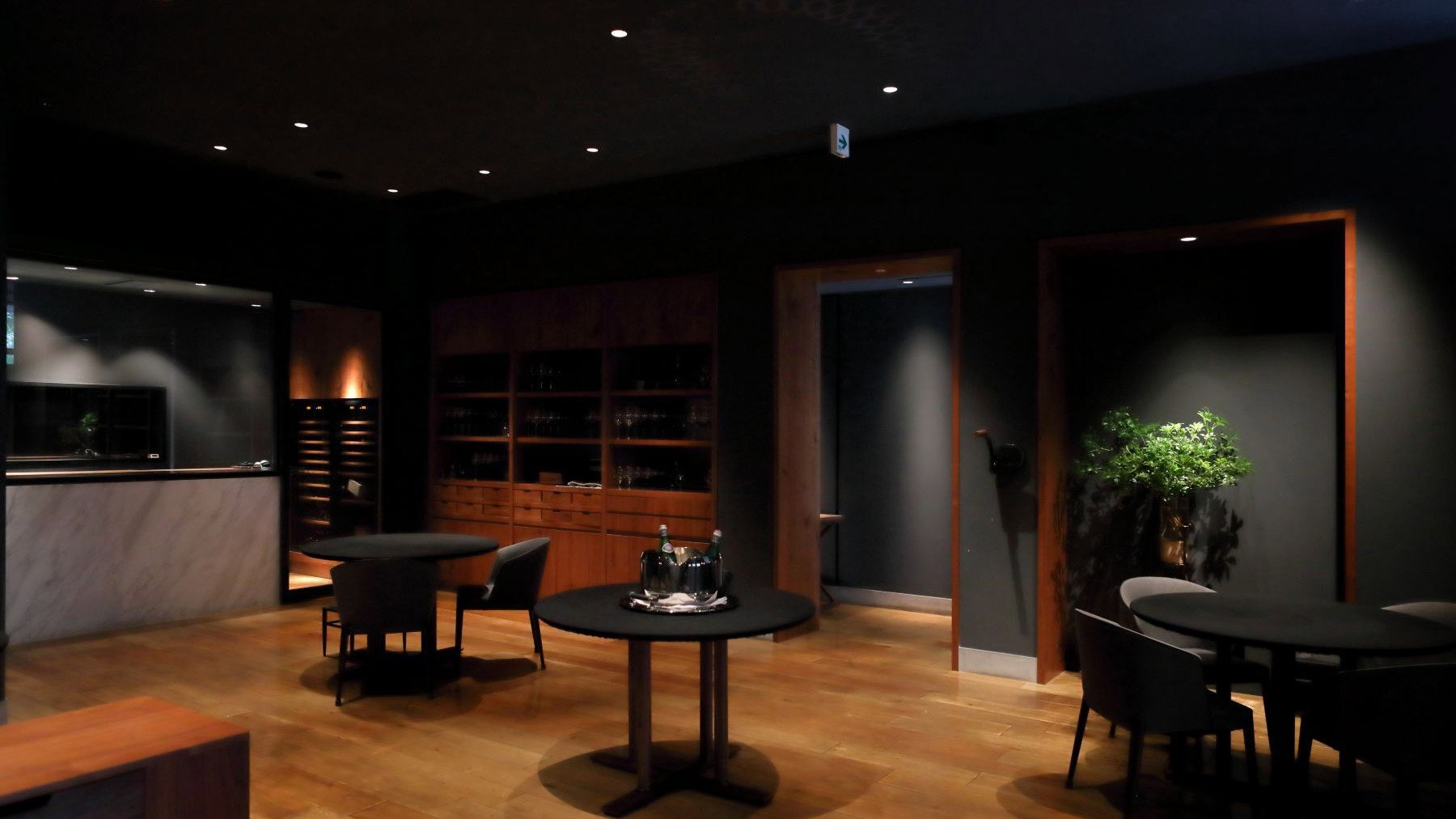
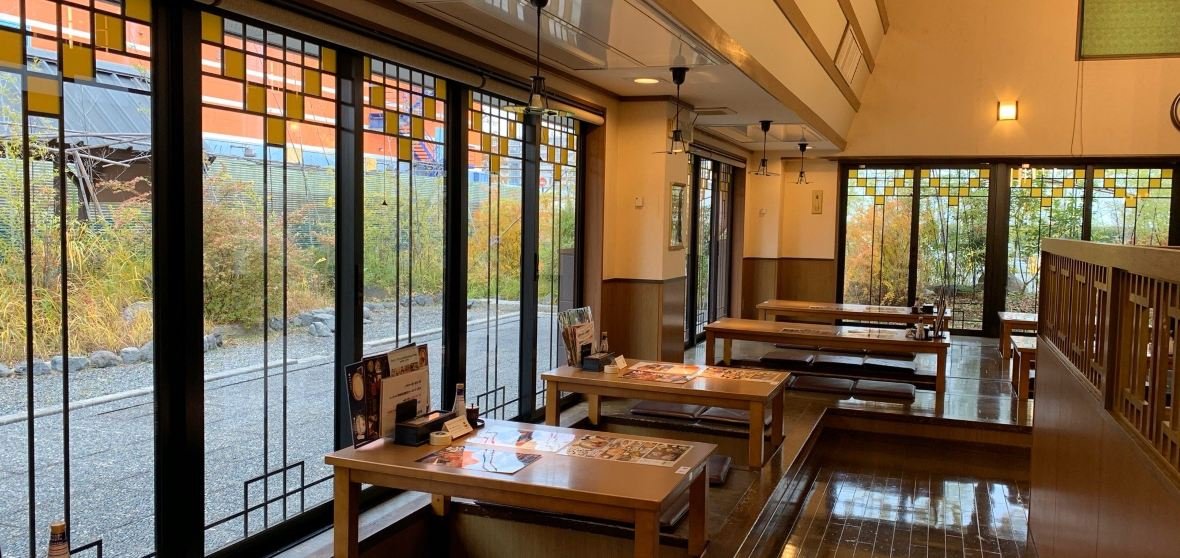
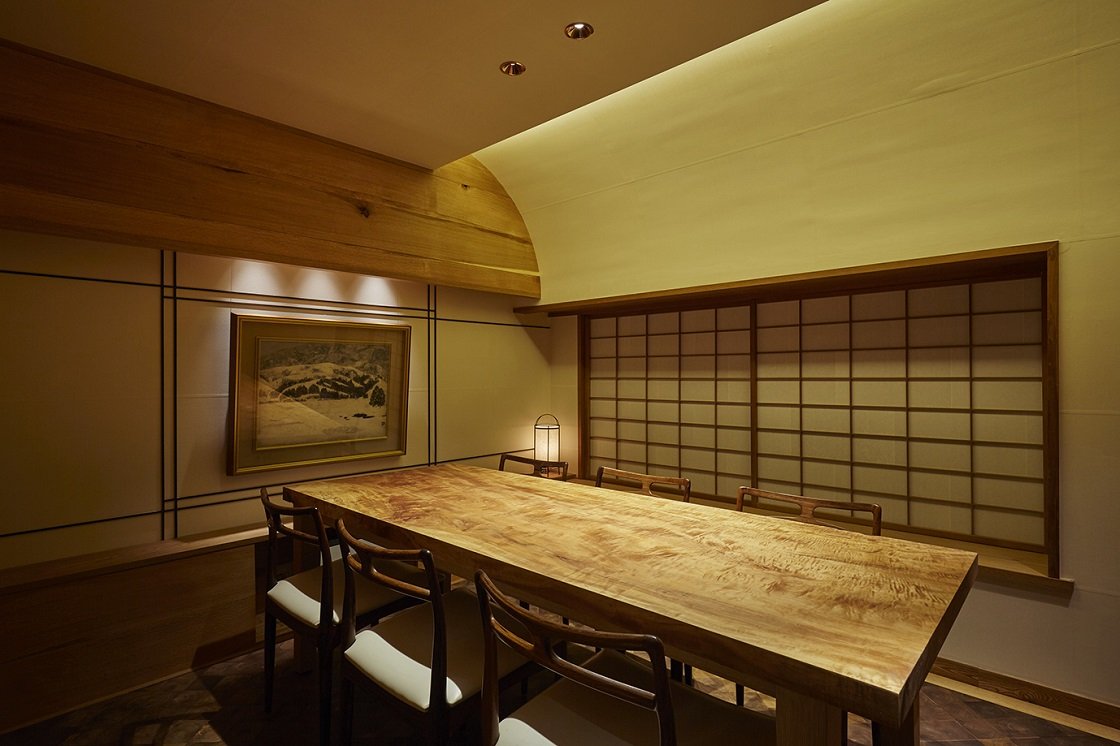
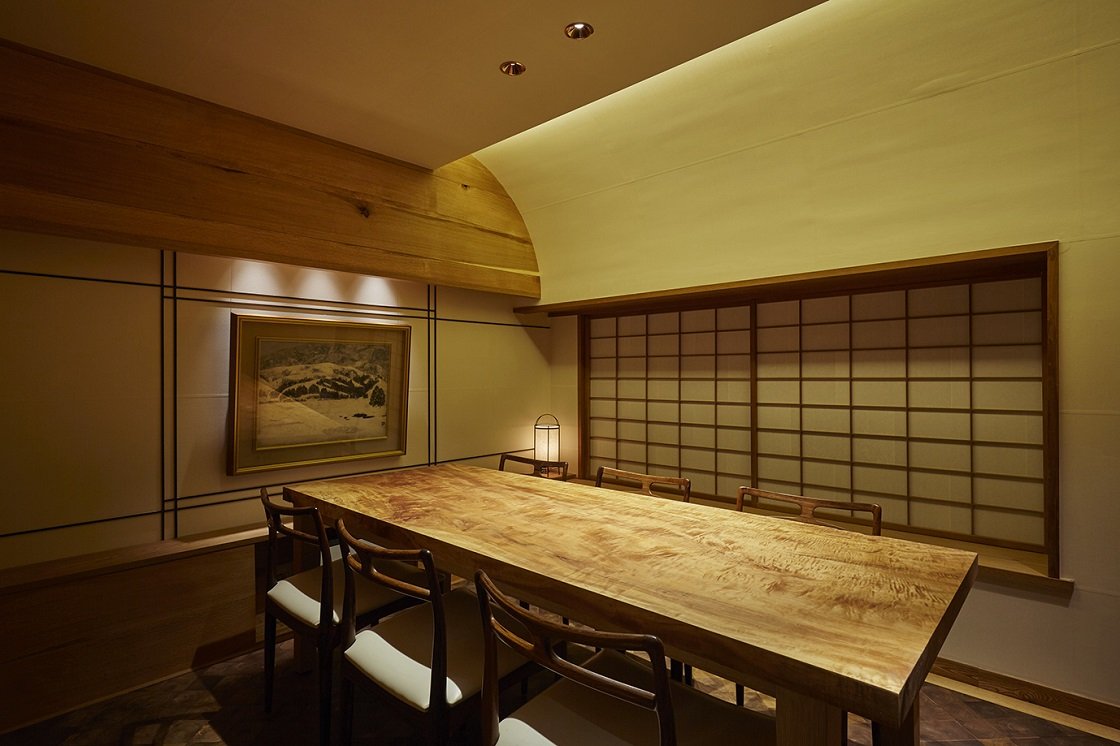
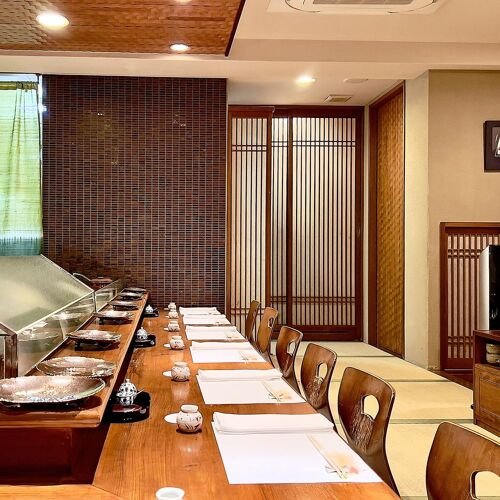
Minimalist white wood counter on concrete floor with high ceiling and airy space; intimate setting emphasizing chef craftsmanship and artistic sushi preparation.
Tags
Vibe
Best For
Experience
Sourcing
At the Table
- Dress Code
- Smart Casual
- Noise Level
- Quiet
- Service Style
- Omakase Bar
- Meal Pacing
- Extended Experience
- Capacity
- Intimate
Signature Dishes
- sea urchin nigiri
- oven-baked sea bream
Know before you go
Know Before You Go
- Getting there
- 5 Chome-5-13 Sugahara, Higashiyodogawa Ward, Osaka, 533-0022, Japan
Planning details
Location
5 Chome-5-13 Sugahara, Higashiyodogawa Ward, Osaka, 533-0022, Japan · Directions
Recognition and awards
Also consider
Also Consider
- HAJIME, French, Innovative, ¥¥¥¥
- La Cime, French, ¥¥¥¥
- Kashiwaya Osaka Senriyama, Japanese, ¥¥¥
- Taian, Kaiseki, Japanese, ¥¥¥
- Fujiya 1935, Innovative, ¥¥¥¥
Restaurant context
Within Osaka's ¥¥¥ tier, Sennarizushi is the clearest choice if sushi specifically is the goal.Taian and Kashiwaya Osaka Senriyama are the strongest alternatives at the same price tier, but both run kaiseki rather than sushi. If the format matters, Sennarizushi is the answer; if you want a longer, more ceremonial multi-course progression, either kaiseki option delivers that more fully.
For diners considering a step up to ¥¥¥¥, HAJIME, La Cime, and Fujiya 1935 are all operating in innovative French territory and represent Osaka's highest-ambition cooking. They are the right choice if budget is secondary and you want the most technically adventurous meal the city offers. Sennarizushi is not competing with that tier; it is the correct booking when you want focused Edomae sushi at a price that does not dominate the travel budget.
On booking difficulty, Sennarizushi is easier to access than most Michelin-recognised sushi counters in Japan's major cities, which is a meaningful practical advantage. If you are comparing against starred Tokyo counters like Harutaka, the gap in reservation effort alone is worth factoring into the decision. For the Osaka visitor who wants a credible, personal sushi counter without months of forward planning, Sennarizushi is the most accessible option at this quality level.
Explore Osaka
Around this place
Discover more on Pearl
Unlock the full Sennarizushi guide in Pearl, including awards, comparisons, FAQs, planning details, and nearby places.
Compare Sennarizushi
| Venue | Awards | Price |
|---|---|---|
| Sennarizushi | Michelin Guide Kyoto Osaka 20262026 Michelin Plate2025 Michelin Plate | ¥¥¥ |
| HAJIME | Star Wine Lists 2026 · #12026 Tabelog Bronze · #922026 OAD Top Restaurants in Japan Ranked · #98Michelin Guide Kyoto Osaka 20262026 La Liste Top RestaurantsTabelog 100 - Innovative / Creative cuisine - 2025 · #692025 Asia's 50 Best Restaurants · #832025 OAD Top Restaurants in Japan Ranked · #87We're Smart World Top Restaurants 2025 | ¥¥¥¥ |
| La Cime | 2026 Asia's 50 Best Restaurants · #132026 OAD Top Restaurants in Japan Ranked · #1492026 Tabelog Bronze · #231Michelin Guide Kyoto Osaka 20262026 La Liste Top Restaurants2025 Asia's 50 Best Restaurants · #82025 World's 50 Best Restaurants · #44Tabelog 100 - French - WEST - 2025 · #932025 OAD Top Restaurants in Japan Ranked · #123 | ¥¥¥¥ |
| Kashiwaya Osaka Senriyama | 2026 Tabelog Bronze · #1682026 OAD Top Restaurants in Japan Recommended2026 Relais Chateaux RestaurantsMichelin Guide Kyoto Osaka 20262026 La Liste Top RestaurantsTabelog 100 - Japanese cuisine - WEST - 2025 · #772025 OAD Top Restaurants in Japan Ranked · #1552025 Relais Chateaux Award2025 Michelin 3 Stars | ¥¥¥ |
| Taian | 2026 OAD Top Restaurants in Japan RecommendedMichelin Guide Kyoto Osaka 20262026 La Liste Top Restaurants2025 OAD Top Restaurants in Japan Ranked · #2042025 La Liste Top Restaurants2025 Michelin 3 Stars2024 OAD Top Restaurants in Japan Ranked · #1912024 Michelin 3 Stars2023 OAD Top Restaurants in Japan Highly Recommended | ¥¥¥ |
| Fujiya 1935 | 2026 Tabelog Bronze · #752026 OAD Top Restaurants in Japan RecommendedMichelin Guide Kyoto Osaka 20262026 La Liste Top Restaurants2025 Michelin 2 Stars2025 Tabelog Silver2025 La Liste Top Restaurants2024 OAD Top Restaurants in Japan Ranked · #2392024 Michelin 2 Stars | ¥¥¥¥ |
.png?width=1200&quality=80)









A quick look at how Sennarizushi measures up.
FAQ
Frequently Asked Questions
Is the tasting menu worth it at Sennarizushi?
Yes, if Edomae-style omakase is the format you want. The chef sequences pieces around your preferences, adjusting the ratio of small dishes to sushi depending on how much you're drinking, which makes the ¥¥¥ price feel earned. The use of Osaka Bay seafood — sea bream, sand shrimp, egg cockle — gives the menu a regional character you won't find at Tokyo-derived counters. If you want à la carte control, this is the wrong room.
Is Sennarizushi worth the price?
At the ¥¥¥ tier, Sennarizushi holds a Michelin Plate (2025), which puts it in credible company without the three-figure-per-person premium of starred Osaka sushi. The responsive format — the chef reads the table and adapts — adds value over a fixed script. For the price, it competes well against Sushi Hoshiyama and Sushi Sanshin; whether it beats them depends on how much you value local Osaka Bay sourcing over a more classical Edomae lineup.
Can I eat at the bar at Sennarizushi?
The venue operates as a counter-style omakase restaurant, so counter seating is the format rather than an option. There is no separate dining room to choose between. That means solo diners and couples get the full experience at the bar by default.
What are alternatives to Sennarizushi in Osaka?
Within the ¥¥¥ sushi tier in Osaka, Sushi Hoshiyama and Sushi Sanshin are the closest direct comparisons. For a step up in formal ambition and budget, Taian and Kashiwaya Osaka Senriyama cover kaiseki rather than sushi. If you want sushi at a higher price point with more extensive credentials, check what's available at the starred level before committing.
What should a first-timer know about Sennarizushi?
The restaurant grew out of a delivery sushi business; the current owner shifted the operation to a sit-down counter and introduced Edomae training, so the format is relatively recent rather than generations-old. Expect omakase sequencing with Osaka Bay fish woven into the nigiri alongside more standard Edomae items. Red-vinegar rice is used throughout, which gives the sushi a firmer, more pronounced flavour than white-vinegar rice — a detail worth knowing if you're particular about that.
What should I wear to Sennarizushi?
A dress code is not specified. For a ¥¥¥ counter omakase in Osaka, neat, presentable clothing is the practical standard — nothing formal required, but avoid overly casual dress out of respect for the counter format. Strong fragrances are worth skipping at any close-proximity sushi counter.
Is Sennarizushi good for solo dining?
Yes — counter omakase is one of the most solo-friendly formats in Japanese dining. You're seated at the bar, the chef reads your preferences as the meal progresses, and the pacing is handled for you. Sennarizushi's adaptive approach, adjusting small dishes based on how much you drink, works particularly well when the chef is responding to a single guest.