.png?width=1200&quality=80)
Hommachi Seimenjo Chukasobakobo
Ramen · Chūō, Osaka
Restaurant in Osaka, Japan
 Book with Pearl
The Read
Dashi-Forward Chukasoba
Price
$10–20per person
Dress
Casual
Why go
A Michelin Bib Gourmand ramen counter (2024 and 2025) inside Osaka's Semba Center Building, where a dried foods wholesaler turns ingredient expertise into a layered dashi broth. At ¥ per head, it offers more technical precision per yen than most of Osaka's recognised ramen options. Walk-in only; arrive before the lunch peak.
About Hommachi Seimenjo Chukasobakobo
Verdict
If you have already eaten here once, the question on a return visit is not whether to come back: it is whether the dashi will land the same way it did the first time. It does. Hommachi Seimenjo Chukasobakobo, the ramen counter born from a dried foods wholesaler inside Semba Center Building, is one of Osaka's most consistent bowls at the lowest price tier. Book it: or simply show up, before lunch peaks.
Portrait
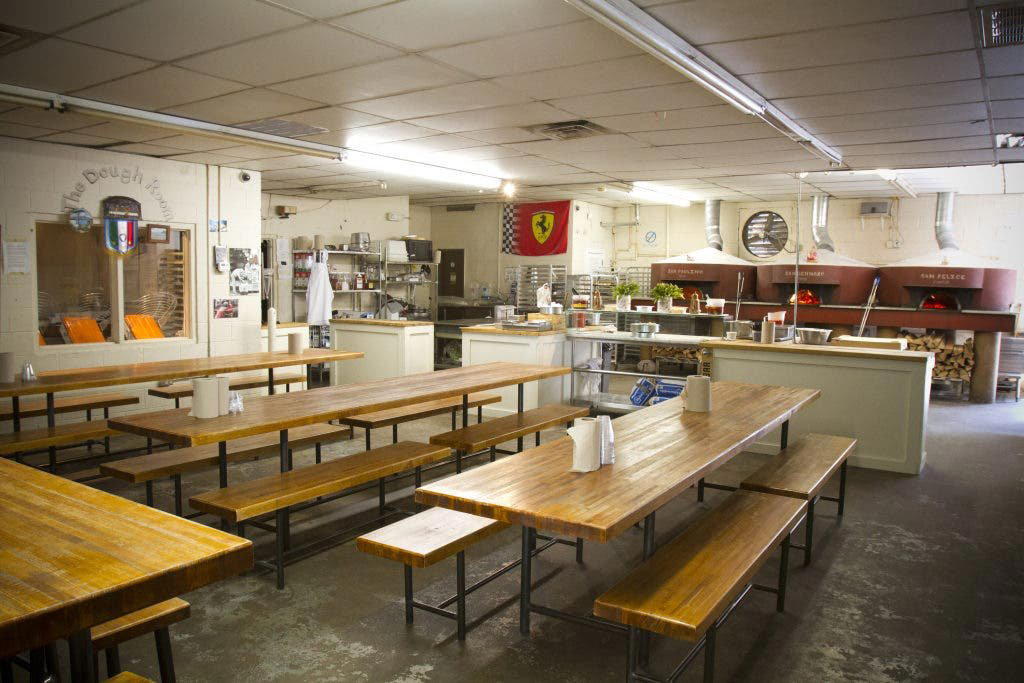
The setting is deliberately unglamorous. Semba Center Building is a mid-century wholesale trading complex that runs beneath an refined expressway in Chuo Ward, and the restaurant occupies basement level two of Building 2. The space signals its origin clearly: low ceilings, functional lighting, a compact footprint suited to quick turnover. There is no design statement here, no architectural moment. What the room does offer is focus, the kind of focused attention that follows when there is nothing to look at except the bowl in front of you. For the food-driven visitor who seeks depth over atmosphere, this is the right trade-off. Explorers of Japanese food culture will find the context as interesting as the product: a dried goods wholesaler turning its supply-chain knowledge into a soup program is a direct expression of ingredient provenance.
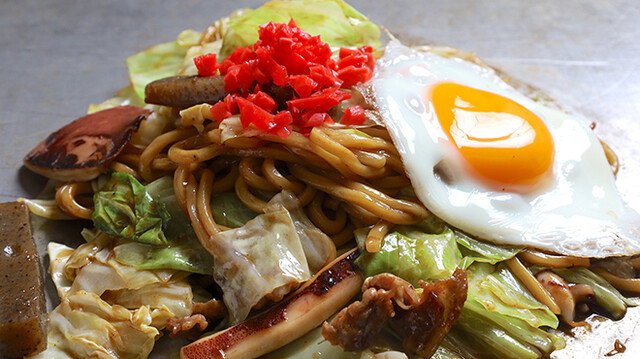
The soup is the reason this venue earns its Bib Gourmand twice over. The dashi base draws on multiple dried fish varieties, the specific blend is the kitchen's expertise, alongside kombu kelp, pike conger, and chicken bones. The result is a broth with layered aromatic depth: the initial fragrance opens cleanly, the body builds through the mid-palate, and the finish has enough weight to hold your attention. For a bowl at the ¥ price tier, this is the kind of technical precision you encounter far less often than the price would suggest. In the context of Osaka ramen, where competition among Bib-level spots is meaningful, the soup here holds its own against venues charging considerably more per visit.
Noodle program adds a second decision layer. Two house-made options, flat noodles cut for soup absorption, round noodles for textural contrast, mean even a return visit offers a different experience depending on your choice. This is a detail that rewards the attentive diner. If you are visiting for the first time, the flat noodles make the dashi the main event. On a return visit, the round noodles shift emphasis toward bite and structure. Neither choice is wrong; the distinction is simply useful to know before you order.
On the question of beverage pairing, which matters less at a ¥ ramen counter than at any other venue type, there is no wine program to assess here. The editorial angle around beverage depth does not apply in the way it would at a kaiseki room or a French table. What replaces it is the liquid itself: the soup stock is, functionally, the primary flavor vehicle, and the kitchen's investment in dashi quality is equivalent to the investment a fine-dining kitchen makes in its wine list. The dried fish sourcing, the kombu selection, the layering of animal and plant proteins in the broth, this is where the craft lives. For an explorer interested in Japanese culinary tradition, understanding dashi as a precision discipline is as rewarding as reading a wine program at Gion Sasaki in Kyoto or working through a sake pairing at a kaiseki counter.
For Osaka-specific ramen context, the city's scene rewards comparison. Chukasoba Mugen, Chukasoba Uemachi, and Mugito Mensuke each operate in the same broad category and are worth including in any multi-day ramen itinerary. Kadoya Shokudo and Kamigata Rainbow offer further variation on Osaka's approach to noodle-led dining. Across all of them, Hommachi Seimenjo Chukasobakobo's Bib Gourmand recognition and its origin story give it a distinct angle, ingredient provenance made edible, that the others do not share in the same way.
If your Osaka trip extends to other cities, the broader Kansai ramen and fine-dining circuits are worth mapping: Harutaka in Tokyo, akordu in Nara, and Goh in Fukuoka each represent different expressions of Japanese culinary precision at different price tiers. For ramen specifically outside Japan, Afuri, Ramen in Tokyo and Afuri Ramen in Portland provide a useful contrast in how the format travels. For deeper planning across Osaka, see our full Osaka restaurants guide, bars guide, hotels guide, wineries guide, and experiences guide.
Ratings & Recognition
- Michelin Bib Gourmand, 2025
- Michelin Bib Gourmand, 2024
Booking
Booking difficulty is rated Easy. No reservation system is listed in available data, and the venue's format, a counter-style ramen shop in a basement food hall, suggests walk-in is the standard approach. Arriving before the lunch peak is advisable. Queue times at Bib Gourmand ramen counters in Osaka can extend significantly at 12:00–13:00; arriving at 11:30 or after 13:30 reduces wait time.
Practical Details
| Detail | Hommachi Seimenjo Chukasobakobo | Chukasoba Mugen | Chukasoba Uemachi |
|---|---|---|---|
| Price tier | ¥ | ¥ | ¥ |
| Cuisine | Ramen / Chukasoba | Chukasoba | Chukasoba |
| Michelin recognition | Bib Gourmand (2024, 2025) | ||
| Booking difficulty | Easy / Walk-in | ||
| Location type | Basement food hall, Semba | Osaka | Osaka |
FAQ
What should I order at Hommachi Seimenjo Chukasobakobo?
- The dashi-based chukasoba is the core order, the broth, built from multiple dried fish varieties, kombu, pike conger, and chicken bones, is the kitchen's primary technical achievement and the reason the venue holds two consecutive Bib Gourmand awards.
- On a first visit, the flat noodles maximise the soup experience. On a return visit, try the round noodles for textural contrast. Both are made on the premises.
- There is no wine or sake list to consider, this is a focused ramen counter. The bowl is the entire decision.
Can Hommachi Seimenjo Chukasobakobo accommodate groups?
- The venue's basement counter format in Semba Center Building suggests limited capacity. Groups of four or more may face a wait or may need to split seating.
- For groups who want to eat together without logistics friction, a reservation-based venue such as Kashiwaya Osaka Senriyama or Taian at the ¥¥¥ tier offers more predictable group seating, though at significantly higher cost.
- For a ¥-tier ramen outing with a group, arriving off-peak (before noon or after 1:30 PM) is the most practical approach.
What should I wear to Hommachi Seimenjo Chukasobakobo?
- No dress code applies. This is a Bib Gourmand ramen counter in a wholesale building basement, casual dress is standard and expected.
- The ¥ price tier and the functional basement setting mean there is no mismatch between casual clothing and the room. Dress for comfort, not occasion.
- If your Osaka itinerary includes a higher-end venue the same evening, HAJIME or La Cime at ¥¥¥¥, plan your outfit around the evening, not the ramen lunch.
What should a first-timer know about Hommachi Seimenjo Chukasobakobo?
- The venue is inside Semba Center Building 2 (船場センタービル2号館), basement level 2, in Chuo Ward. The building is a functioning wholesale complex, not a restaurant destination in the conventional sense, allow time to find the counter on a first visit.
- At ¥ per head, this is among Osaka's most accessible Michelin-recognised ramen. The Bib Gourmand signals consistent quality at an accessible price, not fine-dining production values, the setting is utilitarian and the service is quick.
- Walk-in is the standard mode. Arriving before the lunch peak is the most reliable strategy for avoiding a queue.
- For broader Osaka ramen context, Chukasoba Mugen, Mugito Mensuke, and Kamigata Rainbow are worth adding to the same trip for comparison.
Planning details
- Hours
- Monday: 11 AM–7 PM · Tuesday: 11 AM–7 PM
- Location
- Japan, 〒541-0055 Osaka, Chuo Ward, Senbachuo, 1 Chome−3−2 船場センタービル 2号館地下2階
- Website
- tabelog.com/osaka/A2701/A270106/27120491
- Phone
- +81 6-4708-7717
The take
The Take
The Vibe
Hommachi Seimenjo Chukasobakobo feels like a quietly focused neighborhood ramen shop. Tucked in the basement of the Semba Center Building, its wholesale origins steer every detail toward precision: the broth is built from multiple dried fish flakes, kombu and chicken bones to produce a layered, umami-forward dashi. The tone is restrained rather than theatrical, Osaka’s ‘quieter register’ of ramen, so the experience is more about attentive craft than flash. Michelin’s Bib Gourmand nod underscores the serious, unpretentious quality you’ll find here: understated surroundings, meticulous stock work, and a bowl that rewards close tasting.
Best For
This is a go-to for solo diners and low-key meetups who want a bowl that showcases ingredient-driven technique. The basement location in Chuo Ward’s wholesale district makes it feel like a specialist stop rather than a destination restaurant; it suits quick lunches or relaxed dinners centered on serious broth work. The shop’s provenance, launched by a dried-foods wholesaler, means the menu favors depth of flavor over bells and whistles, so it’s ideal for people who come to appreciate nuanced dashi and the subtlety of Osaka-style ramen.
Ordering Tips
Order with the dashi in mind: the shop’s signature broths are built from multiple dried fish flakes, kombu and chicken bones, so choose dishes that let that layered umami lead. The duck ramen and BBQ pork rice are highlighted as signature items and are a reliable way to sample the house approach to both noodle work and accompaniments. Taste the soup across the first sip, the middle and the finish to follow the development the kitchen emphasizes: clean fragrance up front, increasing body in the middle, and a rounded finish.
Venue details
Ambiance
Cozy atmosphere in a basement location with counter seating, focusing on authentic ramen dining.
Tags
Vibe
Best For
Sourcing
At the Table
- Dress Code
- Casual
- Noise Level
- Conversational
- Service Style
- Counter Service
- Meal Pacing
- Quick Bite
- Capacity
- Intimate
- Kitchen
- Traditional
- Menu Format
- A la carte, Counter dining
Signature Dishes
- duck ramen
- BBQ pork rice
Know before you go
Know Before You Go
- Getting there
- Japan, 〒541-0055 Osaka, Chuo Ward, Senbachuo, 1 Chome−3−2 船場センタービル 2号館地下2階
Planning details
Hours
- Monday
- 11 AM–7 PM
- Tuesday
- 11 AM–7 PM
- Wednesday
- 11 AM–7 PM
- Thursday
- 11 AM–7 PM
- Friday
- 11 AM–7 PM
- Saturday
- 11 AM–7 PM
- Sunday
- Closed
Location
Japan, 〒541-0055 Osaka, Chuo Ward, Senbachuo, 1 Chome−3−2 船場センタービル 2号館地下2階 · Directions
Recognition and awards
Also consider
Also Consider
- HAJIME: French, Innovative, ¥¥¥¥
- La Cime: French, ¥¥¥¥
- Kashiwaya Osaka Senriyama: Japanese, ¥¥¥
- Taian: Kaiseki, Japanese, ¥¥¥
- Fujiya 1935: Innovative, ¥¥¥¥
Restaurant context
Hommachi Seimenjo Chukasobakobo sits in a completely different spending bracket from most of Osaka's Michelin-recognised dining. HAJIME and Fujiya 1935 at ¥¥¥¥ are serious destination restaurants requiring advance reservations, formal dress consideration, and a willingness to commit an evening. La Cime is similarly positioned. If you are deciding between a ¥¥¥¥ French or innovative tasting menu and this ramen counter, you are not choosing between comparable experiences: you are choosing between two different kinds of Osaka meal, each valid on its own terms.
At the ¥¥¥ tier, Kashiwaya Osaka Senriyama and Taian offer kaiseki and Japanese precision dining with reservation systems, private seating options, and sake or beverage programs. For a group or a special occasion, either is a more practical choice than a basement ramen counter. Hommachi Seimenjo beats both on value and accessibility, and its Bib Gourmand recognition means the quality gap is smaller than the price gap implies: but the format is not interchangeable with a seated multi-course experience.
Within the ¥ ramen tier in Osaka, Hommachi Seimenjo's double Bib Gourmand gives it a verifiable edge over unrecognised competitors. For a visitor with limited time and an interest in technically serious ramen, this is the most efficient booking in the category: easy to access, walk-in viable, and backed by two consecutive years of Michelin acknowledgement. If you are building a multi-day Osaka food itinerary, anchor one lunch here and reserve your bigger budget for an evening at one of the ¥¥¥ or ¥¥¥¥ venues above.
Explore Osaka
Around this place
Discover more on Pearl
Unlock the full Hommachi Seimenjo Chukasobakobo guide in Pearl, including awards, comparisons, FAQs, planning details, and nearby places.
Compare Hommachi Seimenjo Chukasobakobo
| Venue | Price | Awards |
|---|---|---|
| Hommachi Seimenjo Chukasobakobo | ¥ | 2026 Bib Gourmand2025 Michelin Bib Gourmand2024 Michelin Bib Gourmand |
| HAJIME | ¥¥¥¥ | Star Wine Lists 2026 · #12026 Tabelog Bronze · #922026 OAD Top Restaurants in Japan Ranked · #98Michelin Guide Kyoto Osaka 20262026 La Liste Top RestaurantsTabelog 100 - Innovative / Creative cuisine - 2025 · #692025 Asia's 50 Best Restaurants · #832025 OAD Top Restaurants in Japan Ranked · #87We're Smart World Top Restaurants 2025 |
| La Cime | ¥¥¥¥ | 2026 Asia's 50 Best Restaurants · #132026 OAD Top Restaurants in Japan Ranked · #1492026 Tabelog Bronze · #231Michelin Guide Kyoto Osaka 20262026 La Liste Top Restaurants2025 Asia's 50 Best Restaurants · #82025 World's 50 Best Restaurants · #44Tabelog 100 - French - WEST - 2025 · #932025 OAD Top Restaurants in Japan Ranked · #123 |
| Kashiwaya Osaka Senriyama | ¥¥¥ | 2026 Tabelog Bronze · #1682026 OAD Top Restaurants in Japan Recommended2026 Relais Chateaux RestaurantsMichelin Guide Kyoto Osaka 20262026 La Liste Top RestaurantsTabelog 100 - Japanese cuisine - WEST - 2025 · #772025 OAD Top Restaurants in Japan Ranked · #1552025 Relais Chateaux Award2025 Michelin 3 Stars |
| Taian | ¥¥¥ | 2026 OAD Top Restaurants in Japan RecommendedMichelin Guide Kyoto Osaka 20262026 La Liste Top Restaurants2025 OAD Top Restaurants in Japan Ranked · #2042025 La Liste Top Restaurants2025 Michelin 3 Stars2024 OAD Top Restaurants in Japan Ranked · #1912024 Michelin 3 Stars2023 OAD Top Restaurants in Japan Highly Recommended |
| Fujiya 1935 | ¥¥¥¥ | 2026 Tabelog Bronze · #752026 OAD Top Restaurants in Japan RecommendedMichelin Guide Kyoto Osaka 20262026 La Liste Top Restaurants2025 Michelin 2 Stars2025 Tabelog Silver2025 La Liste Top Restaurants2024 OAD Top Restaurants in Japan Ranked · #2392024 Michelin 2 Stars |











What to weigh when choosing between Hommachi Seimenjo Chukasobakobo and alternatives.
FAQ
Frequently Asked Questions
What should I order at Hommachi Seimenjo Chukasobakobo?
The dashi-based chukazoba is the reason Michelin awarded this shop a Bib Gourmand in both 2024 and 2025: order it. The kitchen makes two noodle types in-house: flat noodles designed to carry the broth, and rounder noodles for texture. If you have the option, ask which the counter staff recommend that day. Skip anything that pulls you away from the main bowl; this is a single-focus shop.
Can Hommachi Seimenjo Chukasobakobo accommodate groups?
This is a counter-style ramen shop in the basement of a wholesale trading complex, so it is better suited to solo diners and pairs than to groups. Parties of four or more should expect to queue separately or split across seats. If your group wants a sit-down Osaka experience with more flexibility, La Cime or Kashiwaya Osaka Senriyama offer private or table dining: at significantly higher prices.
What should I wear to Hommachi Seimenjo Chukasobakobo?
Dress casually. The venue is a basement ramen counter inside a mid-century wholesale market building at ¥ price point: there is no dress expectation beyond being comfortable. Business casual or even workwear is fine given the Semba district office crowd, but there is no need to change plans around attire.
What should a first-timer know about Hommachi Seimenjo Chukasobakobo?
This shop was founded by a dried foods wholesaler, which explains why the dashi is the defining element rather than a rich pork or chicken broth: it is built from multiple dried fish flakes, kombu kelp, pike conger, and chicken bones layered for depth. At ¥ pricing with back-to-back Michelin Bib Gourmand recognition, the value case is clear. Find it in the basement of Semba Center Building 2 in Chuo Ward; the location is easy to miss if you are not looking for it.