

Raku
Sushi · East Village, New York City
Restaurant in New York City, United States
 Book with Pearl
The Read
Handmade Udon Precision
Chef
Norihiro Ishizuka
Dress
Casual
Why go
Raku is the strongest case for udon in New York City, backed by an OAD North America ranking (#391, 2025) and from over 1,200 visitors. Chef Norihiro Ishizuka's handmade noodles are the draw — served in complex dashi with garnishes that change by visit. Easy to book, late-night viable in the East Village, and far cheaper than the city's omakase counters.
About Raku
Verdict
If you have eaten at Raku once, you already know the answer: come back. The udon holds up on a second visit in a way that most noodle spots in New York do not. Chef Norihiro Ishizuka's handmade udon — springy, al dente, each strand finished with a characteristic pinched end — is the reason this East Village address has expanded to three New York City locations and one in Toronto. Ranked #391 on the Opinionated About Dining Leading Restaurants in North America (2025), Raku earns its place not through novelty but through consistency.
The Case for Booking
Raku belongs in the conversation whenever you want serious Japanese cooking without the omakase price tag or the booking difficulty of a counter like Sushi Sho or Shion 69 Leonard Street. The format is accessible and the booking is easy, a meaningful advantage on a Tuesday night when you want something substantive without planning two weeks ahead.
The kitchen's focus is udon, but the context matters: in New York, udon is routinely sidelined by ramen and soba. Ishizuka's version makes a credible argument for why it deserves equal footing. The dashi is complex and deeply flavored, functioning as a serious base rather than a background note. Garnishes, tempura, nameko mushrooms, crab, duck, are chosen to work with the noodle rather than distract from it. This is the kind of cooking that rewards attention, which makes it well suited to the food-focused guest who wants depth without ceremony.
Late-Night at Raku
The East Village location matters when you are thinking about what to eat after 10 PM. The neighborhood runs later than most of Manhattan, and Raku's format, quick-turning bowls rather than multicourse tasting menus, makes it practical for a post-theatre supper or a late meal after drinks elsewhere on the block. For context, options like Joji or Bar Masa are not realistic late-night propositions. Raku is. If you are looking for serious Japanese cooking that does not require a 7 PM reservation locked in three weeks ago, this is one of the more practical answers in the city. Check current hours directly before visiting, as late-night availability can shift by season.
Atmosphere
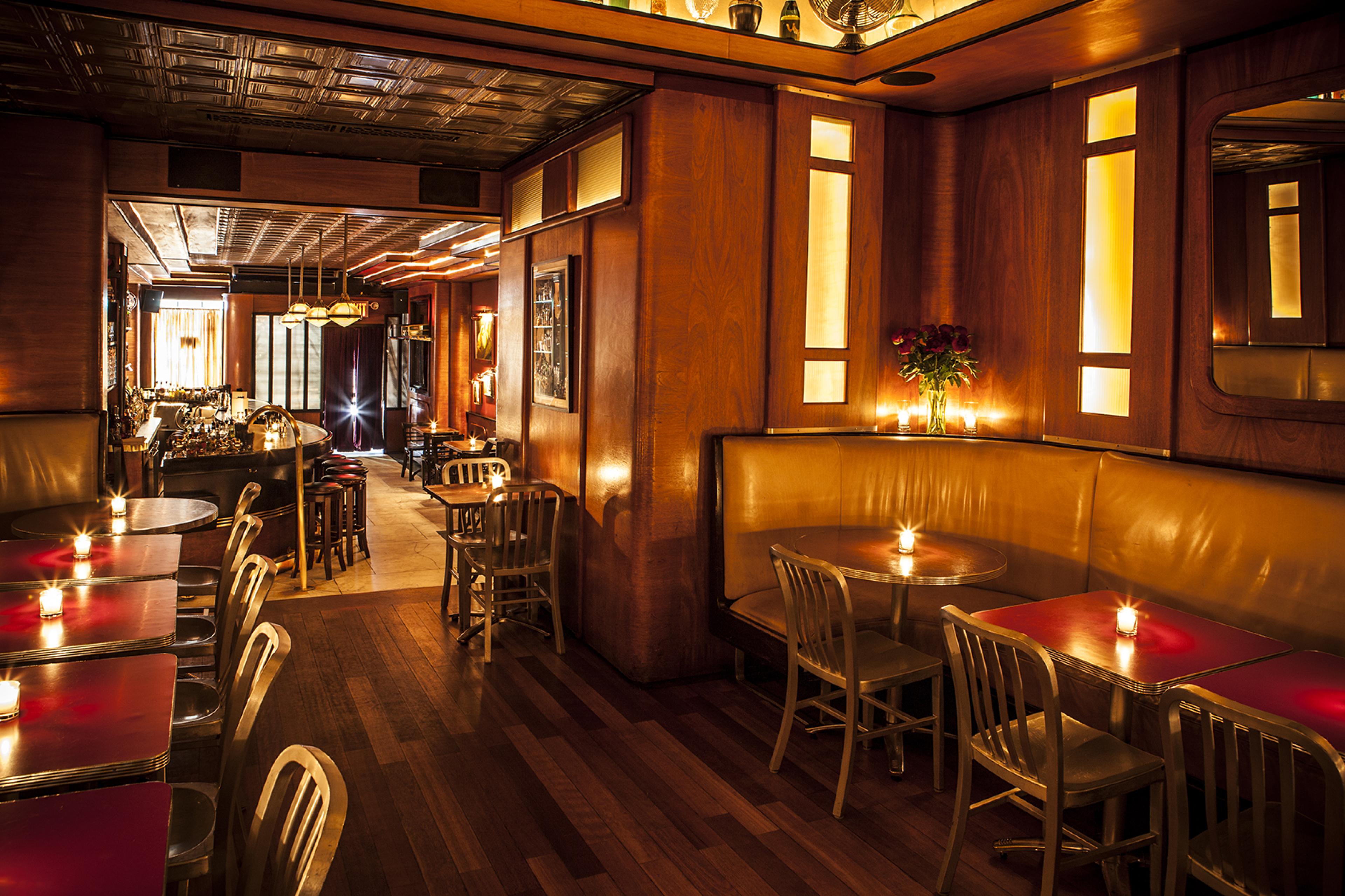
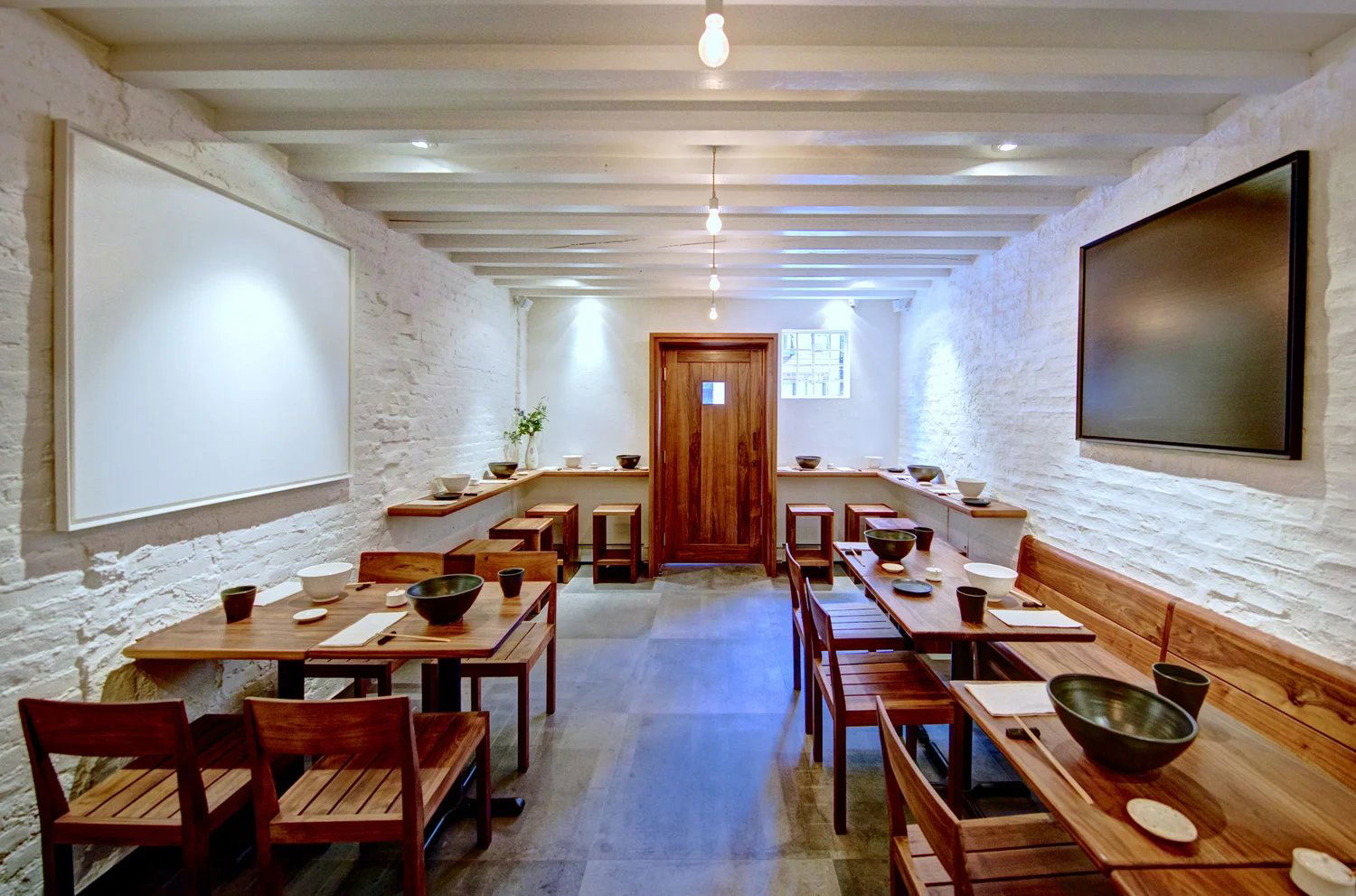
Room is compact and energetic rather than hushed. Expect ambient noise, the East Village does not do quiet corners on a Friday night, but the energy works for the format. This is not a place to have a conversation at a whisper, but it is a place where the food justifies raising your voice slightly. Compared to the studied calm of Blue Ribbon Sushi, Raku runs warmer and less polished in atmosphere, which is not a criticism, it fits the neighborhood and the price point.
Practical Details
| Detail | Raku | Blue Ribbon Sushi | Bar Masa |
|---|---|---|---|
| Cuisine | Udon / Japanese | Sushi / Japanese | Sushi / Japanese |
| Price Range | Not published | $$$ | $$$$ |
| Booking Difficulty | Easy | Moderate | Moderate |
| Neighborhood | East Village | SoHo / Upper West Side | Columbus Circle |
| OAD Ranked (2025) | #391 North America | ||
| Late-Night Viable | Yes (check hours) | Yes | No |
For more on eating and drinking in the city, see our full New York City restaurants guide, our full New York City bars guide, and our full New York City hotels guide. If you are planning a broader trip, our New York City experiences guide and wineries guide are worth a look.
Pearl FAQ
What should I order at Raku?
Order the udon. That is the point of this restaurant. Chef Norihiro Ishizuka makes the noodles by hand, springy, al dente, with a pinched end that is a hallmark of his technique, and the dashi they arrive in is complex enough to make the bowl worth eating slowly. Tempura, nameko mushrooms, crab, and duck appear as garnishes depending on availability. If you are here for sushi, you are in the wrong place; consider Joji or Sushi Sho instead.
Is Raku good for a special occasion?
Depends on your definition. If a special occasion means a hushed room, extensive wine service, and multicourse ceremony, Raku is not your answer, look at Atomix or Per Se for that. But if a special occasion means eating something genuinely accomplished at a place that is hard to replicate, Raku earns the visit.
What should I wear to Raku?
No dress code is published, and the East Village setting means smart-casual is more than sufficient. You will be comfortable in the same clothes you wore to a gallery opening or a concert. This is not a white-tablecloth environment, so leave the formal wear for Le Bernardin.
Can Raku accommodate groups?
Seat count is not published, but three New York City locations means flexibility if one site is at capacity. Booking is rated easy, which suggests groups are manageable with reasonable advance notice. For a large private dining situation, call ahead, nothing in the public record confirms a dedicated private room, so do not assume one exists. If a private room is non-negotiable, Eleven Madison Park is a more certain bet.
What are alternatives to Raku in New York City?
For udon specifically, alternatives are limited in quality terms, that is part of Raku's value. For broader Japanese cooking at different price points: Bar Masa is the accessible entry point to the Masa ecosystem at a fraction of the full counter price. Blue Ribbon Sushi is a dependable late-night sushi option. For serious omakase, Shion 69 Leonard Street and Sushi Sho are the harder-to-book, higher-stakes alternatives. If you are curious how New York's Japanese dining compares to Tokyo or Hong Kong, see Harutaka in Tokyo and Sushi Shikon in Hong Kong for reference points.
Pearl Picks, If You Are Exploring Further
- Smyth in Chicago, for serious tasting-menu cooking in a comparable price tier
- Providence in Los Angeles, for West Coast seafood with similar craft-focused intent
- Lazy Bear in San Francisco, if format innovation and a communal dining experience appeal
- Single Thread Farm in Healdsburg, for a Japanese-inflected tasting menu with Michelin recognition
- Emeril's in New Orleans, for a landmark American restaurant worth comparing against New York's dining culture
- The French Laundry in Napa, the benchmark for long-form American fine dining
Planning details
- Location
- 342 E 6th St, New York, NY 10003
- Reservations
- Book on Resy
- Website
- rakunyc.com
The take
The Take
The Vibe
Raku presents itself as a focused, unpretentious counterpoint to the city's ramen obsession. Located on East 6th Street in the East Village, it leans into everyday craftsmanship rather than theatrical dining—no reservation marathon, no omakase mystique. The writing emphasizes technique: careful dough handling, hydration, and kneading that determine the udon's texture. The result is a neighborhood noodle shop with serious craft credentials, one that attracts local regulars and repeat visitors who value the work that goes into a perfectly elastic, al dente udon bowl. It reads as quietly assured and approachable rather than flashy.
Best For
Raku is best for everyday meals and uncomplicated outings where the noodle is the point. The copy repeatedly frames the restaurant as a 'daily-use' place that serves local, repeat customers rather than tourists or special-occasion crowds, which makes it ideal for solo lunches, quick dinners after work, and casual meetups with friends. Because the concept centers on udon variations and hands-on technique, it suits diners who want a serious bowl without a formal booking process—regular weekday visits and low-key evenings are exactly the kinds of occasions it accommodates.
Ordering Tips
Focus on the udon offerings and order to compare textures and formats. Signature plates listed include Niku Udon, Sansai Udon, and Zaru Udon, which showcase hot, topped, and chilled preparations; the Chicken Tatsuta-age offers a contrasting fried option. The description stresses udon's technical demands—thickness, hydration, and kneading—so pay attention to texture when you order: differing noodle styles and preparations express those choices. Opt to try more than one udon style across visits to appreciate how the kitchen manipulates dough and broth to produce distinct mouthfeels.
Venue details
Ambiance
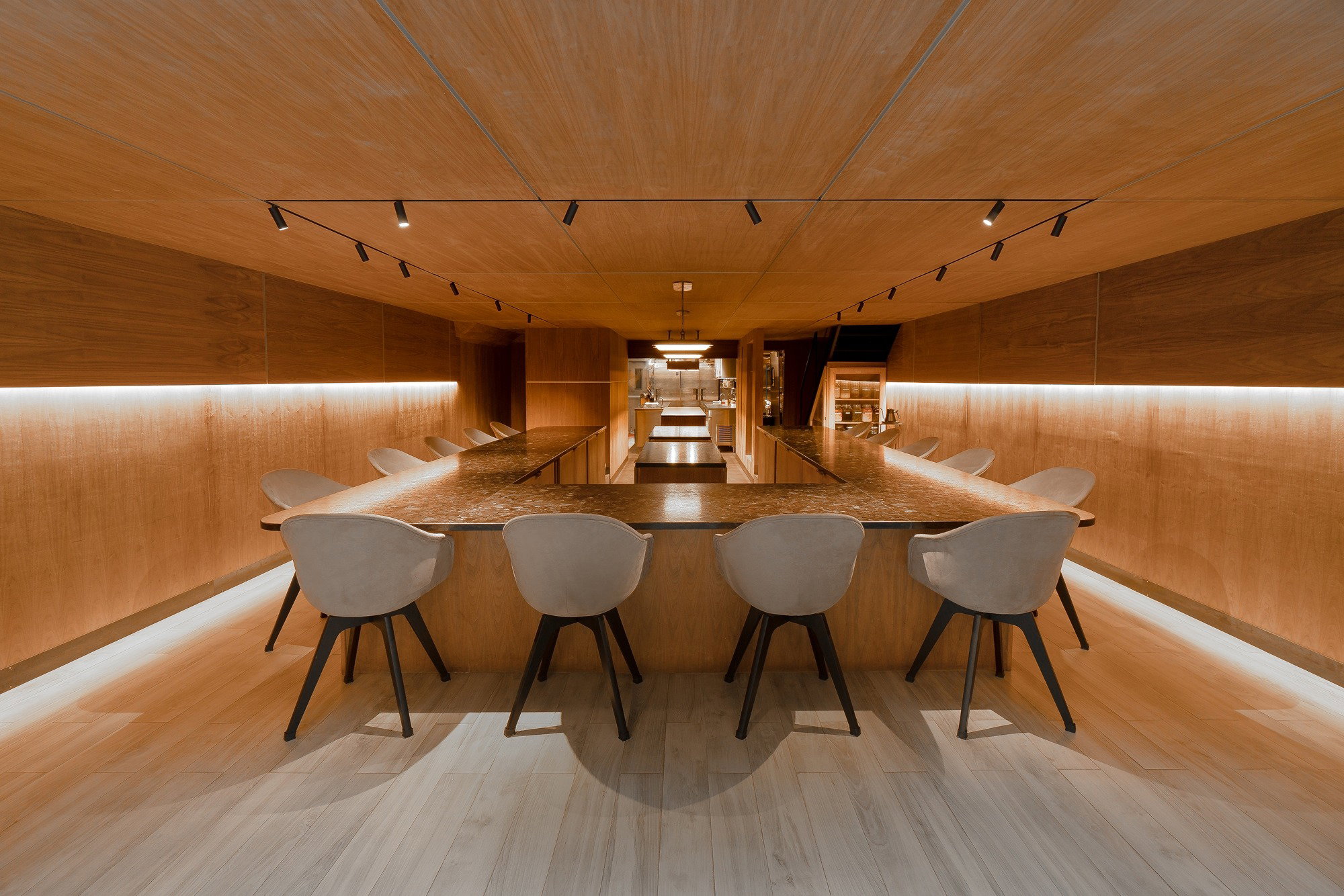
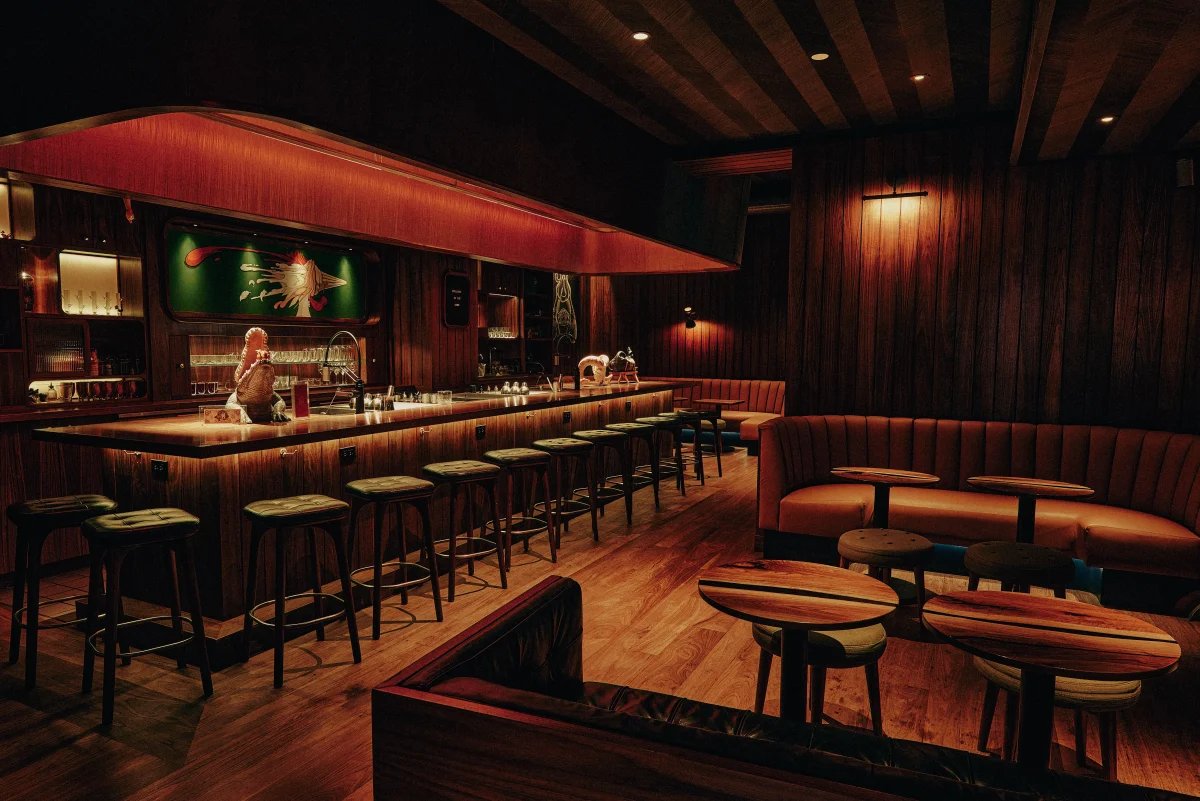
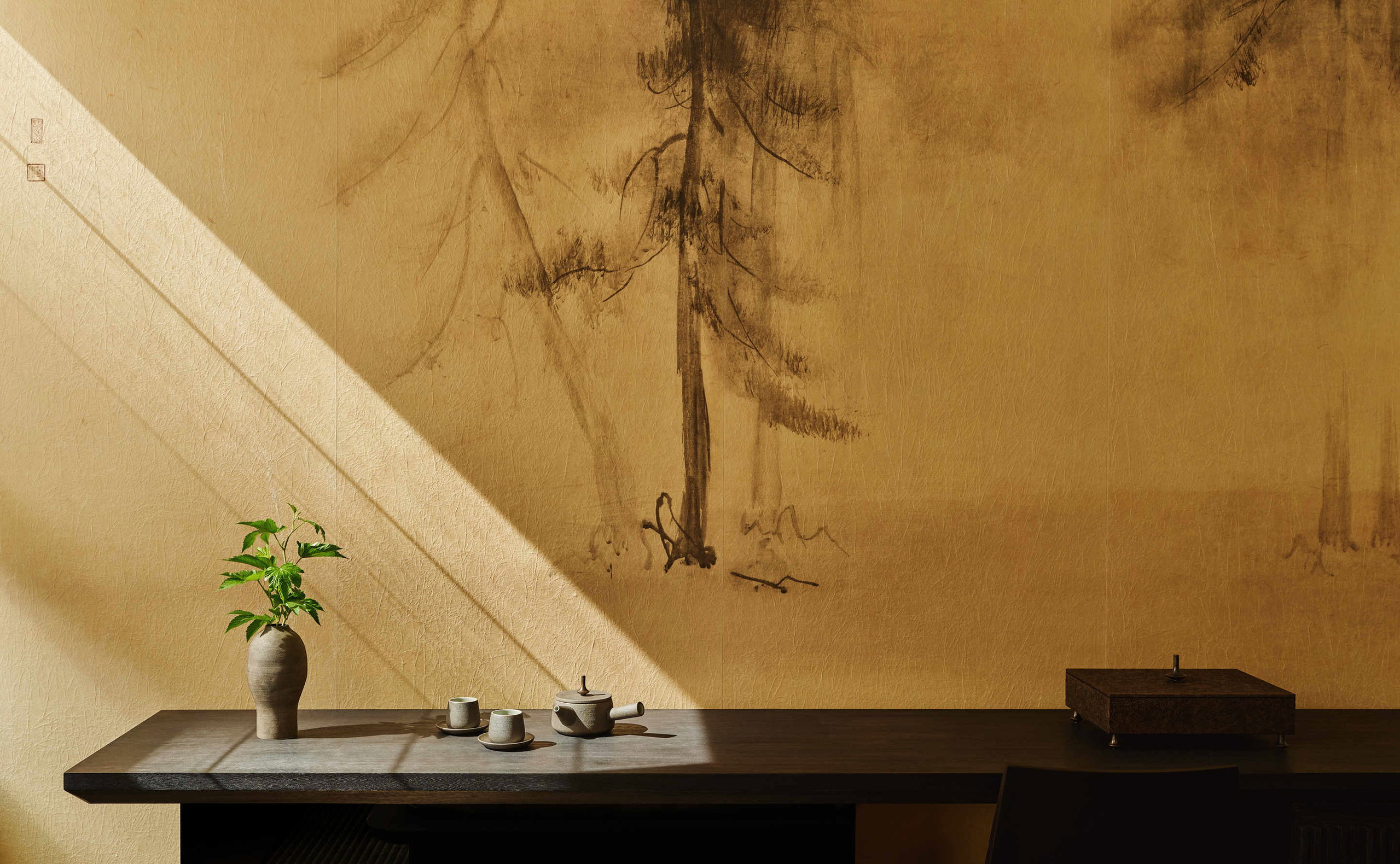
Warm, intimate Japanese dining space with extensive wood accents and minimal decor; described as cozy and authentic with a hole-in-the-wall aesthetic that feels authentically Japanese.
Tags
Vibe
Best For
Experience
At the Table
- Dress Code
- Casual
- Noise Level
- Lively
- Service Style
- Casual
- Meal Pacing
- Quick Bite
- Capacity
- Small
Signature Dishes
- Niku Udon
- Sansai Udon
- Chicken Tatsuta-age
- Zaru Udon
Know before you go
Know Before You Go
- Getting there
- 342 E 6th St, New York, NY 10003
Planning details
Location


Also consider
Also Consider
- Le Bernardin, French, Seafood, $$$$
- Atomix, Modern Korean, Korean, $$$$
- Per Se, French, Contemporary, $$$$
- Masa, Sushi, Japanese, $$$$
- Eleven Madison Park, French, Vegan, $$$$
Restaurant context
How It Compares
Raku and its comparison set barely overlap in format or price. Le Bernardin, Per Se, and Eleven Madison Park are all $$$$ multicourse commitments requiring advance planning, formal dress, and a higher tolerance for ceremony. Masa is the most directly relevant Japanese comparison, it is sushi rather than udon, but it occupies the city's top tier and will cost several times more per head. Raku's OAD ranking places it in serious culinary company without the financial or logistical overhead those venues demand.
Atomix is worth mentioning for the diner who wants a ranked, chef-driven experience with more structure and occasion weight. At $$$$ and with a more difficult reservation, it serves a different purpose than Raku, go to Atomix when the meal is the event; go to Raku when the food is the point and the evening is still open.
The clearest practical comparison is not in the $$$$ tier at all. For late-night Japanese in New York, Raku competes with Blue Ribbon Sushi and Bar Masa. Blue Ribbon Sushi is the more flexible sushi option across two locations; Bar Masa gives you proximity to Masa's kitchen ethos at a lower price point but in a Columbus Circle setting that is less neighbourhood-driven. Raku wins on specificity, if handmade udon in a genuinely craft-focused format is what you want, nothing else on this list offers a direct substitute.
Explore New York City
Around this place
Discover more on Pearl
Unlock the full Raku guide in Pearl, including awards, comparisons, FAQs, planning details, and nearby places.
Compare Raku
| Venue | Location | Cuisine | Awards | Price |
|---|---|---|---|---|
| Raku | New York City | Sushi | 2025 OAD Top Restaurants in North America Ranked · #3912025 New York Times Best Restaurants in New York City | , |
| Le Bernardin | New York City | French, Seafood | 2026 Eater NY 38 Best Restaurants in New York City · #82026 North America's 50 Best Restaurants · #132026 New York Times Best Restaurants in New York City · #212026 OAD Top Restaurants in North America Ranked · #342026 Forbes 5-Star2026 La Liste Top RestaurantsAAA Diamonds Top 10 Restaurants 20262026 Wine Spectator Grand Award2026 Les Grandes Tables du Monde Members | $$$$ |
| Atomix | New York City | Modern Korean, Korean | 2026 OAD Top Restaurants in North America Ranked · #62026 New York Times Best Restaurants in New York City · #72026 North America's 50 Best Restaurants · #7Star Wine Lists 20262026 Les Grandes Tables du Monde Members2026 La Liste Top Restaurants2025 World's 50 North America's Best Restaurants · #12025 James Beard Awards · #12025 New York Times Best Restaurants in New York City · #2 | $$$$ |
| Per Se | New York City | French, Contemporary | 2026 OAD Top Restaurants in North America Ranked · #292026 Forbes 5-Star2026 Relais Chateaux Restaurants2026 Wine Spectator Grand AwardAAA Diamonds Top 10 Restaurants 20262026 Les Grandes Tables du Monde Members2026 La Liste Top Restaurants2025 Robb Report 100 Greatest American Restaurants of the 21st Century · #102025 OAD Top Restaurants in North America Ranked · #92 | $$$$ |
| Masa | New York City | Sushi, Japanese | 2026 OAD Top Restaurants in North America Ranked · #922026 Forbes 5-Star2026 OAD Top Restaurants in North America Recommended2026 La Liste Top Restaurants2025 OAD Top Restaurants in North America Ranked · #672025 Robb Report 100 Greatest American Restaurants of the 21st Century · #862025 Michelin 2 Stars2025 La Liste Top Restaurants2025 Forbes 5-Star | $$$$ |
| Eleven Madison Park | New York City | French, Vegan | Star Wine Lists 2026 · #12026 OAD Top Restaurants in North America Ranked · #472026 Forbes 5-Star2026 Relais Chateaux RestaurantsAAA Diamonds Top 10 Restaurants 20262026 Wine Spectator Grand Award2026 Les Grandes Tables du Monde Members2026 La Liste Top Restaurants2025 Robb Report 100 Greatest American Restaurants of the 21st Century · #3 | $$$$ |












How Raku NYC compares with similar nearby venues.
FAQ
Frequently Asked Questions
Can Raku accommodate groups?
The East Village room is compact, so larger groups need to plan ahead. Parties of two or four will seat comfortably; groups of six or more should call ahead to confirm availability, particularly on weekend evenings when the room fills. Raku runs three NYC locations, so if the East Village spot can't fit your party, the other outposts are worth checking.
Is Raku good for a special occasion?
It works well for a low-key celebration where the food does the talking rather than the room or the price tag. Chef Norihiro Ishizuka's udon earned Raku an OAD Top Restaurants in North America ranking (#391, 2025), which gives it genuine credibility without the formal-dining pressure of an omakase counter. If your occasion calls for a tasting menu and a quiet room, look elsewhere; if it calls for serious cooking in a lively setting, Raku delivers.
What should I order at Raku?
The udon is the reason to be here. Chef Ishizuka makes each strand by hand — springy, al dente, with a characteristic pinched end — and serves them in deeply flavored dashi with garnishes that have included delicate tempura, nameko mushrooms, crab, and duck. Order whatever bowl features the most interesting garnishes on the current menu; the noodle itself is consistent enough that the garnish is the variable worth optimizing for.
What should I wear to Raku?
The East Village location is casual. The neighborhood and the format — noodle bowls in a compact, energetic room — set the tone. Clean, everyday clothes are fine; there is no indication from Raku's format or following that anything more formal is expected or practical.
What are alternatives to Raku in New York City?
For Japanese food in a similar price bracket without the omakase format, Raku sits in a category largely to itself for udon specifically, since udon is overshadowed by ramen and soba across most of the city's Japanese spots. If you want Japanese cooking at a higher price point with tasting-menu structure, Atomix is the benchmark. For ramen rather than udon, the options multiply quickly — but Raku's OAD ranking makes it the clearest choice if handmade udon is the objective.